Showing posts with label Andrew Taylor. Show all posts

Tuesday, 13 December 2016

A BOOK IS FOR LIFE, NOT JUST FOR CHRISTMAS – Elizabeth Fremantle


It's that time of year again, so I'm going to take the stress out of your Christmas shopping chaos and suggest you find everything at your local bookshop. After all the pleasure of a book lasts a lifetime, unlike that of a comedy apron or a scented candle. Here are my recommendations for the stockings of all kinds of book lovers:

FOR LITERARY ECO-WARRIERS

For those undaunted by doorstep sized novels, then Annie Proulx's BARKSKINS is the choice. Spanning more than three hundred years and depicting numerous generations of characters it tells the story of the sacrifice of the world's forests in the name of progress.

FOR POLITICOS

For clever friends who prefer political non-fiction then you can't go wrong with BLOOD AND SAND, the latest book from historian, Alex Von Tunzelman, depicting the sixteen days in 1956 that pushed the world to the brink of a nuclear conflict with crises in Hungary and Suez.

FOR CRIME ADDICTS

For lovers of crime fiction series there's Antonia Hodgson's DEATH AT FOUNTAIN'S ABBEY, set in 1728, it follows Jack Hawkins to Yorkshire on a mission to uncover a murder; or MJ Carter's THE DEVIL'S FEAST, set in 1842, in which Captain William Avery must uncover a horrible death at The Reform Club. Both are the third books in their series, so if you were feeling generous you might want to offer all three.

FOR SPIES AND STRONG WOMEN

For those who like novels about strong women there's Katherine Webb's 1950s set, THE ENGLISH GIRL, about a woman who longs to escape the rigid boundaries of her life and marriage but finds more than she'd bargained for on a desert adventure. Or for a less exotic setting but equally strong women is Elizabeth Buchan's THE NEW MRS CLIFTON, set in London in the wake of WW2, when a brother, to his sisters' dismay, returns from the war with a German bride.

FOR WW2 BUFFS

These two gripping novels tell of soldiers devastated by their experiences war. Jason Hewitt's DEVASTATION ROAD follows a broken English soldier trying to find his way home in the dying days of the war. William Ryan's THE CONSTANT SOLDIER offers another perspective depicting a German soldier, badly injured who returns home to find his eyes are opened about the Nazis who have taken over his village.

FOR SECRET GOTHICS

For those with a yearning for dark victoriana Anna Mazzola's debut THE UNSEEING tells of a woman who is about to hang for a gruesome murder but there's more to her story than meets the eye. Your could offer it alongside Waterstone's pick, Sarah Perry's acclaimed victorian gothic novel THE ESSEX SERPENT.

FOR PEPYS PEOPLE

The Stuart period is having a moment. This year marked the 350th year since London's great fire and how about Rebecca Rideal's excellent non-fiction, 1666: PLAGUE, WAR AND HELLFIRE, which gives an overview of the world-shaking events of that year. You could give it together with Andrew Taylor's novel about murder at the time of the fire THE ASHES OF LONDON

FOR FAMOUS FEMALES

Themes of fame and the female run through Katherine Clement's and Essie Fox's latest novels. Still with the Stuarts THE SILVERED HEART, tells of a notorious highway-woman during the chaos of the English Civil War. THE LAST DAYS OF LEDA GREY slips between the heatwave of 1976 and the Edwardian era to reveal the secrets of a silent movie star.
FOR TUDOR FANS

For those who have read everything there is to read about the Tudors, Sarah Gristwoods far-reaching non-fiction work, GAME OF QUEENS, contextualises the lives of the Tudors by exploring the network of powerful women throughout sixteenth century Europe. Another little-known Elizabethan and Stuart woman is the subject to (ahem – cheekiness alert) my own novel. THE GIRL IN THE GLASS TOWER is Arbella Stuart, raised to be heir to Elizabeth I and the novel tells of her attempts to escape the life fate and politics has prescribed.

FOR WITCHES

Witchcraft or accusations of it in the Medieval period tie these novels together. Maitland's west country setting is the scene for dark happenings in THE PLAGUE CHARMER and Manda Scott's, INTO THE FIRE explodes myths about Joan of Arc in a thrilling tale of a political cover up that spans hundreds of years.


Elizabeth Fremantle's latest novel THE GIRL IN THE GLASS TOWER is published by Penguin.

Sunday, 21 August 2016

Fire! Fire! by Imogen Robertson


I’ve always felt a bit sorry for people who were actually born in London because they’ll never have the pleasure of a first visit to the capital. I remember mine. I told the patient Beefeaters all about the Crown Jewel, got a tour of Broadcasting House from a cousin who worked there (and a BBC pen which I treasured for years), fed the pigeons and had my first visit to the Museum of London. The memory of the flickering diorama of the Great Fire stayed with me long after the pen had run out. No surprise then that I’m delighted to have been asked to chair a discussion at the museum on the Great Fire, Fact and Fiction next month. 

It’s part of a series of talks the museum is running alongside their excellent new exhibition commemorating the 350th anniversary of the fire, and the panel consists of Hazel Forsyth, Alex Larman and Andrew Taylor. I do hope some of our History Girls readers can come along. It should be a great discussion with Hazel talking about the material culture of the period and what the wreckage left by the fire teaches us, Alex setting the fire in the context of the political turmoil of post-Restoration, post-Plague London, and Andrew discussing how it has inspired his new novel Ashes of London, an explosive beginning to a new series of historical thrillers. You should buy all three books, of course, particularly because they form a matching set.


To make sure I ask them the right questions, I went along to the museum to see the exhibition last week and can thoroughly recommend it. The visual design is gorgeous, based on contemporary woodcuts and it makes great imaginative use of shadows and silhouettes. Vignettes of a spark from Thomas Farriner’s oven landing on a pile of dry wood, figures waking up in the smoke and clambering out of windows, a brilliant map of the spreading flames, and wonderful use of sound all fascinated the children who were visiting with me, and I suspect their memories of the flaming houses will be just as long lasting as mine were. You can handle burnt tiles and bricks as well as hearing extracts of letters, and peer at the first newspaper report of the fire and knowing the press which printed them was consumed the same day. 


There is also an excellent final section the the exhibition which looks at the aftermath of the fire, both the rebuilding and the rumours which circulated even before the fires were put out. I did not know for example about scapegoating of Robert Hubert who confessed to starting the fire as part of a Papist plot. On display is the cracked marble plaque proclaiming his guilt which was not permanently removed from the Monument of London until the nineteenth century. There is plenty of food for thought about the politics of blame as well as a chance to sit and listen to the stories of the refugees in the mock-up of one of the camps set up to shelter the thousands of Londoners who had last everything in the conflagration. 


It's all gorgeous and thoughtful. Well, I know what I’m aiming for as chair now. 

Monday, 13 June 2016

ARE THE STUARTS THE NEW TUDORS? Elizabeth Fremantle


I've been wondering if we have yet reached peak Tudor.

Henry VIII’s stinking, gangrenous leg has been endlessly speculated upon, every layer of Elizabeth I’s petticoats has been lifted and thoroughly searched beneath and Anne Boleyn’s execution has been read, learned and inwardly digested from all possible angles. There are even novels that speculate upon what might have been, had Anne and Henry produced a son. But still, doyenne of the period, Alison Weir, is bringing out a series of novels about each of Henry’s wives, Philippa Gregory, has returned from the Plantagenets to give us her version of Katherine Parr, I too have recently completed a Tudor Trilogy and, lest we forget, Hilary Mantel’s Cromwell novels have spawned an arts’ industry all of their own. Surely there is no stone left unturned on Henry’s marital mismanagement, but even so both the BBC and channel 5 are dishing up the six wives. It is not surprising then that Charlotte Higgins recently asked in the Guardian, Tudormania: Why can’t we get over it?

I have a hunch that when such questions begin to be asked about fads – like when people wonder
about why house prices have risen stratospherically high or why beards in Hoxton have begun to walk into rooms before their owners – it signals that their days are numbered. Interestingly two acclaimed Tudor biographers have lately turned to another equally dysfunctional family of royals: the Stuarts. Linda Porter will publish Royal Renegades, about the children of Charles I, in the autumn and Leanda de Lisle’s next book, The King’s Story, will unravel the enigma of Charles I himself. Also published this year are Andrea Zuvich’s, A year in the Life of Stuart Britain and Andrew Lacey’s, The Stuarts: A Very British Dynasty.

The Stuarts offer just as much in terms of drama as that of their Tudor cousins. The period was torn by dark sectarian troubles. The thwarted Gunpowder Plot was an event that – had it succeeded as intended, to wipe out the entire new dynasty – would have been as dramatic as the attack on the Twin Towers. It was a time of witch hunts, espionage, the exploration of the globe, a Queen who unceasingly promoted the dramatic arts and in James I, an openly homosexual king. James was a complex, flawed and unpopular individual whose son would be tried and executed in Cromwell’s revolution – a regicide that would irrevocably change the path of English history.


The 400th anniversary of Shakespeare’s death this year, with all the celebratory exhibitions and seasons of plays, also shines a light on the early Stuart period. We tend to think of the bard as an Elizabethan but some of his greatest and most enduring work fell in the Jacobean period. Think of Macbeth, King Lear and The Tempest. James Shapiro’s recent, and brilliant, 1606, Shakespeare and The Year of Lear, argues that this year, early in James I’s reign, was the apotheosis of the playwright’s career. Drama holds up a mirror to the culture it comes from, and so Shakespeare’s late plays, with their moral complexity and ambitious reach, suggest the society that gave rise to them must be infinitely fascinating.

Indeed, Shakespeare wasn’t alone. The Jacobean period is characterized by a thriving of the literary arts. Even The Bible had its James I makeover and poets such as John Donne and Ben Johnson remain familiar today; women were finding their voice too and publishing for the first time. In 1611 poet, Aemilia Lanyer, published Salve Deus Rex Judaeorum, a brilliant defense of Eve that sought to shake up received thinking about women’s position in the world. Women stepping outside the box so publically gave rise to an anxiety about the female sex, which was articulated by tragedians like Webster and Middleton who, along with Shakespeare, were producing some of the most bloodthirsty heroines in all of English literature, with Lady Macbeth as flag bearer.

The cultural flourishing that reached its zenith with the early Stuarts was abruptly suspended when Cromwell closed the playhouses. But it returned in force with the restoration of Charles II, the most charismatic of the Stuarts, whose reign saw actresses on the stage, and in the King’s bed, for the first time. A recent exhibition at the National Maritime Museum, Samuel Pepys: Plague, Fire, Revolution thoroughly explored the events of the Restoration period as will Rebecca Rideal’s forthcoming book 1666: Plague, War and Hellfire.

The intrigue of the Stuart century is endless, so it is unsurprising that fiction writers have also had their heads turned. A couple of years ago Rose Tremain revisited the eponymous anti-hero of her 1989 Booker shortlisted novel, Restoration with Merivel, a brilliantly funny and touching rendition of debauched Restoration society. Katherine Clement’s duo of novels, The Crimson Ribbon and The Silvered Heart, tell of women leading extraordinary lives during the chaos of the Civil War. Andrew Taylor’s latest thriller,The Ashes of London, is set in the aftermath of the Great Fire and I am working on a Stuart Quartet, with the first, The Girl in the Glass Tower, about Arbella Stuart, who might have been England’s Stuart queen.

So prepare yourselves for the Stuarts: every bit as flawed, dysfunctional and fascinating as the Tudors.


Elizabeth Fremantle’s novel The Girl in the Glass Tower is published by Penguin 


Saturday, 13 July 2013

History Repeats: Rome and Egypt, by Manda (MC) Scott

-->
I spent yesterday evening at Rossiter books with the wonderful Andrew Taylor: one of the best historical writers alive today (do read ‘The Scent of Death, his latest book that explores New York, the bastion of loyalty to the English Crown during the war of Independenc). 
We started off the evening by looking at how we’d both made the shift from crime writing to historical writing but the conversation slipped sideways, as these things always do, into the fact that history seems doomed to repeat itself: in our own personal lives, in public life, in the great span of empires and civilisations, we seem doomed to wander in great, repeating cycles.
Or perhaps it’s just that, as writers, we are doomed to see the patterns in things, and then to imagine that they are repeating: this may also be true. Certainly, having spent a year immersed in AD69, the Year of the Four Emperors in Rome – which lasted 18 months and in which there were, strictly speaking, 5 men who called themselves Emperor, even if one of them never made it to Rome – I can’t help but see startling parallels with what’s happening just now in Egypt.
Morsi's ousters celebrate in Tahrir Square
So, whether it’s authorial paranoia, or a genuine recycling of inevitable history, it’s worth another look at the past and the present.
The differences shroud the similarities and the most obvious of these is that Egypt is hardly a superpower in the way that Rome was: and Hosni Mubarak was not a hereditary ruler who clawed his way to power over the murdered bodies of his relatives.  He was, however, a man who ruled largely by force, and by intimidating the opposition, even if he did not, as far as we know, go as far as Nero went in ensuring that the opposition remained cowed.
Nero, taken by Bibi: Saint-Pol, Wikimedia Commons
Nero – who did rule the single superpower of his age -  overspent to such an extent that the treasury was in danger of bankruptcy.  His answer was not austerity –he cared too much about what the common people thought of him - but rather to present the Senators, (who were the super-rich of their age) with the option to kill themselves and leave their entire estates to the Imperial treasury , or stay alive, in which case he’d let his executioners wax creative on their families and they would die last after they’d seen each of those they loved die ghastly deaths.   A great many good men fell on their swords, and those left behind were too cowed to do much about it – until he killed Corbulo, and put down the Pisoan conspiracy and the legions decided it was time to lead a revolt.
The situation in Egypt is less clear cut but there is no doubt that Mubarak used the powers of police and army to suppress dissent and particularly to suppress the Muslim Brotherhood and what’s striking is that in each case, the army (the legions in Rome) brought down the ruler and then took a relative step back to allow a new Emperor/President to take over.
Mubarak, Former President
In Rome, Galba was the first of the four men to reach Rome and name himself Emperor.  He had been a legionary commander but then in those days, legionary commanders were Senators and every Senator had to have spent some time commanding a legion: It’s one of the reasons that some legions made outstanding mistakes (the XIIth) while some were led by men of military inspiration (Vespasian and all the legions he led, including the by then ‘unlucky’ XIIth).  By the time he took the Imperial throne, he was Governor of Spain, which was a political position.
And here the similarities start.  Everyone thought Galba would make a good Emperor until he actually started the job, at which point, it took a remarkably short time for everyone except Galba and his closest associates to realise he was worse than Nero had been: not an ‘actor’ or a musician, not given to spending money on wild artistic ideas, not prone to roaming the streets after dark assaulting girls and boys he fancied… but nonetheless, he was a martinet of the worse proportions, and nobody wanted him in the post.
It was the legions who replaced him and, as in Egypt, they were split.  The Praetorian Guard in Rome killed Galba and installed Otho, while the legions in Germany gave their oath to Vitellius.  These two men were second and third of the four, respectively and the civil war thus begun would have been far, far worse had not Otho done the decent thing and fallen on his dagger to prevent men from throwing away their lives in his name.  One month after Vitellius arrived victorious in Rome, the legions of the east, of Judaea, Syria and Alexandria (which was then the capital of Egypt) took a look at their comrades in the west and, deciding they could have a bit of the cherry too, declared for Vespasian.
Vespasian, image byShakko wikimedia commons
The point, it seems to me, is that the legions, once they had realized they could make or break the Emperor, carried on until they got one they could all agree on.  Vespasian was one of the greatest emperors Rome ever had, largely because he didn’t really want the job, but, having been offered it, was a good enough organizer, a good enough military strategist – and a good enough Emperor once he returned to Rome – to be allowed to stay in post.
And so in Egypt, the generals installed Mubarak, one of their own and his reign was lengthy, but still, the army sided with the people when the riots became overwhelming. The army stepped back and let the Muslim Brotherhood install one of their own as leader, but they were not slow to get rid of Mohamed Morsi when his incompetence and corruption became evident. 
That’s two down.  And here is where I think history is repeating itself.  The gap between Emperors reduced exponentially in ancient Rome: Galba to Otho was 9 months.  Otho to VItellius was 3 months.  Vitellius to Vespasian was one month (tho’ it took longer for Vespasian’s forces actually to take Rome).
If Egypt follows the pattern, we may see another President relatively soon, but the gap, I think, between his taking power and losing it, may be measured in weeks and months, not years, should he prove (as is likely) not to be up to the job.

What Egypt needs is a Vespasian: a pragmatist, a generally sane, thoughtful, humane and above all, competent, individual.  Like Rome, there is no chance that a woman could take the top job, but in default of that, we have to hope that there’s someone with the courage to put his head above the parapet, and the foresight to lead the nation into peace: Rome’s civil war touched almost all parts of the Empire.  Egypt’s, should it spiral out beyond the borders, may well trigger another global meltdown. And as Einstein so presciently said: “We do not know with what weapons the third World War will be fought, but the fourth will be fought with sticks and stones.”  


Monday, 7 January 2013

THE SCENT OF DEATH by Andrew Taylor: review and interview by Adèle Geras

I first came across Andrew Taylor's work when I read one of his Roth Trilogy novels in the 1990s. I was attracted to the cover image of a stone angel. This trilogy of novels so impressed me that I wrote a longish critical article about them in a periodical called BOOKS AND COMPANY, and you can find this if you go to http://www.lydmouth.co.uk/page3/page5/page13/page13.html

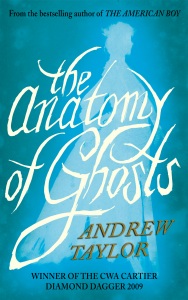
Taylor is a historical novelist of long standing. His book, THE AMERICAN BOY, was chosen for Richard and Judy's Book Club and his THE ANATOMY OF GHOSTS is a cracking story set in 18th Century Cambridge, at almost exactly the same time as THE SCENT OF DEATH. He's known as a crime writer and one of his best series, THE LYDMOUTH NOVELS is set in the 1950s. If you look at his books, you'll see he's both prolific and a bit uncategorizable, which is good news for his fans, because there's always something new and different coming from his direction.

His new novel is called THE SCENT OF DEATH and it's set in Manhattan in 1778. This part of America is still under British rule and it's a place full of soldiers, loyalists, refugees, and a maelstrom of corruption, fighting, and everything you might expect in a country where there are at least three sides to every problem that arises. Edward Savill is our hero and as he arrives from London, almost the first thing to greet him in the New World is a dead body. From these beginnings, Taylor spins an intricately woven plot which not only takes in adventures, such as a memorable journey to the Debatable Ground, outside the city limits, but also a very slowburning, almost Jamesian love story. Savill is billeted on the Wintour family and it did cross my mind to wonder at the name, which nowadays means a lot to fashionistas everywhere but especially in Manhattan.

Taylor is very good at conveying what interior spaces are like. He manages to make us feel part of the household, and it's a very interesting place in which to spend some time. There are several generations of Wintours living here. Arabella is the woman mentioned in the very good first sentence of a terrific first paragraph: "This is the story of a woman and a city." and she's as beautiful, enigmatic and mysterious as you'd expect of a romantic heroine. We are in the era of slavery, of course and this strand of the narrative is among the most interesting, with several slaves among the protagonists. There is a painting of a house that's part of the central mystery and, as in many of Taylor's books, we also find a child. Savill hears one weeping in the night, and the motif of missing/dead/ghostly children is something Taylor returns to again and again in his work, to good effect.

This is the kind of thriller you can recommend to people who are not normally readers of crime fiction. I mean this as a compliment. Absent from its pages are a)frenetic pace b)hideous torture and evisceration and c)overly explicit 'scenes of a sexual nature' as they're called on Sky tv. Andrew kindly allowed me to ask him some questions, and here they are, together with his answers.

1)This book is set in a very familiar place in a most unexpected time: New York in 1778. What was it about both (the time and the place) that attracted you?

I was reading a book about the American War of Independence - Barnet Schecter’s The Battle For New York - and one detail stuck like a burr: that embankments on the North River served as the last resting places for the corpses of rebel POWs. It’s one of those historical details that carry a lot of metaphorical weight. For most of the War, New York was the military and administrative capital of the British Empire in America. It seemed a perfect setting for a novel because it showed somewhere we know so well in other guises, New York City, from such a a different angle - and that always appeals to me. The germ for The American Boy was very similar in that sense - Poe, such a quintessentially American figure from the Victorian age, seen as an English schoolboy in Jane Austen’s London.

2)This book is at the same time a) a historical novel of a traditional kind, b) a thriller and c) a slowburning love story. Were you conscious of the difficulties of blending these three kinds of book together?

No - but perhaps I should have been. I don’t really structure my novels before I begin. I knew a lot about the characters and the setting. I knew that for me it was going to be a book about loyalty, both personal and political, and whether or not it’s an absolute value. (The working title was in fact The Loyal American.) I had vivid pictures in my head that I wanted to find a way of realizing - the ice on the North River, for example, the shanty-town slums they called Canvas Town, the burned-out wreck of Trinity Church, the double portrait of master and slave, etc. I also knew that there would be a corpse or two - I am, after all, usually labelled as a crime writer - and that there would be a woman... For the rest - it emerged, in the way that stories do, a way that I still find quite magical.

3)The question of slavery is important in the novel and yet you write about such matters in a low-key but devastating way. Was it your intention that your readers should learn something as they read? In other words, is there any didactic intention behind the book?

No. It goes without saying that slavery is a revolting and unacceptable practice. But in the eighteenth century they saw such things very differently, particularly in some of the American colonies where it was woven into the texture of all levels of society. What interested me was slavery’s normality: and what this might have meant for those who were slaves and those who were free citizens. Personally I don’t think it’s the job of a historical novelist to impose his or her modern views on the past; the reader provides that perspective in any case. But I do think we can write as honestly as we can about it - and how it seemed to people at the time. Perhaps that helps us towards a better understanding of the present, and how it seems to us.

4)You're a very convincing 18th century gentleman and speaking for myself, I was delighted to see a book in the past tense. Do you have views about the use of the present tense in so many books written these days?

Thank you - I’m glad the voice was convincing. In a historical novel, I try (within reason) to create a plausible pastiche of how people might have spoken and thought in a particular period. The narrative fell naturally into the past tense - I had an image in my mind of the central character writing it after the event. In general, though, I’m not a huge fan of the wholesale use of the present tense in fiction unless it serves a very definite purpose; I agree with Philip Pullman that, as a writer, you can achieve more if you have the full range of tenses at your disposal. Having said that, I’m at present writing a novel with two narrative voices - one of which is present tense. Horses for courses...

5)I read about your RSI on the website. Can you tell us a bit about how you manage this?

I’ve had chronic RSI for nearly twenty years, the result of writing too much, too fast and in unergonomic positions. So I began dictating everything, and my wife would type it up. Then she got RSI herself - and far worse than I have it. We have tried - and tried and tried - voice recognition software. I can’t get on with it at all - it doesn’t like my voice, my vocabulary or my method of writing. My wife copes better, though it’s very frustrating for her. I dictate the first drafts of most books into a machine; my wife transfers it to the computer via voice recognition, adding her comments etc on the way, and then I revise on screen to make a second draft. RSI comes in many shapes and forms, of course, and varies enormously in severity. If you get it as badly as we have it, you never get rid of it entirely. But you can learn to manage it and to reduce its impact.

Follow Andrew on Twitter: @andrewjrtaylor