Showing posts with label Keats. Show all posts

Friday, 17 September 2021

To Autumn: a celebration of nature’s golden season. By Caroline K. Mackenzie.

© Caroline K. Mackenzie

‘Season of mists and mellow fruitfulness’. So begins Keats’ beautiful ode ‘To Autumn’, the first poem I ever learned by heart. Our English teacher at school had asked us each to choose a poem, learn it, and recite it to the rest of the class, with a short presentation of what it meant to us. Flicking through a poetry compilation from the bookcase in my bedroom, Keats’ poem immediately struck a chord. I have returned to the poem every year since, and not just in autumn.

Autumn is, quite simply, my favourite time of the year. Although many people understandably enjoy the ‘new birth’ of spring, or the hot weather and long days of summer, I have always favoured what tends to be one of the two cooler seasons of our year. Some of my friends cite winter as the better, thanks in part to the excitement of Christmas and the prospect of a New Year. However, I particularly enjoy the anticipation and rejuvenation of a new year not in January but September (of which more below).

If you are not familiar with Keats’ poem then I urge you to read it. I shall let his enchanting words speak for themselves. In this blog, I should like to set out just some of the reasons why I believe autumn is so special and, if you are a summer lover, perhaps this post will help you look forward to the days and months ahead rather than feel disappointment as your favourite season draws to a close.

Autumn leaves

© Caroline K. Mackenzie

Watching the leaves on the trees change from green to golden to flaming red is a visual delight, matched by the audible joy of the crunch of fallen leaves underfoot on a brisk autumn’s walk. Who can resist the childlike urge to kick a pile of these giant cornflakes and then watch them as they tumble silently, twisting and turning, to the ground again? Paths which would otherwise simply be muddy brown trails are transformed into golden patchwork quilts lining the way ahead through woods whose trees generously and gently drop their jewels until their branches are bare and ready for winter.

If one of these walks is blessed with a blue sky and gleaming sunshine, then that is a recipe for a perfect autumn day. Sunshine is always welcome but in the height of summer when the temperatures soar, I often find myself seeking shade or even staying indoors (not least to avoid the dreaded hay fever symptoms). However, sunshine on an autumn’s day feels like a surprise gift and makes my soul sing.

Log fires

© Caroline K. Mackenzie

The best experiences enlist all our senses and, together with a feast for the eyes fit for Midas, autumn brings its own aromas, one of the loveliest of which is the welcoming smell of a log fire. Watching the wisps of smoke whirl out of a chimney pot is surely one of the most enticing invitations and a promise of cheer, homeliness and comfort. Once inside, sitting by a fire provides warmth in a way that no central heating can rival and a cosy glow that turns everything in the room golden, mirroring nature’s colours outdoors.

Crackling logs are accompanied by a mesmerising dance display as the flames lick the wood, pirouette above, and showcase a whole rainbow of reds, oranges, yellows, even purples and blues. I find myself hypnotised by the constant movement which is ever-changing and yet supremely calming.

Even a stack of well-arranged logs can create that snug feeling with the promise of hours curling up by a wood-burner or inglenook.

© Caroline K. Mackenzie
Cosy evenings

Log fires are a treat at any time of day but perhaps the most indulgent time is late afternoon which almost unnoticed turns into evening, the hours slipping by as mugs of hot chocolate are grasped with grateful hands chilled during an invigorating stroll. Soon thereafter, it is perhaps time to crack open a favourite bottle of wine (mine is a ‘Bacchus’, of course) and curl up with a good book until bedtime.

© Amanda Short Design.
From ‘A Latin Lexicon: an Illustrated Compendium of Latin words and English derivatives’ by Caroline K. Mackenzie.

The soporific seductions of autumn need no hard sell, but to illustrate this part of the blog, I could not resist including the gorgeous illustration created by Amanda Short for my Latin Lexicon (the subject of a previous History Girls post, A Latin Lexicon). This lovely image accompanies the entry in the Lexicon for ‘dormio’ (I sleep) from which we derive dormant, dormitory and, of course, dormouse.

Candles

© Caroline K. Mackenzie

Most of my days are spent at my desk, researching, writing or teaching (currently via Zoom). As the days draw shorter, a scented candle flickering by my papers and books helps make my study a relaxing and pleasant environment. I would happily spend all my days in here so the lure of an autumn ramble ensures I keep moving and achieve some sort of physical as well as mental workout each day (or as the Roman poet Juvenal so succinctly wrote, ‘mens sana in corpore sano’).

Autumn fruits

Another of nature’s gifts at this time of year is the surplus of delicious ripe fruits growing in abundance on trees and in hedgerows - a healthy, sweet treat! Apples, blackberries, plums, and damsons make for comforting crumbles and warming pies (with plenty of cinnamon for good measure) or can be simply eaten straight from the branch. The fruits add rosiness to a garden or country lane - a form of second flowering when many plants have dropped their colourful petals - and contribute to the kaleidoscope of autumn arrays.

© Caroline K. Mackenzie

If you are fortunate enough to be outdoors just after a rain shower, nature also kindly washes the fruit for you - it is such a beautiful sight to see a juicy plum, perfectly ripe and decorated with a glistening rain drop like a crystal of sugar. Green leaves positively radiate when wet and reflect the sun’s rays, as if thanking the skies for the combination of ingredients which help their host produce its best crop. As for the sweet smell of fresh rain and cut grass, I just stand and take deep breaths and feel the benefit with each one. If I could bottle this air, I would.

Back to school

I realise that I may be biased, being a teacher, but autumn heralds the excitement of a new year. Or, to look at this another way, I have often thought that one of the reasons I took up teaching is because I enjoy the structure of the academic year so much. September brings a new start; as a child, of course, that also meant new pencils - such a thrill! Refreshed and recharged by the summer holidays, the return to school meant new teachers, novel subjects and after-school clubs, sometimes additional classmates, too, and there was always the optimism of unknown adventures ahead.

© Caroline K. Mackenzie

Later, as a student, cycling along The Backs and marvelling at the autumn colours in Cambridge, I contemplated the choice of new courses on offer: Homer, Classical Art and Archaeology, Food and Drink in the Ancient World (and daytimes spent in the Faculty would be punctuated by plenty of parties by night) - what a ball I was going to have! Embarking on my postgraduate studies in York, I remember vividly walking along the River Ouse lined with trees putting on their autumnal attire with the Minster towering majestically in the distance. That autumn reminds me of the excitement of a new chapter and a new challenge. 

The Library at Pembroke College, Cambridge in autumn.
© Caroline K. Mackenzie

This September, I have welcomed a new crop of tutees in Latin and Greek (of all ages and stages of life), whose enthusiasm is infectious and some of whose academic journeys are just beginning. But it is also lovely to welcome back students who have had a summer break from their studies and are returning re-energised and focused, whatever their goals. Happy New School Year!

September in the city

When I commenced my career in London as a lawyer, I was introduced to the joys of a city in autumn including the delight of diving into a cosy coffee shop on a rainy day en route to the office. City breaks are enchanting in autumn - it’s not too hot to explore the streets on foot and European cities like Paris, Bruges and Vienna are even more magical at this time of year, their beautiful buildings radiant in the golden sunshine, and their rivers sparkling like diamonds. New York always looks particularly stunning 'in the Fall' when Central Park comes ablaze with russet trees whose reflections bounce back in the Lake, offsetting the grey, geometric and grid-like mirror images of the city's architecture.

Literary inspiration

To conclude my case for autumn, I leave you with a couple of quotations which pay fitting tribute to autumnal offerings. In the meantime, I shall pour myself a cider and raise a toast, ‘To Autumn’.

‘Her pleasure in the walk must arise from the exercise and the day, from the view of the last smiles of the year upon the tawny leaves and withered hedges, and from repeating to herself some few of the thousand poetical descriptions extant of autumn, that season of peculiar and inexhaustible influence on the mind of taste and tenderness, that season which has drawn from every poet worthy of being read some attempt at description, or some lines of feeling.’ Jane Austen, ‘Persuasion’.

‘Life starts all over again when it gets crisp in the fall.’ F. Scott Fitzgerald, ‘The Great Gatsby’.

© Caroline K. Mackenzie


Saturday, 10 February 2018

Purple cow - Michelle Lovric

According to their own originary myth, the dawn of the last century saw the birth of the ‘Re-Echo’ Club, a group of literary bon-vivants in the Boston area. Initially they were inspired by a poem about an unseen and unfortunate purple cow. The poet was Gelett Burgess. The poem went as follows:

I never saw a Purple Cow
I never hope to see one
But I can tell you, anyhow
I’d rather see than be one.


The project of the Re-Echoers was to re-render this masterpiece in the style of their literary heroes. They produced a book of their re-renderings in 1913. Discovering it in the British Library at least two decades ago, I thought it would be fun to do an illustrated version and so produced some sample designs with the talented Lisa Pentreath who worked with me on all my books for many years. Our revamped version never quite got published, but I came across the designs the other day, and started reading the poems, and was again impressed by the wit and invention. So here are a few Purple Cows for a dull February morning.

                                                                           The Keats version:

John Keats, anonymous portrait
courtesy of Wikimedia Commons

 A cow of purple is a joy forever
Its loveliness increases. I have never
Seen this phenomenon. Yet ever keep
A brave lookout; lest I should be asleep
When she comes by. For, though I would not be one,

I’ve often imagined ‘twould be a joy to see one.


John Milton by
William Faithorn
courtesy of Wikimedia
Commons
The John Milton reworking:

Hence, vain deluding cows.
The herd of folly, without colour bright
How little you delight,
Or fill the Poet’s mind, or songs arouse!
But, hail! Thou goddess gay of feature!
Hail! Divinest purple creature!
Oh, Cow, thy visage is too bright
To hit the sense of human sight.

And though I’d like, just once, to see thee,
I'd never, never, never'd be thee.
                                 

 Percy Bysshe Shelley too salutes the purple cow in characteristic style:

Hail to thee, bright spirit!
Cow thou never wert;
But in life to cheer it
Playest thy full part
                             In purple lines of unpremeditated art
…
 
And Wordsworth has his gentle way with the violet one:
 
She dwelt among the untrodden ways
Beside the springs of Dee;
                                                        A cow whom there were few to praise
                                                         And very few to see.
                                                       A violet by a mossy stone
                                                         Greeting the smiling East
                                                           Is not so purple, I must own
                                                        As that erratic beast …
William Wordsworth by Robert Haydon
courtesy of Wikimedia Commons
 
Thomas Gray’s rendition:

The curfew tolls the knell of parting day,
The lowing herd winds slowly o’er the lea;
I watched them slowly wend their weary way
But, ah, a Purple Cow I did not see.
Full many a cow of purplest ray serene
Is haply grazing where I may not see;
Full many a donkey writes of her, I ween,
But neither of these creatures would I be.


And Swinburne waxes lyrically and purply:

Oh, cow of rare rapturous vision,
Oh, purple, impalpable Cow,
Do you browse in a Dream Field Elysian,

Are you purpling pleasantly now?
By the side of wan waves do you languish?
Or in the lithe lush of the grove?
While vainly I search in my anguish,
O Bovine of mauve? ….


I’ll spare you the second stanza.

The papers of the Re-Echo Club (1913) – plus those of a later edition The Diversions of the Re-Echo Club – are classified under the editorship of one Carolyn Wells. In my days as an anthologist, I frequently had recourse to her work. She was a kind of proto-Dorothy Parker, holding her own in a circle of male writers. She was also prolific – 170 books are attributed to her. She wrote children’s books, crime, short stories, newspaper series and articles, an autobiography and much light verse.

The Re-Echo Club convened a number of times. It also rendered into the words of the greats the following limericks

‘There was a little girl
and she had a little curl …’

 ‘There was a young lady of Niger,
Who smiled as she rode on a tiger …’

 And the nursery rhyme ‘Peter, Peter, Pumpkin eater’.

 ‘Lally’ Tennyson, ‘Dan’ Rossetti and ‘Teddy’ Poe gamely took on Cubism, encouraged by ‘Rob’ Browning: ‘I was born cubic. You see, you just symbolize the liquefaction of the essence of an idea into its emotional constituents, and there you are!’

But as we are betwixt the retail frenzies of Christmas and those of Valentine’s Day, I think I’ll end with the Re-Echo club’s re-rendering of Shakespeare on the subject of seasonal gifts.


To give or not to give, that is the question;
Whether ‘tis nobler on the whole to suffer
The old exchange of trinkets, gauds and kickshaws,
Or to take arms against this Christmas nuisance,
And, by opposing, end it? To buy – to give –
No more’ and by that gift say we end
The Christmas obligations to our friends
We all are heir to! To buy – to give;
To give – perchance to get; ay, there’s the rub!
For in those bundles gay what frights may come
When we have shuffled off the ribbon bows

And tissue paper! Who would gifts receive
Of foolish books and little silver traps,
That make us rather keep the things we buy,
Than get these others that we know not of!
This Christmas doth make cowards of us all,
And, notwithstanding our good resolutions,
Each year we bandy gifts, and follow out
The same old Christmas programme.


Michelle Lovric's website


Monday, 4 September 2017

Comfort Me With Apples - Katherine Langrish


It’s September, and our apple tree has been so laden with fruit this year that branches have actually cracked and broken off under the weight, as though taking Keats’ lines from Ode to Autumn –

To bend with apples the mossed cottage-trees
And fill all fruit with ripeness to the core… 

far too literally. The lawn is now almost ankle deep in windfalls… 

What is it about apples? Why are they so evocative? Why was the fruit of the Tree of the Knowledge of Good and Evil – not actually named in the Bible – assumed to be an apple? Why did the Firebird, in Russian folklore, steal golden apples from the garden of the Czar? Why did golden apples of immortality grow in the Garden of the Hesperides, why was the Norse goddess Idun the keeper of golden apples which preserved the youth of the gods? Why was the Apple of Discord – with its inscription To the Fairest – an apple, and why were three golden apples so irresistible to Atalanta that she paused to pick them up and lost her race? (Mind you, that dress wouldn't help.)


The apple as the fruit of immortality, or perhaps equally of death, appears as a symbol in Celtic mythology too.  Heralds from the Land of Youth might bear a silver apple branch, with silver blossom and golden fruit, whose tinkling music lulled the hearers to sleep – perhaps to everlasting sleep…  And Arthur, after his final battle, went to the island of Avalon, the island of apples, to be healed of his mortal wound. Then of course there’s the apple given by the wicked Queen to Snow-White, one bite of which sends the little princess into a death-like sleep.   

Apples are tokens of love and promises of eternity. In Yeat’s ‘The Song of Wandering Aengus’, the lovelorn Aengus seeks forever the beautiful girl from the hazel wood.

Though I am old with wandering
Through hollow lands and hilly lands
I find out where she has gone,
And kiss her lips and take her hands;
And walk among long dappled grass
And pluck till time and times are done,
The silver apples of the moon,
The golden apples of the sun.

But such an eternity is probably also the land beyond death. 


Where do apples even come from, why are they so ubiquitous?  Why, even today, are so many varieties available - even in supermarkets, usually the home of homogeneity? I went into our local Sainsburies the other day and counted eleven different named varieties of apple all on sale at once:  Empire, Royal Gala, Red Delicious, Golden Delicious, Cox’s Orange Pippin, Russets, Granny Smiths, Pink Ladies, Jazz, Braeburns and Bramleys. By contrast, there were only four named varieties of pears, and everything else was generic – bananas, strawberries, oranges, etc.

Apples are related to roses, I’m delighted to tell you.  According to a rather lovely book called ‘Apples: the story of the fruit of temptation’, by Frank Browning (Penguin 1998):

‘In the beginning there were roses.  Small flowers of five white petals opened on low, thorny stems, scattered across the earth in the pastures of the dinosaurs, about eighty million years ago. …These bitter-fruited bushes, among the first flowering plants on earth, emerged as the vast Rosaceae family and from them came most of the fruits human beings eat today: apples, pears, plums, quinces, even peaches, cherries, strawberries, raspberries and blackberries.

‘The apple [paleobotanists believe]… was the unlikely child of an extra-conjugal affair between a primitive plum from the rose family and a wayward flower with white and yellow blossoms of the Spirea family, called meadowsweet.’ 

Isn’t that wonderful? Apples as we know them today developed in Europe and Asia.  The Pharoahs grew them. The Greeks and Romans grew them. And they keep. You can store apples overwinter, eat them months after you’ve picked them: fresh fruit in hard cold weather when there’s nothing growing outside. So perhaps you would think of them as life-giving, immortal fruit. They smell fragrant. They feel good too: hard-fleshed, smooth, a cool weight in the hand.  


The medieval lyric Adam lay y-bounden provocatively celebrates the Fall of Man when Adam ate the forbidden fruit:

And all was for an appil
An appil that he toke
As clerkes finden
Written in her boke.

It ends on the mischievously subversive thought that if Adam had not eaten the apple, Our Lady would never have become the Heavenly Queen:

Blessed be the time
That appil take was!
Therefore we maun singen:
Deo gratias.


Here is a poem by John Drinkwater (surely the most poetically-named poet ever!) which captures some of those mystical coincidences of apples, eternity, sleep, moonlight, magic and death. 

MOONLIT APPLES

At the top of the house the apples are laid in rows,
And the skylight lets the moonlight in, and those
Apples are deep-sea apples of green.  There goes
A cloud on the moon in the autumn night.

A mouse in the wainscot scratches, and scratches, and then
There is no sound at the top of the house of men
Or mice; and the cloud is blown, and the moon again
Dapples the apples with deep-sea light.

They are lying in rows there, under the gloomy beams
On the sagging floor; they gather the silver streams
Out of the moon, those moonlit apples of dreams
And quiet is the steep stair under.

In the corridors under there is nothing but sleep.
And stiller than ever on orchard boughs they keep
Tryst with the moon, and deep is the silence, deep
On moon-washed apples of wonder.


Picture credits:

Apple tree: Author's garden
Atalanta racing Hippomenes: Willen van Herp, c1650
Adam and Eve: Lucas Cranach, 1537
Apple Tree: Arthur Rackham

Sunday, 13 March 2016

MUSING ON MUSES – Elizabeth Fremantle


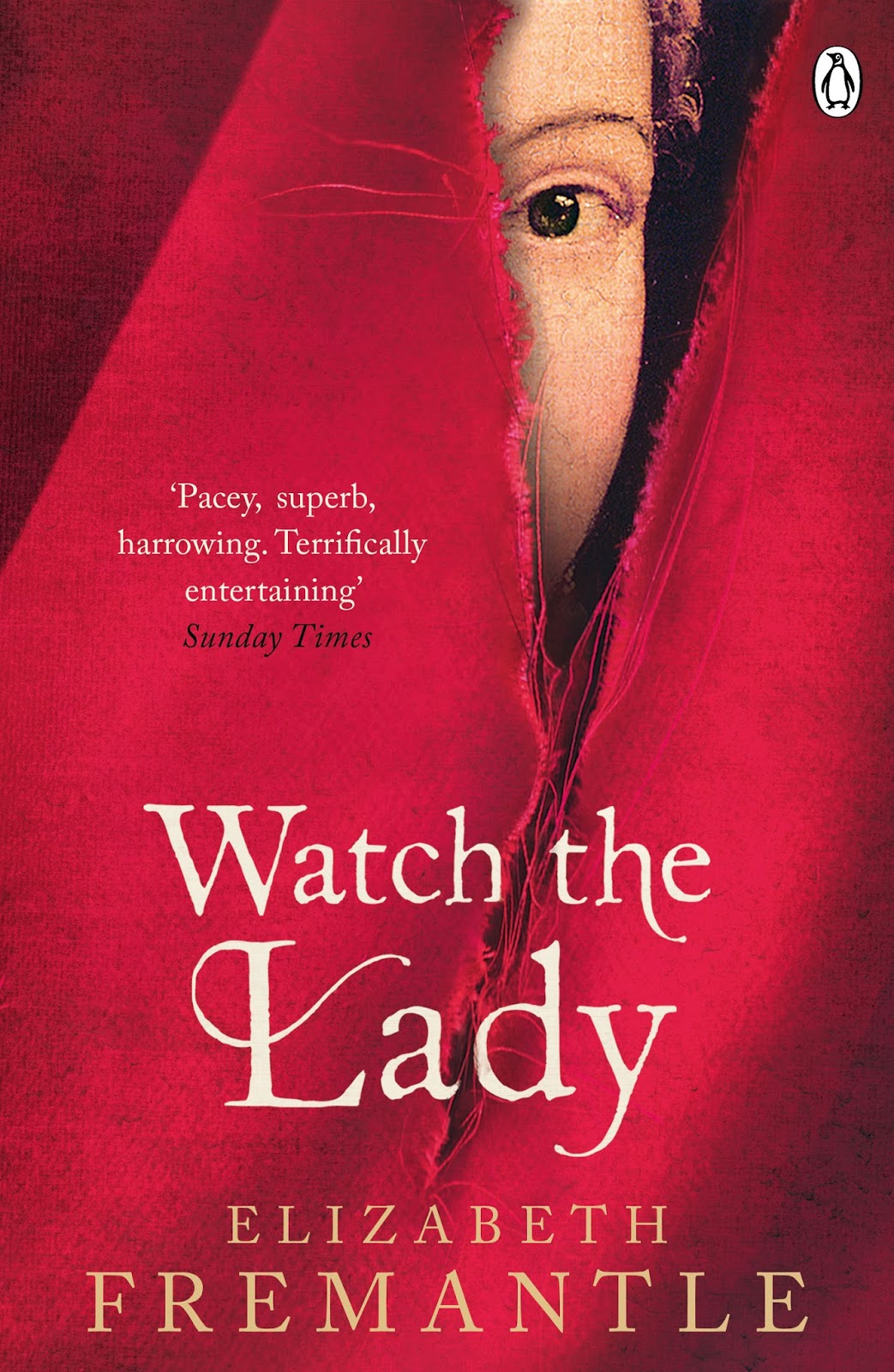
My latest novel Watch the Lady is about a celebrated Elizabethan muse. Lady Rich was the inspiration behind Sir Philip Sidney's groundbreaking sonnet cycle Astrophel and Stella, a heartrending account of Sidney's adoration, longing and bitter jealousy for a woman who slipped through his fingers and was married to another man.

We tend to think of the artist's muse as a passive symbol but when I began to look into the life of Lady Rich I discovered this was far from the case. I was drawn to consider the role of the literary muse in a more general way finding that muses come in all forms all inspiring in completely unique ways. Here are some of my favourites:

Holiday's rendition of Dante's encounter with Beatrice 

BEATRICE

Renaissance poet Dante Alighieri was utterly captivated by a girl named Beatrice when he met her aged only nine and she eight. Though he only encountered her one further time and she was married to another, he tirelessly wrote poetry in praise of her, which collected together became La Vita Nuova a work that would form the paradigm for love poetry for centuries. Beatrice’s role as the pure object of an unrequited yet transcendent love conformed to the expectations of the courtly love tradition. Her early death, aged twenty-four only increased her power to inspire Dante and she appeared in his masterpiece, The Divine Comedy as his heavenly guide.

LADY RICH 
Penelope Devereux was forced to marry the fantastically wealthy and aptly named Lord Rich as a
Lady Rich
means to replenish the coffers of her noble but impoverished family. Prior to her marriage she had caught the eye of the man to whom she had been betrothed as a child, the soldier and poet Sir Philip Sidney. Sidney wrote Astrophel and Stella, a sequence of sonnets and songs telling of his profound devastation and jealousy provoked by her marriage to Rich. Though Penelope was disguised as Stella in the poems, Sidney made frequent plays on the word ‘rich’ which made her identity easily decoded, suggesting that his love for her was common knowledge in the court circles where the poems would have been circulated. Astrophel and Stella was only published after Sidney’s tragic early death on the battlefield.


THE DARK LADY AND THE FAIR YOUTH
Shakespeare’s sonnet sequence subverted convention, as it was inspired by more than one muse. Indeed, many of the poems are addressed to a ‘fair youth’, described as the poet’s ‘master mistress,’ giving rise to a belief that he might have been homosexual. Other poems in the sequence, though, praise a dark lady, whose features were entirely at odds with contemporary notions of beauty. The identity of the bard’s muses has remained a mystery and puzzled Shakespeare scholars for centuries.


Fanny Brawne

FANNY BRAWNE

Romantic poet Keats was struck by the sixteen-year-old Fanny Brawne, describing her in a letter to his brother as a, ‘minx.’ But he was soon deeply enamoured with her, as his biographer Richardson put it, she became, ‘the reconciliation between real life and his poetic quest.’ During the time they were betrothed Keats was at his most prolific but he was to contract consumption and die in Italy before they were ever able to marry.


JEANNE DUVAL

French poet Charles Beaudelaire met the mixed race Jeanne Duval in 1842 and they spent two turbulent decades as lovers. He called her his ‘Venus Noire’ and dedicated many poems to her dangerous beauty, depicting himself as entrapped and helpless in his love for her, as in these lines from Le Balcon: The night was growing dense like an encircling wall,/My eyes in the darkness felt the fire of your gaze/And I drank in your breath, O sweetness, O poison!

VITA SACKVILLE WEST

Virginia Woolf’s gender morphing hero/heroine Orlando was inspired by Vita Sackville West, a woman with whom she had a long love affair and a longer friendship. Woolf was fascinated by Sackville West’s aristocratic heritage as she wrote in her diary, ‘I trace her passions – 500 years back, and they become romantic to me, like old yellow wine.’ With Orlando Woolf sought to address the injustice of Sackville West’s gender, which barred her from inheriting of her beloved ancestral home, Knole, that went to a male cousin.

Vita Sackville West
  

ZELDA SAYRE

Zelda was the emblem of the Jazz Age and was described by her author husband, F Scott Fitzgerald, as ‘the first American flapper.’ He was utterly captivated by her wild spirit but their heavy drinking and mad partying took a terrible toll on Zelda and she ended up in an asylum. Zelda was also an author but never found a way to emerge from her husband’s shadow. Elements of Zelda can be found in many of the women of Fitzgerald’s novels but it is Nicole Diver, the tragic heroine of Tender is the Night who most greatly and poignantly embodies her.


NEAL CASSADY

Neal Cassady grew up in the slums of Denver but was determined to make something of himself and though he lacked education he had a soaring intellect and made a profound impression on the young author Jack Kerouac. Neal became the inspiration for both Dean Moriarty in Beat Generation bible On the Road and Cody Pomeray in Kerouac’s later work and is credited with helping the author develop the spontaneous style that made his voice so original.