Showing posts with label N M Browne. Show all posts

Wednesday, 5 September 2012

Calling on Jane: N M Browne


IT is a truth universally acknowledged, that a history girl in possession of a good blogspot must be in want of a subject and what better than our dear Jane? I am very far from being an expert though I have read the novels endlessly since I discovered them as an eleven year omnivorous reader. They satisfy a particular need: just as I occasionally discover a yen for lemon sorbet so I crave the acerbic wit of Miss Austen.
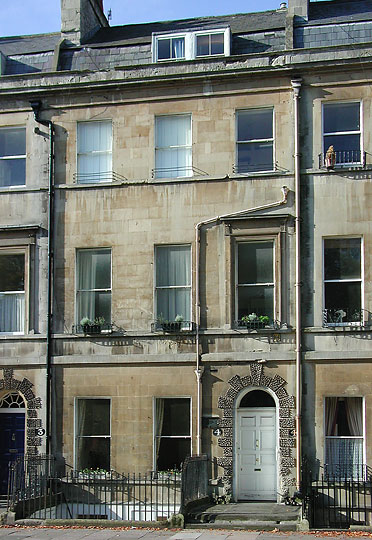
Imagine my delight on discovering that Mr Browne was persuaded to take rooms in Bath if only for the Bank Holiday weekend. Bath - to arrive with hope and then to visit the Jane Austen museum! How gravely disappointed did I feel to apprehend the venality of the establishment; the paucity of its material, and inadequacy of the exhibits. It cannot be doubted that should  Miss Austen have had the misfortune to find herself in its vicinity, she would have been shocked and mortified, found it a deal less than tolerable and certainly unsuitable for any person of sense or sensibility.
 
In short it was a rip off and twenty minutes of Googling would have told me more. A man in a waistcoat gave a short lecture, there was a mannikin wearing reproduction naval uniform and a selection of jumble sale quality headgear to try on; we were encouraged to watch a crackly poor quality video on Jane Austen in Bath presented by Amanda Root, and of course avail ourselves of the opportunity to buy souvenirs and consume overpriced cream teas.

Jane Austen lived in Bath between 1801 and 1806 first at Sydney Place and then, when the lease expired, to Green Park Buildings. After her father’s death, when money became increasingly short, the family took lodgings  at 25 Gay St ( The museum is at number 40)  a location mentioned in ‘Persuasion’ as the address of Admiral Croft. It is suitable for a Miss Anne Elliot, the daughter of a Baronet to visit, but not inappropriately grand,
‘perfectly to Sir Walter’s satisfaction.  He was not at all ashamed of the acquaintance, and did, in fact, think and talk a great deal more about the Admiral than the Admiral ever thought or talked about him.' (Persuasion.)

As the Austens' position became more precarious even these lodgings became too expensive and they moved closer to the Westgate Buildings a place which in her fiction is associated with the poor and infirm widow Miss Smith: '"Westgate Buildings!" said he, "and who is Miss Anne Elliot to be visiting in Westgate Buildings? A Mrs Smith. A widow Mrs Smith; and who was her husband? One of five thousand Mr Smiths whose names are to be met with everywhere. And what is her attraction? That she is old and sickly. Upon my word, Miss Anne Elliot, you have the most extraordinary taste! Everything that revolts other people, low company, paltry rooms, foul air, disgusting associations are inviting to you." (Persuasion)


In fact Jane Auste
n’s own view of the place was more generous. As she writes in her letter to her sister, Cassandra: ‘Westgate Buildings, though quite in the lower part of the town, are not badly situated themselves. The street is broad, and has rather a good appearance.’ She also adds ‘In the meantime she [their mother] assures you that she will do everything in her power to avoid Trim Street, although you have not expressed the fearful presentiment of it which was rather expected.’ Trim Street was not however avoided and the family stayed there until they went to live with Jane's brother Frank and his family in 1806.

Mr Browne and I found the architecture of Bath Pump Rooms and the Assembly rooms more to our taste and, for me at least, much more evocative of our dear Jane. The Fashion Museum has some fantastic examples of Georgian costume, well displayed in its historic collection. I finally I got to see some sprigged muslin  as well as an example of the longer sleeved gown Austen mentions in her letter to Cassandra of 1814 ‘I  wear my gauze gown to-day, long sleeves and all. I shall see how they succeed, but as yet I have no reason to suppose long sleeves are allowable. I have lowered the bosom, especially at the corners, and plaited black satin ribbon round the top’ 

Bath is very much Austen’s city for me, but Mr Browne, who has always maintained a keen interest in the Peninsular War, finds himself quite unable to forgive its omission from her novels. As she wrote in 1799, "How horrible it is to have so many people killed! And what a blessing that one cares for none of them!"

Thursday, 5 April 2012

Going Back: N M Browne


So - still no new historical fiction but a month of wallowing in the past nonetheless.
Earlier this month I taught a residential course at Lumb Bank with all its framed hand written Ted Hughes poems and walked the short but steep road into Heptonstall to the churchyard where Sylvia Plath is buried - her grave a mess of dying flowers and pens - a huge jar of them spilling out onto the gravel. Ah yes the past is all about people.

The land all round is witness to the changing industrial fortunes of the North West. The valley is cut with vertiginous stone steps, to allow the mill workers access to the mills from miles around and in the valley the chimney stacks stand like Rapunzel’s fairy tale tower.They were tough those mill workers. I was there in glorious unseasonal sunshine but the weather can be rough there. Winters are raw and Lumb Bank itself can be cut off. Food has to be brought in on sledges and human backs. It was easy enough to see the ghosts of mill girls in shawls and clogs hauling themselves up over the hillsides and home after a long shift.

Elsewhere the slag heaps that I recall from my childhood are covered in unlikely looking vegetation and the stark bleakness of the landscape I remember is softened by trees, the dark millstone grit of the buildings cleaned so that it is more ‘green and pleasant land’ than the ‘dark satanic mills.’ Mind you I did see it on a very good day. I was last in Hebden Bridge in about 1979 in my exotic gap year job of trainee accountant. I got food poisoning from a dodgy Cumberland sausage and never went back, but the town is now affluent looking, boasting the kind of vegetarian, vegan and organic caffes which would have given short shrift to any kind of processed meat product, contaminated or otherwise. Ah yes the past is all about economics and land use.

Back in Burnley my childhood home, the post industrial picture looked bleaker, of the hundred or more mills listed in 1891 only a handful remain and while the air is the better for it and the stone cleaner it is twenty first in the list of the most deprived areas in Britain, with a declining population, and higher than average rates of unemployment. As I drove through the run down town centre I was disoriented by my memories of other shops, other buildings that made it hard to see the present through the past. I couldn’t see ‘Dorothy Perkins’ where I had a Saturday job. Did mounted police still escort football fans through the town centre on match day?

The terrifying round-about where I learned to drive is quiet and civilised, scarcely the life threatening, multi-laned, Piccadilly Circus of my memory. My former primary school St Pauls’ is still small and neat, but my childhood home is unrecognisable - some idiot chopped down the huge weeping willow that was the best thing about it. My secondary school has been demolished - perhaps to bury its poor reputation and behind every building lurks another, painted a different colour, housing a different family.

Thirty years is a long time - the past is all about change and nostalgia.

Sunday, 5 February 2012

Historical Problems of a Fantasist: N M Browne


My current work in progress is not historical but a kind of horror fantasy. While this might disqualify me from blogging about it on this forum, I would be a poor kind of fantasist if I couldn’t find a way round this minor disadvantage. I would like to claim that writing history and writing fantasy is very similar – no, damn it, I will claim that they are very similar and history and fantasy writers battle the same difficulties in bringing a story to the page and making it live in the mind of the reader.
But first I must acknowledge the biggest difference: research.
For most writers of all persuasion research is necessary – crime writers need to know about procedure and forensics and bus times and ballistics, even fantasy writers have to find out how the world of their imagining might fit together, which has had me researching dye making, wolves, insect life cycles, animal husbandry , beer making and physics theories in the past to name but a few. I usually ‘borrow’ ideas from history – Renaissance Florentine history for ‘Basilisk’, theories about Neolithic history for ’Story of Stone', maps of pre war London for ‘Shadow Web’ but I would hazard that historical writers probably do more research than most of us.
In writing fantasy after what is usually a relatively short period of research, I begin a more protracted period of invention ie I make it up. In writing fantasy the making things up only has to be constrained by what is feasible in the story world of your imagining, and credible to the reader. In writing historical novels there is that added constraint of all those by turns inconvenient, extraordinary and sometimes plain unbelievable historical facts: golden handcuffs manacling the writer to the ‘truth’ of the past.
Of course research is only the beginning. We have probably all read novels of one kind or another when the research gets in the way of the story; where at every point the reader is reminded in great detail of the thoroughness of a writer’s preparatory work but remains admiring yet unengaged. The same is true of fantasy where the reader is told about the world in such minute detail that they story is dwarfed by the intricacy of the world building. We have to make a choice not of how much but also of what to tell and that really is the hard part. For me the trick of fantasy and of history is to introduce the reader to an alternate reality - the past or another world, as if it were the only reality – immersing them in strangeness without explanation or exegesis. In this kind of writing each carefully selected detail of clothes, furniture, manners builds on this picture of otherness.
Which brings me to the battle for the reader’s cooperation, their willing suspension of disbelief. How far should you go? In conveying the truly strange where do we strike a balance between what was or would be and what will be meaningful for the contemporary reader?
AS you may by now have guessed I am struggling with this problem in my current project. In constructing a reality, you can’t easily abandon its logic for that logic is the fantasy version of a historical truth. How strange can the story reality be before I lose my reader? So I would like to ask you historical writers how far can the illusion of history found in a novel truly reflect the alien nature of other times and other societies? Should a research truth be abandoned in order to tell a better story. In order to be credible and feasible do we have to ignore the most peculiar of facts? How do you deal with the truly weird?

Thursday, 5 January 2012

When and Where and Witches: N M Browne


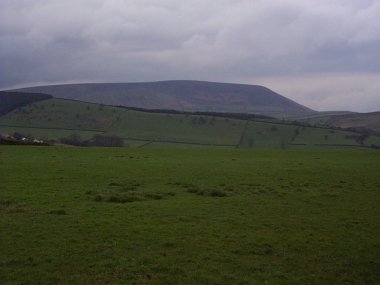
It isn’t surprising that our own personal histories influence our choice of historical periods, or indeed of places. Most of my writing is set very firmly either in the somewhat bleak Lancastrian landscape of my childhood home or in the South Wales that my parents always regarded as home. It is surprising then that I have ignored the most obvious historical story associated with my bit of Lancashire, the story of the Pendle witches. Ann Whittle alia Chattox was examined and confessed that she ‘feloniously practised used and exercised divers wicked and devilish arts called Witchcraftes, Inchauntementes, Charmes and Sorceries in and upon Robert Nutter’ in the very village where I grew up that is ‘at the Fence in the Forrest of Pendle.’
I haven’t been back to Fence since my parents returned to Wales, apart from a brief visit with my children. I think my kids struggled to connect their cappuccino-loving, resolutely urban mother with the wind blown wildness of Pendle but I have carried that landscape with me into my southern life, into my fiction and sometimes into my dreams. It has taken years, a slew of newspaper articles and a rather good BBC dramatisation of the story with Simon Armitage to remind me of what every school child in the area used to know, the story of the witches hanged at Lancaster in 1612.
I’ll be honest I wasn’t very interested in the story as a child it was muddled up with the area’s tourist industry, but the discovery of a seventeenth century ruin, the press are keen to identify as Malkin Tower, has re awoken my interest.


It would be a coup for the never very vibrant tourist industry to have unearthed the place where the convicted women all met to feast on a stolen sheep on Good Friday 1612 - and perhaps an unlikely one.The rediscovered building probably isn’t Malkin Tower - it is too isolated, and too recent a building to be the home of poor women, trying to scrape a living from midwifery, herbalism, and begging. That doesn’t matter, the story has begun to live a little in my head.
I don’t know if any publisher will want another story about these women, but I am intrigued now as I wasn’t as a child by what they thought of themselves, by the way they lived, by the religious politics of the time and of course by the place.
It’s a hard country, historically a land for hunting, for sheep,cattle and cloth making, The winds there slice through to your bones, there’s the grey rain and the greyer mists and in the centre of it all the oddly shaped hill, the runt of the Pennines, the place that haunts me still, Old Pendle itself. This may be a story that I just have to write.


The newspaper article
The television programme 

Monday, 5 December 2011

Lost generation: N M Browne

I am of a strange generation, straddling two worlds. My grandmother, born in 1914 was ninety seven last week, her mother, who died when I was sixteen, was born at the end of the nineteenth century. I have had a direct link with the age that precedes the welfare state, the age of the horse drawn carriage, oil lamps and tin baths, domestic service, back street abortions and the fear of the workhouse. The link carries through two world wars,the creation of the NHS, the wireless, the radiogram, to the age of the pill, the radio, the tv the internet and the mobile phone. I remember when wash day took all day - my grandmother had a dolly and a mangle. She would boil, and blue and starch whites, then would dry and air, and iron and that too would take a whole day. I casually 'put a wash on' most days, use an ecology destroying tumble dryer and am a stranger to the iron.
Am I of the first generation to know less than my children? I first used a computer in 1985, used an early version of the internet in ’87. Even so I am an ignorant visitor to the digital age, irritating my children with my idiosyncratic approach, my inefficiency and impatience with instructions.
Our society has reached a degree of complexity that many of us don’t understand how it works. Indeed I don't even know how much I don't know, just how much a problem in an oil well in the Middle East directly impacts my ability to buy coffee in Richmond. One slight blip with the National Grid and we cannot cook or wash, or do our jobs. The failure of any one part of the system could paralyse the whole and as someone or other said we are never more than three meals from riot.
The point of this ramble is this: complex societies when they fail, fail fast and in the past they have failed often. I like to write about such times, moments which straddle the rise and fall of one culture or another: the departure of the legions from Britain, the coming of the Angles; the moments when chaos descends. Fruitful as they are for stories however I’m not sure I want to live in such times and we may just be on the brink.
There is a well known article by Brian Ward- Perkins which suggests that once Rome with all its administration and advanced technological specialisation left these shores, the economy slumped to below its pre Roman level and took three hundred years to recover. According to Professor Ian Morris of Stanford until around 1700 societies have tended to reach a degree of complexity and then spectacularly imploded. The West has far exceeded that ceiling, have we finally reached a new one? Will my generation straddle a third world, that of the decline and fall of Europe? Tin bath anybody?

Sunday, 18 September 2011

Wolves, Werewolves & Wolf Blood

by N.M Browne

I would never have made a real historian. It was, with English, my favourite subject at school and like English I dropped it firmly after ‘A’ level. My history teacher understood. He knew that while I could churn out an essay with relative ease, my heart wasn’t in it. My first reaction to any piece of information is not ‘why’ or ‘how’ or, most usefully, ‘when’, but ‘what if?’ And maybe that’s what marks out a novelist from a historian and a historical fantasy writer from a historical writer.

I have never been overly interested in facts and knowledge seems to slip through my mind as if my brain were made of teflon. I have difficulty researching - a terrible confession- mainly because I combine this urge to ask ‘what if’ with a terrifying lack of patience and real research takes time - a lot of time. I tend to read something fascinating and lose interest in the actual, sidetracked by the ‘possible, if wildly improbably,’ and indeed by the ‘probably impossible.’

I am not saying I can’t do it - as we all know it is a necessity, but it takes an effort of will unless what I need to know is absolutely essential to the story. When I persist I discover that fact is often more interesting than fiction and patience is not only a virtue but a prerequisite for anyone trying to write a historical novel. Facts however have to be more than merely true in order to find a place in a narrative.
In researching Wolf Blood my last book I discovered two things that I longed to include but which, though true, simply didn’t fit in the story I was trying to tell. I tried to weave them in but they didn’t work and in the end my firm inner editor consigned them to the ‘trash’.

The first was this wonderful story Petronius’ Satyricon:

Once upon a time, when I was yet a slave, we dwelt in a narrow street — in the same place as Gavilla's house is now — there, as the will of the gods fell out, I fell in love with the wife of Terence, the tavern-keeper, the sweetest little duck you ever laid two eyes upon; and, by Hercules! 'twas for her good humour, I took a liking to her, and not for any other reason. Anything I asked her for I always got. If she made an as, I got half of it, and anything I had, I gave up to her to keep, and she never failed me when I wanted it. One fine day, her good man died in the country, and so I plotted means to get out to her by hook or by crook, for you may take my word on it, it's only when you're in a tight corner you know your friends. For good luck it happened that my master had gone to Capua to transact some business, and I took occasion of the opportunity to persuade a guest of ours to come for a walk with me as far as the fifth milestone; he was a soldier, and as plucky as the very devil. We set out about cock- crow, and the moon shone as bright as day. Jogging along, we didn't feel weary till we found ourselves at a burying-place. My man began consulting the stars, but I sat down humming a song, and started counting them. 


Happening to glance round at my companion, what was my surprise to see him take off his clothes and lay them by the roadside. My heart sank down to my boots at the sight, and there I stood, rooted to the
spot; but he made water all around his clothes, and was forthwith changed into a wolf. You needn't think I'm humbugging — no, I wouldn't — no, not for a million; but as I was saying, after he was transformed into the wolf, he commenced howling, and fled into the woods. I didn't know whether I was on my head or my heels for a while, when stooping to pick up his garments — they were turned to stone. Well, I may tell you, if ever any one was ready to drop with fright, I was that time. 


However, I drew my sword, and hacked at imaginary spectres all the way till I reached my sweetheart's house. I got in pale as a ghost, not a kick left in me, and the sweat was running down my fork with dread; my eyes were glassy, and I had like never to have recovered from the fit. Melissa wondered what had me out so late, and says she: "If you'd been here sooner, you might have been some help to us. A wolf came into the farm and attacked all our flocks — a regular slaughter he made. But though he escaped, he didn't get off scot free however, for our serving-man ran him through in the neck with a spear." 


After hearing all this, I couldn't lie wider awake that night if I tried, and as soon as dawn came, I got up and started back for my master's house, as if the devil himself were after me. When I came to the spot where the clothes were turned to stone, there was nothing to be seen but a few spots of blood on the ground. At last when I got home, there was my bold soldier stretched out on his bed, bleeding like a bull, and a doctor bandaging up his neck. It was only then I knew he was a were-wolf, and from that day to this, I couldn't bring myself to break bread with him — no, not if you were to kill me.


Now those that don't like to believe me can do the other thing ; but, so may your good genii help me, what I say's nothing but the plain truth.

I would have loved to incorporate this tale somehow though my Roman werewolf was nothing like this. Even though I couldn’t include it in the story, I liked the idea that my Morcant’s condition would have been understood and given a name in first century Britain.

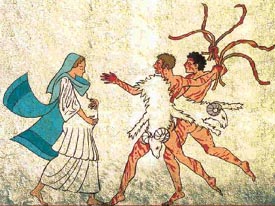
The second thing that I was desperate to include was the winter festival of Lupercalia which persisted well into the Christian period. The origins of it seem a bit hazy, though it is linked to the founding of Rome and the myth of Romulus and Remus but who could resist a festival in which young men run round the streets naked or dressed only in the skins of sacrificed goats, striking people with thongs? In the original draft of my novel my soldier changed into a werewolf on the night of the festival and all kinds of shenanigans ensued, but, in the end, it proved too difficult to provide a context in which such a thing made sense.

As a novelist I have to select where I place my window into the past and discard what won’t fit my recreation of it. That makes me a bad historian, as my history teacher rightly recognised, but I hope it makes me a better novelist.

N.M. Brown's Wolf Blood is available in paperback and kindle.

Friday, 5 August 2011

But I'm a Lady! N M Browne


I had an interesting research opportunity this weekend when taking part in the gladiatorial games at the Guildhall. How I wish I could say that I was a fighter, though I doubt anyone who knew me would believe it, knowing that I’m a dyed in the wool wimp and a malcoordinated coward.
The games were great. The crowd were baying for blood in a horribly realistic way and I found myself in the taverna cooking also in a horribly realistic way. That is what women have always done and though I am interested in fighting techniques and military kit, the male business of war and armies, I donned my borrowed Roman finery and ground pine nuts - in a pestle- because that’s what women did and do.
I am very inclined to write about feisty female characters who are much more likely to wield a sword rather than a pestle and I think I underestimate how hard it is to step away from the expectations of friends and family, to make a fuss, be a harridan, unfeminine, unprotected by the norms of society.
I am a domestic disaster, lacking much interest in cooking. I am a haphazard housekeeper, I can’t sew and you probably wouldn’t want so much as a scarf or dishcloth that I’ve knitted. I’ve spent my life working with men in male dominated environments and yet I slipped as easily into my role as servant of the men, as I did my first century clothes. I hid my short hair under a scarf and my expectations of equality under a smile. It was so easy.
In this case of course it was pretend. Everyone was really grateful for our work in the tavern and I don’t think I have ever felt so appreciated, but it was an important research opportunity and not in the obvious way. I learned a good bit about Roman cooking, and something of gladiatorial games but more than that I learned what I had almost forgotten that as a woman it is all too easy to fall into role, to be the support and not the main event.
I don’t know how much of that I want to reflect in my fiction. Maybe I will just have to make my heroines even feistier so that they can break away.

Tuesday, 5 July 2011

Hitching a Lift to the Past: N M Browne


The past is another country so they say and getting there can be problematic.
You can try the usual routes, letters, contemporary reports, memoirs, even novels written at your destination but the further back you go the rarer they become and the more controversial their meaning. Right back in first century Britain, my destination of choice, there is little written material of any kind. The twenty first century fiction writer is left pacing up and down, checking their watch at the researcher’s bus stop and hitching a ride on anything that’s going their way.

And who is going our way? Well, archaeologists mainly and that useful and much maligned breed, the experts on the arcane and ever so slightly bonkers historical reenactors.

alt=""id="BLOGGER_PHOTO_ID_5625177378841310818" />

And here I must declare my interest, I have on occasion removed my shoes to play the part of a Celtic first century slave and, in borrowed finery, strutted my stuff as a fourth century Roman matron. But I have merely dabbled. There are a hardcore of enthusiasts in this country who have researched the character they play, who have painstakingly recreated their kit, backstory, lifestyle, who’ve walked the slightly blistered walk of the Roman centurion, talked some of the talk ( though usually not in Latin) and even eaten something like their food and hauled the weight of their packs. Such paragons can usually substantiate their assumptions by reference to the archaeological record. As a researcher what’s not to like?

I like my historical fiction to feel real. I hate being told things. I especially hate being made to endure the fruits of a writer’s extensive research. As a reader I want to read a novel set in another time and place, I want to care about the story and I don’t want a history lesson. I want to discover the past world of a historical novel as naturally and as easily as I might the contemporary milieu of literary fiction.


As a writer I know just what a difficult trick that is to pull off when every sentence is a challenge. Morcant, my hero needs a drink. What kind of cup would my hero drink from, would he have a cup or a canteen and what is he drinking? What is in his kit bag? What’s it made of and how would he carry it? This information, the work of a moment to read on the page, can take long hours to discover. Such detail has to be gleaned from a variety of sources and even then there is the need for inspired guess work for testing out theories and for making it up on the balance of probability. Good re enactors can do a lot of that work for you. In finding that lost other country they can help to put you on the right road.