
Showing posts with label Thames. Show all posts

Friday, 31 March 2023

The wrong ship in the wrong place at the wrong time – Michelle Lovric


This beautiful photograph is by my colleague David Winston, of whom I’ve written previously. It’s part of his recent London exhibition, Mood Indigo.


The image shows a shoal of Venetian ferries, known as vaporetti, gliding down the Grand Canal with minimal wake, humble stature and self-effacing lines. The vaporetti know their place – it is to serve Venice: not to dominate her, not to reduce her to a backdrop, not to repurpose her as a place to maximize alcohol sales and not to do so at the cost of residents’ peaceful enjoyment of their homes nor at possible risk to human and marine life.


Everyone’s the same on a vaporetto. A vaporetto doesn’t care if you’re an influencer or a celebrity. And even if you are one of the latter, please note that Venetian courtesy still dictates that you give up your seat to an elderly person or a mother and baby.


The vaporetto is the right vessel in the right place. Just as the Grand Canal is the perfect waterway, protected from the commodification of greedy new skyscrapers and only occasionally subject to tasteless advertising on shrouded scaffolds while her ancient facades are restored.


If only the Thames were so lucky. London’s greatest public realm, our river has suffered successive attempts at commodification, like the Garden Bridge and the River Park. Now we have (arguably) grotesque sky-grabs along the Thames, with buildings like 72 Upper Ground agglomerating ungainly masses from small footprints. Residential communities are drained by successive campaigns against what is happening to the Thames, which has become, as journalist Rowan Moore describes in the linked article, a gold-diggers’ gulch, a miles-long mine of real-estate value.’


Riparian development is controlled by land-based authorities, but the river is ruled by the Port of London Authority (PLA), operating on a 1909 charter and funded by the dues it extracts from its client-vessels and its River Works licences.


When something goes wrong on the river, however, it is not the PLA but the publicly funded emergency services that must deal with it, as well as the RNLI, a charity.


Sadly, things do go wrong on the Thames, especially given the swift 23ft tide and the intertwining of industrial, commuter and traffic on a river that snakes as much as it flows.


And when things do go wrong, they can go tragically wrong.


Most Londoners know about the 1989 Marchioness disaster, in which, at approximately 1.46am, the 262ft Bowbelle dredger ran down an 85.5 ft party boat near Southwark Bridge. The Marchioness sank in minutes. There were 51 casualties, most of them young. In subsequent hearings, safety, crew training and lookouts on both vessels were judged inadequate.


Grieving families and friends still gather in remembrance of the dead on the anniversary. Southwark Cathedral hosts a permanent memorial to those lost. The Marchioness has remained a household name for nearly thirty-five years.


But few people know about the Marine Accident Branch’s 2015 publication on the Marchioness disaster. Additional possible factors named in the report included: disco music so loud that the captain couldn’t hear the radio warnings about the Bowbelle; hydrodynamic interaction, by which two boats are drawn together, losing steerability, especially in shallow, winding waterways.


And even fewer people know about the river’s worst disaster so far, that of the Princess Alice. And that, historians have theorized, is because most of those who died were poor. They were ordinary Londoners, lacking celebrity except, briefly, for the hideous manner of their deaths.


Swan Lane Pier (background) circa 1850, engraving by John Wood,  Yale Center for British Art, Wikimedia Commons.


The PSS Princess Alice, a paddle steamer, left Swan Lane Pier – by the northern foot of London Bridge – in glorious sunshine on September 3rd, 1878. A long, low vessel, she bore a crowd of around 800 Londoners on a pleasure excursion to the Rosherville Pleasure Gardens at Northfleet, Gravesend and Sheerness. The Princess Alice’s owners, the London Steam Company, operated a kind of hop-on hop-off system with its other ships so no one knows how many passengers joined the vessel that evening for the ‘moonlight trip’ home.


Entertainment continued all the way back, with the band playing on deck. The sun had set and the moon was rising around 7.30pm when, near Gallions Reach, the Princess Alice (219ft) was rammed in the starboard side by the SS Bywell Castle, a cargo ship (254 ft).


The moment of impact – a chromolithographic cigarette card from around 1911.

In less than four minutes, the Princess Alice broke into three and sank. Her deck passengers were pitched into water horribly enriched by gallons of raw sewage. Those below decks were entombed inside the doomed vessel.


Nick Higham’s The Mercenary River explains how Joseph Bazalgette, for the Metropolitan Board of Works, had in the previous decades diverted the sewage of London to the eastern reaches of the city. In a vivid chapter, ‘Volcanoes of Filth’, Higham recounts how cost considerations stopped the sewage outfalls being sited far enough from the metropolis. At the time of the tragedy, two grand pumping stations churned out London’s waste twice a day at Barking and Crossness. The Princess Alice had come to grief at Tripcock Point, too close in time and place to the evening’s discharge of millions of gallons of untreated waste – not just human but also oil, petroleum and the liquids drained from abattoirs and factories.

In the minutes after impact, a few male passengers from the Princess Alice were able to climb up the Bywell’s ropes or use the life-buoys, chicken-coops and chairs thrown down to them. But, like the captain of the Bowbelle in 1989, the Bywell’s master chose not to stay long on the scene to help rescue victims. Instead, he steamed away. In the dark, in the foetid water, around 650 drowned. Few women made it to shore alive. Impeded by their long skirts, women were also far less likely than the male passengers to know how to swim. At the moment the Bywell struck, many women were below decks, tending to their children. The young fared badly too. Among the dead and missing were 95 children of twelve and under as well as 30 babies aged 15 months or less. A diver investigating the wreck a few days later found bodies packed, vertical, near the doors through which they were probably trying to escape.


Of the Princess Alice’s passengers, just 130 survived. More than a dozen of those died soon after, possibly from ingesting the foul water.


William Heysham Overend: “The Great Disaster on the Thames, recovering Bodies from the Wreck of the Princess Alice”. Illustrated London News. Wikimedia Commons.

As the news seeped out, Londoners made the grim pilgrimage to Woolwich to claim their dead, who were now being washed up at different points along the Thames. The mourners were accompanied by journalists, newspaper artists (whose work you see here) and tragedy tourists, some of whom – in a queasy pre-echo of today’s clamorous social media – felt obliged to inundate the newspapers and the coroner’s post-box with ‘helpful’ letters about the best way to manage the gruesome situation.


Only gradually was a ghost passenger list compiled, never to this day completed. We know now that it included 46 out of 51 members of the Clerkenwell Mission Bible Class and eight pupils from the Queen’s College Institution for Young Ladies. The professions of the dead sketched their social classes: zinc plate worker, coach trimmer, caulker, commercial traveller, servant, nursemaid, tobacconist, greengrocer, ironmonger’s porter, pipe maker, sweet-seller, shoemaker, draper’s assistant, rising to solicitor’s clerk, organist and the mistress of Limehouse Industrial School.
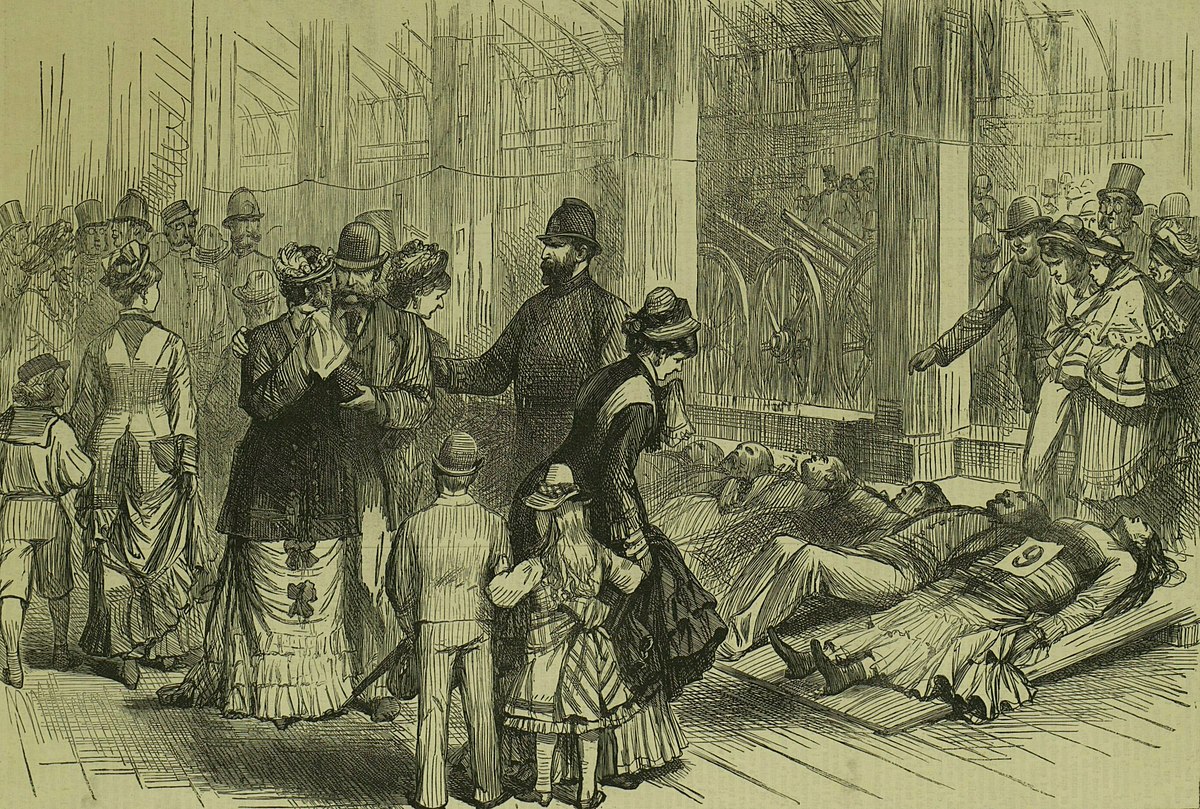

Identifying the dead in Woolwich Dockyard, from "The Disaster on the Thames", Illustrated London News, 14 September 1878. Wikimedia Commons.

The police found an ingenious way to spare relatives the pain of inspecting hundreds of corpses – in deteriorating condition – when searching for their loved ones. Trinkets and valuables were put in numbered glass-topped cigar-boxes.  Shawls and other items were hung up, also with the same numbers. Clothes taken from bodies were boiled and then sewn together so they could not be scattered. Only relatives who recognised the possessions would be taken to view and identify the body with the corresponding number.
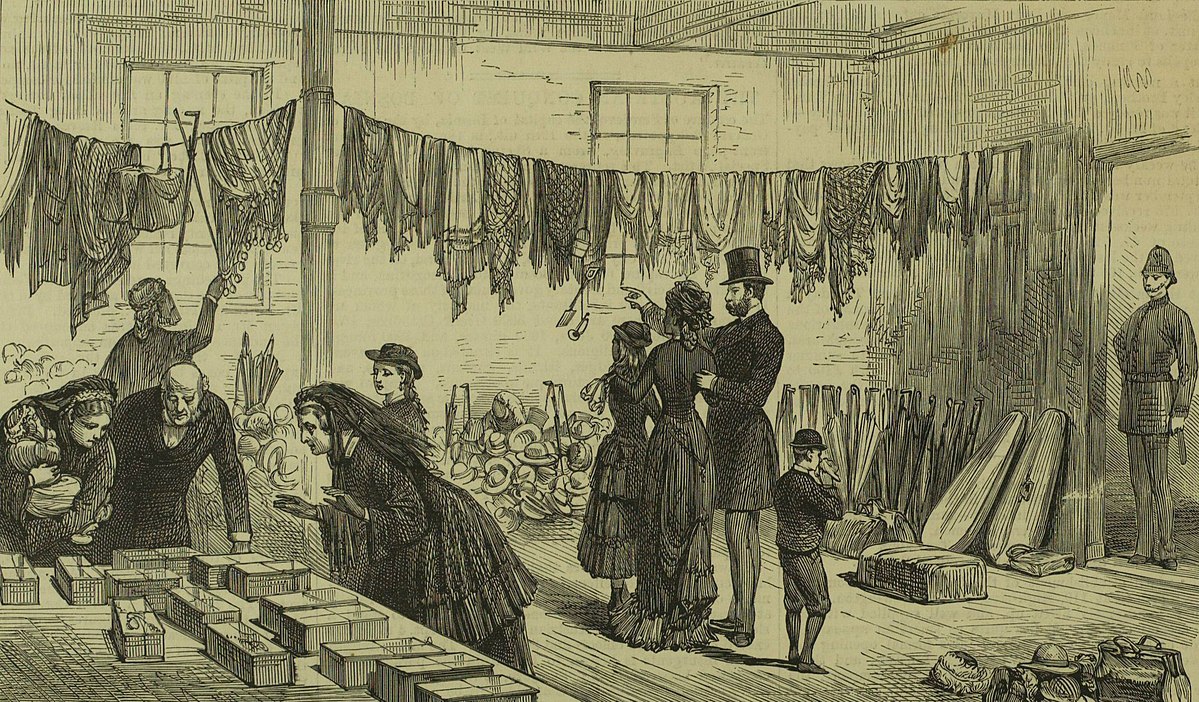

Relics of the dead exposed for identification at Woolwich dockyard following the sinking of the Princess Alice
from "The Disaster on the River". Illustrated London News, 21 September 1878. Wikimedia Commons.

Many of the drowned were buried as ‘unknown’. Ten were later exhumed at the expense of their families. But most of the anonymous dead remained unclaimed, listed only by the colour of their hair and sometimes their height. Among them were 18 children, including infants.


Perhaps eighty people were never recovered from the river. Family historian Colin Aylsbury has put online a list of the dead, the saved and the missing here. And this Facebook page serves as a meeting place for people who are descended from Princess Alice victims, crew, survivors and the Lightermen who collected the corpses from the Thames.


“The great disaster on the Thames burial of the unknown dead at the Woolwich Cemetery, East Wickham after the sinking of the Princess Alice" from The Illustrated London News, 21 September 1878. Wikimedia Commons.

Although it’s largely forgotten now, for some months personal accounts, funerals and scandals kept the Princess Alice tragedy in the press and in the courts. The captain of the Princess Alice had died in the accident, and with him the truth about the last minutes of his vessel. Various court cases blamed first the Bywell Castle and later the Princess Alice, for wrong steers and misleading signalling. There were accusations of drunkenness against the Bywell’s crew. Some said that the cargo vessel’s engine had not been cut, thus failing to prevent its propellor from injuring flailing victims. Some Lightermen, who collected the bodies for five shillings apiece, were denounced for rifling their valuables or piling them up so that the dead were further disfigured; there were stories of alcohol-fuelled fights over corpses. The Lighterman also earned by rowing sightseers out to the wreck. 


Some of the scandals are recounted in this eight-page pamphlet below, from Wikimedia Commons. It describes its contents as follows: ‘An Authentic Narrative by a Survivor, not hitherto published. Heartrending Details - Facts not made public - Noble efforts to save life - Robbing the Dead - Particulars as to lost, saved, and missing - Plan of the Locality. Sketches by an eye-witness. Beautiful Poem, specially written on the event, now first published. Memorial for all time of this fearful calamity.’


The coroner concluded that the Princess Alice was not properly or efficiently manned, lacked adequate life-saving equipment and was probably overloaded with passengers. There were also claims that the Princess Alice’s design had sealed her fate. Her length was 28 times her draught, rendering her riskily top-heavy. Nevertheless, the vessel had been passed by the Board of Trade in 1878 to carry maximum of 936 passengers between London and Gravesend in smooth conditions.
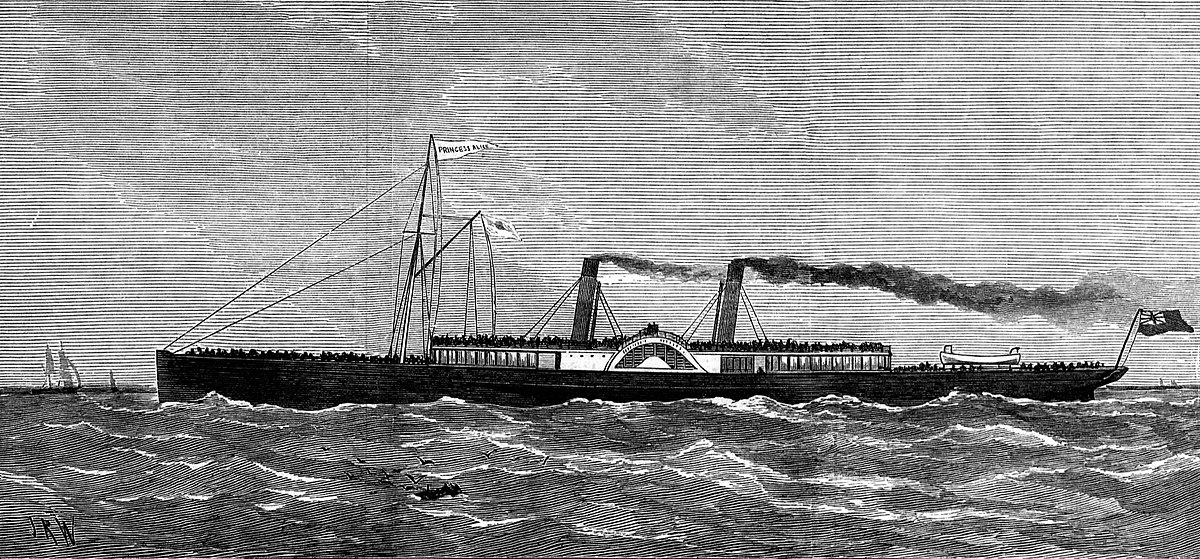
 

Josiah Robert Wells, "The Saloon Steam-Boat Princess Alice" from “The Great Disaster on the Thames”, The Illustrated London News, 14 September 1878. Wikimedia Commons.

Joan Lock’s excellent book, The Princess Alice Disaster, compares the Princess Alice accident with the Marchioness tragedy of 1989. She concludes ‘… there were some echoes down the years: the rapid sinking of the smaller vessel; accusations on both sides of a failure to keep a proper lookout; inebriation of one of the captains … and some victims being trapped in the lower saloons.’ The author also looks at how the Marchioness incident differed from the Princess Alice tragedy. ‘One marked difference,’ she points out, ‘… was the type of passenger. Those on the Princess Alice had been mostly mixed-aged family groups and were largely upper working class, whilst those on the Marchioness were in their twenties, educated, artistic and professional, or aspiring to be.’ As Joan Lock explains, the media's depictions of the victims and their families in some cases added to their suffering. 

Where Venice has its vaporetti, and London has its Clippers, today’s Thames also hosts a fleet of around 60 leisure boats, most of which offer beautiful days or evenings on the river at reasonable costs. Certainly, there’s a problem with thundering music, bellowing DJs and shouting passengers. However, the 1200 complaints registered in the last year focussed on just a very small number of vessels. The vast majority cause harm to no one and give pleasure to thousands.


But the Thames horizon may be about to change, with the arrival of a massive new ‘floating events space’.


These days, passenger vessels on the Thames are certified by the Maritime & Coastguard Agency (MCA), which is now being asked to approve an extremely long, low vessel – longer than a Boeing 747 – for 1000 - 1500 passengers. Described by its owners as a ‘super-yacht’, it’s called the Oceandiva, a portmanteau name that carries a substantial weight of expectation.

Image from the Oceandiva website.

Last summer the Oceandiva consortium applied for a 2.30/3am liquor licence and also bought control of two old Thameside piers – Butler’s Wharf (below) and West India Pier.


Butler’s Wharf, designated in some Oceandiva’s publicity as its ‘main residence’, is surrounded by around 5000 residents; close by are two communities of boat-dwellers including dozens of children. Diagonally across the river is the Tower of London, where 100 people live.


Meanwhile, tiny West India Pier (above) was abandoned and derelict for years, during which time a community of around 700 residents grew up around the site, which is served by a single narrow street. Now West India Pier is slated for transformation into a high-voltage charging, telecoms and servicing station.


In the two riparian communities, the shock is palpable.


Elsewhere, Londoners have been frank, if not brutal, when it comes to their opinions of the ‘super-yacht’s size, design and its designs on the city’s public realm.I've seen better looking coal barges,’ observed one reader of the Daily Mail. Another said, ‘That ship would give me the creeps. Cold, dark, uninviting, and creepy.’ Others expressed fears that London’s emergency services lack adequate capacity to deal with an Oceandiva-sized emergency: ‘It's another Marchioness waiting to happen.’


Meanwhile, no one (except perhaps the Oceandiva consortium) knows exactly when the vessel will arrive on the Thames. Last week, the consortium withdrew their liquor licence application, citing construction/certification delays, but stating that they will re-apply in the near future.


The sudden withdrawal of the liquor licence application cancels out the 1000 objections that were made within the deadline last October.


I conclude with a final picture of the Princess Alice’s last moments, this time from Harper's Weekly October 12, 1878. (Wikimedia Commons). One hundred and eleven years before the Marchioness, this picture encapsulates the danger of a busy, narrow river where, even at night, industrial vessels compete for space with pleasure craft, where the sinuous nature of the river plays hide-and-seek with sightlines and also, incidentally, increases the danger of hydrodynamic interaction. Recent news about river sewage releases does not give comfort when we contemplate the possibility of a large-scale incident on the Thames, which has been, incidentally, the site of all three of the most recent London terror attacks.


Michelle Lovric’s website

OTHER LINKS

River Residents Group website

Petition · The Ocean Diva party boat will ruin the most historic part of the Thames · Change.org

Petition · No OceanDiva · Change.org

Princess Alice Memorial, Woolwich Cemetery: https://www.geograph.org.uk/photo/2985013

Royal Museums Greenwich: https://www.rmg.co.uk/stories/blog/library-archive/drowning-sewage-sinking-princess-alice

Art in the Docks commissioned a moving collaboration between artist Christopher Mike and sculptor Vincenzo Muratore to commemorate those lost on the Princess Alice. You can see images here.


Saturday, 27 July 2019

Colouring in Oxford by Janie Hampton

The tower of Magdalen College was built in 1492 beside the River Cherwell
Copyright Janie Hampton, 2019.
The River Cherwell (pronounced ‘Charwell’) flows into the River Thames- but where it flows through Oxford, the Thames is called the Isis! It then goes back to being the Thames until London and then the English Channel. On May Morning, Magdalen choir sing from the top of the tower at dawn. Then drunk students leap off Magdalen Bridge into the River Cherwell. It is shallow enough to punt, so a dangerous pastime. On the left are the Oxford Botanical Gardens, home to many exotic and wonderful plants.
It is far too hot here in Southern England to read much. So here are some drawings of the history of Oxford you may print out. Then go and sit under a tree, or any shadey, cool place, and colour them in. Choose your favourite. Or print out several and offer them to friends, or neighbours. But don't sell them or use them for commercial gain. You can use paint, coloured pencils or felt pens, or a combination of all three. There are no rules for colouring. Use any colour you like, stay in the lines, go over the lines, add your own flowers, leaves and people. The only rule is that you should enjoy doing it. This is not work, or school prep, it is for fun!
Queen Elizabeth I (1533-1603) visited Oxford once, in 1566.
The castle mound in the background is still there. Copyright Janie Hampton, 2019.
In 1566 Queen Elizabeth I (1533-1603) visited Oxford during her annual ‘Royal Progress’ around England. The Queen and her courtiers were entertained by university students with debates, plays and music. She attended discussions at the Church of St Mary the Virgin and closed the final debate herself with a speech in Latin. Five years later in 1571, she founded Jesus College, the first Protestant college. Her father, Henry VIII, had ensured she was well-educated and although she had no children of her own, she paid for the education of many of her 100 godchildren.
Alice Lidell (left) and her sisters Lorina and Edith with ukuleles in 1848.
From a photograph by Lewis Carroll, author of ‘Alice in Wonderland’.
Copyright Janie Hampton, 2019.
The drawing above of Alice Lidell (1852-1934) and her sisters is possibly the first ever photo of anyone playing a ukelele. Though some people dispute these were exactly like ukeleles that we play today. Can you spot the characters from ‘Alice in Wonderland’? 
Stained glass window in Christ Church Cathedral, designed by Pre-Raphaelite artist Edward Burne-Jones (1833-1898) . Copyright Janie Hampton, 2019.
Christ Church cathedral was built on the site of St Frideswide's monastery, which dates back to the 12th Century. Christ Church College, where many British Prime Ministers were educated, was built in 1525, funded by Henry VIII as part of his dissolution of Roman Catholic monasteries and establishment of the Church of England.
Oxford, originally called Oxnaforda, (the place where Oxen could cross the river without a bridge) has been here for over a thousand years. I have lived in Oxford thirty four years this week, and little has changed, apart from more traffic, more visitors and more cafés with wi-fi. It is not often I really look at this beautiful, old city. Doing these drawings made me look, and think, and appreciate. One day I may have enough to make a whole book. But for now, I share a few of them with you, gentle readers. If you like them I shall do some more.

Monday, 27 February 2017

London History with Grandchildren by Janie Hampton

Isambard Kingdom Brunel 
Last week I was tasked with grand-child care during the half-term holiday. Ben, 9, Desdemona, 7, my co-grandparent and I decided to go on a history outing to London. We began at Paddington station to admire the work of Isambard Kingdom Brunel (1806 –1859) and discusshis extraordinary ability to design not only innovative railway stations but also bridges, canals, viaducts, docks, steam ships and trains.
Then by double-decker bus via Marble Arch, formerly the royal entrance to Buckingham Palace, and then after it was moved next to Hyde Park, a police station until 1968. This was also the site of the Tyburn gallows where from the 12th century, public executions took place, the last one a highwayman called John Austin in 1783. Swerving round behind Buckingham Palace we peered over the wall and wondered why the Queen needed such a big garden.
Ben and Desdemona wanted to see their great x 5 grandfather, immortalized in Westminster Abbey. But entry to the 13th century abbey is expensive unless you attend a service. So during Holy Communion we admired the extraordinary Gothic architecture (‘All built without machines!’ said Ben), and whispered about the many coronations held here ever since William I on Christmas Day in 1066. We found our ancestor beside his friend the slave abolitionist, William Wilberforce (1759 –1833), watching over the audio-guide stall. Thomas Fowell Buxton MP (1786-1845) fought to abolish capital punishment (unsuccessful), reform prisons (some improvement), and founded the Society for the Prevention of Cruelty to Animals (now the RSPCA). I hope his several hundred living descendants are still inspired by the inscription: ‘Endued with a vigorous and capacious mind, of dauntless courage and untiring energy.. he devoted his powers to the good of Man. In Parliament he laboured for the liberation of the Hottentots in southern Africa, and above all, for the emancipation of eight hundred thousand slaves in the British Dominions. The energies of his mind were afterwards concentrated on a great attempt to extinguish the slave trade in Africa…’ The white marble monument was paid for by friends, colleagues and ‘many thousands of the African race’. (see Your last paper five pound note  History Girl)
Thomas Fowell Buxton meets one of his many
great great great great great grandsons in
Westminster Abbey
Walking through Parliament Square we saw the statue of Winston Churchill (1874 –1965), recently adorned with a Mohican hair cut made from green turf. ‘Why?’ asked Ben, which prompted a discussion on dissension, demonstrations and the right to protest. The statue of Oliver Cromwell guarding the Palace of Westminster led on to republicanism, and why Britain reverted to a monarchy after his rule. Once in the Houses of Parliament, we entered the huge 11th century Westminster Hall. Here we met Andrea our tour guide who told us the hall had been improved with a timber hammer-beam roof back in 1393, and is still the largest in Northern Europe. She led us on the route that the Queen takes once a year for the State Opening of Parliament. From the Sovereign’s Entrance at the base of the Victoria Tower, we saw the scratches on the Royal Staircase where the swords and spurs of troopers of the Household Cavalry have worn holes in the stone; and the tiny lift that, now she is 90, the Queen uses (though the stairs are still freshly carpeted each time.)
Andrea and history students in Westminster Hall
Andrea kept the tone and content just right for children. Between the Queen’s Robing Room and the House of Lords, we stood on the spot under which Guy Fawkes had hidden 36 barrels of gunpowder in 1605, and almost blew up King James I, all the peers and members of parliament. We saw where Guy Fawkes was tried (roughly where Nelson Mandela, a more peaceful political opponent, gave a speech three hundred years later) but Andrea didn’t give the gory details of his execution (hanged, drawn and then quartered.) In the Members Lobby we saw the doorway damaged by a bomb during World War Two; the statues of six previous prime ministers; and the pigeon hole of Prime Minister Theresa May, arranged democratically in alphabetical order and no larger than those of the other 650 Members of Parliament. Neither the House of Commons nor Lords were sitting, so we could go inside and stand beside (but not sit on) the MPs’ and peers’ leather benches.

After lunch in the vaulted Jubilee café, we crossed over Westminster Bridge (1862) and embarked on a Thames Clipper for a 45-minute history of river-side London. As it zig-zagged back and forth across the river, the twin-hulled catamaran cut through the incoming tide. After the Tate Modern, we shot under Waterloo Bridge (1945 - mainly built by women), London Bridge (first built by the Romans), and spotted the 13th century “Entry to the Traitor’s Gate” below the 11th C Tower of London. Passing under 19th C Tower Bridge we could see the underside of people walking across the glass walkway. Desdemona watched the skyline carefully, ‘Look there’s St Paul’s Cathedral! And do you see how the old and the new buildings are all muddled up?’ We talked about the 1941 blitz, dockers and shipping. We passed wharfs and warehouses now converted into apartments, including the fascinating home of History Girl Michelle Lovric. But as the waves grew and clouds descended, I feared the next stage of our journey would be a foggy white-out.
Entrance to the Tower of London 
Crossing the Greenwich Meridian Line prompted an unscientific explanation of the difference between that imaginary vertical line, and the horizontal equator. As we disembarked on the south side of the Thames, the storm departed and the skies cleared. We clambered into a glass-sided Emirates cable car which shot up from Greenwich Peninsula and crossed high above the river to the Royal Docks. The view was amazing, with a golden sunset behind Hampton Court, and opposite, a rainbow landing somewhere in the Anglo-Saxon wool depot of Woolwich. ‘Look, there’s the Thames Barrier,’ said Ben. ‘And there’s an airport,’ said Desdemona as a small plane flew over us. Grandfather pointed out the Isle of Dogs and Canary Wharf far below us. The cable car too, was historical, as it was paid for by the European Union in 2013 – and they won’t be doing that again in Britain any time soon. We returned from Royal Victoria on the Docklands Light Railway, which gave us a high level view of Billingsgate Market and East India docks. A walk over Tower Hill took us to the underground and back to Paddington.
Paddington Bear from Peru reminds young travellers about the importance of generosity to migrants
This grandmother was delighted when Ben told his parents it was his ‘Best ever day out in London.’ I don’t think they even noticed how much history they’d learned along the way.

Our Route:
Number 36 bus from Paddington to Buckingham Palace
Number 148 bus to Parliament Square
WestminsterAbbey
Houseof Parliament tour
ThamesClipper
Emirate Thames CableCar
DocklandsLight Railway
London Underground- Tower Hill to Charing Cross.
No 15 bus Trafalgar Square via Piccadilly and Oxford Circus, to Paddington.

Friday, 9 October 2015

Mudlarks on the Foreshore by Caroline Lawrence

FORESHORE - the part of a shore between high- and low- water marks, or between the water and cultivated or developed land.

MUDLARK - a person who scavenges in river mud for objects of value

NOTICE: Aimed at young archaeologists, on this walk you'll discover the archaeology of the waterfront from its Roman origins to the Victorian period, with Museum of London Archaeology specialists - pick up artefacts and have them identified by the experts! Walk leaders: Alan Pipe & Nigel Jeffries of Thames Discovery. Meeting Point: Stairs below north end of the Millennium Bridge, Paul's Walk, EC4 

Last month I met twenty other adults and children at Trig Lane near the Millennium Bridge for an hour long guided wander on the foreshore of the Thames. After a short introduction by Alan Pipe and Nigel Jeffries of Thames Discovery, Museum of London, we went carefully down narrow concrete stairs to the foreshore.

I have lived in London nearly forty years and in a riverside flat for the past fifteen but this was my first time on the foreshore. I am astounded to see the amount of archaeological debris covering the shore. Alan and Nigel hand out plastic gloves to protect our hands from Rat Urine Disease and plastic bags to put our finds in. British law says you can keep anything you find, spotted 'eyes only'.


'Although the Thames foreshore is an amorphous splurge because of the churning and the tides,' explains Nigel, the medieval expert, 'there are lots of different interesting strands of evidence that you can tease out of it…' So let's tease out some strands:

1. The first strand is rocks and stones. London has no stone to speak of, mainly clay, sand and gravel, but you can still see chunks of imported Kentish ragstone, worked and unworked gemstones (!) and heating stones, used for boiling water but only re-usable a few times before they crack and have to be thrown out. You can find imported chalk and also flint, prehistoric man's favourite material for make tools.
STAR STONE OBJECT: a complete Neolithic flint scraper found by an American teenage student on the foreshore in front of the Tower of London on one of these Thames Discovery walks at the beginning of this summer (2015).


2. The second strand of finds are metal tools and artefacts. Of course the famous Battersea Shield and Waterloo Shield (now on show at the British Museum Celts Exhibition) were both found in the Thames, but a mudlark can find lots of other goodies. These include bronze brooches, iron nails, gold thimbles, brass Hindu river tokens, gold rings, brass parts of Victorian oil-lamps, Medieval shoe buckles, lead cloth seals from the 17th century and many different types of coins.
STAR METAL OBJECT: set of car keys (above), possibly from a Vauxhall Cavalier

3. Glass. Lots of glass fragments but also whole items including marbles. Nigel once found bottles of wine with corks and Madeira wine still in them.
STAR GLASS OBJECT: trade beads like the ones used to buy Manhattan. (Found on previous occasions)

4. Pottery. Alan tells us that the most common type of pottery is a plain white glazed material used for chamberpots, bowls, plates, etc. They are mainly British made from Stoke on Trent, Staffordshire from the late 18th and early 19th century. You also find loads of pieces of pottery coloured by the transfer method. Chinese style prints popular imitating much more expensive Chinese imports. You get mass-produced 20th century pottery but can also find much much older pieces including late-medieval and even Roman.
STAR POTTERY OBJECT: Victorian fragment in blue and white


5. Bones. Unlike pottery, which can be dated by ornamentation, type of clay and manufacturer's marks, bone does not reveal much about its provenance. Pieces of bone could come from anywhere. But bones can tell us what species are being consumed and which parts of them are popular. 'What you're seeing here,' says bone-expert Alan Pipe, 'is a snapshot over centuries of waste disposal arising from consumption of animal and bird species that people still eat. Some of is personal consumption for meals,  a lot of it is coming from butchery waste from butchers' shops where carcasses are being prepared and a little of it will be coming from further back in the process where the animals are being slaughtered and then their carcasses being trimmed before they go to be butchered and then consumed.' But some of the bones are from non-edible animals like dogs, cats and horses. What did you do when a domestic animal died? You threw it in the Thames. We have even found human bones. 


'Many of the bones we find on the foreshore have be modified in some way, either by saw cuts or by cleaver cuts or by knife cuts. This reflects the way the carcasses were cut up to produce manageable joints for cooking. That kind of technology changes over time and location.' Other tool marks are not necessarily linked to butchery. One shoulder blade of a young calf shows a hole where it was hung on a butcher's hook. In the days before plastic, bone was worked to make buttons, dominoes, inlays and knife handles. 
STAR BONE OBJECT: A bone hairpin from the Roman era showing a woman with a Flavian hairdo. (Found a few years ago and now on display in the Museum of London.)

6. Shells. You see masses of oyster shells on the beach. You might also find mussels, cockles, winkles and whelks, but they are not as common as oysters. This is because for centuries oysters were poor people's food and even street food. 'It's only when you get well into the 1800's with the buildup of pollution contaminating the oyster beds around the estuary that oysters started to become rarer and more expensive.' A piece of shell from a Chinese mitten crab (so-called because of mitten like claws) shows us how the ecology of the river is changing. This freshwater species was an accidental introduction into Western Europe and Britain, probably reaching England in ballast tanks on ships. They are a burrowing species and can cause riverbanks to collapse. You would not have seen them before the 1920s, but now they are established.
STAR SHELL OBJECT: A piece of abalone shell, possibly from California.


7. Clay pipes. There are so many of these that they deserve their own strand. We all know Sir Walter Raleigh brought tobacco to England but did you know that it was first used medicinally? And that the millions of white clay pipes are modelled on wooden versions used by Native Americans?
STAR CLAY PIPE: A so-called fairy pipe spotted on the London Mudlark Facebook page which tells you that If you're looking for one of the really early tobacco pipes, this is the size you're looking for - small because tobacco was expensive when it was first imported at the end of the 16th century. It also explains whey they are also known as 'fairy pipes.'

The London Mudlark Facebook page also sets down some rules and guidelines for Mudlarking, including: Anything made of precious metal (gold or silver) and over 300 years old (not including coins unless they are found in a hoard) must by law be reported as Treasure Trove. It will then be assessed by the coroner and offered to various museums who have the right to buy it. If they choose to buy it the finder gets half the value and the land owner will get the other half. The process can take a while, sometimes years*… And: You can collect surface finds, spotted eyes only without a license.

NB As of November 2016 EVERYBODY needs a permit to go down on the foreshore and look for goodies: Check PLA's site HERE


Happy Mudlarking!

*Read the exact terms of Treasure Trove HERE.


Caroline Lawrence is currently working on a series of books for kids set in Roman Britain including Londinium. The Roman Quests 1: Escape from Rome is out May 2016.