Showing posts with label material culture. Show all posts

Friday, 23 February 2024

Family Junk or Family Treasure? by Janet Few

 
Having recently moved house, for what really must be the last time, I have become acutely aware of just how much ‘stuff’ I have. Much of this has accompanied me on my life’s perambulations from south London, via the Isle of Wight, to North Devon, with a short side spell in Buckinghamshire thrown in. Other items have joined the collection more recently, since I became my oldest relative, a sobering thought. These possessions, some of whose history stretches back four, or perhaps five, generations, come with associated stories, stories that have been diminishing with each retelling. There is the collection of artefacts that great-grandad brought back from India, or was it China? Or perhaps it wasn’t great-grandad at all but his father.


 There’s great grandmother Clara’s quilt that has been worked on by five, soon to be six, generations. 


Then there is grandad Frederick’s games box, a little dilapidated round the edges but still played with. 


The mixing bowl, that was a wedding present to my parents in 1947, has less history attached but it is still in use to make the annual Christmas cake and has a significance none the less. 


I fully appreciate what a privilege it is to have these treasures and I don’t take the responsibility lightly.

  
What makes these items of material culture, these ‘things’, transform into precious heirlooms. Why am I moving them from home to home and giving them room in my tiny house? It is the association. An heirloom is such because it reminds us of a person, an occasion or a place. It is something that has been, or will be, handed down in the family. A thing only becomes an heirloom, only becomes something that is likely to be treasured and passed on, if the significance of that object is known and handed on too. One of the ways in which I pass my time, is to participate in a project that seeks to preserve the stories of misfortunate women, whose lives might otherwise be forgotten. I am now on a mission to encourage others to record the biographies of their precious possessions, stories that equally might easily be lost.
 
Acutely aware that, when I am no longer around to be their custodian, my descendants might deposit these items that I treasure in the nearest charity shop, or worse still skip, I recently set out to record the stories behind these heirlooms. At least then my family will be aware of what the are discarding and at the very least, photographs and the stories will survive. So much of the oral history associated with these objects and their original owners has already been lost, I vowed that I would allow no more to disappear. I decided that I would preserve what I knew on what is currently a fledgling website. Eventually, I will ensure that the same information is recorded in other formats too.
 
I have the gold fob watch, given to my grandfather, Albany, for forty-five years’ service on the railways. This is a man who witnessed serious railway accidents, who took part in the General Strike and who, after a brief spell as a railway porter, chose to revert to being a cleaner because he didn’t want the responsibility that came with promotion. My mother’s wedding dress was hand-made by her from a silk parachute, as post-war rationing was still in force. Unless I tell the story, no one but I will know that what appear to be rust stains down the front are actually blood stains where she cut her hand on the wire holding her bouquet together. Then there is Jessie’s locket. Jessie, born in 1874, was my grandmother’s cousin. She left no descendants. If I don’t tell her story, who will?


We see china, jewellery and other artefacts in antique shops and on online auction sites that were once precious to someone; sadly this is no longer the case. Their stories have been lost. This diminishes them as an object; they are now merely items of material culture, to put it bluntly, they are things. Some are attractive, some are useful, some have a monetary value but they are no longer imbued with the essence of their owner.
 
Of course, everyone is perfectly entitled to do what they like with their family heirlooms. Not everyone will agree with me but personally, I cringe when I see people on television programmes selling grandad’s medals or granny’s engagement ring so they can renovate the kitchen or jet off on holiday. They may well sell and may even fund that dream holiday but no purchaser will ever have an emotional connection to those items; they will not be bound to the original owners by blood, by memory, or by an invisible chain of shared heritage.
 

If you are not fortunate enough to have inherited any family treasures, perhaps you have siblings or cousins who have. Seek out those items and make sure their stories are shared. If you are the current custodian, perhaps you too will take on the task of record the history of the heirlooms in your possession.

Friday, 17 February 2023

No amount of Wright's Coal Tar -- a trip to the Museum of Brands Sheena Wilkinson

I’ve spent the last few months in the 1930s. It’s a grim place in many ways, with the rise of the political far right; poverty and deprivation, and the displacement of millions as people are forced from their homes by political or economic cruelty. Part of the grimness is not how alien these issues are to us today, but how depressingly familiar. 


the reason for my immersion in all things 1930s


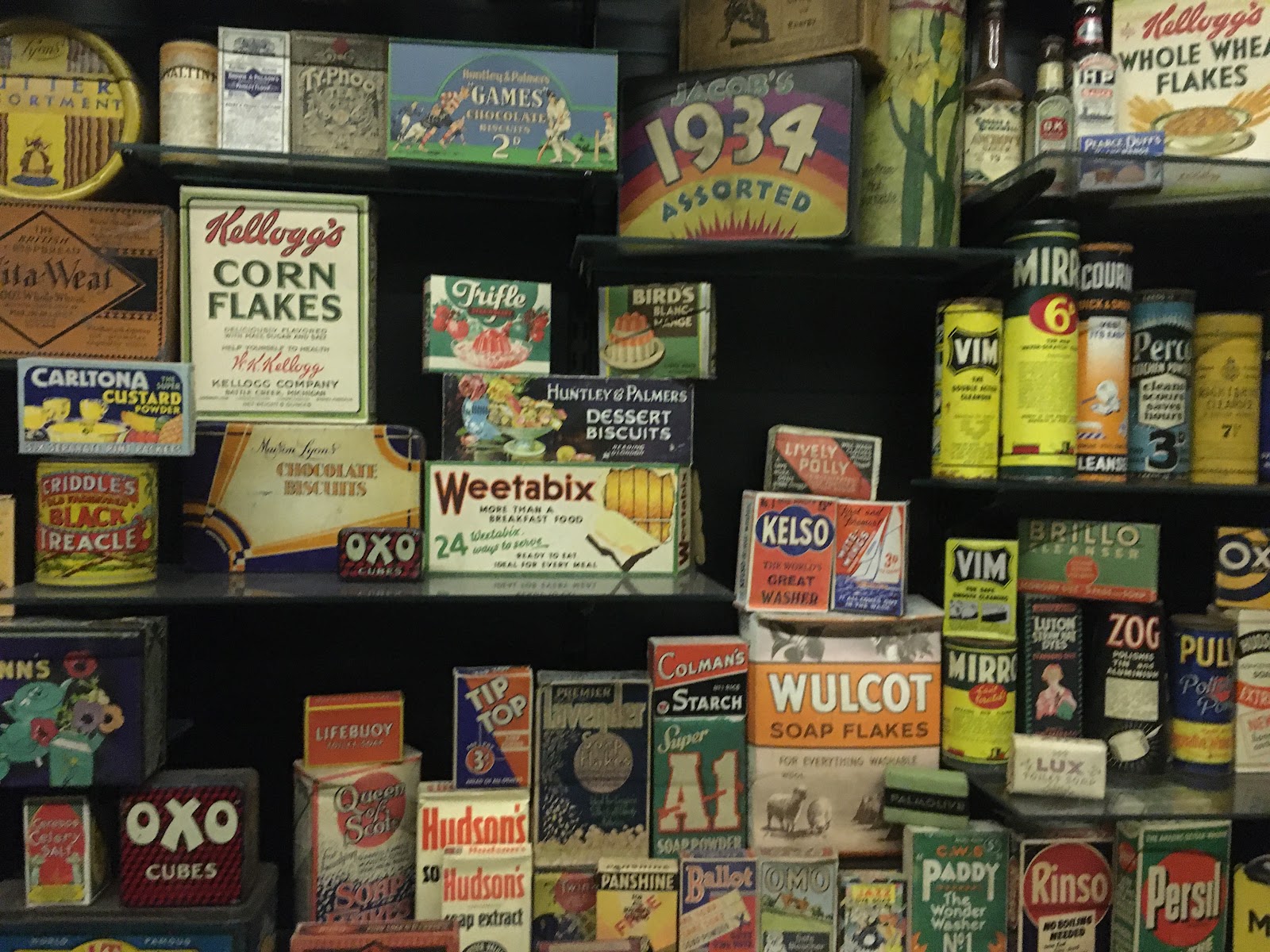
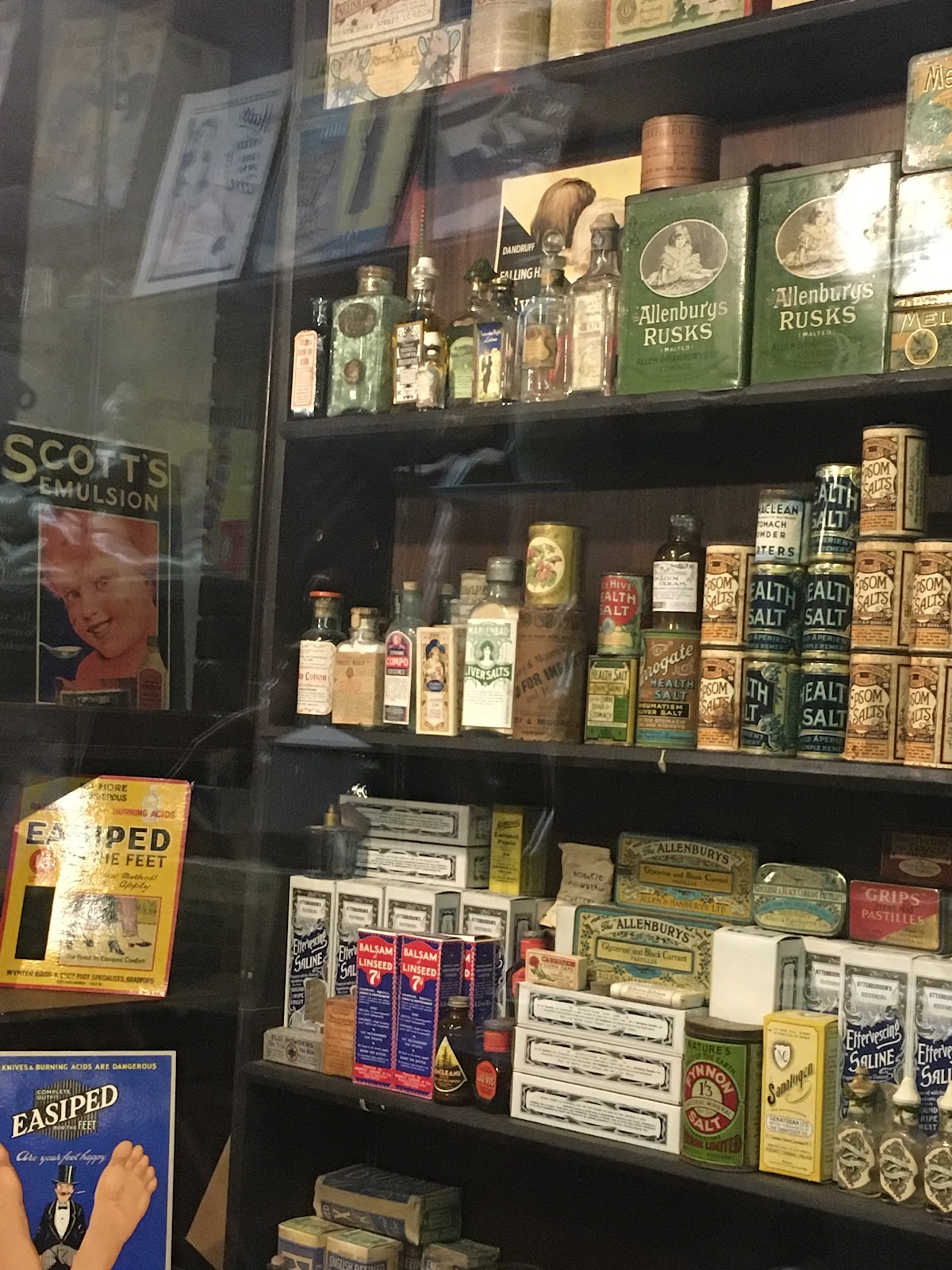
But the books I have been writing and editing, though firmly grounded in political reality, have been essentially upbeat in their tone. Yes, there’s fascism, but also bias-cut frocks and black-and-white matinĂ©es. My three historical novels for children (Name upon Name, Star by Star and Hope against Hope, Little Island 2015-2020) dealt with Politics with a capital P, as they looked at various aspects of Irish history a century ago. In Mrs Hart’s Marriage Bureau (HarperCollins Ireland, 2 March 2023, and its unnamed-work-in-progress sequel) the focus is much more domestic. And that’s what took me to the wonderful Museum of Brands in London a couple of weeks ago: an afternoon’s immersion in 200 years of packaging, with particular attention to the 1930s. The museum’s permanent display is based on the extensive Robert Opie collection.

Note the biscuit tin from the exact year

I’ve always loved material culture. Even as a child, I loved reading as much about the minutiae of everyday objects as about huge historical events – more, probably. It’s one reason why I always loved Noel Streatfeild: her emphasis, in books like Ballet Shoes, on what they wore, and how much things cost, was endlessly fascinating to me. Having said that, I’ve always been suspicious of what I call the product placement type of historical fiction – you know what I mean: too many brand names at the expense of a genuine feel for the period. If characters speak with 21st century accents and voice 21st century opinions, no amount of Wright’s Coal Tar soap is going to wash that out.


But there’s nothing like looking at the chocolate bars and shampoo bottles and dress patterns that your heroines would have been familiar with. Luckily the museum was quiet that afternoon because I kept exclaiming at things I recognised. Sometimes this was the visual memory of a childhood sweet, or a biscuit tin the same as the one Gran kept her buttons in. More often I was excited to see evidence of the brands and labels that I had mentioned in the text but wasn’t personally acquainted with. For example, my heroine April offers to wash some curtains in Reckitts Blue – a product I knew from my reading of 1930s fiction would bring them up nice and white, but which I’d never actually seen in the flesh until then. And there it was, reassuringly promising to do just that.


As always I was surprised at both the longevity of some of my favourite brands, and the disappearance of others. My 1930s characters could have joined me in a bar of Aero, but I can only imagine what grapefruit filled chocolate tastes like – and I don’t think I’d have given them a bar, because for the reader to start thinking, Gosh: grapefruit chocolate, how odd. I wonder what tastes like? might well have plucked their interest out of the story.

grapefruit chocolate, anyone?


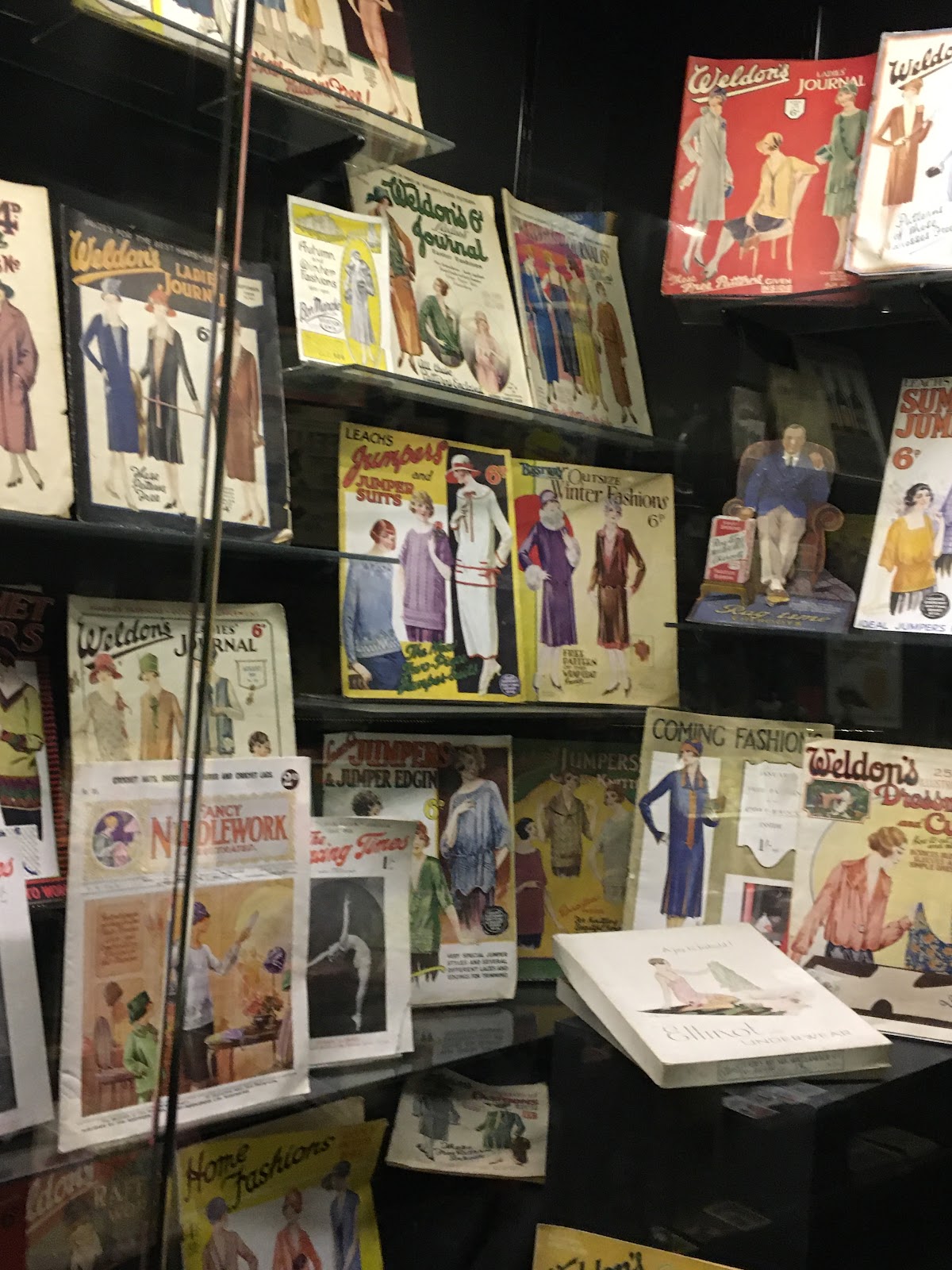
And maybe that’s key to using brands and products: of course it’s important to be accurate – my browser history is full of questions like When were tampons invented? and What breakfast cereals were popular in 1934? – but that needs to be balanced by not distracting the reader. After all, in a book set in 2023, I wouldn’t even mention brands unless perhaps as an economic signifier. One of my favourite displays was the 1930s chemist’s shop. I could imagine my characters choosing a shampoo, or trying to find a patent recipe for period pains. And although they don’t make their own clothes, the range of 1930s dress patterns helped me to imagine their frocks and cardigans.

some frocks for Martha and April 

Mrs Hart’s Marriage Bureau will be published on 2 March. It’s my first novel for adults, and I absolutely loved writing it. I hope the little domestic details will charm the readers as much as they charmed the writer. And at the launch, I’ll be serving little boxes of traditional toffees. And yes, they did have Mackintosh’s in 1934.

(all photos taken at the Museum of Brands, 31 January 2023)


Monday, 15 July 2019

Don't be out of Pocket by Susan Vincent


I love pockets. This doesn’t mean that I must have them, but just that the whole notion is so brilliant. The idea of having a built-in receptacle – a handy ambulatory container for the things that you need throughout the day – is pure genius. A bag, you can always leave somewhere by mistake and it clutters your hands or drags at your shoulders. But pockets are different – pockets, no matter where you go, they effortlessly come along with you.

Useful as they are, pockets often look good too. Virtue out of necessity, their functional features – the openings, the flaps, the outlines – are made decorative with embroidery, extra stitching, or contrasting colours. This is a ‘pimp my pocket’ restyle of the basic receptacle concept. 

But I even love the weirdness of the way that such essentially practical devices are often entirely useless. Think of those pockets on the front of a blouse, and the absurdity of actually carrying anything in them. Or what about those titchy change pockets in jeans that are too small to ram your fingers in, let alone remove again clutching a coin. And then there are faux pockets. These promise entry to a roomy interior but on closer inspection turn out to be just flaps – these are pocket teases, of ornament but no use.

But where did pockets come from? Were they always around?


The not-so-humble pocket as a built-in garment feature appeared from around the end of the fifteenth century, inserted into breeches. 

As the sixteenth century progressed it began to migrate to garments on the upper body. But it was the eighteenth century that might truly be called the era of the pocket, when they became such striking – and capacious – design elements on outerwear, as on the coat and the waistcoat here. 


Even if not apparent, as in this quite severely cutaway garment from 1780–90, the back and side views reveal that this coat is flamboyantly rocking those pockets. 


From this point on, pockets were standard issue in male garments, with an increasing range of sizes, types and locations. But womenswear tells a somewhat different story. While they started to be sewn into skirts in the sixteenth century, pockets for women did another amazingly brilliant thing as well. They became separate garments consisting of the pocket itself attached to a tape either singly or in pairs, which were worn tied around the waist. Sometimes plain, they were also often prettily embroidered.


These are the sorts of pockets that are immortalized in the rhyme that has puzzled generations of children and their parents, for whom its mundane description has now been lost in the mists of dress history:
Lucy Locket lost her pocket,
Kitty Fisher found it;
Not a penny was there in it,
Only ribbon round it. 

To add to the all-over niftiness of these standalone pockets, they could either be worn on top, or hidden away over a shift and corset but underneath the skirts. You can see this in the tight-lacing caricature below, in which the subject is getting dressed. Such a wearer would reach her pockets through an opening in the side seams of her gown. This made them full-proof against theft, but also explains the aspersions cast on a woman’s virtue if her pocket was successfully picked.


When the nineteenth century dawned, bringing with it high waists and light, narrow-fitting dresses, neither separate pockets nor the sewn-in sort were feasible. Enter the reticule, a small bag – very often fancifully decorative – that eventually ushered in the whole vast world of handbags.


But pockets didn’t die away. Around the middle of the century they returned to womenswear as the built-in variety, though they have never been the necessary features that they are in male garments. As we all know, in modern womenswear function is subordinate to looks, and pockets are only included if they do not spoil a garment’s drape or cling. Instead, women have been both hampered and helped in equal measure by handbags and purses.

Once created, these pockets of ours allowed for the invention – or adaptation – of other items of material culture (as historians rather pompously like to put it), and thus new habits and practices. Pocket money, pocket knives, and pocket handkerchiefs are still part of our lives. The pocket watch has gone, but we know what it is: a timepiece carried in a fob (a small purpose-made pocket). Less familiar are pocketbooks, sometimes meaning a folding case used for carrying papers and banknotes, and at others referring to a notebook for memoranda. Or what about this rather lovely pocket pistol from around 1815: deadly, elegant and infinitely portable.


And of course, carrying things on the person in this way in turn facilitated a new branch of criminal industry: the pickpocket. But probably what fascinates me most about pockets are the performances that they allow to their wearers. I was reminded of this the other day when I walked past two men in suits, both of them with their hands plunged in their trouser pockets, busy jingling change. Pockets give us something to do with our hands when we are nervous or bored. In the cold we ball them into fists and huddle them into, yes, our pockets. Pockets help us express slouching defiance of authority. And with pockets you can be nonchalant. 


In fact, it strikes me that traditional womenswear, in denying them (pocketed) coats and trousers, made it much harder to perform devil-may-care ease. Along with all the social mores and the normative gender behaviours that prohibited this kind of emotional register, women’s clothing also worked against the performance of such expansive and easy nonchalance.

Having worked this out, I love pockets even more than before. Sure, they trap the tissues which then disintegrate in the wash. But with pockets, we can be insouciant and cool. This is a very big thing – this is gender equality. And it comes courtesy of a very small feature indeed.


If you want to take pockets further – and let’s face it, who wouldn’t – then here are some excellent places to start:

  • Barbara Burman and Ariane Fennetaux, The Pocket: A Hidden History of Women’s Lives, 1660–1900 (New Haven: Yale University Press, 2019)

Images
1. Photo by Lisa Fotios from Pexels

2. Jan Georg van Vliet (print maker), Figure with hands in pockets, 1635, Leiden. Rijksmuseum, Amsterdam, no. RP-P-OB-61.808

3. Coat, 1750–9, British, fustian. V&A Museum, London, Given by James Potter, Esq., Master-Tailor of Derby, no. T.962-1919

4. Waistcoat, 1775–85. V&A Museum, London, no. CIRC.216-1920

5. Cutaway coat, 1780–90, French, silk. Metropolitan Museum of Art, New York, Brooklyn Museum Costume Collection, Gift of the Brooklyn Museum, 2009 (Gift of Mrs. Gilberte Andree, 1960), no. 2009.300.840


6. Pair of Pockets, 1700–25, English, linen, silk embroidery. V&A Museum, London, no. T.281&A-1910


7. John Collett, Tight lacing, or, Fashion before ease, print, London, c. 1777. Lewis Walpole Library, Farmington, Local record no. lwlpr04124


8. Le Mois, Journal historique, littéraire et critique, avec figures, Vol. 4, No. 10 (Paris, 1800). Rijksmuseum, Amsterdam, no. BI-1926-0324D-1


9. Joseph Egg (gunsmith), Over-and-Under Flintlock Pocket Pistol, c. 1815–20, English. Metropolitan Museum of Art, New York, Gift of Charles M. Schott Jr, 1917, no. 19.53.111a–d

10. Portrait of a man standing by a fence, photograph, c.1900–10, France. Rijksmuseum, Amsterdam, no. RP-F-F01164-5-1

11. Pearl, Kit & me, Landgirls, World War II, no date.