Showing posts with label Britain in the Second World War. Show all posts

Wednesday, 29 May 2019

May's Guest - Jacqueline Winspear

This month's guest is the best-selling author of the Masie Dobbs series of crime novels, Jacqueline Winspear. She was born and raised in Kent and emigrated to the USA in 1990. She has written extensively for journals, newspapers and magazines, and has worked in book publishing on both sides of the Atlantic. 

Here she talks to Charlotte Wightwick about the role war journalists played in bringing the USA into World War II, the role of women during war time and the fascination of writing a long-running series. 

The American Agent revolves around the murder of Catherine Saxon, an American war correspondent in London during the Blitz. Can you say a little about the work of war correspondents in London at this time, and in particular your inspiration for Catherine's character?

There were many war correspondents in Britain during the war, not only from the USA, but representing our Commonwealth allies, and those countries already invaded by Germany. However, the focus in this book is chiefly the journalists who reported news of bombing during the Blitz to the USA – via both radio (or “the wireless”) and print media. Obviously, a good number of those reporters were Americans, and of particular interest in The American Agent is the work of Edward R. Murrow, who broadcast for CBS from a small studio in the bowels of the BBC in London...I was drawn to the fact that Murrow revolutionised broadcast news in a manner that set the scene for the type of reporting we see today. Prior to his broadcasts (and he typically broadcast between midnight and 3:00am, a time when Americans would be sitting down to dinner), the BBC was a very formal environment – in the early days the men who read the news would wear dinner jackets and bow ties. Little emotion came into the reporting, and it was very matter of fact, delivered in the clipped tones of Received English.
 
Murrow knew he had to bring in the human factor to have any impact on American audiences, for whom the war was very much “over there and nothing to do with us.” On one occasion he famously took recording equipment into the street to record the footsteps of people running for cover in a bombing raid, and he repeatedly went into shelters to record the voices of ordinary people, and later accompanied the crew of a Lancaster bomber on a raid into Germany. This immediacy began to have an impact on American opinion, and effectively shortened the distance between the two countries... Other reporters had an impact too – Mollie Panter Downes in her “Letter From London” in the New Yorker did her part, as did JB Priestley, Vernon Bartlett and Cecil Beaton with his photography, published in Life magazine. They were, if you will, the agents of change in American opinion.

The character Catherine Saxon is an amalgam. I have been interested in the work of women war correspondents since my early teens, so I’m very familiar with so many of those women who have effectively put their lives on the line to tell the story of what is happening in a war zone. In a way Saxon is a blend of Clare Hollingworth, Marguerite Higgins, Dickey Chapelle and Martha Gellhorn – and so many others I admire. I could go on listing names!

A big theme of the novel is whether or not the Americans will join the war, and the work of the media, undercover agents and propaganda to try and bring that about at this time. Why did you choose to focus on this? 

It’s such an interesting period, and I am drawn to the role of soft propaganda in a time of war – and indeed, in the time leading up to war. In an earlier book, Elegy For Eddie, one of the continuing characters, a writer, is part of a group who are charged with developing appealing stories about Britain – her countryside, industry, people, farm life, children etc. The initiative was to give the people a deeper sense that they had something to be proud of in Britain, and an emotional connection to their country. This was part of the story was based upon fact – there was that emphasis in newspaper and magazine storytelling, as it was clear to the government that another war was on the cards, and they wanted the people to be ready to take up arms and be ready to protect their country – they wanted them ready for war, and most people were reluctant to consider war as they’d lost so much in the years 1914-18. Edward R. Murrow and his “boys” in WW2 were considered to be one of Churchill’s greatest tools in the job of getting the USA behind Britain’s war effort.

Maisie is torn in this novel between her life as an investigator, her voluntary work as am ambulance driver, the child she wants to adopt and the possibility of a new romance. How far do you think these pressures were typical for women of Maisie's generation?

I think multiple pressures are typical for women of any generation! My grandmother had to keep her job and had to consider the safety of her ten children. Many women worked, volunteered and cared for families in dreadful conditions following the repeated bombing night after night after night. I have visited the archive of the WRVS (In the war it was simply the WVS – Women’s Voluntary Service – the “Royal” designation came later), and simply reading the very detailed reports from every woman who worked through the Blitz and subsequent bombings would leave readers in no doubt that multiple pressures were very much the lot of women – and continue to be so today.

This is the 15th Maisie Dobbs novel. What is it that keeps bringing you back to her? And can you give us any insight into what will be coming next for her?

From the time I knew I had not just one novel, but the material for a series, I wanted to move my characters through time. I wanted to see how they grew and changed with experience, and how they were impacted by the events of their day and the trials and tribulations of their lives – creating that overall arc of story keeps me coming back to the series. I wanted to create a saga in the traditional sense, but one underpinned by the journey through chaos to resolution that is at the heart of mystery. Ultimately, life is that mystery, and I am buoyed forward by the journey not only of Maisie Dobbs, but her fellow characters – and history itself. History frames the story – and that is the only “insight” I can give for what comes next!

The American Agent (number 15 in the bestselling Maisie Dobbs series) by Jacqueline Winspear is out now and published by Allison & Busby. Previous titles in the series are being reissued by John Murray.

Sunday, 11 March 2018

1940s hairstyles - describing a character in bobs and curls


When I write I have to have a clear picture of how my characters look, including how they dress and style their hair. So before I began to write about the wartime era I looked into the sort of hairstyles that were around in the early 1940s. 

Hair was worn in a style that was feminine and soft, and always dressed off the face. It was often flat on top, so that a hat could be placed easily. One thing was sure - hair would not have been worn messy. A woman's hair had to always appear styled and neat. In the early 1940s, going out with "bed-hair" would have been social suicide. 

Hairstyles in the 1940s were fuller and longer than those of the 1930s and hair was cut in a rounded U-shape at the back, curving up towards the ears. There were always a lot of layers because the hair was usually worn in curls or soft waves, usually just below shoulder-length. Straight hair was simply unfashionable. 

To achieve the curls, girls who couldn't afford a weekly "wash and set" at the hairdresser would pin up their wet hair in bobby pins each night to make pin-curls. 
If you've ever been tempted, this is a good tutorial on how to set easy pin curls:

https://www.youtube.com/watch?v=yughhvjKf9c

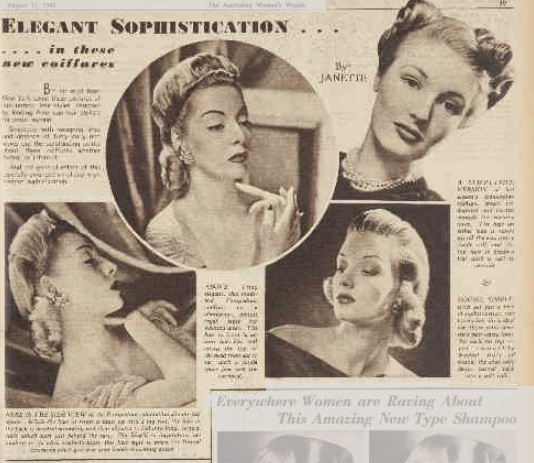
Although the loosely waved page-boy was a very popular style, so was a more sophisticated and set look such as those below. 
"ELEGANT SOPHISTICATION........ in these new coiffures" The Australian Women's Weekly (1933 - 1982) 17 August 1940: 39 (The Homemaker). Web. 9 Mar 2018 <http://nla.gov.au/nla.news-article47116871>


As war rationing really began to bite, women still spent time and effort on their hairstyles, but no longer wanted lots of waves in intricate designs. Hair was worn shorter, in a practical style, still curly with a wave or two at the front. This sort of style looked good under small hats and military hats and could be hidden under turbans if the hair was dirty. One such style was the "Maria" style, which came in 1944 (http://nla.gov.au/nla.news-article59182619)


An iconic war-time hairstyle was the "Victory Roll". The name seems to have come from the corkscrew through the air by RAF pilots before landing, if they had successfully downed an enemy plane. The hair was divided at the front and curled up and out, in a rather aerodynamic form.

Here is Betty Grable, rocking a Victory Roll. 


And if you want to reproduce it, see this tutorial:
http://www.bbc.co.uk/programmes/p01sh5tk


And how did I use bobs and curls to define my characters? Each of the heroines of my five novels to date has specific hairstyle. And just like a girl of the 1940s I found my inspiration in the hairstyles of the movie stars of the period.


A Stranger in my Street (2012) 

Personally, I don't think that there is any hairstyle more elegant than the loose pin curls we associate with 1940s Hollywood. 

I'm sure that is why sad, sweet Meg Eaton, the heroine of my first novel, A Stranger in my Street, has her light brown hair in a shoulder-length bob.   

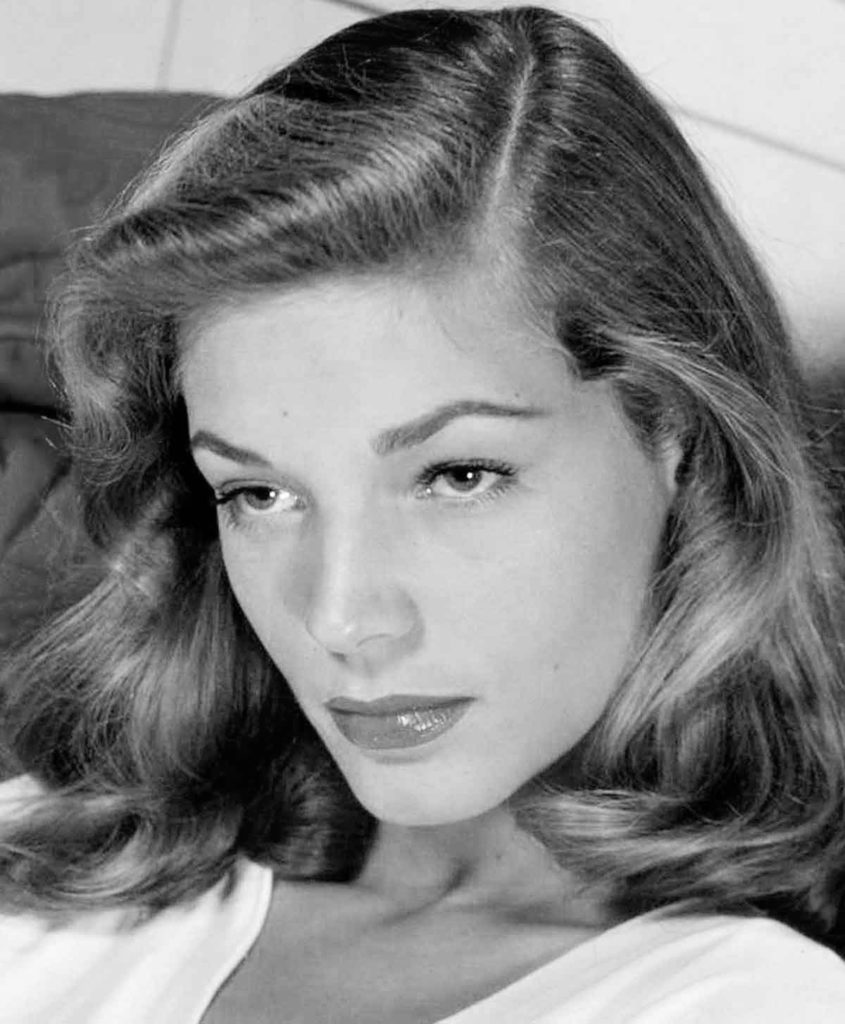
In my mind's eye I saw Meg's hair as being similar to this gorgeous photo of Lauren Bacall. 

Taking a Chance (2013)  
https://deborahburrows.com.au/books/taking-a-chance/

The heroine of my second novel, Taking a Chance, is Eleanor (Nell) Fitzgerald. As a fashion journalist with her own newspaper column giving tips on beauty and fashion, I thought that Nell was likely to style her hair into something a little more interesting than a bob. 

So I decided that her signature style would be the "unbroken roll." I got the idea for the hairstyle from an article in The Australian Women’s Weekly of 28 March 1942.
http://nla.gov.au/nla.news-article47488001


But even a fashion journalist has bad hair days. When her hair was not looking its best, Nell puts it into a snood. 

A snood is a lacy hairnet or crocheted bag (often homemade) that gathered up the hair so that it sits on the nape of the neck. 

Here is American actress Carole Lombard wearing a snood. 

Sometimes I wish that snoods were still in fashion, as they hide a lot of sins and (in my opinion) look very elegant. 


http://nla.gov.au/nla.news-article47488001

Apparently it was Vivian Leigh (or, rather, her costume designer in the 1939 movie Gone with the Wind) who was responsible in no small part for the popularity of the snood in the 1940s. 

But that was not the whole story of course. A snood kept loose hair properly and safely confined when women were doing war work in factories. 


A Time of Secrets (2015)
https://deborahburrows.com.au/books/a-time-of-secrets/


My third novel is set among the military intelligence units of wartime Melbourne - the most elegant and European of the Australian cities. 

In the book, Stella Aldridge, the pretty, clerical heroine wears her thick, wavy ash-blonde hair at shoulder length and parted at the side. 

The side part was a feature of the 1940s, as it was the foundation for most styles of that era. 
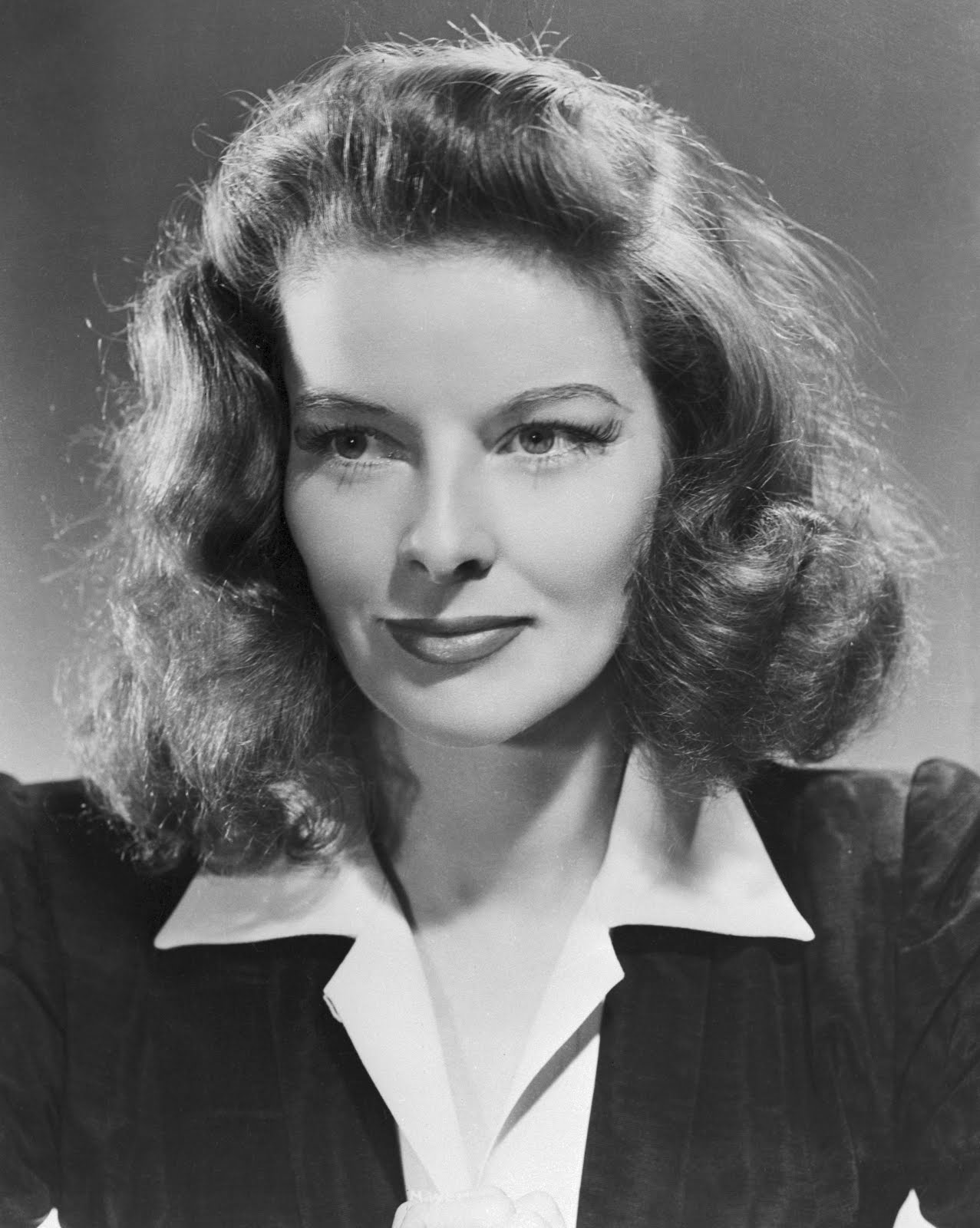
I pictured Stella's hair as being similar to Katharine Hepburn's thick mop.

Ambulance Girls (2016) 

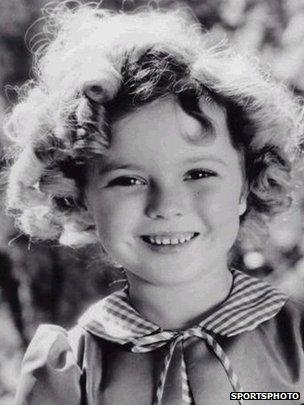
Lily Brennan, the Australian ambulance driver who narrates the first book in my Ambulance Girls trilogy, which is set in the London Blitz, has very curly hair and dimples. This, combined with her small stature, gives her a bit of a “Shirley Temple” look, which she detests. 

Not the most sophisticated hairstyle, but naturally curly-haired girls will understand the difficulty Lily had in making her curls behave.
The very sophisticated Celia Ashwin, “a thoroughbred, from the auburn hair framing her smoothly oval face in a loose bob to her aristocratically narrow hands and feet,” is the heroine of my most recent novel. 

Celia is not impressed when another character likens her to the oh-so-glamourous Rita Hayworth, but I did have the beautiful titian-haired Rita in mind when imagining Celia's full page-boy hairstyle and side part. 

Isn’t she gorgeous?


Saturday, 11 November 2017

Churchill's secret army - a visit to Coleshill


In October I went on a guided walk put on by the National Trust at Coleshill in Oxfordshire. The house itself no longer exists, but during the Second World War, Coleshill was the top-secret General Headquarters (GHQ) of Churchill's 'secret army' . 

This was not a regular army, it was one made up of ordinary civilians who had volunteered to serve as Britain’s last line of defence in the event of a Nazi invasion.

Coleshill House in the Second World War

The secret army was formed in the dark days after the fall of France and the ‘miracle’ of Dunkirk. Most of the British Expeditionary Force had been saved, but the BEF had lost 68,000 soldiers during the French campaign and nearly all of its tanks, vehicles and equipment had been abandoned in France. German troops were massed a mere twenty-three miles away across the English Channel and Britain steeled itself for German invasion.

The Battle of Britain had not yet begun and the fate of Britain hung in the balance. Hitler had conceived 'Operation Sea Lion', by which he intended to land more than a quarter of a million troops, 60,000 horses, up to 40,000 motor vehicles and 650 tanks on British shores. His aim was to eliminate the British homeland as a base for operations against Germany.

Prime Minister Winston Churchill had made it clear that in the event of invasion surrender was not to be considered. Instead the people of Britain were to "defend our island, whatever the cost may be. We shall fight on the beaches, we shall fight on the landing grounds, we shall fight in the fields and in the streets, we shall fight in the hills; we shall never surrender …”

Defensive measures against invasion were in place, such as barbed wire, anti-tank measures and mines on beaches. 

The country was divided up into defensive sectors by ‘stop lines’, continuous anti-tank obstacles – natural or man-made – which would block or hinder the progress of German armoured columns and allow an easier counter-attack by British defending forces. 

The stop lines were backed up with minefields, concrete pillboxes housing riflemen and machine gun emplacements. 

It is sobering to read Home Forces Operation Instruction No.3 (submitted to the War Cabinet on 25 June 1940), which states: “This system of stops and strong-points will prevent the enemy from running riot and tearing the guts out of the country as had happened in France and Belgium.”

Such measures were designed to assist regular soldiers and, at a pinch, the Home Guard, to defend the country. But what if the impossible happened, and the German invasion was successful, or even partially successful? How were the British people supposed to defend their island?  

In 1940 Britain had an advantage over the nations in Europe that had fallen so quickly to the German blitzkrieg - it had time to create a resistance movement in advance of an invasion.

Colonel Colin Gubbins, a British Intelligence Officer who was later the head of the Special Operations Executive (SOE), was asked to put in place a network of British resistance fighters to operate a resistance movement behind enemy lines. It was known by the deliberately vague title of Auxiliary Units and was comprised of civilian men and women (known as Auxiliers), who were usually in reserved occupations, but who were expected in the event of German invasion to engage in a guerrilla war. They would blow up bridges and trains, report on possible fifth column activity and discourage collaboration with the Germans. 
These were the men and women of Churchill’s secret army, and their training in sabotage and mayhem was given at Coleshill House.

There were two branches of the Auxiliary Units. The 4,000 ‘Special Duties’ Auxiliers were trained to be spies in their own country, to be the ‘eyes and ears’ of the organisation. They were people whose work allowed relatively free movement, such as doctors, district nurses and vicars. 

In the event of invasion they were expected to continue their normal lives, but to gain and communicate intelligence about the deployment of enemy forces. They learned how to identify vehicles, high-ranking officers and military units and objectives. Once they had gathered intelligence they were to prepare a short report and deposit it in a secret ‘letter box’ or 'dead letter drop'. 

These letter boxes were in unusual places, such as under rocks, in hollowed bricks or gate-posts or in holes in trees. At Coleshill I was shown examples of 'dead letter boxes'.

The reports would be collected by runners and taken to one of more than 200 civilian wireless operators, who would use secret radio transmitters to transmit the information to military headquarters. 
These radio transmitter might be hidden under the outside toilet on a farm, or in a secret compartment in a chicken shed. One such wireless, manned by the local vicar, was hidden under his church's altar; its antenna cable ran up the side of the bell tower. 
At Coleshill they had a reproduction secret wireless transmitter to show us. The dummy priest, who is a secret wireless operator, is secreted in a little room behind the far wall of this chicken shed.
 

 Auxiliary Unit Patrols were the second branch of the Auxiliers. They were the combat units who had been highly trained in guerrilla tactics. Each patrol was made up of a small group of six to eight men who operated on a ‘need to know’ basis as a self-contained cell, so that the members of one unit did not know the identity of any members of other units in their area.  
They were instructed to cause maximum disruption to the invading German forces by engaging in sabotage operations behind enemy lines, specifically to deny mobility to the attacker and to disrupt supply lines. Their prime targets were aircraft, fuel dumps, railway lines and depots, together with senior German officers.
The Patrols were provided with hideouts, known as operational bases (OBs) or 'funk holes', which were built in local woodland and stocked with plastic explosives, incendiary devices and ammunition, and with enough food to last for two weeks
Each OB had a camouflaged entrance and an emergency escape tunnel. 
The replica 'funk hole' at Coleshill is hidden beneath the soil, invisible until the top is lifted to reveal the entrance and a 30 foot ladder. 


Inside, the OB was fairly commodious, with four bunks (pulled up against the wall when not in use), a separate compartment for an Elsan toilet, a kitchen area and storage for tinned food and explosives. 

A real OB exists in Sussex, and is still in pretty good shape after 70-odd years.
Each OB had an emergency escape tunnel, leading to an exit some distance away.
 

This is an example of a 'how to blow up things' in a secret booklet given to Auxiliers, disguised as a Countryman's Diary.


As a sober note to such 'boys' own' adventures, it was accepted that, in the event of German invasion, the life expectancy of an Auxilier was only 10-14 days. The men anticipated being shot if captured. Many were determined not to be taken alive.

The Auxilier Unit Patrols were comprised of part-time volunteers, often recruited from the Home Guard. Former Boy Scouts, gamekeepers, foresters, hikers and mountaineers were preferred, because they knew their local area and had good survival skills. Game keepers were prized recruits as they were used to moving quietly through the countryside and they were used to killing things. All had to sign the Official Secrets Act and not even their families knew what they were trained for. As cover for their activities, they were given Home Guard uniforms.


Auxiliary Unit Patrol recruits were trained in secret at Coleshill, usually on a weekend so as to avoid interfering with their other work. Recruits were asked to check in at Highworth Post Office, where they were vetted by the postmistress, Mabel Stranks. After screening them she telephoned ‘Highworth 85’. The recruits were then blindfolded and taken by army transport on a circuitous route to Coleshill House. There they were taught close combat, self-defence, use of fire-arms, map reading, stealth, night fighting and camouflage techniques, and training in explosives, which were to be used for attacking enemy transport and supply lines. 
The men were also issued with sub-machine guns, hand guns and the deadly Fairbairn Sykes double-edged dagger.
The services of the Auxiliers were never needed in Britain. In September 1940, after defeat in the Battle of Britain and fearing the might of the British navy, Hitler postponed his invasion. Instead he turned his forces towards the Soviet Union. Operation Sea Lion was officially cancelled in March 1942.
What of the Auxiliers? They were stood down  in late 1944, when the tide of war had moved decisively in favour of the allies. Most of them slipped back quietly into their former lives. However, one group was determined to use the skills they had been trained in at Coleshill. These men were parachuted behind enemy lines for Operation Bullbasket in July 1944, but were captured in Verriers Forest near Poitiers and killed by lethal injection.
The Auxiliary Units had no official recognition. It is only now that we are aware of the desperate measures taken to prepare Britain for the expected invasion, and of the work of this ‘secret army.’
As I walked through the countryside following our guide, enjoying the beauty of the autumn colours, I thought about what had motivated those ordinary men and women in 1940 to volunteer for this secret army. 


Coleshill House burned down in 1952. A few years ago a small hedge was planted to mark the perimeter of the house and inside it were planted wildflowers and shrubs. 
I visited on a day of sunshine and shadow, when the flowers were in their last flush but still bright and beautiful. It is fitting, perhaps, that the headquarters of such a secret and chilling organisation should now be open to the sky and enclosing only flowers.

Additional information and photographs: http://www.pillbox-study-group.org.uk/