|
| Landscape with the Fall of Icarus |
Since earliest times, it seems, mankind has
looked up at the birds and dreamed of flying. The ancient legend of Daedalus
and Icarus embodies both the dream and the potential disaster.
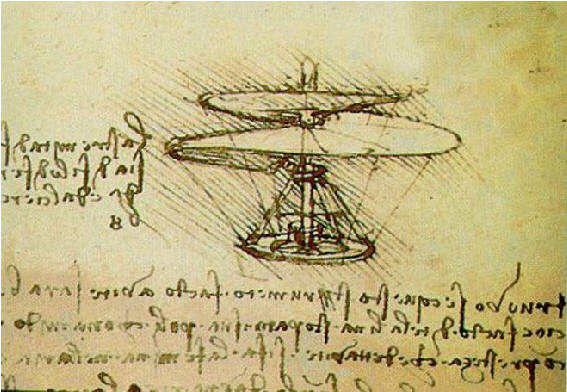
Leonardo da Vinci in the early sixteenth century
believed flight was possible and designed several prototype aircraft but – as
far as we know – never attempted to fly them. There are many cases documented
throughout history of flight enthusiasts making themselves wings out of
everything from feathers to cloth and wood. As their attempts generally
involved jumping off high buildings (or sometimes bridges), these usually ended
either in farce or tragedy.
 |
| Montgolfier balloon flight 1783 |
Progress began to be made in the eighteenth
century with the development of balloon flight, first carrying animals and then
men. These balloons were at the mercy of air currents, so the next step was to
invent a means of steering, hence ‘dirigibles’, first developed in the
nineteenth century and in regular use during the first World War.
 |
| Dirigibles & other balloons early 20th C |
After the tragedy
of the Hindenburg in 1937, the inherent dangers of being carried through the
skies under a balloon filled with highly inflammable gas were recognised, and
dirigibles or ‘airships’ fell out of favour.
Other nineteenth century experiments with
flight included the development of gliders and kites which could carry a man.
In the second half of the nineteenth
century the new goal was to develop a heavier-than-air flying machine which
would carry a pilot, could take off and land safely, and could be steered. The
race was on. A host of enthusiasts in different countries – particularly Britain, France,
Germany and America
– began to experiment with many designs of wing structure, fuselage shape,
construction materials, steering mechanisms, and engine types. On the whole,
the inventors were secretive and competitive. They wanted to be the first to
achieve manned flight in a heavier-than-air machine, and they wanted to be sure
no one stole their patents.
It has been generally accepted for many
years that the first successful manned flight was in a flying machine designed
by the Wright brothers and piloted by Orville Wright on 17th
December 1903 at Kitty Hawk,
North Carolina. But was it, in
fact, the first?
 |
| Wright Brothers |
A young man named Preston Watson was born
in Dundee in 1880 into a fairly prosperous family and attended the fee-paying
private Dundee High School. He did not go to university
full-time, but seems to have attended classes in physics at Queen’s College
(then part of St Andrews University, later the University of Dundee).
From childhood he was obsessed with the idea of flying and spent many hours on
the shores of the River Tay, watching the flight of birds, particularly gulls
and – unlike other pioneer aircraft designers – took note of the way they
banked when turning, something which was to prove decisive in his later
designs. He also shot and examined birds, in order to try and understand the
mechanism of their wings.
Preston Watson was a keen athlete, very
physically fit, and accustomed to the long training essential to ultimate
success, a lesson which was to prove useful in his work on aircraft. A
colleague described him as very calm, never dismayed by setbacks.
He was helped financially by his father,
although Watson senior was not wholly enthusiastic about his son’s schemes,
even on the eve of the first World War, when Preston Watson’s skill and
experience would prove invaluable. With this financial assistance, and the help
of his elder brother, James Yeaman Watson, Preston
built a number of prototype aircraft at the turn of the nineteenth-twentieth
centuries. Construction took place in Dundee, but he needed a wide flat stretch
of land to attempt flight, which he found near Errol in the Garse o’Cowrie, a
stretch of fertile alluvial land to the west of Dundee, lying between the Tay to the south and the hills to the north.
 |
| One of Preston Watson's early planes |
Because the soil is rich this is an area
which is intensely farmed, and it was the owners of the Muirhouses and Leys
farms who eagerly joined in the project, as well as providing a stretch of
ground to carry out the experimental flights. A whole host of enthusiasts lent
a hand and witnessed the various attempts.
Preston Watson was responsible for two
major innovations. The first was the ‘parasol’ or ‘rocking’ wing, which
improved stability and made it possible to bank when turning, the technique he
had observed in the flight of gulls. This wing design was considerably more
sophisticated than that of the Wright brothers. His second innovation was the
invention of the ‘joystick’, a single stick controller for up and down, turn
and bank movement, a true breakthrough in aircraft steering. His design was
essentially the prototype for the modern system.
In August 1903, Preston Watson made a
series of manned, controllable and heavier-than-air flights at Errol which were
reported in the local press. These therefore took place some four months before
the Wright Brothers’ flight at Kitty Hawk.
 |
| Preston Watson's third aeroplane |
Why, then, is the credit for the first
flight given to the Wrights?
At the time, competition between the early
inventors was fierce, not to say cut-throat. In subsequent years the Wrights
were involved in many legal battles over patents and design claims against
their rivals. There is a further twist to the story. The original Wright
aircraft is now held by the Smithsonian National Air and Space
Museum in Washington, D.C.
In order to gain possession of the aircraft, the Smithsonian was obliged to
sign a contract with Orville Wright’s estate in which they agreed never to
recognise that anyone else was the first to fly.
 |
| Orville and Wilbur Wright in 1905 |
To this day, they are unlikely to recognise
flights by an unknown young Scotsman over remote farmland which took place four
months earlier.
The rivalry between designers had more than
a personal aspect. The military potential of aircraft was quickly recognised by
forward-looking strategists, although the military establishment (especially in
Britain)
was slow to catch up. After the first flights, the next ten years saw rapid
developments in aircraft, and these were the years leading up to the first World
War. France was particularly
keen to be in the forefront of aircraft design, acutely aware of the growing
industrial and military might of her neighbour, Germany.
Britain
formed the Royal Flying Corps in 1913, which was to play a significant part in the
war, mainly in reconnaissance and bombing, although their planes were often
victims of German planes designed more for fighting. Preston Watson, like so
many patriotic young men, was eager to volunteer his services to the nation.
With his skills, he should have been welcomed with open arms. Instead, he had a
dismissive interview with a Major Merrinden. Merrinden told Watson that, at 34,
he was too old to be a pilot. This was a lie. The top age was 40. The real
stumbling block was the fact that he had not attended a public school. He was
turned down as a pilot and told to try for a job at an aircraft factory.
 |
| Preston Watson |
Watson was not so easily discouraged. He
trained for his pilot’s license at his own expense and through other contacts
was commissioned as a Flight Sub Lieutenant in the Royal Naval Air Service in
April 1915. Above all, his experience in aircraft design was of paramount
importance. Leo Anatole Jouques, owner of Jouques Aviation Works, contracted to
the British government, recognised Watson’s value. Jouques contracted with
Watson to build fifty-six planes to Watson’s designs, plus parts for another
150, Watson to receive a royalty for each.
On the morning of 30 June 1915, Preston
Watson set out to fly from Eastchurch to Eastbourne,
a distance of some sixty miles. The aircraft was not one of his own designs,
but a Caudron GIII. The plane was believed to be in good condition, but it had
been involved in an accident a fortnight earlier. About an hour later there was
cloud and rain above the Cross-in-Hand Inn in Sussex and the field opposite.
Several locals heard engine noise followed by a loud explosion. The engine
noise ceased and parts of an aircraft fell from the sky. Preston Watson died
instantly. He left a widow and two young sons. The elder was himself to die on
active service in World War II.
That might have been the end of the story.
However, in the 1950s, Preston’s
elder brother, James Yeaman Watson, decided that as a tribute to his brother he
would try to establish that Preston Watson had in fact made the first manned
flight in a heavier-than-air aircraft. He sought out statements from those who
had been present or who had assisted at those early flights and he assembled
any surviving documents from the period, although many had unfortunately been
lost. His case was roughly dismissed by the leading ‘expert’ at the time,
Charles Gibbs-Smith.

In 2014, Alastair W Blair and Alistair
Smith published The Pioneer Flying
Achievements of Preston Watson. Commenting to the Dundee Courier when the book was launched, Alastair Blair had this
to say about Gibbs-Smith’s reaction to James Watson’s efforts to establish his
brother’s claim: 'Mr Gibbs-Smith was very scathing in his appraisal of Watson's claim. He seemed to think that someone without a great deal of education and who came from the back of beyond could never have accomplished anything in the field.'
This was clearly not the opinion of Leo Anatole Jouques, who
was so keen to build planes to Preston Watson’s designs for the government
during World War I. It is difficult now to establish the claim, in the face of
the Smithsonian’s contractual agreement (surely a very strange approach to
history), despite the eye-witness accounts collected by James Watson.
A full-scale model of Preston Watson’s
Plane One, built by the Dundee Model Aircraft Club, will be presented to the
Dundee Museum of Transport on 30th June at a celebration in honour
of its designer.
The story of his life and the early history
of aviation is told in full in Blair and Smith’s book. Perhaps on the centenary
of Preston Watson’s death, we should pause to remember the achievements of this
young pioneer of flight.
Ann Swinfen
http://www.annswinfen.com



 hj
hj