Showing posts with label Lucy Inglis. Show all posts

Wednesday, 2 April 2014

Writing What You Know - Lucy Inglis

When writing non-fiction, there is a definite process for constructing a body of research and then drawing upon it for a book. The more sound and extensive the research, the better for the book. The framework is also more rigid. Writing fiction is a different process in terms of creative freedom, but sometimes solid research pays off. I'm currently finishing a historical novel for Young Adults, and I was excited by the prospect of this particular project. On mentioning that I was working on a historical YA, pretty much everyone assumed it would be set in the eighteenth century and almost certainly in London. But it's not. It's set in nineteenth century America, a period I have absolutely no knowledge of. Why? I don't know. I knew the story I wanted to tell, but how to make it real was key. I also knew how irritated I get with lazy historical fiction. If I ever read another novel set in the eighteenth century where all the women are simpering misses and every surgeon a filthy-pawed walking pesthouse, I shall scream. So, when I wanted to write about Montana during the goldrush and the massacre of the American plains bison, I thought I'd better do my homework.


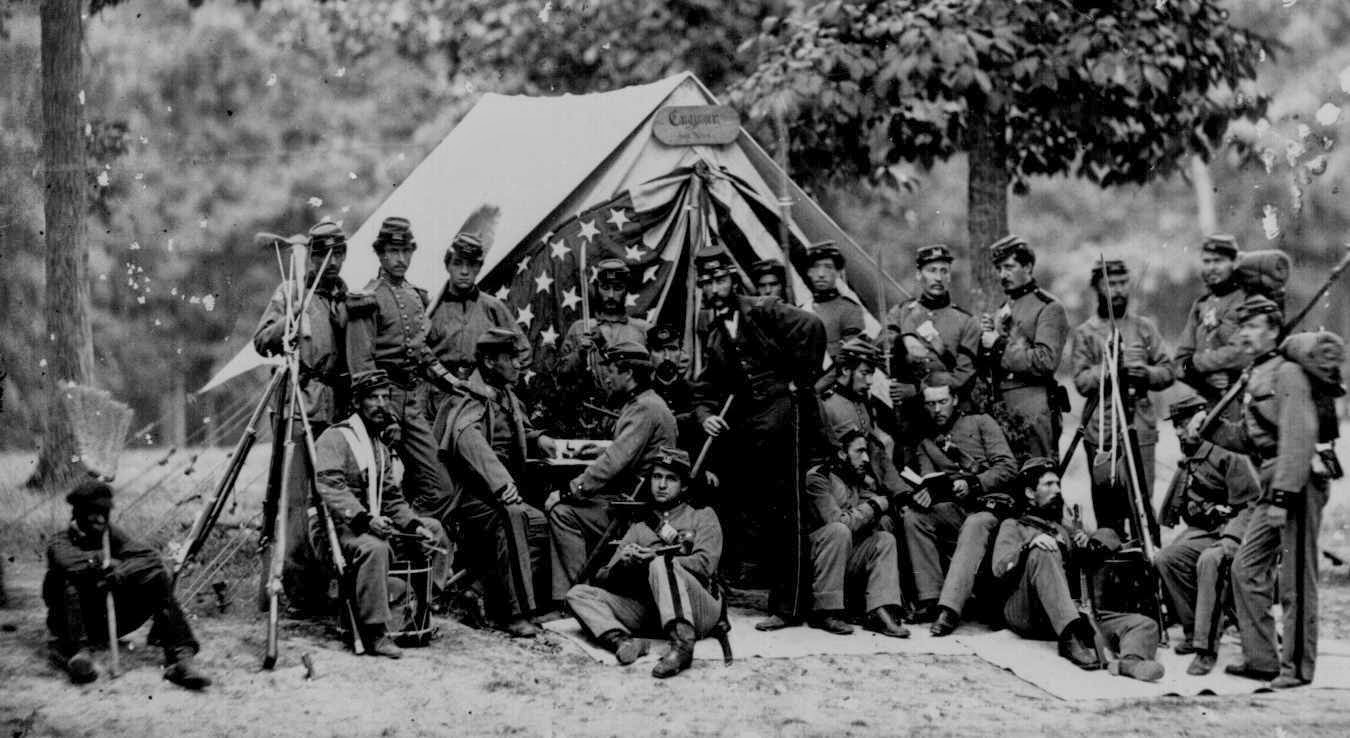
The internet is, of course, brilliant for images and information about flora and fauna, dates and facts, but the meat of getting to know another time is more likely provided by real stories about the people who lived then. Did you know that Civil War soldiers favoured licking morphine powder out of the palms of their hands to deal with pain because it was quick to take effect but also slower release? Or that the Colt revolving rifle, so popular during the Civil War, had a nasty habit of discharging all six shots at one if not kept immaculately clean and dry? Pretty tough during war. Or, that native Americans saw sex as a social exchange and expected a gift afterwards, even if it was a shirt or some elk teeth, as a symbol of that exchange, leading settlers to get thoroughly confused about issues of morality, consent and 'price'? I don't ever want to butcher a bison, but I think I could talk someone through which bits are used for what and how kidney fat is the real delicacy. I know far too much about corsets, pioneer marriage statistics and I've come across some fantastical given names: Relentless and Helpless my favourites so far.


Most of this research will never see the light of day. Let's face it, a lot of it is pretty dry bones. But it has given me the confidence to construct characters. It's handed me plot mechanisms that save me from relying on 'happy coincidence' - a thing that irritates even when done in a masterful fashion and shows little respect for the reader. Yes, fiction is about making things up, but it's far more satisfying to make things up that you know may have happened. Is it any good? Well, that's not for me to decide!

Thursday, 2 January 2014

Normal service will be resumed tomorrow

Lucy Inglis, the History Girl whose post should go up today, is without reliable Internet access because of storms. Bear with us and you will be able to read Lucy's post next month.

Thanks

Mary Hoffman

Saturday, 14 December 2013

Christmas, Paris and Kate Beaton Catherine Johnson


There have been some fantastic posts here, so thoughtful and entertaining and erudite. This will not be one of those. I am currently in Revolutionary France in my head and as with all writing sometimes it is the hardest thing and sometimes you have to stop yourself thinking too hard and give in to the impulse of the story and just let it carry you away and onwards and mop up the mess afterwards.

I use a lot of maps when I write historical novels, and there are some cracking maps of Paris before, during and afterwards, when road names changed to things like Rue de l'Hommes Arme, Rue du Contrat Social and Rue des Droits de l'Homme.  


This one's from's 1792. I've used it extensively, imagining how you'd get around, gauging distances and doing a sort of analogue version of Google Streetview which involves dragging your brain down to street level and looking around.

But because of this I have rather let Christmas drift by. I was hoping I might squeeze in a very late present to myself which involved long walks round the city. But alas I've been writing and there are no decorations, the tree is still outside and the freezer is empty. I haven't even bought all my books.

So on that note I thought I'd recommend some disparate and diverting reading. Rush along to your local independent bookshop quick sharp.

Georgian London  Into the Streets  by Lucy Inglis.  I so wish this book had been published when I started writing historical novels. It would have saved me a lot of time. This is a wonderful book with so much useful and fascinating information, law and order, the stink of the tanneries, the bustle of Covent Garden and the mystery of Bow Wow Pie amongst many others. I knew nothing of Southwark's melon pits or Hackney's orange trees and there's loads of wonderful pictures and maps. It's a really useful guide for any reader who's interested in how the metropolis came of age. And I've just noticed it's been shortlisted for the Longman History Book of the Year.


The Big Con by David W. Maurer. Jump forward a couple of hundred years and immerse yourself in the argot and culture of late nineteenth and early twentieth century America. This is a book written by a linguist about the world of Confidence Tricksters. The Sting - the film with Robert Redford and Paul Newman was made on the back of the information in this book. It's full of wonderful and specific criminal slang too, which is always a plus.


Hark! A Vagrant by Kate Beaton.  If you have never come across the drawings of Kate Beaton you are in for such a treat. She is a Canadian cartoonist who draws (not always) historical cartoon strips. My personal copy is adorned with a hand drawn sketch of Matthew Henson heading north. I wrote loads of sentences trying to explain them, but you're better off having a look yourself. But consequently I have not done any work at all this afternoon re reading them, and laughing. Here's the link  http://harkavagrant.com/

Happy Holidays

My book Sawbones is out now too http://www.booktrust.org.uk/books/view/33334


Monday, 2 December 2013

Paper, Print and the Georgians - Lucy Inglis

The British Library’s new Georgians Revealed exhibition is now open. It is a wonderful exploration of works on paper throughout the Georgian period, and the whole thing has a dynamic feel to it that reflects the spirit of the age.

Last month, I gave a Sunday lecture there focussing on the importance of paper during the eighteenth century, but also on the broader themes of life in Georgian London. What makes a Londoner? How was that identity forged? And what part did paper play in it?

Londoners had always been financial animals, but they were becoming consumers on an international scale. For that, they needed a currency they could trust. The foundation of the Bank of England in 1694 saw the beginning of a move towards standardised bank notes; the first ‘modern’ ones appeared in 1725. That, coupled with recoinage to get rid of the vast numbers of brass fakes swimming around the system, helped to stabilize the pound and create confidence in it. As an aside, the most famous of the Wardens of the Royal Mint, Isaac Newton aged nineteen, made a list of his sins which, along with stealing, ‘punching my sister’, ‘falling out with the servants’ and ‘having unclean thoughts’ was ‘Striving to cheat with a brass halfe crowne’.

International trade required that this money had a value not only at home, but when compared to other currencies, so, in 1698, a Huguenot named John Castaing began writing up a news-sheet called The Course of Exchange and Other Things. The sheet included stock prices, bullion rates and exchange rates. It was published on Tuesdays and Fridays and sent to the Hook of Holland the same day in bulk.

Owing to the power of commerce, literacy was rising fast. Parents and orphanages found that their children were simply more employable if they could read and write. This rapid rise in literacy was accompanied by a boom in print culture. Thousands of news-sheets, papers, ballads and broadsides were printed in London’s Moorfields, where Grub Street was a real place specialising in tabloid-type publications. Newspapers came to prominence in the reign of George I. They were key to London trade and social life, but politicians were becoming aware of how the press could be used to influence the electorate. Though the government was becoming increasingly aware that it could not control the press, it could - through the Post Office - control its distribution. It franked and sent out the newspapers which were most supportive and least inflammatory to those ‘who keep coffeehouses, that they might be furnished with them, gratis’.

Moorfields was not only the centre of production for the popular press, but it was also the home of many of London’s producers of pornography. Most of this was retailed south of the Strand, where two streets, Wych Street and Holywell Street were almost entirely given over to the sale of London’s saucier material. Samuel Pepys probably represents the average consumer: he had a copperplate print of a naked Nell Gwynn above his desk at the Admiralty; and in the early part of 1688, he purchased a copy of L’École des Filles from John Martin, his bookseller. On a February Sunday, ‘the Lord’s Day’, as he noted in his diary, he went to the office to do some work and have a little read of his new purchase, ‘which is a mighty lewd book, but yet not amiss for a sober man once to read over to inform himself in the villainy of the world’. Women also played a part in the production and sale of pornography: Elizabeth Nutt ran a cluster of shops in the Royal Exchange where she sold her more respectable stock, such as Swift’s Tale of a Tub. She was also listed as a ‘Mercury-woman’, printing cheap and often seditious or salacious ballads in Grub Street; in the 1730s, she was printing pornography there, aided by her daughters.

The rise in popular, accessible music was pioneered by John Walsh and his son, also John, from their shop the Harp and Hoboy in Catherine Street off Drury Lane. There, they held the monopoly on producing Handel’s work. Walsh started publishing in 1695 and was soon innovating: using cheap and quick-to-work pewter instead of copper and punches for notes to speed things up.  He had instant success, but his real opportunity presented itself when Handel appeared on the scene. Handel came to London in 1711 with the ink still wet on his opera Rinaldo, which he had been engaged to write for performance in the 1710-11 season at the Queen’s Theatre, Haymarket.  Aaron Hill, the manager, had decided upon an ‘Italian’ season, and Handel was the man to deliver, his reputation already known in the city. Opera was relatively new to London’s sophisticated set and attempts to establish an English style were damp squibs in the main. Rinaldo - a consciously Italianate opera written by a German - was an instant hit. The quick, cheap production of Handel’s music was key to his success. Hear it at a recital or on the stage, go to the Walsh’s shop, buy the sheet music for your instrument and go home and play Handel’s music.

But paper wasn’t only used for commerce and entertainment. It was also used for education and huge advances in medicine and science were recorded in ambitious manuals and treatises which went on to save thousands, if not millions of lives after their publication. The most important of these was arguably the collaboration of man-midwife William Smellie, surgeon William Hunter and artist Jan Van Rymsdyk. It resulted in two defining works: Smellie’s A sett of anatomical tables, with explanations, and an abridgement, of the practice of midwifery of 1754, and William Hunter’s Anatomy of the Human Gravid Uterus, Exhibited in Figures twenty years later. These books are still regarded as the moment modern obstetrics was born.

No lecture on paper, print and the Georgians would be complete without the Romantic poets, and we ended with Keats, Shelley and Byron. Keats was the only true Londoner, described by Byron as a ‘Cockney’ and a ‘dirty little blackguard’. Both Keats and Shelley had backgrounds in medicine. Shelley in particular was interested in Galvinism and the reanimation of the body. The lectures he attended on it coincided with the beginning of his love affair with Mary Godwin and she listened, rapt, as he talked about them afterwards. Later, Mary Shelley wrote Frankenstein, telling the story of a monster brought to life through reanimation and of a need for love that could not be conquered by death. I gave the last words to Samuel Taylor Coleridge, whose writings, both his poetry and private letters, gave his contemporaries a powerful insight into the dangers of addiction. He died in 1834, in the lull of the reign of William IV. The Georges had gone, and Victoria was still to arrive, but London had changed immeasurably. Coleridge wrote from a small room in his doctor’s house in Highgate, where he was treated for addiction. The view from the window was of the ‘ocean of London, with its domes and steeples definite in the sun, big Paul’s and the many memories attached to it hanging high over all...Nowhere, of its kind, could you see a grander prospect on a bright summer day.’

Friday, 2 August 2013

Mary Lacy: The History of The Female Shipwright by Lucy Inglis

In 1773 Mary Lacy, a married woman in Deptford published her autobiography, The History of the Female Shipwright. It was an instant success, but soon forgotten. Of its author there is no more trace and no image survives. Of all the women who served in the Navy such as Hannah Snell and Mary Anne Talbot, it is Lacy’s account which is the most plausible and in many ways the most appealing, showing how many small lies ended up as one great big one, and depicting life at sea during the eighteenth century.
Mary had been born and grown up in Kent. She was a bright child who liked to be constantly outdoors ‘at liberty’. At the age of nineteen Mary was in love with an old friend who didn’t feel the same way. She went into the room of her employer‘s brother and took an old coat, a pair of breeches and some old shoes and stockings. She stole a hat from her father. Then, ‘On the first day of May, 1759, about six o’clock in the morning, I set off, and when I had got out of town into the fields, I pulled off my clothes and put on the men’s, leaving my own in a hedge, some in one place and some in another’. The choice of donning male dress is crucial to the story. Mary was small, at about five feet high, and flat-chested. Dressing as a man gave her some protection on the road as she was unlikely to be able to fend off any would-be rapist. She arrived in Chatham later that night and had nowhere to sleep, and ended up lodging with some pigs. The following morning Mary headed down to the dockyard, where some men on a coal-boat took pity on her and shared their breakfast with her.
As she was eating it, a hawk-eyed recruiter came up to Mary, and ‘asked me if I would go to sea, “for,” said he, “it is fine weather now at sea, and if you will go, I will get you a good master on board the Sandwich’’. Mary replied, ‘Yes, sir’. At that moment changed her life forever. The Sandwich was a ninety-gun shop of the line, waiting at Chatham for a crew. The navy was short of men as it was fighting the Seven Years‘ War, as well as being active in North America, the Caribbean, Africa, India and the Channel. The crew welcomed Mary on board, but despite them being short-handed, there was not a whiff of her being pressed to join them. In fact, they asked her repeatedly if she wanted first to come aboard, and then to stay. When asked for her name, Mary used her father’s Christian name and her mother’s maiden name, becoming William Chandler. She became the servant to the ship’s carpenter, Baker, who was a kindly man but a violent drunkard.
Although she does not reveal any regret over her decision to come on board, she does reveal how difficult it is to deal with such a man in close confines, both psychologically, when he drunkenly rants over her shortcomings for she couldn’t bear ‘to have my faults told me’, and physically, thinking ‘it very hard to be struck by a man’. For the first part of her autobiography Mary identifies herself as a woman taking on the role of a man, but soon her no-nonsense language makes it clear that her identity was smudging. It begins with a fight.
William Severy was a young nobleman serving the Admiral who picked quarrels with Mary as she went about her duties for Baker. On one occasion she was cooking her master a steak in the galley when Severy gave her a ‘slap in the face that made me reel’. The ship’s cook, who had seen the altercation told Mary that she should call Severy out and that he would mind the steak. ‘Upon which I went aft to the main hatchway and pulled off my jacket, but they wanted me to pull off my shirts, which I would not suffer for fear of it being discovered that I was a woman…Hereupon we instantly engaged and fought a great while…almost enough to dash my brains out, but I never gave out, for I knew that if I did I should have one or other of them continually upon me.’
Mary went back to the steak and took it down to Baker, who said, ‘you have been a long while about the steak, I hope it is well done now’, followed by looking her up and down and concluding, ‘I suppose you have been fighting?’ Mary told him yes, it was that or ‘be drubbed’. Baker’s response was ‘I hope you have not been beat’. It is then that Mary begins her curious fade into what became her male persona. She wrote to her parents in July, ending with ‘Shall be glad to hear from you as soon as you can. So no more at present from, Your undutiful daughter, Mary Lacy. P.S. Please direct thus: For William Chandler on board the Sandwich at Brest’. Mary underwent many hardships onboard ship including a serious attack of rheumatic fever. Worst of all, Baker had fallen into drink and stopped paying her, if he had ever paid her at all. In the autumn of 1760 her rheumatic complaint was so bad that she ended up in hospital at Portsmouth, and was then assigned to the Royal Sovereign. There she met again with William Severy, and formed a friendship with a young woman, living aboard as the companion of one of the sailors. She also met the sailor Robert Dawkins, who became her mentor in her later years in the Navy, and went to a sort of school onboard, where she learned book-keeping. In 1763, she was released from the Navy with the end of the Seven Years’ War. Mary remember that, ‘On this occasion, my joy was so great that I ran up and down scarcely knowing how to contain myself’. But she did not go home. Instead Dawkins helped her get an apprenticeship as a shipwright at Chatham dockyard, and a place living on board the ship the Royal William.
Mary it seems, was now committed to her life as a man. Sadly for Mary her new master was another drunk, and again she had to made shift to earn money for herself by running errands. Once she went for beer in the botswain’s canoe and her master said that if she could beat three men in a four-oared boat he would give her a sixpence. She won, of course. ‘I fell a-laughing at them and called out, “Where’s my money, where’s my money!”’ Her master, of course, did not give her the money, but it shows how competent and confident Lacy had become in her role as both man and sailor.
She was by this stage sharing a bed with John Lyons, a fellow dockyard worker, but he found the work hard and so was always asleep by the time Mary came to bed, and still asleep when she got up. Her best friend at the time was Edward Turner, and with him she went to parties where she met women ‘of the town’, although when she realised this, she stopped going to the parties. There was, after all, no point throwing away her disguise just for an ineffectual engagement with a prostitute. It was at about this time that Mary met a ‘girlfriend’, Betsy. Mary liked her very much but Dawkins discouraged her from continuing the relationship. Instead Mary took up with a servant named Sarah Chase.
Their relationship is a model of eighteenth century tentative, rational courtship: ‘I had not yet served quite three years of my time; nevertheless it was agreed that neither of us should walk out with any other person without the mutual consent of each other. Notwithstanding this agreement, if she saw me talking to any young woman, she was immediately fired with jealousy and could scarce command her temper. This is did sometimes to try her. However, we were very intimate together.’ What intimate means in this case isn’t quite clear, and not necessarily indicative of physical intimacy. But it might well be, as they were living together under the same roof. Furthermore, it seems that Mary was something of a Jack-the-Lad, and couldn’t help flirting with other women. On returning from work one day and asking Sarah for something to eat, Mary could see that Sarah was annoyed. ‘Whereupon I asked what was the matter with her. She told me to go to the squint-eyed girl and inquire the matter there. “Very well,” said I, “so I can”’.
In 1767 Mary visited her parents in Kent after an absence of almost eight years. She went to them in male dress and maintained her male persona throughout the visit. Her family played along. The visit, whilst good for the family, was bad for Mary: a neighbour who knew of the situation then moved to Portsmouth and ‘outed’ Mary. Some of her fellow workers got wind of the situation and came to speak to Mary about it. She held her nerve, and although they searched her things, she was clever enough to have not made a habit of keeping things visible which might betray her.
In 1770, Mary Lacy was made free as a shipwright. Then, she was again struck down by rheumatism. By this time both her parents had died and she had no one to turn to for help until a family friend, a Mr Richardson in Kensington who was apparently aware of her situation invited her to stay with him and his wife, where he helped her apply for a Navy pension. He applied under her real name, and the Admiralty minutes are worth reproducing at length. ‘A Petition was read from Mary Lacy setting forth that in the Year 1759 she disguised herself in Men’s Cloaths and enter’d on board His Maj. Fleet, where having served til the end of the War, she bound herself apprentice to the Carpenter of the Royal William and having served Seven Years, then enter’d as a Shipwright in Portsmouth Yard where she had continued ever since; but that finding her health and constitution impaired by so laborious an employment, she is obliged to give it up for the future, and therefore, praying some Allowance for her Support during the remainder of her life: Resolved, in consideration of the particular Circumstances attending this Woman’s case, the truth of which has been attested by the Commissioner of the Yard at Portsmouth, that she be allowed a Pension equal to that granted to Superannuated Shipwrights.’
Mary was granted a pension without delay. She collected her money in Deptford and there met a sailor named Slade whom she had known in Portsmouth. She married him soon afterwards, moving to King Street in Deptford. What happened to her after that is a mystery.
This post previously appeared on GeorgianLondon.com and received a lot of input from readers. Anyone with other stories of ladies in masculine trades, it would be great to hear from you in the comments.

Friday, 2 November 2012

Interview with Cornelia Funke - Lucy Inglis


In October, I was lucky enough to interview author Cornelia Funke for the History Girls. Cornelia is the author of many books for children and young adults, including the Dragonrider series and the Inkheart trilogy, the first of which became the subject of a film in 2008.  Her latest book is Ghost Knight, set in Salisbury and starring Jon Hartgill. Jon narrates the book, looking back on his eleven year old self from his late teens. Young Jon is a spoiled boy, sent away to his late father’s old boarding school because of his jealousy directed towards his mother’s new boyfriend. He arrives in Salisbury and takes up a place the cathedral school, where he soon gets more than he bargained for; an ancient grudge against the male members of his family brings ghosts back from the grave. Soon, Jon and his new friend Ella are in danger. They turn to another ghost for help, that of William Longespee, the Plantagenet bastard brother of Richard and John. Longespee is a medieval knight, handsome, armoured, chivalrous and in centuries-old mourning for his dead wife, Ela of Salisbury, interred in Lacock Abbey. Yet history tells us Longespee has a chequered past, filled with betrayal. Is Longespee the man Jon and Ella take him for? Or will he betray them in death, as he betrayed his brothers in life?

I’ll be honest, I’m a big fan of Cornelia Funke and jumped at the chance to interview her. I had written down a long list of questions about the book and her writing process, but in the end it felt more natural to follow the conversational hare. Her books are for the 9+ market, but possess deceptively complex structures and address difficult emotions. Ghost Knight is no exception: Jon is not immediately likeable, revealed honestly by his appealing older self as narrator. All Funke’s books have a strong plot and drive the reader forward, and again, Ghost Knight keeps you turning the pages. I asked Cornelia how much of this structure she planned before writing. About half was the answer, with the other half being allowed free rein. 

This led on to the intriguing choice of William Longespee as both Jon’s hero, and the hero of the book. There is, throughout, the sense the Longespee may not be the shining protector he appears and may, as so often happens with our childhood heroes, let Jon down. He entered into a marriage of convenience with a child (Ela was anywhere between nine and twelve at the time), but history also tells us they lived happily and Ela bore him as many as ten children, all of whom survived. After his grisly death at the hands of a poisoner she refused to marry again and retired to Lacock Abbey, becoming beloved amongst her followers there. Amongst the conflicted Plantagenet brood, William was no exception: violent, self-serving, charismatic and passionate. His life was lived in the extremes of warfare, deception and royal politics. Not, on the surface, the man to play the hero in a book for young adults. I asked Cornelia first, what made her choose Longespee, and second, how obligated did she feel to a man history has not painted kindly? ‘Very’ was the immediate answer! Longespee came as a kind of compulsory gift after Cornelia was captivated by Salisbury on a visit to England. She researched the character thoroughly (I sensed throughout the interview that meticulous research and planning are what allows her to let that ‘other half’ of the book write itself), and it really does feel as if she knows him. She summons him as a youngish man perhaps thirty or so, in love with his wife, torn by his compromises. I was intrigued by this choice; William died as a battle-hardened old war dog of around fifty. This was part of the obligation Cornelia felt towards him, that he was still a young man, trying to make things right. The quest for William to find his lost heart is the grail quest of the book. It becomes Jon’s journey too, and in helping William to be reunited with his heart (and of course, his wife), Jon finds himself.

I liked very much the way Funke does not shy from the compromised reality of a medieval knight’s life. The chivalry and glamour were there to put a gloss on medieval warfare. One of my favourite moments in the book is when Jon experiences war through William’s memories. The recreation of the horrors of a medieval battlefield brings a new level to the story: it takes a children’s ghost story into the realms of real danger and is a wonderful achievement. The danger isn’t only physical, but emotional. When I put this to Cornelia she agreed, and said she had tried hard to create that feeling of true danger. Children have become accustomed to peril, through video games or television, but the idea of mortal danger for young boys on a battlefield was something she deliberately summoned. Gone are Jon’s petty concerns at the outset of the book. He must not only acquit himself with honour in what lies ahead, but protect his own Ella. 

The story works on so many levels, and is a compelling and satisfying read for fans of YA fiction, of all ages. Cornelia Funke’s skill in rendering it so is clear, but I think the sheer effort she puts into her books is cleverly concealed. Even the illustrations scattered throughout the pages are a reflection of the care lavished on this story, and Orion have produced a beautiful book. Cornelia Funke’s standards are high: her earlier career was as an illustrator and she had definite ideas about how the characters and settings should appear. 


Finally, eager to keep chatting but anxious not to outstay my welcome on a busy day, I asked Cornelia if she believes in ghosts. Her reply was that she had never seen one, but that there are many things we cannot explain. An expert in the paranormal (whom she had contacted when researching the book - see what I mean about dedication?) had once described ghosts to her as recordings of a moment in time when someone, somewhere, felt something so extreme it became implanted in the fabric of that particular place. 

As I got up to leave, Cornelia signed my copy of Ghost Knight. As she opened the front cover revealing the crimson endpapers, I was reminded of Inkheart’s Mo Folchart, a bookbinder and master storyteller who brings characters from books alive by reading aloud. Mo thought that all good books should have endpapers in ‘dark red or dark blue...when you open the book it’s like going to the theatre. First you see the curtain. Then it’s pulled aside and the show begins’. I wondered for a moment at such a happy accident and was about to mention it, before realising I would be telling a master storyteller something she already knew.


Tuesday, 2 October 2012

The Importance of Remembering by Lucy Inglis


Last week a friend flew in from Charleston. He wanted to spend a couple of days sightseeing in the City of London before he spent the weekend with friends, so we decided to take in St Paul’s Cathedral and the Tower of London. 

I started working in the City of London almost fifteen years ago and I’ve lived here for seven. It is, as people often observe, a very lovely but peculiar place to live. It doesn’t have the obvious appeal of somewhere like Paris, Rome or Venice. There are no green spaces, people hurry everywhere all the time. It’s either too crowded, or deserted. There are too many offices and Tesco Metros, but it does have a thick crust of time that clings to almost everything. Even the new buildings are tinged with it, like a creeping moss. In the fuss and inconvenience of the Olympics, the endless construction work, I had forgotten, but it only took a few hours to rediscover.

We went first to St Paul’s cathedral, where my guest was somewhat shocked to see a service starting as tourists walked around, chatted and took photographs, although, he reasoned, in a place the size of St Paul’s what else could you do? We looked at everything, and climbed to the Stone Gallery for the incredible view of the City below (not the Golden - vertigo beat us). In the crypt we visited the tombs of Nelson, Wellington, Turner, and of course, Wren as we discussed burial rituals in Georgian London and in the American South, as well as the most macabre tombs we’d seen. He won by some margin after regaling me with the image of the rotting corpse carved in stone he’d seen in New Orleans.


Then it was to the Museum of London, via the medieval and Roman London Wall. I had forgotten it was there. Seeing it on the street was almost a surprise. The grey squirrel sitting on the top of it seemed equally unimpressed, looking at us as if to say ‘What do you want?’ Around every corner we seemed to find something else. At the Museum we saw London from prehistory to the modern in what was literally a whizz around before we went over to the Guildhall to look at the Roman amphitheatre. I feared I had history’d out my companion, already weary from his flight. But no, back he came for more the following day.


At the Tower of London we sat by the river, had a cup of coffee looking at Tower Bridge, and marshalled our resources. There is, after all, far too much to see on one visit. We debated the Princes in the Tower, the recycling of crown jewellery, and how long it would take to carve a shield and motto into the stone wall of your cell. All the ravens were annoyingly camera shy. How and why did Walter Raleigh ultimately get it so wrong? For my friend, visiting the church where Thomas More is buried was an unexpectedly moving moment. 


At Tower Hill, we said goodbye. I had decided to walk back, past the end of the street where Samuel Pepys lived, past the Monument to the Great Fire of London, the Bank of England, the Mansion House and streets with names such as Huggin Lane and Old Fish Street Hill. All these things I had forgotten were there in my rush for a pint of milk and the often elusive dog food. 

The photos in this post are not of the big things but of all the little things we saw, neglected corners of the City. A memorial tablet bedded into a wall where a churchyard once stood, the chapel on Aldersgate, and the interior of St Stephen Walbrook. Rediscovering all the good things about where I live turned sightseeing with a friend into something really memorable. Now I have to be sure not to forget again!

Sunday, 2 September 2012

Hello! by Lucy Inglis


This is my first post, and I’m very excited to be part of The History Girls line up.  You won’t know me yet, but wait, don’t go!  I’m currently ‘book pregnant’ to two publishers.  As a historian for adults, I’ve written Georgian London, which will be out with Viking soon.  Then, next summer, Chicken House will be publishing my first novel for Young Adults, which is based in the City of London and full of folklore.  

So, I thought I would begin at the beginning, where my love for historical fiction was born.  Like thousands of others, it started with Kathleen Winsor’s Forever Amber.  Published in 1944, it sold over three million copies and was also banned in Boston as ‘obscene’.  Winsor’s Amber, a headstrong girl from the country who follows the inappropriately-named aristocrat Bruce Carlton to Charles II’s Restoration London, is a wonderful heroine.  She is also infuriating, obtuse, and not always entirely convincing but Winsor’s research into the period was meticulous.  As Amber bounces from one disaster to another and indeed, one lover to another, she carries the reader through one of the most interesting and vibrant eras in London’s history.  From streetlife to domestic scenes, the city comes alive.  The book is also soaked in romance and elaborate descriptions of everything Amber wears.  Love and sex are central, and as the Boston book-banners noted there are seventy references to ‘intercourse’ and numerous ‘objectionable passages’.  But no matter how many lovers she takes, her heart remains with Carlton.  He, meanwhile, is intent on keeping his social status and improving his fortune, and so has no intentions of fulfilling Amber’s dreams of marriage, even after she risks her own life to nurse him through the plague.

‘The plague bit’ of Forever Amber was the moment I realised historical fiction, and history itself, was for me.  For some, it’s the romance, Amber’s devotion to her charismatic idol.  For others, the rich fashions.  For the fifteen year old me, it was the sweating, the vomiting and bloody buboes, the squalor.  As Amber and Bruce fight for survival, around them London falls silent except for the tolling of the bells and the rumble of the dead-cart.  I was hooked.  

Twenty-something years later, here I am, a historian who writes about ordinary people with a borderline unhealthy interest in the underbelly of long ago London.  Is Forever Amber great historical fiction?  In parts.  Is Amber a successful heroine?  Essentially, no.  Did Kathleen Winsor influence my life?  Definitely.  It wasn’t the fashions or the sex or the (clearly) doomed pursuit of an unattainable man, but a vivid portrait of a terrifying moment in history.  I’ve read hundreds of historical novels since and many very good ones, but Forever Amber has a place in my heart.  And every time I open a new historical novel, I hope that somewhere inside will be the next plague bit.