
Showing posts with label history in fiction. Show all posts

Wednesday, 25 January 2023

Discovering Lost Culture, by Gillian Polack


Lost culture is exciting. How can something be exciting when we have lost it? Most times when we talk about loss, it’s in terms of the events that caused the loss. The political pressure, the murders – dire events that add up to big cultural losses. Yet, when a culture is lost because of irrepressible cruelty, it leaves traces. For years, I’ve been watching for such traces, to see how much we can know when remnants of a population have been forced away from their homes and when their lives have to be rebuilt from scratch. I don’t want to hear about horror. I want to find out what we can know about what was destroyed. I don’t look for the names of people: I want to know how they lived.

The first and most obvious relic is, in many cases, linguistic. I was just reading a study of eighteenth and nineteenth century Yiddish in Europe. It traced loan words from cultural areas such as food. Those loan words matched with a bunch of trade records and showed that there was a dynamic and strong Jewish butchers’ industry in the Polish-Lithuanain Commonwealth in the seventeenth century. These days most of the surviving descendants are in the US and may not even eat kosher, but some of the Yiddish has snuck into US English and so, in parts of the US, there is a memory of a life that people once led.

Other records come from the persecutors themselves. The records of the Inquisition have vast repositories of cultural information about Spanish Jews. They used it to technically prove that people were reverting to Judaism or had not dropped Judaism. While conversion to Christianity is by a claim of faith, the Inquisition demanded complete cultural change. Those who held religious power in the empire of Spain was key to maintained that Jews were impure and that impurity carried down the line to children and to children’s children so people with Jewish ancestry had to be watched forever in case they shifted back to their ancestral religion.

The “convert, leave or die” ultimatum in Spain in 1492 left a lot of people, then, having to forsake family traditions and local customs. It was not safe to wash and wear nice clothes of Friday, or to send for sweets made by your favourite Jewish confectioner, or even to eat salad on Saturday afternoons. It was possible to be burned alive if any of these small things informed the Inquisition that you were secretly Jewish. Because the Inquisition documented their research into what they regarded as lapsed converts, we know more about everyday life before 1492 as well as after it.

Another hidden aspect of culture is what happens when a whole cultural/religious group is suddenly missing: local culture changes to fill the biggest and most gaping holes. For example, in some places where Jews were sent into exile or mass murdered, the remaining Christian population would suddenly eat more pork. Why? I assume because it proved they were not Jewish and were therefore safe. Big cultural shifts have reasons. This is only one of them, but it’s a deeply-distressing one.

Let me finish on a less distressing note. Superstitions. Some superstitions are folk beliefs that have walked alongside popular culture and religious culture for a while. Others are what’s left when the framework and history for that belief or action is lost. I can imagine that, when we all have flying cars, people will still look both ways before crossing the road, because a hundred years of watching for regular cars instilled a habit so strong we mostly don’t notice we’re doing it.

What look like irregularities in a contemporary culture can tell us a lot about where that culture has been, historically. It’s not the core of my research right now. It’s something I keep an eye on. A lot of the lost elements of culture are the aspects that will bring a novel to life for readers. Understanding how they fit together and create living spaces for real people in our past also helps us write history into fiction more accurately. 
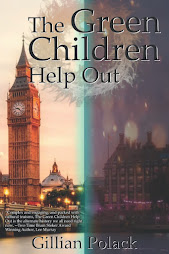


Someone sent me to a story the other day because they knew I was interested in alternate Jewish history (because my most recent novel, The Green Children Help Out, has superheroes and alternate Jewish history) and that story rested all of its research on Christian views of history. The concept was a terrific one: what would happen if the relationship between Christianity and Judaism were inverted, with Christianity the minor religion. Making Judaism more Christian both culturally and religiously meant the story didn’t even come close to exploring the concept. The major players were changed, but the everyday culture was not.

It’ll be a while before I can write a novel using these historical explorations, unless I want to follow the path of the story I so dislike. Before I can bring my imagination to play and tell stories based upon hidden and lost history, I need to find as much as I can about the hidden and lost histories. It’s a marvellously fun trail, but the research is happening now. Old and trusty studies aren’t nearly as useful as conferences and conversations with those doing the research.


Thursday, 29 July 2021

Historians and History in Fiction, by Gillian Polack


Right now, I’m not in the Middle Ages. I’m in the seventeenth century. An important part of my research is looking at whether one novelist in particular frames her seventeenth century story so tightly within genre, that a lot of history simply doesn’t belong there. I’ll talk about this novel somewhere else or some other time, for I’m still in the early stages of analysis. One thing I am certain about: the genre we choose for our fiction informs the type of history we use for it. I am certain about it because it was a part of my research a few years ago.

One of the new things this project is teaching me is rather important for all fiction: when we write novels, we are making stories come to life for readers.

Simple, really. Except it’s not at all simple. Most branches of history (as in the discipline studied by historians) do not include this in their desired outcomes. As historians we’re learning about the past, testing hypotheses, finding out what other historians know, trying to understand our small specialisation and trying to interpret our small specialisation. Very few of us are trying to bring history to life for general readers.

To my mind (and I have strong biases on this!), the historical disciplines that come closest to what novelists do are ethnohistory and living history. The focus in these disciplines is on ethnography and culture and changes over time (ethnohistory) and how real people lived their everyday (living history). They overlap with each other.

My own disciplines are ethnohistory and historiography, which is my very weak excuse for giving you a truly oversimplified description of ethnohistory. Most of my writing, fiction and non-fiction, is informed by ethnohistory, in fact. I have two new novels in the last eight months, and both of them use it, even though one of them doesn’t look as if it should. Let’s start with the other, then, because it’s easier. (I ought to talk about my previous novel, Poison & Light, because it’s all history, even though it’s set in the future. The whole premise is about how we try to bring history into our present, so it’s complicated. It has, I must say, fine costumes.)

Poison & Light


The Green Children Help Out is a fantasy novel, but everything in it rests on history. The history is not solely ethnohistory, but ethnohistory is the wheel that turns everything in the story. The villains are villainous because of how they interpret what has happened to themselves and to others in the past. The heroes are terribly heroic because they don’t want the past to happen again. Every step my characters take is on land I’ve researched and using history I know. This is the novel I went to Amiens to research in 2018. 

The Green Children Help Out


I have pictures of old land use and new land use, of land affected by war and land affected by building over hundreds of years. The ethnohistory embedded into the novel doesn’t shout “Look! History!” it simply informs the characters, giving each of them complex pasts and real lives. It also informs the plot, for the Australians and the British and the French and the sole Singaporean all have quite different national histories and those histories can push individuals from those backgrounds towards certain paths and make certain choices inevitable.

Borderlanders is quite different. It’s set in a house with no clear history. A magic house, settled somehow in the middle of a mountain range not too far from where I live. There’s a gale blowing from me to there, as I type. 


Borderlanders


The ethnohistory is still so much part of Borderlanders. Some parts of culture go with us everywhere and those things have history. Folk beliefs, food preferences, belief in magic or even caring to think about magic: all these things can be written without ethnohistory in mind, but in my case… ethnohistory is always there. My reminder to my readers that it’s always there is the library in this very special house.

My thoughts about ethnohistory are not the only ones. In fact, I’m at one of the edges of the spectrum of ethnohistorians because of how I entered the discipline and because, honestly, not many ethnohistorians write novels. This means I can teach writers how to use ethnohistory, and I do, when they need it as a tool.

What about living history? Every historical fiction writer uses living history in their work, whether they intend to or not. It’s the stuff that brings a scene from the past to life. When you read about someone walking down a muddy street and they wish they had worn pattens and their feet hurt from the cobbles and… that is living history.

There are some amazing places to learn living history. Museums, for example, will create displays that are not simply objects in a cabinet, but objects that make me want to pick them up and use them. Some fairs (and also many museums) bring experts in to not only show everyday life, but to talk about it. I have a friend who’s an archaeologist and who is expert in textiles. You can see her work at museums in Germany. You can ask her questions and understand what spinning means and what it is in the life of an ordinary woman in the Middle Ages.

When a scholar is studying living religion, they look at the part religion plays in the lives of people and how religion is expressed. It’s not the theory of religion. It’s ordinary life. How does their religion inform their world view? What religious customs do they bring into their everyday?

Obviously there’s large overlap between ethnohistory and living history. In fact, as disciplines, they inform each other. And both of them inform fiction writers.


Tuesday, 2 August 2016

History belongs in all fiction (Canberra's history, part one) by Gillian Polack


This month I asked readers what they’d like me to write about. I was given half a dozen good suggestions, and a couple of silly ones. 

The suggestion that stuck with me was to write about the history of where I live, which is Canberra, Australia. When I was catching a bus last week I saw my local lake from the bus and realised that I’d seen that view in the Canberra Museum and Canberra. I’ve seen a nineteenth century painting of it (with sheep, for it was a sheep station at that moment in its long life) and a twentieth century painting (also with sheep) and any number of photographs (with cars and a highway replacing the sheep). I’ve not seen any pictures of it that show it before European settlement. 

Picture courtesy NLA


I’ve had this thought before: it’s the view that got me thinking about how we brought European culture to this region and laid it over an existing landscape, which was what I explored in The Time of the Ghosts. We replaced some of the kangaroos with sheep and pretended we were part of Europe. History slips into all novels, one way or another, and in the case of The Time of the Ghosts it did a lot more than slip in. 

The changes European settlers made to the landscape inspired me to think about the way we interpret landscape and live on the land. The psychic tensions in that novel reflect the very real unhappiness we’ve carried with us to this country. Fears have to be faced, not just carried like baggage. The sheep help explain that, too, for their sharp hooves are tough on the fragile local ecosystem.

St Andrews, Canberra 1934, picture courtesy St Andrews


I didn’t tell myself “I’m writing about the history of the city I live in” because I didn’t see it that way. Not even when I added the local story about the bushranger’s hoard. History is with us in our novels, however, whether we realise it or not. Historical fiction admits this directly. 

My fiction only sometimes says directly “This has history in it.” It always contains history, however. Every single piece of fiction I’ve ever written contains history in one way or another. 

History always informs our fiction, whether we want it to or not. Some novelists deny having pasts, but those pasts are always there. History informs mine more than most, because when I’m not a writer and analysing various things, I’m a historian. I can’t imagine the world without history. I can’t imagine stories without history. This means, of course, that I can’t imagine where I live without having many thoughts and views about its history.

My forthcoming novel (The Wizardry of Jewish Women) is the last of the series with such strong Canberra links and you can see recent history a little more clearly because of this and because it’s written from an outside vantage point, being set mostly in Sydney. It traces a year (or thereabouts) in the life of a family. I used real events for a great deal of it. Those events ranged from bushfires to meetings inside Parliament House. I was using real events with intent. History in this novel is a grounding factor. It’s the firm foundation from which the reader can enjoy the magic and the special powers that some of the characters possess. Because the bushfire actually occurred and really did burn down a whole region of our city, seeing just how far magical protection can help someone in the story gives the reader a sense of the limits of magic in this world that’s not quite ours.

Canberra bushfire, picture L Rose


So many writers find something that works as grounding for their fiction. For some people it’s the quirks of everyday life. For others it’s clothes and manners. For me, in my contemporary novels, it’s history. 

It’s so easy to remember those paintings and to envisage the difference between the nineteenth century station and the twentieth century fields with a burgeoning city in the background and then the city overtaking the sheep and transforming them into cars and houses. Because it’s easy to see, it’s easy to write about.

Two weeks ago I gave a workshop on world building for writers. I talked about discovering the geology that creates the landscape, because it’s exceptionally useful in grounding the story and in getting details right. The sheep were brought to Canberra because the farming land was mostly poor thin soil. The ancient rocks brought this poor thin soil into existence. But they also count for the shape of that slope I looked at from the bus: even when the sheep are gone, the land is there. It’s the foundation of the world of the story. 


Landscapes over time are terribly important to understand how people live in a place and interact with it. It’s the foundation of all our stories, whether we realise this or not. Once we know a place, we can tell its stories. And now that you know where I’m coming from, I can tell you stories of Canberra. Not every month, but now and again, when something strikes me as interesting.
I’ll leave you with a vignette, just to whet the appetite. 

The reason the Australian Labor Party has US spelling for its name is because one of its founders was American (or from Canada – it’s not entirely clear). King O’Malley was a famous teetotaller. One of my favourite pubs is named after him. I live in a city that has a pub named after a teetotaller politician from over a hundred years ago. This suggests that Canberra is not entirely the dull national capital it appears from outside. 

Our history helps dig beneath that surface and to the bedrock of the city. I look forward to introducing you to it.