Showing posts with label social history. Show all posts

Friday, 22 August 2025

Fallen Women or Vulnerable Girls? by Janet Few


In the second half of the nineteenth century, a proliferation of homes, or ‘refuges’ for fallen women were set up across Britain to reform those who had not adhered to the moral code of the time. As well as government founded refuges, there were also charitable bodies who established institutions with the aim of rehabilitating ‘fallen women’; the most notorious of which were the Magdalen Laundries, run under the auspices of the Catholic Church. The various regional branches of the Discharged Prisoners’ Aid Society were a major provider, funding homes from public subscriptions and donations, supplemented by what the institutions could generate from offering laundry or needlework services.

What was the purpose of these refuges and who exactly were these ‘fallen women’, some of whom were as young as twelve? Our twenty-first century minds, might expect that fallen women would have been prostitutes and it is true than many of the inhabitants of such institutions had been before the courts for soliciting, prostitution, or brothel keeping. The aim of a woman’s refuge was to rehabilitate and reform; transforming the fallen into respectable women who could play a meaningful part in society. Thus, only women who were regarded as capable of redemption were accepted, leaving those who were labelled as the most dissolute and depraved without refuge.

Some of the inmates of these homes were society’s casualties, rather than ‘sinners’. To the Victorians, a ‘fallen woman’ was rather more than just someone who sold, or attempted to sell, sexual favours. The term was applied to anyone who had fallen from virtue, whether they were willing participants in that fall or not. Victims of rape and incest, those with learning difficulties and girls whose home life might put them in moral danger, were institutionalised alongside the criminals and prostitutes. The term ‘prostitute’ is also an elastic one and in the nineteenth century, was not confined to women who provided services of a sexual nature in return for money, or recompense in kind. ‘Prostitute’ might be used to encompass a woman who had had an illegitimate child, or who was living with a man as if she was his wife, without the benefits of a marriage ceremony.

Although Victorian women made up only 20-25% of those indicted for criminal offences, women were more likely than men to be repeat offenders, raising concerns about the need for rehabilitation. Women were also potentially mothers, with an influence over the moral well-being of subsequent generations, so attitudes towards women who transgressed against the legal or moral codes were very different to those towards male wrongdoers.

Time spent in a home for fallen women might be part of the punishment meted out by the courts, with women being transferred from prisons to spend periods of six to twelve months in a refuge. As well as religious instruction, they would be taught domestic skills, designed to fit them for employment. ‘Refuge’ is a word that has benign connotations, a place of safety for those in physical, mental or moral danger. In the nineteenth century, although the motives for setting up these homes might be seen as philanthropic, for the most part, refuges were far from being a place of safety; conditions were harsh and inmates were unlikely to be there voluntarily. 

Many ‘fallen women’ were victims of societal attitudes or circumstances. Some who turned to prostitution were driven by poverty, others were coerced. Women who were persuaded or forced to embark on a sexual relationship and were subsequently abandoned by their partner were regarded as ‘fallen’ but might, in a more compassionate time, be regarded as vulnerable girls, who had been taken advantage of by men. The stigma attached to a fall from virtue, whatever the cause, cannot be underestimated. Condemnation sprung from the contravention of religious, moral and sometimes legal codes. Researching the lives of women who spent time in refuges, often reveals the circumstances that led to their incarceration and helps to explain the life choices that they made, if indeed they had a choice. There is a very fine line between a vulnerable girl and a fallen woman and they were judged by the standards of their time.

Hogarth's A Harlot's Progress 
Image used under Creative Commons - in the public domain


Friday, 16 February 2024

A Gentle Meander by Sheena Wilkinson

Like most History Girls I love reading – fiction, non-fiction, old favourites, new releases, whatever I’m in the mood for. Sometimes, especially if I’m having a vexatious time with the vagaries of the publishing industry, or if life is otherwise stressful, I tend to go ‘off’ fiction for a while. At those times, nothing appeals so much as a good dose of social history – I especially love twentieth century history about the lives of women and girls. 


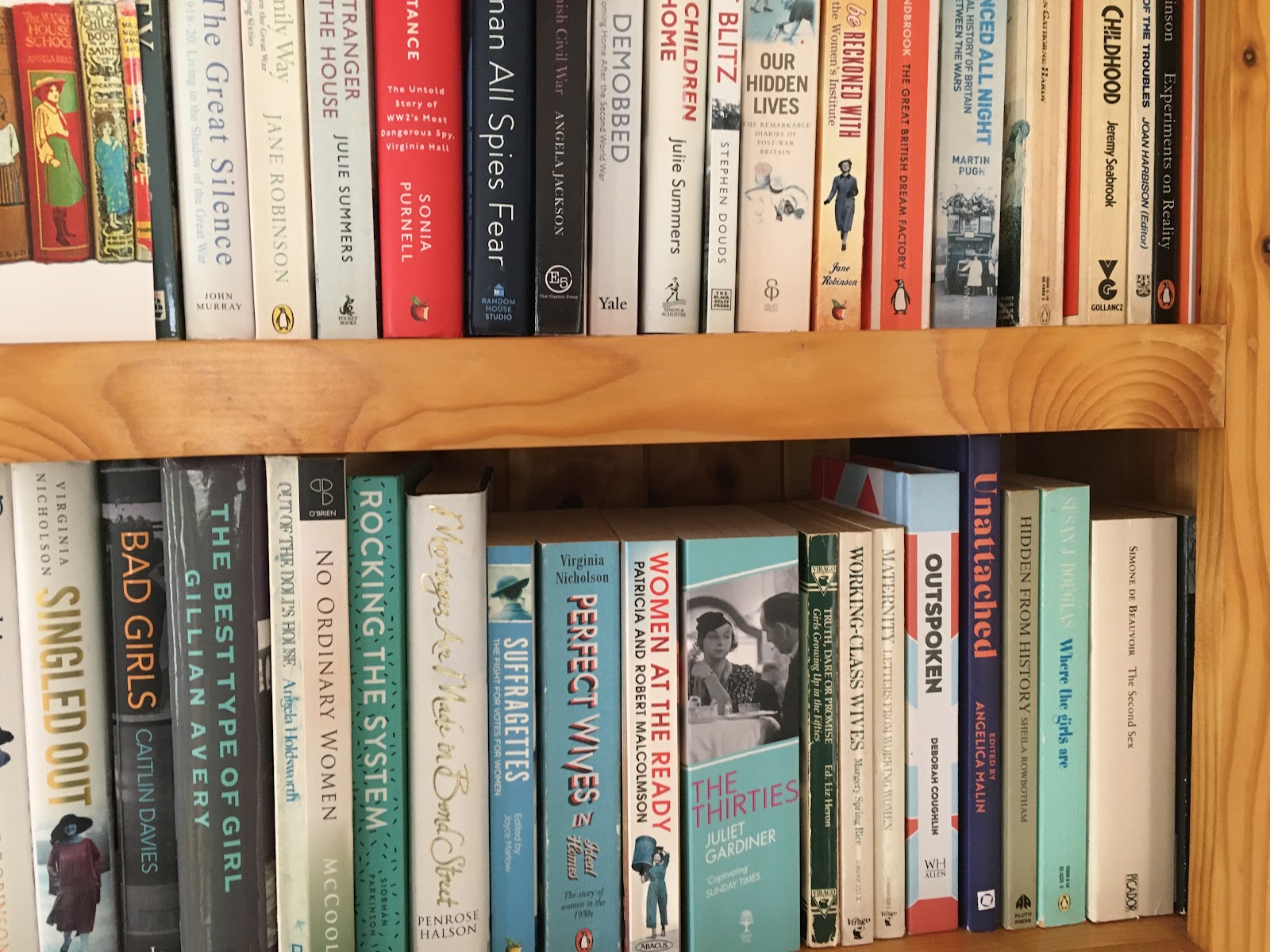
my go-to bookshelf when I fancy a bit of social history 

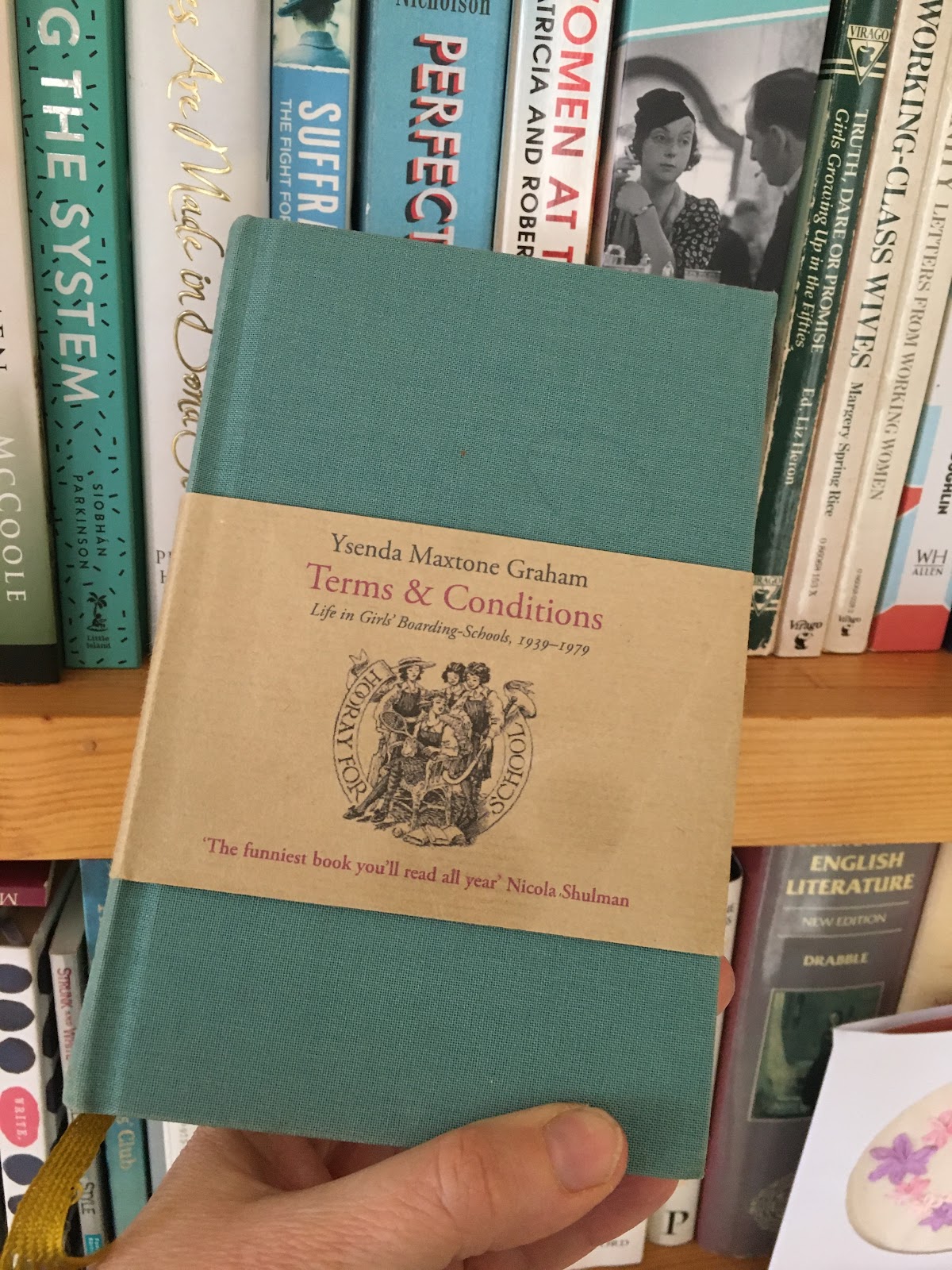
Recently, for research for my forthcoming children’s novel set in a girls’ school, I reread Terms and Conditions, Life in Girls’ Boarding Schools, 1939-1979. This is the first of three books by the writer Ysenda Maxtone Graham. My edition is the first, an unassuming, deliberately retro-style cloth-bound hardback published by the wonderful Slightly Foxed in 2016. That the book did well is evident by its subsequent publishing history – it came out in paperback the following year, and since then Graham has published two similar books, British Summer Time Begins, which focuses on the long school holidays, and Jobs for the Girls, about women in the workplace. All the books, which are based round the reminiscences of living people,  range in scope from the 1930s to the 80s/90s, have sold well and been enthusiastically reviewed. 


As someone who writes fiction about the lives of girls and women, at work, at school and at play, these books have been wonderful research material, but also a great joy. Ysenda Maxtone Graham writes with humour and warmth, and the books certainly appealed to those who love a bit of nostalgia, but they are very sharply observed too. 


I particularly enjoyed Jobs for the Girls, where we meet women – and many teenage girls – at work in factories and offices of all sorts, often giving those jobs up on marriage as was expected. By writing about this aspect of women’s lives, Graham is really shining a light on society more widely. 


I’ve always loved reading and writing about women at work; my favourite bits of my novel Mrs Hart’s Marriage Bureau (Harper Collins, 2023) were the scenes set in the back office of the eponymous bureau. As a lifelong fan of the Chalet School series, I always loved the glimpses of the staff at rest in the staffroom, gossiping, smoking and eating chocolates. (The years I actually spent in a school staffroom, in my former life as a teacher, were less relaxing.)


In my adult reading, too, I love the little details of life in offices, on farms, in hospitals and factories. One of my go-to comfort reads (I am not alone in this) is the Cazalet saga by Elizabeth Jane Howard, and much as I love the relationships and adventures of the central characters, I also relish the domestic minutiae – how will the cook feed all those people and how can she stop the meat from spoiling in the heat? It’s the same instinct that takes me often to my granny’s old recipe books, even though I know I will never cook brains or rissoles.


Of course Howard was writing about the years of her own childhood, and Graham is mining the memories of her interviewees. What I love best are the incidental details in the fiction from earlier decades – how people lit their fires and polished their furniture and cleaned their typewriters and spent their wages at Woolworth’s. Dorothy Whipple’s books are all delightful, but one of her earlier novels, High Wages, though not generally seen as one of her masterpieces, appeals to me because the heroine works in, and gradually rises to own, a dress shop. 


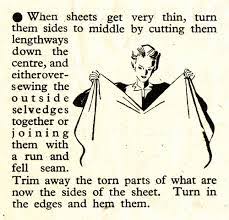
This isn’t  a learned essay; it’s a gentle meander through some favourite books, but I make no apology for that. I’m a History Girl because I love those small domestic details, and always have done ever since I first read about the Fossil sisters saving the penny and walking to see the doll’s houses in the V & A, or about Laura Ingalls curling her bangs with a hot poker, or the Chalet School girls hemming sheets ‘sides to middle’ to increase their lifespan – the sheets’, not the girls’.


I was sad to finish the Ysenda Maxtone Graham books, and I do think many History Girls would enjoy them too. She has written about people, mostly women, at school, in the summer holidays and at work; I wonder where she might go next? Wherever it is, I can’t wait.