Showing posts with label spies. Show all posts

Friday, 3 May 2024

Spies, Lies & Deception - Celia Rees


 Being interested in spies and all things spying, I just caught the end of this fascinating exhibition at The Imperial War Museum. 

I first visited the IWM in the Sixties and have been a regular visitor over the decades. In recent years, my visits were often focused on a particular exhibition which had direct relevance to something I was writing. Fashion On The Ration was really useful when I was writing Miss Graham's Cold War Cookbook; Lee Miller: A Woman's War was invaluable as one of my characters was an American photojournalist. I like exhibitions. The mix of images: photographs, paintings, sketches, postcards, newspaper cuttings and the objects that people used, owned, carried and valued tell you a great deal about those people and their lived experience. To a writer of historical fiction, these things provide invaluable reference, enabling us to more accurately re-create and re-imagine past lives. 

I've also spent time in the Imperial War Museum Research Room, doing Real Research, reading contemporary accounts of life in Post War Germany for Miss Graham: diaries, letters, journals, log books and official documents. It's not just information, these documents provide really valuable details of people's lives. These are the 'nuggets' we depend on as writers to make our characters authentic to their time and make them come alive, details that it would be impossible, otherwise, to find or imagine. Even the paper, the handwriting, the writing instruments, pencil or fountain pen, the browning paper, the courier font of the manual typewriter are evocative echoes of past lives. 

The Imperial War Museum is also a place of inspiration. I was in another Spy Exhibition when I had one of those powerful moments when disparate strands of an idea come together and coalesce into something that you know will be a book, in this case Miss Graham's Cold War Cookbook. 


Spies, Lies & Deception covered more than a hundred years of espionage through 150 different objects, photographs and interviews. It began with spying in World War 1 and went on to the interwar period and World War II: the deceptions, inflatable tanks and Operation Mincemeat; the gadgets dreamed up by MI9 the precursors of Q and the heroism of agents like Noor Inayat Khan who had to use those gadgets for real. 

Noor Inayat Khan

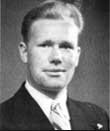
The exhibition continued through The Cold War period with the Soviet double agents, Cambridge spy, Kim Philby and  Karl Fuchs, the spy who gave away the secrets of the atom bomb to the Soviets. One of my favourites from this period is Melina Norwood, an 87 year old great grandmother, another atomic spy, who wasn't uncovered until 1999. As a woman, she was not considered a threat. 

Melina Norwood - great grandmother - and spy

The exhibition continued to the present, ending with the Salisbury Novichok poisonings and the role of Bellingcat, the online investigators, in uncovering the real identities of the two men responsible, both officers in the GRU,  Russia's Foreign Military Intelligence Agency. 

Matchbox containing secret messages.


We've come a long way from messages hidden in matchboxes to Bellincat's combing of open source data. In a world of deepfakes, where it is hard to tell fact from fiction, their investigation of the Salisbury poisonings proved it is harder now to hide and keep secrets. Just like mobile phones have made any citizen a potential news photographer, online open source intelligence organisations, like Bellingcat, keep an eye on clandestine developments in an increasingly complex and dangerous world.  

Friday, 10 February 2017

The Apothecary as melting pot - Michelle Lovric

Many modern chemist shops, as typified by Boots, are large, impersonal places.

They could not be more different from their antecedents in Venice.

The old Venetian chemist, known as the Apothecary or Speziale,  ran a highly personal business, often trading on the cult of his own personality and the special patent remedies he produced. His shop had its own logotype – often an animal, mythical eminence, religious figure or human virtue - which was reproduced on his handbills. More than that, each Apothecary shop, or Spezier, was a fertile ‘contact zone’ between classes, races, professions and the sexes.

Signor Speziale probably came from the citizen class, but he mixed with noblemen, merchants, scientists, doctors, priests, writers, performers, ambassadors and – spies.

His skills and cultural knowledge gave him respectability and social permeability – and so did his establishment, as seen in this painting by Pietro Longhi, 1752.

It shows an apothecary in his elegant shop, examining the throat of a young female singer, while an apprentice takes notes and other patients wait their turn. They include a friar and a nobleman.

For Signor Speziale’s premises were no mere dispensary. His shop was luxuriously appointed with carved wood panelling, furnished not just with the picturesque tools of his trade, including enormous mortars & pestles, duck-billed alembics, painted glass and majolica pots and talismanic objects, but also with exotic plants, perfumed oils, books, ledgers and religious paintings, because medicine was a holy art in Venice.

Like art, Venetian medicine underwent a distinct humanist Renaissance. So in Signor Speziale’s shop you would find the curious mixture of theatre and science, modernity and antiquity, that characterized Venetian medicine.

Our Signor Speziale might have the traditional crocodile hanging from his ceiling, a private collection of wonders from the natural world.

Above is the studio of a Neapolitan collector and apothecary, Ferrante Imperato, who imported some drugs from Venice. Imperato’s Venetian counterpart would have adopted some of this intellectually provoking interior design. The Golden Ostrich, for example, had a narvalus horn to entertain its visitors.

 Notice the chatterers, admirers and strollers here … Prices of medicines were fixed by the state, so Venetian apothecaries had to compete for attention and allure clients in other ways. So Signor Speziale’s shop was a place where men might drop in after work – or instead of work. It was clean and smelled delightful, unlike the streets of Venice. The goldsmith Alessandro Caravia observed in 1542 that only paradise could smell better than a Venetian pharmacy.
This pleasant place was therefore a site for socialising, gossip, political discussion and even gambling. People came to play chess, to network socially. There was a convivial atmosphere, as in a coffee shop. Apothecaries offered mail-drop services and could even print for clients.
Our Signor Speziale was often a bit of a newsmonger and a newshound. In 1755, Carlo Goldoni, Venice’s Shakespeare, produced a musical comedy called Lo Speziale, in which the apothecary Sempronio is obsessed with the news cycle. The ‘avvisi’ or news bulletins are delivered throughout the day to his premises. In this picture you see him avidly reading one.


At the times of the wars against the Ottoman Turks, people would gather at the great pharmacies to hear the latest. And as well as disseminating news of battles, pirates and politics, selling medicines, and having learned or philosophical discussions, Signor Speziale might well be working on a book of remedies of his own for publication, to solidify his immortality. Giorgio Melichio at Lo Struzzo was particularly prolific, as were his heirs in business Alberto Stecchini and Antonio de Sgobbis.


The humanism of the Renaissance also positively contaminated Signor Speziale’s profession. He would know Latin, and ancient Greek. Venice being the heartland of Italian printing, he would have read the works of Avicenna and Serapion, and particularly Galen and Hippocrates.

The apothecaries of Venice were obsessed with recovering the ancient herbal remedies of the past, particularly those of Dioscorides, promoted by the Venetian physician Pietro Matteoli as well as the materia medica of the chemistry kit of course. So a director of one of the great botanical gardens on the mainland might visit our Signor Speziale with samples of medicinal herbs. Apothecaries from other towns in Italy might also come calling, hoping to hear about Venetian novelties and marketing techniques.

Doctors and physicians would of course come to Signor Speziale both to dispense prescriptions and on the hunt for patients. Scipione Mercurio, planning to start a medical practice in Venice, was told by a local physician that he needed only two things to be a success in Venice:

1. to know how to get a woman pregnant and
2. to have a good relationship with the speziali
Doctors issued their prescriptions in person at Signor Speziale’s premises. The doctor might suggest a substitute ingredient if something was not in stock. Physicians often had favourite apothecary shops, but they were not allowed to have a financial interest in them. This did not stop Signor Speziale making handsome gifts – especially of expensive drugs – to the doctors who brought them work.
As well as from the medical professionals, Signor Speziale would receive visits from servants coming to get discreet feminine remedies for their noble mistresses, like Polvere di Hannover – a popular prophylactic against fainting. Or those mistresses might come themselves, sure of a pleasant, entertaining and even educational time.
And finally, given all this activity, Our Signor Speziale might be a conscious or an unwitting host to spies and informers from foreign states or cities, plus the spies and informers of the Inquisition and the Holy Office, watching the spies and the informers of foreign states.
Not surprisingly, some apothecaries were accused of heresy by the Holy Office – the Moor, the Angel and the Falcon were denounced in 1551, along with their apprentices. The Inquisitors (from 1539) kept an eye on the apothecaries because of the books they collected, which often associated healing with magic or ancient pagan wisdom.
 

Moreover, such dangerous ideas were freely discussed in the sociable environment of Signor Speziale’s shop. In 1611, Angelo Cerutti of the Sun at Arsenale was spied on by the Inquisition. He was arrested in 1612 and tortured probably by the strappado, a rope that tied his hands behind him and lifted him up until his arms broke. On the basis of his confession a Spanish conspiracy was uncovered. Cerruti was exiled.
In 1620 the Golden Lion at San Marco and the Castle in Castello were accused of hosting dissident religious discussions. In 1622 Bartolomeo di Marostica at the Charity was denounced for blasphemy. And later, after the Venetians’ revolution against the Austrians in 1848, a Venetian Speziale partisan was deported to Bohemia. His name was Bernardo Baldisseroto … and he was the father of Giovanni Baldisseroto the pharmacist of I do San Marchi, which can still be seen today as its interior has been rehomed at the Ca’ Rezzonico museum.

All in all, there was more than crushed millipedes fermenting in the ‘front room’ of our Signor Speziale’s shop.

 I never fail to think about that when I am waiting in a queue in Boots.

Michelle Lovric
An essay by Michelle Lovric is included in this new publication, Stories of Inspiration: Historical Fiction Edition, Volume 1: Historical Fiction Writers Trace Their Journeys from Starting Point to Finished Work, edited by Suzanne Fox.


Tuesday, 3 March 2015

Author Maths, by Y S Lee


The US/Canadian cover (Candlewick Press)
One of the things I find consistently surprising in historical fiction is how very long it takes to get from one place to another. My Mary Quinn Mysteries (called the Agency series, in North America) are set in London between 1858 and 1860. They’re too urban to make use of the railways that criss-crossed the country and a shade too early for the first intra-city underground trains (the Metropolitan Railway opened in 1863). Most of the travel in my novels takes place either on foot or by horse-power: carriages, cabs, and of course, simply riding on horseback. By 1858, there were also horse-drawn omnibuses that, like our present-day buses, plied regular routes through the city. 

The UK/Australian cover (Walker Books)

The climax of Rivals in the City features a fair amount of running around between locations in central London. One of the first things I did when plotting it was create a chart showing the different sites, the distances between them, and how long it would take to move from one point to another. In order not to spoil the plot (Rivals will be published next week in the U. S. and Canada; it’s already available in the UK), I’ve renamed the locations after four of my favourite North American cities. This, of course, is a fiction upon a fiction; the real locations are London landmarks. Otherwise, here’s what my chart looks like:


Timing the final action

Locations
Distance in miles
Walking (in mins)
Running (in mins)
Horseback (in mins)
Vancouver to Toronto
2.7
54
27
22
Toronto to New York
3.2
64
32
25
New York to Montreal
1.9
41
19
16
Montreal to Vancouver
1.9
40
19
16
New York to Vancouver
1
20
10
8

I assumed an average running speed of about 6 miles/10 km per hour - a pretty fast clip for a woman burdened with heavy clothes on slick, inconsistently paved, and poorly lit urban streets (it’s after dark). But I’m talking about the women of the Agency, an elite detective firm. Not only are they are in excellent physical form, they are responding to an emergency.

I assumed a horse trot of 7-8 mph, since poor road quality and night-time visibility again make it impossible to canter. With horseback, I also needed to allow tie-up time and the need to rest or change horses. Riding turned out to be not much faster than running, but riding made it possible for a character to arrive at an important location looking respectable.

As it worked out, the time elapsed for a series of important messages to be relayed was:

- 57 minutes: for a character to run from Vancouver to Toronto and back again

- 41 minutes, plus delays while tying-up a horse: for a character to ride from Toronto to New York, and then from New York to Montreal

- 30 to 35 minutes, plus time for marshalling and instructions: for a large group to walk quickly from Montreal to Vancouver

This left me with a space of 2 ¼ hours, the minimum period during which my heroine, Mary Quinn, would be alone in “Vancouver” after sounding the alarm. It turned out to be the perfect window of time to allow her to take action, imperil herself, yet receive help at just the right moment.

I love this kind of concrete plotting, and wonder if any of you do the same. How do you work out timelines, near-misses, and rescues?
--
Y S Lee is the author of the award-winning Mary Quinn Mysteries (Walker Books/Candlewick Press), a quartet of novels featuring a girl detective in Victorian London. Rivals in the City, the last in the series, is published in the US and Canada on March 10.

Tuesday, 3 February 2015

Setting Europe Ablaze, by Y S Lee

In December, I introduced you to my historical boyfriend, Freddy Spencer Chapman. Since then, my research has led me to the more general history of SOE, the Special Operations Executive that operated parallel to – and sometimes in conflict with – established military intelligence during the Second World War.

Chances are, you’ve heard bits and pieces about SOE’s exploits in both fact and fiction. Historian M R D Foot says it was “formed in a tearing hurry during the summer crisis of 1940, at Churchill’s direct prompting” and dismantled in 1946. Churchill’s actual directive was for SOE to “set Europe ablaze”. Now, looking back, what reader or writer could resist such an invitation? Even better, because the organization no longer exists, its six years of secrets can be fully explored without endangering lives. Finally, there’s the romance of it all: clandestine recruitment of a diverse and international group of volunteers who didn’t know what they’d be doing, but were willing to perform “duties of a hazardous nature”.

SOE’s work is at the centre of recent novels like Elizabeth Wein’s Code Name: Verity, William Boyd’s Restless, and many others. I’ve recently been reading some non-fiction sources in an absolute fever of excitement. Currently, I have SOE and the Resistance: As told in the Times Obituaries (ed. Michael Tillotson, 2011) and Forgotten Voices of the Secret War: An Inside History of Special Operations in the Second World War (ed. Roderick Bailey, 2008). Today, I want to share a few highlights in hopes of enticing you to join me.

Einar Skinnarland (Norwegian, 1918-2002)
image via snipview
Skinnarland was an engineer at a hydroelectric plant in German-occupied Norway that was scheduled to produce heavy water for the Nazi plutonium project. In May 1940, Skinnarland took a one-month leave from his job at the plant, joined a group of young Norwegians who hijacked a coastal steamer, and sailed it to Aberdeen to offer their services to the Allies. He brought with him detailed information about the plant’s security systems and volunteered to return for a sabotage operation. After “very basic” parachute training, the RAF dropped Skinnarland back into the Norwegian mountains, in good time for his return to work after a “holiday”! Skinnarland and his associate, Knut Haukelid, spent several months training resisters in the mountains and their group succeeded in sinking Germany’s stocks of heavy water in Lake Tinnsjo in February 1944 – a major contribution to the end of Hitler’s hopes for an atomic bomb.

image via wikipedia
Jos Gemmeke (Dutch, 1922-2010)
As a teenaged girl in the occupied Netherlands, Gemmeke volunteered to distribute copies of a resistance newspaper. The penalty for being caught with even a single copy on one’s person was death, and Gemmeke ran this risk daily for more than four years. She also couriered messages for the Dutch resistance, on bicycle, hiding the microfilms in her shoulder pads. On one journey, while attempting to cross the River Waal, a German soldier informed her that the bridge was closed. As she tried to persuade him to let her cross, Allied aircraft strafed the bridge. The German soldiers dived for cover and Gemmeke was free to cycle across, working her way through the front lines, and delivering the microfilms to newly liberated Brussels.

Pearl Witherington (English, 1914-2008)
image via wikipedia
When Paris fell to the Nazis in 1940, Witherington, who was born to English parents and raised in France, was forced to make her own way to England, from Spain to Portugal and then through Gibraltar. Once she found SOE, her instructors were impressed, if patronizing: “This student, although a woman, has got leader’s qualities. Cool, resourceful, and extremely determined. Very capable, completely brave.” Witherington parachuted back into occupied France to work a courier between different SOE “circuits”. When the Gestapo arrested the head of her circuit, Witherington was given control of the northern half of the circuit. She armed French Resisters, gave them weapons training, and ambushed German convoys of military vehicles. After the war, she settled in the area where she’d led her circuit.


Ibrahim bin Ismail (Malayan, 1922-2010)
image via wikipedia
After the debacle that was the British “defense” of the Malayan peninsula in 1941-42, SOE turned its attention to recruiting local resistance to the occupying Japanese army. The Malayan Communist Party was staunchly anti-Japanese, but their politics made the British nervous. In Ibrahim, SOE found a perfect recruit: an existing officer in the Indian Army willing to infiltrate his homeland. After two failed attempts at a coastal landing, Ibrahim’s party successfully reached the shore in kayaks, only to be welcomed by Japanese soldiers. Under interrogation, Ibrahim persuaded the Japanese that he would prefer to work with them. As evidence, he offered to radio a message to SOE headquarters. In the message, Ibrahim gave the wrong answer to his safety check question, thus alerting headquarters that he was in Japanese hands. For the remaining ten months of the war, SOE used Ibrahim to feed the Japanese false information.

Noor Inayat Khan (Indian/American, 1914-1944)
The daughter of an Indian father and an American mother, Khan declared to SOE that while she loathed the Nazis and wanted to defeat them, her first loyalty was to India. Her recruiting officer noted that hers was the sole case in which “a loyalty was not directly British”. As Khan was fluent in French and already working as a WAAF wireless operator, SOE trained her only briefly. Six weeks after Khan’s arrival in France, hundreds of other resistance workers in her circuit were arrested. As the only radio operator still free in Paris, Khan continued to work, limiting message transmission to 20 minutes per location, and moving constantly in order to evade detection. She was betrayed to the Germans by a double agent within SOE. During her month-long interrogation, she lied consistently, gave up no secrets, and twice attempted escape. After her third effort to escape, Khan was transferred to Germany as a Nacht und Nebel (Night and Fog) prisoner – that is, to disappear without a trace. There, although kept shackled and in solitary confinement for ten months, she was able to communicate her name and London address to another inmate. She was executed and her body burned in 1944, and was still officially classed as “missing” in 1946.

These are just five of the astounding volunteers of the Special Operations Executive. I've deliberately chosen individuals from diverse places, to show the breadth of SOE's remit: Churchill may have thought primarily of Europe, but SOE operated the world over (with the exceptions of Russia and Japan). Three of the five here are women because women were particularly active in SOE, especially in its French Section. But there are hundreds of others whose stories keep me up late at night and change the way I think of the Second World War. I hope the same is true for you, too.

Friday, 1 August 2014

The Secret World of Christoval Alvarez review by Mary Hoffman

Ann Swinfen is no stranger to this blog; indeed she has become one of our invaluable team of Reserves - that group of stalwarts who write "anytime blogposts" which we can use if there is an emergency or a regular contributor needs a scheduled month off.

So it's a great pleasure to be able to review Ann's - I was going to say "latest" book but she is so prolific and quick that the sequel is already available and the third book coming soon.

To return to the first book, The Secret World of Christoval Alvarez, England in 1586 is a dangerous place. Queen Elizabeth the First has been on the throne for nearly thirty years and, at fifty and without an acknowledged heir, is now the subject of many plots to replace her with a Catholic monarch. Her chief Secretary is also her spymaster, Sir Francis Walsingham.

In London, where William Shakespeare is shortly to arrive and the life expectancy for men is 29 years, lives a sixteen-year-old boy and his father, the physician Dr Baltasar Alvarez. They are Portuguese Jews in flight from an appalling family catastrophe at first only hinted at.

Christoval, known as Kit, is learning his father's mystery, how to treat and heal sickness and injury. One night a young Player from the Earl of Leicester's Company calls for the doctor to come and treat a man in the Marshalsea Prison but Baltasar is away and young Christoval takes the case (which might have been poisoning but turns out only to be caused by bad oysters).

From that night, his adventures multiply and Christoval ends up in employ of Walsingham as a code-breaker and spy.

"The plot thickens" is a cliché but this one really does. Christoval has a secret of his own and a past filled with horrors, which we occasionally glimpse. But in his new life as one of Walsingham's "eyes and ears" he finds himself in greater danger than if he had stayed in Portugal.

Tudor buffs will recognise the date of 1586 and guess what plot Christoval might have a hand in unearthing. But the man he purged of oysters at the beginning of the book has not yet passed out of the story and the reader feels instinctively he will be back with more plots and dangers.

The second book is just out so we won't have long to find out.


Ann Swinfen wears her learning lightly but there is clearly rigorous research behind these novels. Not just the events of an eventful but well-known reign but the properties of herbs and roots as medicine, the types of code used in conspirators' letters and what happened to the Jews in Portugal. I imagine we will gradually piece together exactly the fate of Christoval's mother and sister and it won't be good.

The third book, The Portuguese Affair, will be out before summer is over.

And an elegant trio of books completed.


Ann Swinfen's website


Tuesday, 29 April 2014

Saints, Spies and Saboteurs

Our guest this month is Ann Swinfen, one of those multi-talented women who seem to be able to do anything, juggling a large family, academia, historical research and writing fiction.


Ann Swinfen (http://www.annswinfen.com) published three novels with RandomHouse, but her three latest – The Testament of Mariam, Flood and The Secret World of Christoval Alvarez – she has published herself. Loving the whole independent publishing process, she thinks it unlikely she’d ever return to conventional publishing. Short stories previously in magazines and on BBC radio are now on Kindle. She’s reissuing her backlist and continuing the Christoval series set in 16th century London, featuring a young physician coerced into becoming a code-breaker and spy in Walsingham’s secret service.

Over to you, Ann and many thanks for visiting

Sometimes a story seizes you by the throat and won’t let you go until it is told. That is what happened to me with The Testament of Mariam. For a long while there had been a vague, half-formed thought at the back of my mind – What would the real man Yeshûa have been like? The peasant from Galilee who, over the course of a few short years, changed the course of human history? Yeshûa was his original, Aramaic name, though down the years it has been transformed into Iesu, Jesu, Jesus, and many other variants. The man of blood and bone has been so buried under the accumulated detritus of doctrine and years that he is hidden from us.

I have never doubted that there was a real man, but I had never given it any serious thought until one day a question formed, without any conscious volition on my part: What would it have been like, to be the sister of such a man? To have grown up with him in that humble carpenter’s family, in an insignificant northern village, in a Roman-occupied province, where all the wealth and any surviving power was concentrated in the south of the country? At that point Mariam walked into my head and began to talk. She was elderly and ailing, living as an exile in southern Gaul, having shut away the memories of her girlhood, too painful to recall. But then a series of events occurs which brings back those times, and I – we – relive them with her.


Unusually, I did not do a lot of research before I began to write, because the story was pressing itself on me so urgently. Instead, I wrote and researched in parallel. Having been, in my time, a classicist, I already had a good grounding in the culture and history of the first century AD, so I was on familiar ground as I wrote during the day. In the evenings I read voraciously about the areas of the history that were new to me. I discovered that a great deal more was known than I had realised. Galilee was a hotbed of insurrection. Revolts against the Roman occupation, and also against the time-serving southern aristocracy, had been erupting for a couple of generations. Some of the leaders of these revolts were even called Yeshûa. Now there was food for thought! Also, I had recently read The Gospel of Judas, which caused me to rethink that whole strand of the story. In the course of my research I discovered a fascinating study on the content and poetic structures of the psalms, so when I needed a psalm, I wrote one myself, based on that research.

I had dipped into the translation of The Dead Sea Scrolls before, but now I read them from cover to cover, and the commentaries relating to them. I became convinced that Yeshûa must have spent time amongst the Essene community, where the Scrolls originated. The Essenes had ritual meals involving sacred bread and wine. Their medical practices included techniques used by Yeshûa in his ministry (and I learned that amongst his contemporaries, he was renowned above all as a healer rather than a religious leader). However, the Essenes were an exclusive, hierarchical sect, regarding the rest of mankind as sinful and doomed, and permitting only those from the priestly castes to rise to high rank amongst them. This would have been anathema to Yeshûa, given his later teaching. Therefore, I reasoned, if he had spent time amongst the Essenes, he could not have remained there.
A fragment of the Dead Sea Scrolls

What about women? Where would this fictional sister fit into the story? The social mores of the time meant that women and girls were kept very close to home, under the strict supervision of their fathers or husbands. Yet it is clearly documented in the New Testament that a group of women formed part of Yeshûa’s following, travelling with him about the country, living, like him, on the charity of the communities they visited. They came from many different walks of life and they were there at the end, at the crucifixion. Therefore it was perfectly reasonable that Mariam, Yeshûa’s younger sister, should be one of those women. I was writing a secular novel – it was never intended to be a religious book – and I felt that Yeshûa’s sister would be confused. She loves her charismatic brother. She fervently believes in his vision of a new dispensation, when all shall be free, the common people no longer downtrodden. But she has known him all her life, a son of the same parents. How can she accept his divinity? She constantly tries to rationalise the miracles, never quite sure…

And then, there are the saints. Saint Peter, after all, starts out as a peasant fisherman called Shim‘ôn. A blunt, practical man of his hands, nicknamed Kêphas, ‘The Rock’, a solid reliable man, on whom Yeshûa depends. Yet we know he denied his leader three times. He was human. He was frightened. He too could have been crucified. Even saints are very much like the rest of us.

Hence the strand of ‘saints’ in these musings of mine. In writing historical fiction, I have never wanted to write about kings and queens, mighty warlords or powerful politicians. What interests me are the ordinary people, the common mass of humanity, who sometimes do extraordinary things. So fishermen, tax collectors and prostitutes can become saints. The other two historical novels of mine that I want to discuss involve small communities, commonly overlooked in the general scheme of things, but sometimes remarkable for all that.

The first is the Marrano community in late Tudor England. Most history books will assert that there were no Jews in England from the time of their expulsion in 1290 by King Edward I (who owed them a great deal of money) until Cromwell did a deal with Menasseh ben Israel in 1655-6, keen to lure wealthy and experienced Jewish merchants to London at a time when the country was in dire financial straits after the Civil War.

However, there were Jews in England during the intervening 365 years. There are occasional references to Jewish merchants in the fourteenth and fifteenth centuries, but the real influx began as a result of the Inquisition in Spain and later in Portugal (after an aggressive Spain under Philip II invaded and seized control of the latter). Ironically, when a large part of the Iberian peninsula was under Arab control, both Christians and Jews were tolerated, even if they did not have full citizen rights. Once the Spanish had driven out the Moors, an inflexible Spanish Catholic Church turned on anyone outside its confines, which meant anyone with suspiciously Protestant leanings and above all, the Jews. Spanish and Portuguese Jews, if they were to avoid death, were forced to convert to Christianity, becoming the conversos, or novos cristãos, or New Christians. They were also known as Marranos, which is, in fact, a term of insult.

Despite their conversion, the New Christians continued to be regarded with suspicion by the Catholic Church. They were regularly rounded up by the Inquisition and tortured. Those who did not give satisfactory answers were killed in the mass public executions called autos-da-fé. (It was considered beneficial for local people to attend these edifying spectacles – it would chalk up advantages for them in the afterlife.) Those New Christians who were deemed to have shown true penance were paraded through the streets half naked, while they were scourged. Their property was confiscated and they were driven from their occupations. As many of them were wealthy merchants or distinguished scholars, this was no minor affair, and Iberia lost many men of great talent.

Auto da Fe
One recourse for those who had the means of escape was to take passage on one of the merchant ships trading with the Protestant countries of northern Europe, in particular England and those parts of the Low Countries which were not under Spanish control. Although some of the Portuguese Marrano immigrants who settled in London were poor, earning their living as pawnbrokers or by trading in secondhand clothes, a large number were from the professional classes. The merchants dealt in exotic goods – spices and silk and gems – sending their ships along the new routes to the near East, the Indian subcontinent and the East Indies. The physicians, some of whom had been university professors, brought with them their advanced knowledge of Arab medicine.

So it was that the two leaders of the Marrano community in late Elizabethan England were Dunstan Añez, merchant and Purveyor of Groceries and Spices to Her Majesty the Queen, and Hector Nuñez, merchant and physician to (amongst others) Lord Burghley. The most famous of them all was Roderigo Lopez, who rose from a position as physician in St Bartholomew’s Hospital for the poor of London to personal physician to the Queen herself.

Into this established community of Marrano London comes twelve-year-old Christoval Alvarez. Baltasar Alvarez, New Christian professor of medicine at Coimbra university, fleeing the Inquisition, has brought Christoval (Kit) to London, where he assumes a post as physician at St Bartholomew’s. At the point when my novel The Secret World of Christoval Alvarez opens, Kit is sixteen and working as an assistant physician at the same hospital.

I was drawn to this story by this little-known community living discreetly but quite successfully in Shakespeare’s London. And although they took care not attract attention to themselves, they were not entirely free from danger even here, for there was a good deal of racism and anti-semitism in Elizabethan London, where there were substantial foreign groups, mostly escaping persecution on continental Europe. As well as the Marranos fleeing the Inquisition there were Hollanders persecuted by the Spanish overlords of parts of the Low Countries and those French Huguenots who had managed to survive the Massacre of St Bartholomew’s Day and who now plied their silk-weaving trade in Petty France. There were, however, bad winters, unemployment and periods of famine at the time, and it took little enough to set loose the bands of armed apprentices on the streets of London, crying, ‘Clubs! Clubs!’ and looking for easy victims. Both Marlowe and Shakespeare drew on this vein of racism and anti-semitism in The Jew of Malta and The Merchant of Venice.

It was a dangerous place, late Tudor England. And one of the greatest threats came from the constant – almost innumerable – plots against Elizabeth and the English State. Elizabeth had been excommunicated by the Pope and his blessing had been given to any man who tried to assassinate her. There were plenty willing to make the attempt. Some plots were simple affairs, involving just one or two men, but the most dangerous were backed with money and troops by the Duke of Guise, cousin of Mary Queen of Scots, who wanted to see her on the English throne and Protestantism wiped out. Philip II of Spain – always an expansionist – also had his eye on the throne. While he was married to Mary Tudor he styled himself King of England. Had the Armada succeeded, he would have reclaimed the title.
Sr Francis Walsingham
Into this morass of traitors and plots stepped Sir Francis Walsingham, who formed England’s first secret service of spies, intelligencers and code-breakers. His network extended over the whole of Europe and reached even into the Ottoman Empire, often making use of the channels of communication provided by the Marrano merchants. The amount of work accomplished by his service (and financed by him personally) was phenomenal, and kept the country safe for years. His chief code-breaker was Thomas Phelippes, who survived him and had a colourful subsequent career. One of his agents was Robert Poley, a slippery, ambiguous character, probably a double agent, possibly a traitor, certainly an agent provocateur, and a thoroughly nasty piece of work. It is not without significance that he was one of the three unsavoury characters present when Marlowe was ‘accidentally’ stabbed to death.
An encrypted letter
Through the connivance of Robert Poley, Christoval Alvarez, who is mathematically gifted, is coerced into becoming a code-breaker and later an agent in Walsingham’s service. Kit has a secret which Poley has uncovered and which could lead to burning at the stake. The only way to ensure Poley’s silence is to comply.

Although Christoval is a fictional character, the secret service and its activities are factual, and amazing some of those activities are. I was drawn both to the history of the Marrano community and to Walsingham’s organisation. It seemed fitting to make a young Marrano one of Walsingham’s agents. The first book in the Christoval series covers the year 1586 and the foiling of the Babington plot, while the next will cover the period up to, including and after the Armada, 1587-8. The Counter Armada of 1589 is rarely spoken about, for it was a total disaster. Undertaken to avenge Spain’s attack on England, its alleged purpose was to put the pretender, Dom Antonio (himself half Jewish), on the Portuguese throne, but through incompetence, arrogance and greed it deteriorated into a catastrophe which cost thousands of lives. Subsequently, it has been swept under the carpet of history, and it has not been allowed to tarnish the fame of the hero Drake, who was largely responsible for what happened. It will be the subject of the third book in the series. The whole history of espionage, plots and counter-plots, the rivalries of men and the battles of nations is so rich it will carry Kit forward into the next century and the next reign.

Saints, spies and . . . saboteurs. Another of those neglected corners of history concerns the Fenland Riots of the seventeenth century. I stumbled across them while pursuing a different piece of research and was immediately intrigued. The enclosure of the common lands of England is one of the more disreputable parts of our history, when all over the country men of wealth and power seized land which had been held ‘in common’ by villagers, ‘enclosed’ it – thus shutting out its rightful owners – and exploited it for their own ends. In many parts of the country, the land was turned over to sheep, an outcome foretold in Jim Crace’s recent novel Harvest. In the East Anglian Fens, it was rather different. This strange, remote, marshy country had its own mode of farming the land, which went back generations, at least to Roman times and almost certainly earlier. Every winter the rains washed alluvial soil from the inland wolds down on to the flat fenland fields. When these winter floods drained away into the marshes – the Fens – the arable fields were left covered with some of the best soil in the country. The whole area, from Cambridgeshire through Suffolk and Norfolk to Lincolnshire, was a patchwork of these field and marshes, interspersed with natural waterways and other channels which had been constructed over the centuries by local people who understood their land and its peculiarities. There was an abundance of fish and waterfowl, the peat bogs supplied fuel, and the thickets of willow and rushes provided material for thatch, baskets, hurdles and eel traps. It was a rich and varied landscape. The people worked hard, but the land yielded a good living.


When ‘adventurers’ turned their greedy eyes on the Fens in the seventeenth century, they claimed that the land was useless and their enclosures and drainage would turn the area into a pot of gold for investors. They were, in fact, a sort of prototype of today’s venture capitalists. Once the land was drained, it would be rented out to immigrant peasant farmers, still coming in (as they had been in Christoval’s time) from France and Holland. The rents paid by these farmers to the investors would return their investment a hundredfold.

The first wave of drainers arrived in the early part of the century and the capital came primarily from the nobility and even the king. Francis Russell, fourth Earl of Bedford, was notorious for his appalling treatment of local people and their rights. However, unlike most other areas where enclosure took place, the fenlanders fought back. This was the start of the Fenland Riots and is reckoned to be one of the underlying causes of the English Civil War. Women as well as men fought against the drainers. When their cases were dismissed in court, often through corrupt and unscrupulous practices, they took up their scythes and pitchforks and attacked the men digging the new drains, who were protected by armed guards. In massive and persistent acts of sabotage, they tore down pumping mills, smashed sluice gates and set fire to the immigrant farmers’ hastily built houses. A number of them were killed or seriously wounded in the counter-attacks.

Then the Civil War came, and the balance of power shifted in the country. Oliver Cromwell, who himself came from East Anglia and had promised support for the fenlanders, seized control of the government, expelling all members of Parliament who disagreed with him (including John Swinfen, but that’s another story!). The fenlanders thought their homes and livelihood were safe. There came the lull between the two phases of the Civil War, and with this temporary peace came a new wave of speculators, led by the new men risen to power, among them Cromwell himself. My novel Flood is set at this time, when the fenlanders found they must fight again, against both speculators and an ever more corrupt judicial system, which often fined and imprisoned those who brought court cases against the speculators.

My central character, Mercy Bennington, daughter of a yeoman farmer, is one of those courageous women who were prepared to go out and fight alongside their men. Some of them were accused of being witches, on account of their unwomanly behaviour. For this was also the time of Matthew Hopkins, self-styled Witch-Finder General, who roamed East Anglia accusing and condemning to death hundreds of innocent men and women. It was also the time of the licensed Puritan iconoclasts, who were commissioned to go out and destroy any remnants of Anglican worship in local churches, smashing up mediaeval stained-glass windows, making bonfires of altars and altar rails, and beating up any clergymen who continued to use the Elizabethan prayer book.


All the atrocities which occur in my novel actually took place – the soldiers urinating in a church font, the mock baptism of a trooper’s horse, the forcing of a village girl to become an army whore, the vicious attacks on clergymen and villagers who supported their traditional way of life, the torture and ‘swimming’ of witches. Everything was fully documented at the time. And what of the actual drainage works? Now here’s the irony of it all. Because the engineers brought in by the speculators did not understand the local terrain, they pumped water out of the Fens into drainage channels for the purpose of turning them into agricultural land. But from time immemorial the Fens had acted as sponges, absorbing the excess water when the winter rains came. The result was that the new channels filled up and overflowed, flooding villages and homes, and drowning those who could not escape. It wasn’t until the nineteenth century that water engineers were able to design a form of efficient drainage, but this turned the peat bogs of the Fens into shrunken, dried-up areas lying below the level of the local rivers, a precarious situation.
"Swimming" a witch
The fenlanders of the seventeenth century were persistent and courageous, but only succeeded in saving small areas of the Fens. Several people have commented on the fact that my novel Flood was published just at the time when the country was, once again, suffering from disastrous floods, many of them due to the ignorance and even arrogance of those who have ignored the lessons of history. Property speculators have built on flood plains. The ancient functions of water meadows and marshes have been ignored. The gradual dispersal of water in the uplands to avoid greater volumes downstream has been forgotten. One sign of returning sanity can be found along the coast of the Fens themselves, where some farmlands lying along the sea are being allowed to revert to salt marsh, a natural sponge to absorb flood water from the North Sea, as the Fens once absorbed the flood waters inland. Perhaps someday sense will prevail and historians will be able to point the way to the sound methods of our ancestors.

One story famous throughout the world, and two neglected corners of history. Saints, spies and saboteurs – all of them people of little account amongst their contemporaries – but in their various ways fighting for what they believed to be right. Rich territory for any novelist.