
Showing posts with label women. Show all posts

Friday, 16 February 2024

A Gentle Meander by Sheena Wilkinson

Like most History Girls I love reading – fiction, non-fiction, old favourites, new releases, whatever I’m in the mood for. Sometimes, especially if I’m having a vexatious time with the vagaries of the publishing industry, or if life is otherwise stressful, I tend to go ‘off’ fiction for a while. At those times, nothing appeals so much as a good dose of social history – I especially love twentieth century history about the lives of women and girls. 
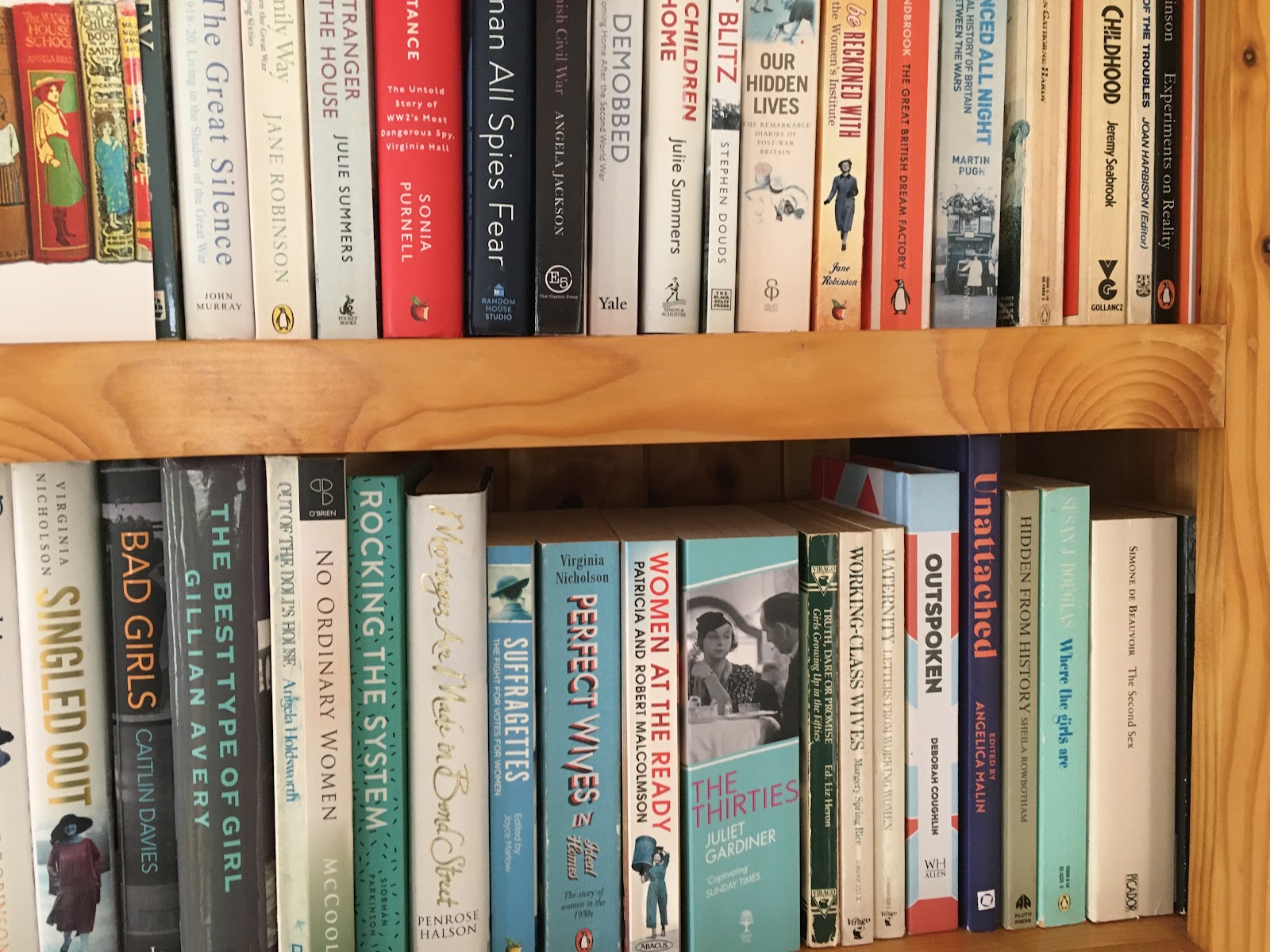

my go-to bookshelf when I fancy a bit of social history 

Recently, for research for my forthcoming children’s novel set in a girls’ school, I reread Terms and Conditions, Life in Girls’ Boarding Schools, 1939-1979. This is the first of three books by the writer Ysenda Maxtone Graham. My edition is the first, an unassuming, deliberately retro-style cloth-bound hardback published by the wonderful Slightly Foxed in 2016. That the book did well is evident by its subsequent publishing history – it came out in paperback the following year, and since then Graham has published two similar books, British Summer Time Begins, which focuses on the long school holidays, and Jobs for the Girls, about women in the workplace. All the books, which are based round the reminiscences of living people,  range in scope from the 1930s to the 80s/90s, have sold well and been enthusiastically reviewed. 
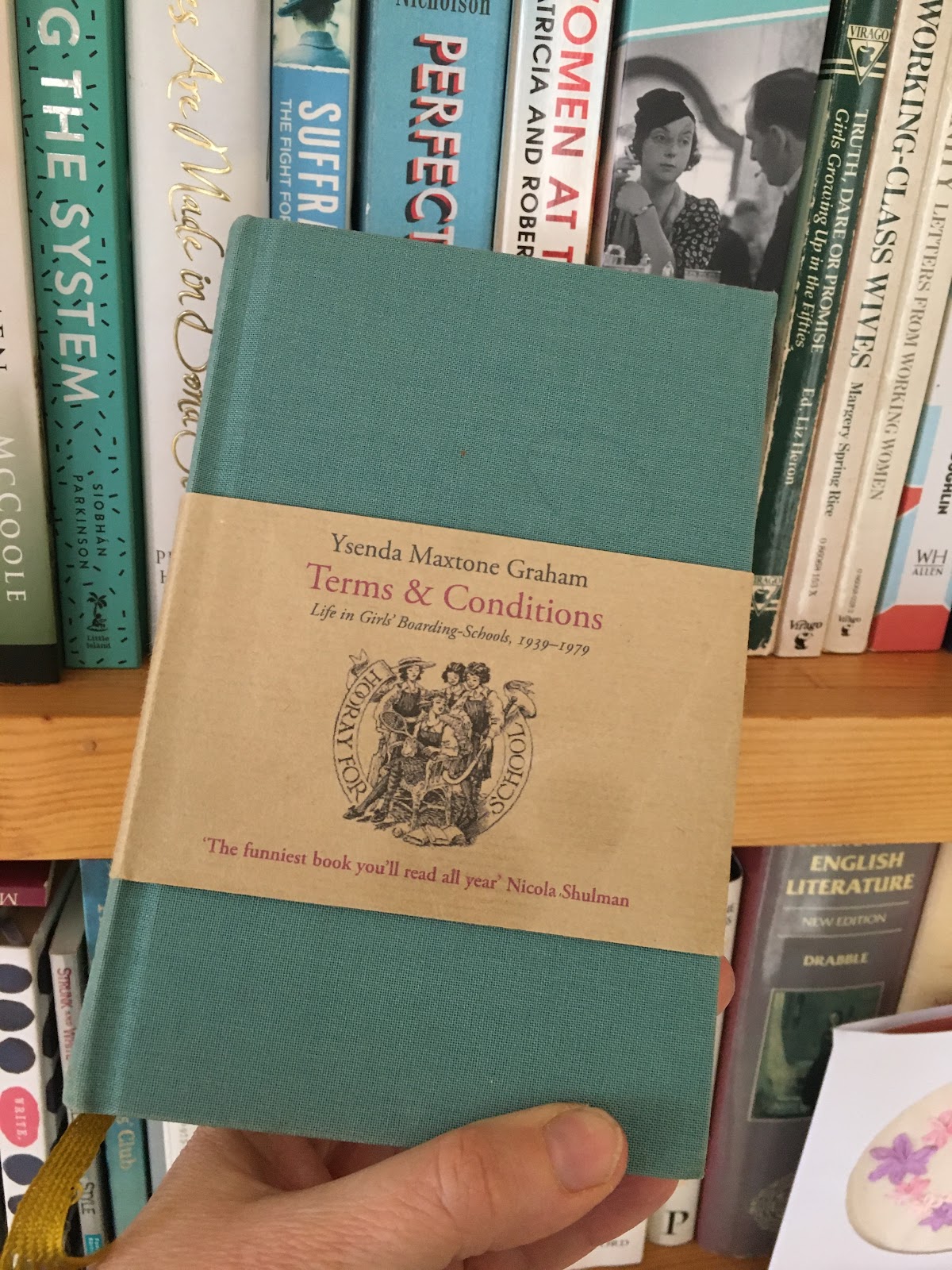


As someone who writes fiction about the lives of girls and women, at work, at school and at play, these books have been wonderful research material, but also a great joy. Ysenda Maxtone Graham writes with humour and warmth, and the books certainly appealed to those who love a bit of nostalgia, but they are very sharply observed too. 


I particularly enjoyed Jobs for the Girls, where we meet women – and many teenage girls – at work in factories and offices of all sorts, often giving those jobs up on marriage as was expected. By writing about this aspect of women’s lives, Graham is really shining a light on society more widely. 


I’ve always loved reading and writing about women at work; my favourite bits of my novel Mrs Hart’s Marriage Bureau (Harper Collins, 2023) were the scenes set in the back office of the eponymous bureau. As a lifelong fan of the Chalet School series, I always loved the glimpses of the staff at rest in the staffroom, gossiping, smoking and eating chocolates. (The years I actually spent in a school staffroom, in my former life as a teacher, were less relaxing.)


In my adult reading, too, I love the little details of life in offices, on farms, in hospitals and factories. One of my go-to comfort reads (I am not alone in this) is the Cazalet saga by Elizabeth Jane Howard, and much as I love the relationships and adventures of the central characters, I also relish the domestic minutiae – how will the cook feed all those people and how can she stop the meat from spoiling in the heat? It’s the same instinct that takes me often to my granny’s old recipe books, even though I know I will never cook brains or rissoles.


Of course Howard was writing about the years of her own childhood, and Graham is mining the memories of her interviewees. What I love best are the incidental details in the fiction from earlier decades – how people lit their fires and polished their furniture and cleaned their typewriters and spent their wages at Woolworth’s. Dorothy Whipple’s books are all delightful, but one of her earlier novels, High Wages, though not generally seen as one of her masterpieces, appeals to me because the heroine works in, and gradually rises to own, a dress shop. 


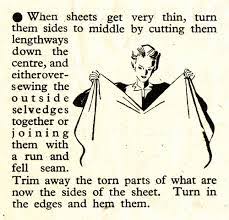
This isn’t  a learned essay; it’s a gentle meander through some favourite books, but I make no apology for that. I’m a History Girl because I love those small domestic details, and always have done ever since I first read about the Fossil sisters saving the penny and walking to see the doll’s houses in the V & A, or about Laura Ingalls curling her bangs with a hot poker, or the Chalet School girls hemming sheets ‘sides to middle’ to increase their lifespan – the sheets’, not the girls’.
 

I was sad to finish the Ysenda Maxtone Graham books, and I do think many History Girls would enjoy them too. She has written about people, mostly women, at school, in the summer holidays and at work; I wonder where she might go next? Wherever it is, I can’t wait. 


Friday, 16 April 2021

Sumer is icumen in, but am I ready for it?

By Susan Vincent


You know how the (very) old song goes:

Sumer is icumen in (Summer is a coming in)
Lhude sing cuccu (loud sing cuckoo)
Groweþ sed (groweth seed)
And bloweþ med (bloometh mead)
And once again I start to shave my underarms and legs.


So, I’m kidding about the last line, but the return of warmer weather and the corresponding casting of clouts, does mean for me a return to depilation. Now well into middle age, I am much less commited to the whole enterprise though. Something that was once a year-round practice has shrunk to the few months that require summer clothing, and even then only when I can be bothered.

Like my own personal practice, the history of women’s hair removal has been closely tied to what she wore – or, put more accurately, what she didn’t wear. The ‘problem’ areas were limited to those body parts on show.
 
Back when garments covered mostly everything from neck to feet, shoulder to wrist, then faces were the sole target. Recipes and advice manuals from these centuries suggest ways of tending to eyebrows, upper lip, and those pesky foreheads, at the time admired with a high hairline.


Then, as now, women might pluck with tweezers, 'wax' with a mastic, or use chemical depilatories. The last of these, by necessity home-made, featured a range of ingredients on a continuum from anodyne to excoriating and ordinary to outré. So we have things like vinegar, nettle heads, cats' dung or horse leeches (both dried and powdered), arsenic compounds, and quicklime. In the words of the author of one early printed recipe,
Some that have the hair of their forehead growing too low, others the hair of their eyebrows growing too thick; and some women that have haire growing on their lips, (an unseemly sight to see) would give any thing for this Secret. (La Fountaine, A brief collection of many rare secrets (1650), sig. Br.)


As sleeves got shorter from the later seventeenth century, a new potential area was disclosed: forearms. 


A handwritten recipe in one manuscript collection advises that you can dispose of long arm hair by singeing it off with a candle at the wane of the moon (London, Wellcome Library, English Recipe Book, 17th-18th century, c.1675-c.1800, MS. 7721, 'To hinder haire from growing'). I'm assuming this would be effective but for the life of me can't see how you'd escape painful burns
– losing hair and skin, both. (One history lesson when I was fifteen was made memorable by the loud discussion between three of the girls about shaving forearms, with one demonstrating the results of her attempt. By contrast, I can remember nothing about that year’s actual curriculum.)
 
The Victorians, as we well know, were mad about head hair. For women it was an abundant crowning glory, brushed one hundred times (anecdotally anyway) and let down to her waist. Men had side whiskers, beards and a moustache; a manly beauty. But the Victorians were also vocal about the removal of hair from the wrong place. In the new world of print saturation, mass production and rampant advertising, the dread words ‘superfluous hair’ were presented as a suffering that could be relieved by the right product. Tweezers, mastics, creams, and now the newly invented electrolysis charged to the rescue, at a price.
 
This, except for the electrolysis, was little different from earlier ages. When sleeveless evening wear made an appearance though, the world definitely tilted, shifting closer to the precipice down which it would soon hurtle. 
And the destination at the bottom? The hairless woman. 


The next key moment came in the 1920s, and what a moment it was. Hemlines rose and for the first time, well, pretty much ever, adult women routinely showed that above the ankles, they had legs. And guess what, those legs needed to be hairless. 
 

And this was where the new invention of the safety razor was truly revolutionary. Breaking a centuries-old tradition linking masculinity and the open blade, the safety razor found a market with female users. Manufacturers were quick to spot the opening, developing dainty ‘women’s’ styles with attractive names and pretty cases. More helpfully, some even had design adapatations like a curved edge, easier for underarms.


But the history of women’s hair removal is like a corporeal whack-a-mole, with new areas popping up that now suddenly need attention too. The old zones are not forgotten, more are just added. 

And so after a brief flurry of hair in the 1960s, the 1980s brought highcut swim and gym wear and a new worry about the bikini line. Over the ensuing decades the permutations of pubic hair removal have been many, with different mini-fashions of sculpting all nibbling away at the hairy growth between our legs. Total pubic depiliation is common. (Who knows, it might be the norm – obviously, it’s a bit hard to gain a sense of this through mass observation . . .)


For women, superfluous hair is a social solecism. A failure of femininity. And here’s the irony, it’s an invented problem. Growing alongside her sartorial emancipation, this is a new, and voluntary, servitude.

But I get it. Who is brave enough to defy cultural norms? More importantly, who is able to recalibrate their own ideas of beauty and decency in defiance of received assumptions and the familiarity of habit? A few can, but sadly I’m not among them. 
 
On the other hand, I have – joy of joys – discovered the delight of swim shorts.

 
Picture credits
Imgae 1: ‘shaving my legs’ by Mario A. P. is licensed under CC BY-SA 2.0
Images 2 and 3: Queen Elizabeth I (The Ermine Portrait) by William Segar (and detail), c. 1585, Hatfield House, photo Wikimedia Commons
Image 4: Self-Portrait with a Harp by Rose Adélaïde Ducreux, oil on canvas, 1791. Metropolitan Museum of Art, New York, Bequest of Susan Dwight Bliss, Accession No. 67.55.1
Image 5: ‘Women 1888–1889, Plate 019’, Gift of Woodman Thompson, Costume Institute, Metropolitan Museum of Art, New York
Image 6: Evening dress (silk, cotton), 1898–1900, House of Worth. Metropolitan Museum of Art, New York. Gift of Miss Eva Drexel Dahlgren. Accession No. 1976.258.4a, b
Image 7: ‘Two women in pleated skirts’ by simpleinsomnia is licensed under CC BY 2.0
Images 8 and 9: Razorette miniature safety razor for women, case measures 2.25 inches in length, razor measures 1-5/8 inches, made In USA, c. 1930s–1940s, both photos by France1978 licensed under CC BY-SA 2.0
Image 10: ‘Um Mergulho’ by Rodrigo Soldon Souza is licensed under CC BY-ND 2.0
Image 11: My Home magazine, ad for Veet depilatory (1930s), photo by davydubbit (‘Superfluous Hair’) licensed under CC BY-ND 2.0