Showing posts with label Elizabeth Barrett Browning. Show all posts

Tuesday, 8 January 2019

Wilkie and "that all-potent and all-merciful drug" by Karen Maitland

Wilkie Collins in 1874, aged 50
Photographer: Napoleon Sarony
Today, 8th January, is the birthday of the Victorian novelist and playwright, Wilkie Collins, born in 1824 and famous for the enduring classics The Woman in White and The Moonstone. He was a very successful writer, earning £10,000 in just one year in 1863. Many modern novelists would envy him, given that, 154 years later in 2017/18, the average income for a full-time professional writer in the UK was less than £10,500. (Compare this to average annual salary for a clerk in the 1860's of around £100, and the average clerical salary today of around £21,000.)

But behind the success, he was battling illness which was diagnosed as ‘rheumatic gout,’ which cause his eyes to become ‘bags of blood’ and agonising pain in his legs and feet. He also developed neuralgia and arthritis, which meant that for the last 20 years of his life, he was often confined to bed and his famous novel, The Moonstone, was dictated from his bed between bouts of pain. 

His physicians tried all manner of medication until he finally sought pain relief in what he called divine laudanum, which he took in ever increasing quantities, becoming hopelessly addicted, as is the character, Ezra Jennings, in The Moonstone. Both author and character paid the price for the relief of their pain with terrible nightmares and hallucinations.

At this time, Laudanum was a mixture of opium and alcohol and was sold under names such as Godfrey's Cordial and Mother Bailey's Quieting Syrup. Wilkie’s own father had taken Battley's Drops for his pain, which contained opium, sherry, and alcohol.
Engraving by Franz Muller-Munster (1867-1936)

Wilkie began to be unnerved by the movement of shadows in his gas-lit study, thought that ghosts followed him through the house and a green woman with tusks, waited for him on the stairs or in his bedchamber. On one occasion he was convinced she was biting chunks of flesh from his shoulder. Wilkie introduced the drug to his friend and patron, Charles Dickens, who also used it though not in such quantities as Wilkie.

‘Laudanum’ was originally the name for Cistus ladanifer a beautiful flowering plant found in western Mediterranean, also known gum rockrose and common gum cistus. Paracelsus, a 16th-century Swiss-German alchemist, combined this with opium and other ingredients such as crushed pearls and musk to produce a pain-relieving medicine. The name stuck, even when Cistus ladanifer was no longer included as an ingredient. In 1618, the London Pharmacopoeia describes laudanum as a ‘pill made from opium, saffron, castor, ambergris, musk and nutmeg’.
Cistus ladanifer or Laudanum
Photo: Juan Sanchez


Laudanum was not widely known until in the 1660’s, when the English physician Thomas Sydenham (1624–1689) produced a tincture of opium that he also named laudanum, although the only ingredient it had in common with laudanum of Paracelsus was the opium. By the 18th century, the name laudanum was being given to any combination of opium and alcohol. George Young was one of several leading physicians who recommended the drug for all sorts of ailments including neuralgia, coughing, or diarrhoea, and to ease the symptoms of ague, rheumatism, consumption and cholera. 

In the early 19th century, there were laudanums containing a tincture of opium mixed with all kinds of other ingredients from the fairly innocuous such as cayenne pepper, brandy, whiskey, and wine, to the downright dangerous – belladonna, mercury, hashish, ether and chloroform. Laudanum was being prescribed for everything from colds to heart disease for adults and children, and was used widely during the yellow fever epidemic. It must have seemed like a miracle drug for patients racked with pain or fever, because it relieved the pain, helped them sleep and even dried up excessive mucus.

Victorian women of all classes, plagued by ‘women’s problems’ which they were not supposed to mention much less seek help for, could buy a bottle of laudanum to ease their pain without having to consult a male physician, and, in any case, many could not afford a doctor’s fees. That was both the attraction and danger of laudanum – it was cheaper than a bottle of spirits or wine because, being medicine, it was not taxed as alcohol, but it gave the same kind of escape from the stresses and miseries of life.
Photo: Cydone


Until 1908 in Britain, Laudanum or tincture of opium was also included in a number of baby’s ‘soothing’ syrups. Grandma’s Secret, Mother’s Treasure, Morrell’s Teething Syrup, Godfrey’s Cordial and Mrs Winston’s Soothing Syrup were just some of the brands a desperate mother or nursemaid could buy and, especially in the hands of parents or wet-nurses who either couldn’t read well or might think an extra dose would ‘do baby good’, these syrups could be lethal. Koop’s Baby Friend killed 11 infants in two years, and those were only the infant deaths that were investigated. There were probably many others that weren’t.

Wilkie Collins was not the only writer to become addicted to laudanum, Lord Byron took it in the form known as Black Drop, which is four times the normal strength, as did Coleridge. Somehow Coleridge managed to keep his addition a secret, though he could imbibe up to a pint in one day.

The poet Elizabeth Barrett Browning first took laudanum at the age of 15 after suffering a spinal injury, and at the time of her engagement to Robert Browning was taking 40 drops a day, which was large dose. Florence Nightingale also took it for medical reasons.
1781, 'Nightmare' by Henry Fuseli (1741-1825)

A number of prominent people took laudanum to calm their nerves before a public speech, including John Hunter, the ‘Father of Anatomy’ (1728-93) who took 30 drops before giving lectures; William Wilberforce, the slavery abolitionist; and the Prime Minister William Gladstone who took it to steady his nerves before addressing parliament. I imagine there are days when modern Prime Ministers might sympathise with that.

Wilkie Collins tried many times to break his addiction through hypnosis and other means. On 26th February 1869, he wrote a letter to Mrs Benzon, 
‘… forgive me if I am absent tomorrow night. My doctor is trying to break me of the habit of drinking laudanum. I am stabbed every night at ten with a sharp-pointed syringe which injects morphia under my skin - and gets me a night's rest without any of the drawbacks of taking opium internally. If I only persevere with this, I am told I shall be able, before long, gradually to diminish the quantity of morphia and the number of nightly stabbings - and so emancipate myself from opium altogether.’ 
Sadly, he was never able to do that.

1863, Advert for 'Wolcott's Instant 
Pain Annihilator'
A few weeks ago, my wisdom teeth erupted. I couldn’t open my jaws more than half an inch. My cheeks swell up like a hamster with mumps and I discovered that sucking soup for Christmas dinner doesn’t make you feel festive, especially when soup is all you’ve been able to eat for a fortnight. It was massively painful and if I could have travelled back in time, I would have been snatching bottles of ‘Morrell’s Teething Syrup’ from any Victorian baby I could find.

Trying to stick to my daily writing routine whilst grizzling like an infant, I found a renewed admiration for Wilkie Collins. Since my teens, I’ve been captivated by his novels, but thinking about what he was battling when he wrote them, makes them seem even more amazing. He was able to turn the pain and nightmares that tormented him into great stories. Now that really is the stuff of fairy tales – spinning the nettles of life into pure gold. Happy Birthday, Wilkie!


Friday, 15 December 2017

The Heart of Westminster Abbey? Poets' Corner and Writing Women by Fay Bound Alberti

Westminster Abbey 

In October I had the opportunity to visit Poets' Corner in Westminster Abbey, before the doors opened and the tourists poured in. I was recording with the Rev. Giles Fraser, who was presenting a series of programmes on Radio 4 about the heart. Giles had recently undergone major heart surgery, and it had got him thinking about all aspects of the heart in history and culture. Other guests included Rowan Williams and Susie Orbach, and I had the pleasure of talking about the heart in science and medicine and history. You can listen to the programme here.

It was extraordinary to be in the Abbey when it was virtually empty, save for the occasional hum of a vacuum cleaner. We visited Poets' Corner, the name traditionally given to the South Transept of Westminster Abbey because of the high number of poets, playwrights and writers buried and commemorated there. The first poet to be interred in Poets' Corner was Geoffrey Chaucer, and the site has become famous for the number of romantic poets, interred or commemorated there.

In my interview, I talked about the meanings of the heart as a romantic organ, still connected to authenticity, truth and emotion, even though we now place emotions in the mind. And the ways in which we still regard ourselves as driven by heartfelt feelings, even though the tyranny of neuroscience insists the brain is first. I wrote a book about the 'two hearts' that exist, the poetic and the medical, and you can find out about that here.

Writing women are lacking at Poets' Corner - a problem I have written about here. The photos below (permitted by a kind security guard), show the commemoration of Percy Bysshe Shelley, and William Shakespeare, amongst a wall of marble white men. We stopped for a time at the plaque to Shelley, because his mythology, as a radical, a poet and a Romantic, is so bound up in his heart.

Adele Geras and Anna Mazzola have both written in this blog about Shelley - whose heart was snatched from the funeral pyre and kept, it is said, by his wife in a silken cloth for many years before being buried with their son after Mary Shelley's death. There is no memorial to Mary Shelley, the daughter of Mary Wollstonecraft, though she was a successful writer in her own right, best known for her novel, Frankenstein.

Shelley's plaque, visible top right 

Of the few women who did make the cut, Elizabeth Barrett Browning (1806 - 1851) is an interesting case because she, like many Romantic and Victorian writers, suffered with heart complaints, in addition to believing that the heart was the centre of emotions, the self and even the soul.

Born in Durham, Elizabeth was a successful poet, having written since the age of six years old. Like many early feminists, she was a social reformer and campaigner against the slave trade, and an avid admirer of Mary Wollstonecraft.

Elizabeth Barrett Browning's Poems (1844) brought the poet great success, and attracted the attention of the poet Robert Browning, with whom she eloped, much to her family's displeasure, despite the fact that she was then 40 years old, Elizabeth suffered from numerous ailments, including spinal problems, lung problems and heart trouble.

The nineteenth century was a time when scientific medicine identified many different kinds of heart defect, and Barrett Browning was not alone in suffering from heart complaints. She discussed her cardiac trouble with her friends, including the feminist writer and early sociologist Harriet Martineau, who also believed that she suffered from a heart defect. I have suggested in another article that it was better to be diagnosed with a cardiac complaint than with the gynaecological condition that seems to have caused Martineau's debilitating symptoms.

Besides the shame Martineau felt at her 'women's troubles' being openly discussed, there was something rather prestigious in her day about having a weak heart: it was the mark of a sensitive and creative soul in an age where the heart was still seen as the emotion centre; only with the birth of Cardiology in the early twentieth century was heart disease principally associated with poor living, fatty food and too much stress. Unfortunately, Martineau is not memorialised anywhere in the country, let alone at Poets' Corner, despite her remarkable contemporary influence.

And what of Elizabeth Barrett Browning? Despite periods of intense ill health, Elizabeth lived happily with Robert in Italy, though she was disinherited by her family. They had one son, called Pen. Elizabeth died in 1861, apparently in her husband's arms. Her family refused to allow her remains to be buried with Robert, when he died in 1889 and was interred in Westminster Abbey. Her name, however, is inscribed on the base of her husband's headstone.

I will leave you with Barrett Browning's poem, 'My heart and I', which seems remarkably apposite, given the subject of the heart, and because she had suffered for so many years before her death.

ENOUGH! we're tired, my heart and I.
We sit beside the headstone thus,
And wish that name were carved for us.
The moss reprints more tenderly
The hard types of the mason's knife,
As heaven's sweet life renews earth's life
With which we're tired, my heart and I.


Elizabeth Barrett Browning's inscription at the foot of her husband's stone. 
I won't be posting until the new year now, so I wish you all much love and happiness and heartfelt feelings over the festive period. You can visit my website and find out more about my writing and research here.

Saturday, 7 February 2015

MY LIFE IN HOUSES by Margaret Forster. Reviewed by Adèle Geras


The first thing that occurred to me when I was thinking about this post was: I'll write a review of My Life in Houses by Margaret Forster, because even though it's not a historical novel, it is about a person's  history.  One of the reasons  I liked this book so much was because the idea of looking at a life through the houses that a person has lived in was so wonderful and so apt that I marvelled it hadn't been done before. There's a piece from Leonard Woolf's Downhill all the way which credits him with the idea, but I don't know of any other. I stand ready to be corrected, but as far as I know, Forster is the first person to do  exactly this. Penelope Lively, in books like Ammonites and Leaping Fish, A Life in Time and Making It Up  has explored her own life in several unusual  ways, but not quite like this.  As soon as I heard about Forster's book, I thought: of course. This is such a logical journey to take  through a life: following the subject from house to house through the years.  Part of me was very envious. I wished it had been my idea. 


And so we follow Margaret Forster from Carlisle to Oxford to Portugal to London again and to the house in NW5 where she still lives. Along the way we meet not only several different Margarets (the young child, the student, the writer, the wife and mother and the elderly woman) who share throughout a clear-eyed intelligence and a delight in the vagaries of life in all its strangeness. We meet many other people. We get to see houses she has visited or stayed in for a short while. She looks. She describes. Above all, she speaks to the reader as though she's across the table, say, with a cup of coffee or a glass of wine in her hand. She's open without being too intimate or embarrassing. She's gossipy without being nasty. She's constantly entertaining and fascinating about the  physical  properties of the houses themselves. I can't recommend this book highly enough. The fact that there is an ending which isn't entirely 'happy ever after' is down to Forster's honesty. She has suffered from cancer in the past and that cancer has now returned. Has that stopped her from writing this intelligent, humane and fascinating book? Of course it hasn't. The Margaret we've been following from her first house in Orton Road in Carlisle would see to it that the book got written.  

It's also worth saying a word about how beautifully this volume has been produced. Chatto &Windus have done a grand job. The font, the cover, the paper: they are all quite beautiful and the production adds a great deal to the pleasure of reading it. Do not get it on Kindle because you will be missing a real treat.


Something else occurred to me while I was reading this book.  I am often surprised that writers known to me since I was very young seem not to be as talked about and lauded as the latest whizzy young thing. Forster is a writer who has never quite got the public acclaim she deserves. Her readers love her. They've loved her for years and she is a National Treasure of sorts, though I fear mostly for the middle-aged reader. She's never won the kind of prize that gets you noticed and written about. She's not flashy. She does not appear on talk shows. She's popular but would not immediately leap up the best seller lists. And this is a huge shame. I think it's time that her books were better known and more widely read. And as this is the History Girls, it should be said that several novels from her enormous backlist are very accomplished bona fide historical novels.  She has written biographies, such as this life, (below) of Elizabeth Barrett Browning. 


And she returned to to the subject of Browning in possibly her best-known novel: Lady's Maid.  This tells the story of the Browning ménage through the eyes of Elizabeth's maid. If you haven't read it, then do so at once. It's brilliant.


She has written social history, as in Hidden Lives


and in a ground-breaking novel about dealing with Alzheimer's within a family she opened the way to many novels by other people which came after it, in which 'problems' in society were dealt with in a fictional way.


She's returned to biographies again and again. She's written about Daphne du Maurier and below, she tackles the lives of eight early feminists. 


 "Is there anything you want?" is a novel about women who come together because they all have suffered or are suffering or have recovered from cancer. It is typical of Forster that she took what must have been a terrible personal experience and made fictional gold from it.


She's written a Gothic novel. She wrote the book on  which the movie Georgy Girl was based.  She's written funny books, and very sad ones, especially Over about a family dealing with the early death of a child. She's tackled adoption, and in Mother's Boys she writes about young criminals. She's interested in everything and everything she writes is worth reading. Do try her books if you haven't already. You will thank me for this suggestion, I promise you. 

Monday, 14 October 2013

The Barretts of Wimpole Street ( and Trenchtown, JA) Catherine Johnson

This post was going to be a review of one of my all time favourite books which I recently re-read; Andrea Levy's The Long Song. There doesn't have to be a good reason although it is, here in the UK at least, Black History Month. Yesterday's post by H. M. Castor was a review of the book, 12 Years A Slave,  a wonderfully written and thorough look at 19th century American slavery. The Long Song, although fiction, looks at the demise of that industry from a distinctly British perspective.

The book is beautifully written and a wonderful read, and it illuminates a period of history often forgotten but hugely important to Jamaican and British history, the 1830s and what were known as The Baptist Wars, the rebellions and reprisals in the fight for emancipation. But as I was thinking and writing I thought that while many of us here in the UK have no knowledge - or at least only a little - about this time in the West Indies, we might also have forgotten something else.

Although the British Empire had outlawed the slave trade in 1807, the practice and ownership of slavery went on until well into the 1830s, even after formal abolition in 1833.  It only ended when slave owners - not slaves, not their families, the slave owners - were paid huge sums (in total over £20 million - what would that be worth today?) in compensation by the British government. All slave owners could apply to the government for compensation and payouts continued way into the 1840s.

Can you imagine that? Not the victims, not those who suffered, not their families, uprooted and tortured on an industrial scale, but their exploiters. Each and every one paid enormous amounts by the UK government, funded by all British taxpayers. The reasoning was that the owners had lost their 'property' and deserved compensation. Of that 20 million pounds, 10 million stayed in Britain, that is it went to slave owning families who resided wholly in the British Isles.


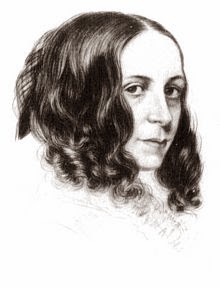
Elizabeth Barrett Browning

These slave owning families lived in country estates and town houses all across Britain. They might have been the owners of grand plantations or maybe simply owned a handful of niggers to toil for them thousands of miles away conveniently out of sight and mind across the Atlantic. Many of these people might have no idea of the root of their wealth. Or maybe they just shut their eyes and looked away, like many of the German population did during World War II.

Some of these families may even have been against slavery, as, no doubt, many of us rail against, but end up buying cheap clothes from Primark or use computers that have been assembled by people exploited and worked in conditions we cannot imagine and do not want to think about.

One of these numerous beneficiaries included the poet Elizabeth Barrett Browning. Her family owned mining rights and plantations across Jamaica, they had made huge fortunes in their 300 years of slave owning on the island. In fact there are many Jamaicans today that share the name and most probably the genes - brothers Aston and Carlton Barrett might just be the most famous. They were The Wailers' rhythm section  and played with Bob Marley as well as with many of reggae's foremost musicians.

But hey, let's get back to Elizabeth, She was very sensitive, she thought slavery awful, terrible, she even wrote a poem - The Runaway Slave at Pilgrim's Point - in which she imagines herself into the skin of a black slave raped by her master. But she was also completely sure of the fact that her family deserved to be compensated for the loss of family property, all the while believing slave owning a 'bad' thing.

Her poem is of its time, overlong and overwrought - unlike a good tune. This one, Small Axe, by Bob Marley and The Wailers is in my mind infinitely preferable  and I do hope we're all sharp and ready when it comes to exploitation and art.
Aston 'Family Man' Barrett
Carlton Barrett
http://www.youtube.com/watch?v=ia6Tvpj6dPw

People are and always will be complicated, but I do know I'd take the Wailers or The Heptones or anything Aston or Carlton Barrett played on over Victorian long form poetry. (Except maybe small doses of Hiawatha).

 Here's another gem,   Watch This Sound by Slim Smith, bass by Aston Barrett which is also lovely.
http://www.youtube.com/watch?v=vRuG86cEz98   - skip the ad though!


Catherine Johnson's latest book - SAWBONES is out now, a forensic murder mystery set in 18th century London - 'thoughtful and impressive' -Booktrust.