Showing posts with label Halloween. Show all posts

Tuesday, 30 October 2018

Cabinet of Curiosities by Charlotte Wightwick: Manuscripts, Magical and Remarkable

As its Halloween, it is almost obligatory that I should write about things that go bump in the night. This year, I’ve been enjoying my spooky fix via Sky’s Discovery of Witches – a TV series featuring witches, vampires and demons, based on the All Souls trilogy of books by Deborah Harkness. I first read – and greatly enjoyed - the books some years ago, and have to admit to rather mixed feelings about the TV series. The actors are generally great (although personally I’m not sure about all the casting choices!) and the cinematography and locations are beautiful. But, as is inevitable with any adaptation, they’ve had to leave things out, or at least not give them the prominence they receive in the novels.

In Harkness’ books, the Twilight-style romance is leavened with a real passion for history. The protagonist Diana has a non-magical career an academic historian, and her love for the subject – or rather, that of Harkness (herself a professional historian before she turned to novel-writing) really shines through. In particular, significant time and space within the novels is devoted to loving, meticulous descriptions of the illuminated manuscripts Diana studies (and which cause her such supernatural trouble – her discovery of a bewitched book kicks off the plot).

The only other place where I’ve read such bewitching (excuse the pun) yet accurate descriptions of medieval manuscripts is in Christopher de Hamel’s wonderful Meetings with Remarkable Manuscripts (if you’ve not yet read it, it is worth getting your hands on the hardback version for the beauty and quality of the reproductions.) Taking one manuscript per century between the C6th and C16th, de Hamel walks his readers through what it is like to see, feel, touch and smell the reality of these rare and precious objects, as well as explaining the historical and social conditions in which they were created. It is accessible, scholarly and passionate; beautiful and illuminating all at once, as perfect and jewelled as the manuscripts he describes. 

So, my item for the Cabinet of Curiosities this month? Definitely a medieval manuscript. But I’m torn. My personal favourite from de Hamel’s book is the fourteenth century Hours of Jeanne de Navarre, with its stunning and intricate gothic illuminations. But I do wonder if I might be allowed Diana’s fictional, magical Book of Life, explaining through alchemical imagery the origins and destinies of vampires, witches, demons and humans?

Well, it is Halloween, when the veil between the mundane and the magical is supposedly at its thinnest, so maybe, just maybe…


Wednesday, 3 October 2018

The Top Ten Gothic Novels - Chosen by Anna Mazzola


As the nights draw in and the spirits move closer, it’s time to huddle beneath your Victorian counterpane with an unbearably creepy book. Many brilliant Gothic reads are being released in time for Halloween: Melmoth, The Corset, House of Ghosts, The Lingering, and The House on Vesper Sands, to name but a few. All play with and develop ideas and tropes that have been ghosting about since the 18th century. Ever since Conrad was crushed to death by a giant helmet in The Castle of Otranto, the Gothic genre has been evolving strangely and blooming darkly.

Here, as a discussion/fight-starter rather than a definitive list, are my top ten favourite Gothic reads.

1. Jane Eyre (1847)


Sinister boarding schools, ghostly visions, eerie laughter, suppressed sexuality and angry women in the attic. Charlotte Brontë used Gothic elements in Jane Eyre to create a new female language. Critics of the time were not impressed, however. The Quarterly Review did 'not hesitate to say that the tone of mind and thought which has overthrown authority and violated every code human and divine abroad, and fostered Chartism and rebellion at home, is the same which has also written Jane Eyre.’


2. Wuthering Heights (1847)


Wuthering Heights was also controversial in its time because of its unflinching depictions of cruelty and its challenge to Victorian societal ideals. Even now, Wuthering Heights remains a raw and powerful read, and many authors cite its influence in their own work. Many of us have wondered what else this formidable author might have written, but Emily Brontë died at the age of 30, saying that she would have ‘no poisoning doctor’ near her.

Charlotte's Jane Eyre, Emily's Wuthering Heights, and Anne's Agnes Grey, were all published in the same year.


3. The Turn of the Screw (1898)


Henry James said he preferred to create ghosts that were eerie extensions of everyday reality: ‘the strange and sinister embroidered on the very type of the normal and easy.’ For nearly 120 years, readers have been trying to work out whether the ‘strange and sinister’ were only in the unnamed governess's mind, or whether the ghosts in The Turn of the Screw are in fact real.


4. Rebecca (1938)


Though dismissed by many critics at the time as romances, novels such as Jamaica Inn, Rebecca and My Cousin Rachel (and many of Du Maurier’s short stories) are more akin to mysteries or psychological thrillers strongly embued with Gothic elements. As with Henry James, the real and the ghostly often elide, so that Mrs Danvers is part human, part malevolent ghost, and Rebecca herself haunts the imaginations of the characters, and also that of the reader, long after they’ve finished the book.


5. We Have Always Lived in the Castle (1962)


‘My name is Mary Katherine Blackwood. I am eighteen years old, and I live with my sister Constance. I have often thought that with any luck at all I could have been born a werewolf, because the two middle fingers on both my hands are the same length, but I have had to be content with what I had. I dislike washing myself, and dogs, and noise. I like my sister Constance, and Richard Plantagenet, and Amanita phalloides, the death-cup mushroom. Everyone else in my family is dead.’ 

It’s my favourite first paragraph so had to be quoted in full. We Have Always was Shirley Jackson’s last novel and, in my view, her best. In fact, it’s probably my favourite book on this list: deceptively simple, darkly funny and profoundly unsettling. Jackson's biographer referred to it as a 'paean' to the author's agoraphobia. If you haven’t discovered Shirley Jackson yet, you’re in for a rare and disturbing treat.


6. The Bloody Chamber (1979)


Angela Carter was hailed as the ‘grand-dame of the modern English gothic’, saying that she’d ‘always been fond of Poe and Hoffmann – Gothic tales, cruel tales, tales of wonder, tales of terror, fabulous narratives that deal directly with the imagery of the unconscious.’

The Bloody Chamber is perhaps her most gothic work. In her collection of stories about witches, forsaken castles, haunted forests and howling wolves, Carter gave fairy tales a fantastic, feminist twist.


7. Perfume: The Story of a Murderer (1985)


Jean-Baptiste Grenouille is born with an exceptional sense of smell. He survives his mother’s attempt to kill him at birth and grows up in stinking, extraordinary 18th century Paris. Grenouille becomes a perfumer in order to preserve that most precious of smells: his murder victims. Dark, brilliant and building in bizarreness to a climax you’re unlikely to forget. Kurt Curbain wrote a song about it.


8.  Beloved (1987)


Gothic fiction often connects with the fears and anxieties of its time. Beloved is the story of Sethe and her daughter Denver after their escape from slavery. Their home in Cincinnati is haunted by a revenant, whom they believe to be the ghost of Sethe's daughter, Beloved. This astonishing book uses the Gothic to expose the horrors and silence of slavery.


9. The Little Stranger (2009)


Sarah Waters has apparently said she did not set out to write a ghost story, but she seems accidentally to have written one of the best ones. It is the 1940s and, as Hundreds Hall decays, peculiar powers take hold. Superbly measured and deeply chilling. As with the best Gothic tales, we’re left unsettled and unsure. And probably wanting to see the movie.


10. The Loney (2015)


Of the many brilliant Gothic novels from recent years, The Loney stands out like a moss-covered tombstone. Both old and new and suspended somewhere between the supernatural, the strange, and the outright horrific, Andrew Michael Hurley’s novel is, as Sarah Perry has said, a real Gothic masterpiece.


And yes, I realise I’ve missed off many of the classics usually included in lists of this kind. But what would be the point of a Gothic list, if it conformed to expectations?


__________________________________________________________

Anna Mazzola is a writer of historical crime fiction. Her second novel, The Story Keeper, is a tale of dark folklore and missing girls on the Isle of Skye.

https://annamazzola.com
https://twitter.com/Anna_Mazz



Monday, 30 October 2017

Cabinet of Curiosities: Cat O’Lantern (not by) Charlotte Wightwick


Happy Halloween!

I have to admit that Halloween always takes me slightly by surprise, although why this should be, I don’t know given that the shops are full of plastic ghouls, fake cobwebs and tiny witches’ hats for weeks beforehand. But yet again, here we are and the most I have done to celebrate is to watch the brilliantly-costumed edition of Strictly (although to be fair, I also don’t need the fake cobwebs – I have real ones of my own.)

My amazing friend is far more organised than I and sent me a photo of her take on the traditional carved pumpkin – this truly stupendous ‘Cat O’Lantern’ (I advised that the whiskers were necessary, so I think I get to take some credit for this masterpiece of vegetable artistry).

Cat O'Lantern - Photo: Kate Wheeler

As I gazed in awed wonder at its glowing glory, however, I got to wondering about the history of this (actually, when you think about it) rather odd tradition. I knew of course, like most people, that Halloween in its current form is a relatively new phenomenon, although the roots go back a long way. But what about the pumpkins with faces?

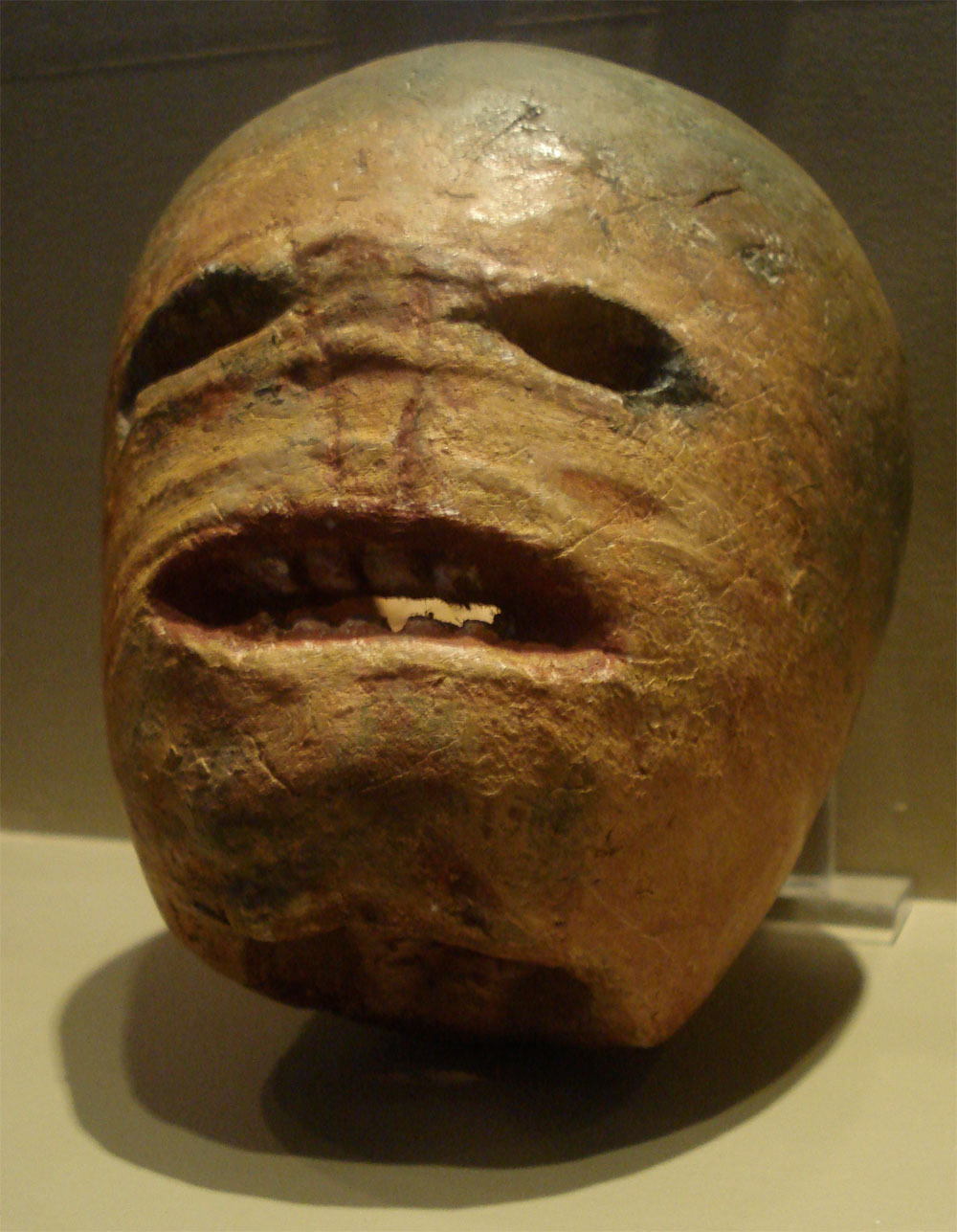
It turns out that they too, are older than I thought. The original Jack O’Lanterns were carved, not from pumpkins, but from turnips, and the practice was recorded in both Ireland and parts of England in the early nineteenth century, although the tradition is said to be much older. The faces, with a small ember or stub of candle in them, were designed to ward off evil spirits. In America, Irish immigrants continued the tradition, only now with the native pumpkin.


https://upload.wikimedia.org/wikipedia/commons/3/30/Traditional_Irish_halloween_Jack-o%27-lantern.jpg
Traditional Irish Jack O'Lantern  - Photo: rannṗáirtí anaiṫnid b  

So now you know.

I’m afraid it all seems like a bit too much work to me – so I shall continue to admire my friend’s feline-veggie handiwork and settle down to watch the Strictly results!

Have a spooky time! 

Cat O'Lantern: Kate Wheeler

Tuesday, 22 November 2016

Witch Marks and Curses: The Rituals of Protection by Catherine Hokin

In the midst of all the Halloween madness around crazed-clown sightings (surely a PR stunt for the forthcoming Stephen King movie) and poor-taste celebrity costumes, my eye was caught this year by a request from Historic England for help with searching out some rather specialist graffiti. The patterns they are looking for date from between the the sixteenth and eighteenth centuries, can be found on both homes and churches and may be marks made by the builders or occupants to deter witches.

 The Norfolk and Suffolk Medieval Graffiti Survey
We are a superstitious lot when it comes to guarding home and hearth.These marks (known as apotropaic from the Greek word for turning evil spirits away) are part of a long tradition of charms and curses stretching across cultures and centuries designed to keep homes and places of religious significance safe. The Japanese ofuda, charms written on paper and blessed at a Shinto shrine, date back to at least the seventeenth century Edo period. A nazar, a blue and white teardrop-shaped amulet, is a common sight outside homes across Turkey and Greece and is a legacy of the Turkish Ottoman Empire. Chinese door gods, or menshen, have been displayed on the entrances to temples and homes since the pre-AD Han Dynasty and any self-respecting house in Ancient Egypt would be guarded by the goddess Bast, depicted as a black cat.


 Daisy Wheels in Stratford, Nicholas Molyneau
Apotropaic witch marks seems to be an English phenomenon and Historic England's treasure hunt request is directed particularly at secular buildings: although witch marks have been discovered on homes, these have, to date, been far less catalogued than those discovered at churches. So where do you look and what are you looking for if you decide to try and wean the teenagers of hunting for Pokemon? Witch marks of the type Historic England are hoping to catalogue are usually concentrated around entrance points such as doors, fireplaces and windows which are deemed as vulnerable to malevolent incursions. Marks can be in the shape of pentacles (sometimes lying on top of demons), inter-twined Vs and Ms for the Virgin Mary or, most commonly, compass-drawn hexfoils or 'daisy-wheels'. Whatever the shape, they do appear to share the characteristic of being formed from endless lines: apparently demons follow the lines and then get trapped, a plot device which a lot of films seem to have over-looked. Sites where marks have been found include Shakespeare's birthplace in Stratford, in roof beams at the Tower of London and carved into the timbers of a room prepared for a visit by King James I (a man obsessed with witches to an unhealthy degree) at Knole House in Kent. 

The scratchings are certainly intriguing although their association with deliberate attempts to ward off evil spirits is not a given: they could simply be marks made by masons to show how and where stones or timbers should be fitted or the product of apprentices learning the geometry needed for their craft. Perhaps, as with many superstitions, they started as one thing and became another. Whatever the truth of these marks, a belief has grown up around them that they exist as a protective measure, a belief it is not hard to understand in the context of communities living in genuine fear of witchcraft and in homes far darker than anything we can imagine in these days of instant light.  

The urge to guard against danger or ill-luck is part of the fabric of our buildings and some superstitions of the past still linger. Few of us, for example, would raise an eyebrow at a horseshoe nailed above a door, even if we no longer believe iron has the power to repel witches. Niels Bohr, the Danish scientist who basically sorted out quantum physics for the rest of us, had one on his house and, when asked if he believed it brought luck allegedly replied: of course not but I have been reliably informed it will bring me luck whether I believe it or not. It's a line of thinking many are probably still happy to follow, although I imagine most would draw the line at a horseshoe rather than employing the full range of charms available to our ancestors.

 Witch Bottle, Portable Antiquities Scheme
A fear of magic implies a belief in its power. While witch marks and horseshoes are visible signs that a house is protected, some of the other methods used were far more secretive, perhaps because they had 'magic' in their creation. Repelling a witch is one thing, to be accused of being one yourself in the doing would be rather unfortunate. The stoppered vessels known as witch bottles for example, which have been discovered bricked inside walls particularly in houses in East Anglia, could be classed as a form of magic fly trap. The bottles were intended to trap the witch who threatened the home-owner and contained mixtures of pins (to catch the evil), red wine (to drown it) and rosemary (to cleanse it away). If the identity of the witch was known, adding a personal touch, such as their urine or finger parings, made the magic doubly strong. Other, perhaps less dangerous, charms included fashioning the lintels over windows and doors from rowan wood and concealing shoes in the rafters and the hearth - this latter superstition apparently stemmed from the story of a priest in the thirteenth century who once trapped the devil in a boot. For the finishing touch, a mummified cat could be placed in the chimney breast - possibly an inversion of witchcraft as it uses the traditional witch's familiar to repel the danger.

Inverted name -  Norfolk Medieval Graffiti Survey
Protection is one thing but sometimes a stronger response to danger was required and charms gave way to curses. Examples of curses, essentially an inversion of magic/evil, have also been found in and around both church and domestic buildings. Curses which may be intended to direct the evil back at its perpetrator rather than merely block it do not need to be complex: witch marks have been discovered which are, apparently deliberately, incomplete, for example with a missing petal. Some curses, however, are very specifically directed: Roman-style curses in which the targeted person's name and the details of the damage to be inflicted have been found on church walls, including at Norwich Cathedral. The writing is corrupted, being inverted with the letters jumbled, hence the assumption that these are curses.

Many of us feel like we are currently living in dark days. Whatever the truth of these marks, and no matter how difficult it is to really 'read' their intentions, they offer a fascinating insight into a world where fear of external dangers was just as real and the need to guard against them perhaps no different to our gated communities and lives lived under the shadow of CCTV. If this has wetted your appetite, Matthew Champion's wonderful book Medieval Graffiti: The Lost Voices of England's Churches is a really good read.

Happy hunting...