Showing posts with label Skagen. Show all posts

Wednesday, 15 November 2017

Of Ships and Churches

by Marie-Louise Jensen

Churches can be a fascinating reflection of their local community and history. I have grown up visiting churches in the North of Jutland (Denmark) and taking for granted that in each church, there will be at least one model ship suspended from the ceiling.

Lønstrup
In a community where almost every family made their living from the sea, mainly from fishing, the sea and its dangers were part of life. In Skagen, fishing was done from the beach until the harbour was built in 1904. On the west coast, fishing from the beach continued for much longer and there are still small communities like Lønstrup, where fishing boats are still winched on and off the beach today.


Lønstrup Boathouse
The North Sea is big and dangerous and without modern navigation tools, engines or weather forecasting, many persished at sea. This was the same for fishing communities the world over, of course. But here it has been integrated into the churches. The ships are there as a reminder that every family has lost members to the sea, that many may have loved ones at sea even as some sit in church. Perhaps they are also a form of thanksgiving - a reminder that the sea provides food and - for some - prosperity.
This is Skagen's Kirke:


 As one might expect of such a grand church (by local standards) it has a sophisticated interior. And some smart ships. Here is one of them:

Råbjerg kirke
But the ships are in all the coastal churches (and right up in the north, almost everywhere is on the coast). This church is in the middle of a dune, grass and farmland landscape, not far from the west coast. It has an interesting history of its own; it stands alone because the village around it had to be abandoned during a bad spell of shifting sand. But the church endures, solitary and charming. It underwent major restoration in 1931 and is now on a busy summer route to the beach so, for a few weeks a year, it has plenty of visitors:

The interior is low ceilinged and beamed and painted the traditional white. And of course, there are beautiful model ships suspended down the middle of the church:


It is impossible not to know you are in a coastal community when you sit in the churches here and look around. (For copyright : all photos are my own, taken summer 2017)


Follow me on Twitter at @jensen_ml


Friday, 15 September 2017

A Brief Lighthouse History

by Marie-Louise Jensen

Within a short stretch of coast on the very northern tip of Jutland, there are three lighthouses. Two are decommissioned, the third is still active. They are a remarkable glimpse into the development of the lighthouse in Denmark. 
This first picture is of the Skagen's vippefyr (or 'lever light') which is a copy of the lighthouse that guided ships around the tip of Jutland from 1627 to 1747. It was the first of its kind and replaced an earlier system - a parrot light. This new design allowed the burning coals to be hoisted into the air, clearly visible to passing ships, contained in a metal basket, thus reducing the risk of setting the wooden structure alight. 


This was one of three of a kind that marked the shipping channel from the North Sea down into the Baltic - an important but treacherous route for Danish vessels, especially in the days of sail. This one defintely has a quaint, olde worlde look to it.
A short distance further north, but in sight of each other, is another lighthouse; Det hvide fyr (the white lighthouse). This looks altogether more modern, even with its lantern removed:


(Photo attribution: by Arnoldius (Own work) [CC BY-SA 3.0 (http://creativecommons.org/licenses/by-sa/3.0)], via Wikimedia Commons)

The white lighthouse served Skagen from 1747 to 1858. The first Danish lighthouse to be built of stone, it was originally red brick until it was whitewashed at the beginning of the 19th century. It must have originally had another name! Initially coal fired, rapeseed oil was later burned.

The third lighthouse on this small peninsula is the Skagen Lighthouse, also known as the Grey Lighthouse (Skagen fyr; det grå fyr).


This lighthouse came into use in 1858 and is still in use. It is impossible to tell from the photographs, of course, but at 46 metres tall, it is more than twice the height of its predecessor. The original parafin lamp was replaced by a 1,000 watt and then a 1,500 watt sodium lamp. It's not difficult to imagine the progress towards safety at sea that these developments must have made over the years. Having seen an old chart of shipwrecks clustered at the tip of Jutland, I know how necessary that was.
What is fascinating at Skagen, is having these three very different lighthouses from different eras all in view at once; testament to the importance of warning ships of the dangers of the peninsula through the centuries and to people's continual striving to improve the system for doing so.

Incidentally, the Skagen lighthouse is now also home to a migratory bird reserve with hides and an interactive museum inside. An excellent double use for the building.



Saturday, 15 August 2015

The Church that was Buried


by Marie-Louise Jensen

One of the characteristics of northern Jutland in Denmark is that the peninsula is formed of sand, not bedrock. And sand shifts with wind, tide and currents.

Just south of Skagen, lies an area which is dunes from coast to coast:

It's a beautiful, windswept area. In the summer, wild flowers and heather bloom; autumn and spring, migrating birds stop on the wet areas.

In the 14th century, a large church was built just two kilometres south of Skagen. It was in use for several hundred years, but the dunes began to drift. The congregation grew weary with digging the entrance free every time they wanted to hold a service there and eventually, in 1795, it was finally abandoned and partially demolished. The sand was free to drift and now only the tower remains free of the engulfing dunes


From a distance it looks for all the world like a complete Danish church. But when you reach it, there is just the tower:
:

Drifting sand isn't a thing of the past up here in the north of Denmark, either, This summer I was over on the West coast where a different church, once several miles inland, is now on the point of falling into the sea as the sand cliffs it stood on are gradually eaten by the North Sea. (This church is called Maarup kirke and was a location for the filming of the Danish film Babette's Feast). Several summer-houses out near the coast are being slowly buried by dunes too, as the sand drifts and the sea draws nearer.


There is also a wandering sand dune in this area south of Skagen. It moves some 15 metres a year and it's hard to convey in photos how vast an area it covers in its slow march from west coast to east with the prevailing winds:


Not a beach; a cool Nordic desert formed of millions of cubic metres of sand:

 
At the top there's a view from coast to coast Sadly, I couldn't get that in the shots with my camera, so here's some more inland sand-dune:
The dune is called Raabjerg Mile and is correctly known as a migrating coastal dune. Most of these dunes, which caused so many problems for the population in the 16th and 17th centuries, have been tamed with plantations and other measures. But this one is still allowed to roam free.

@jensen_ml


Sunday, 15 March 2015

Unusual Recipes

by Marie-Louise Jensen

When I talk to school groups about my Georgian books, I occasionally recount tales of Georgian food. It's guaranteed to liven up any group. There's something about food from different cultures and times that is an endless source of fascination for most of us.

So I talk about how gelatine for jelly was made by boiling pigs' trotters in a pan and red food colouring obtained from beetles (both still true, of course, we just don't do it ourselves in the home kitchen any more) and how pulled chicken was made - though bizarrely pulled meat has started coming back into fashion, so it's no longer as interesting.

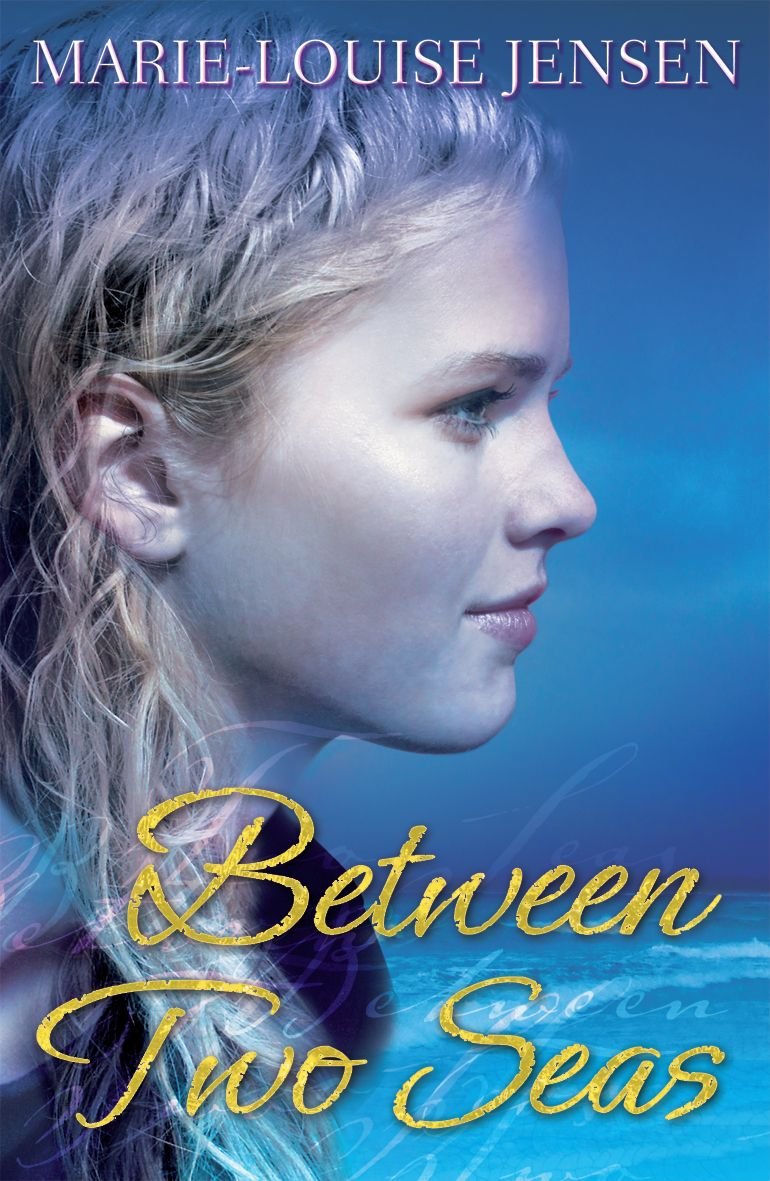
But one of the most weird and unappealing dishes I've found to date is still the one I came across researching my first book Between Two Seas. The novel is set in Skagen, which is the isolated tip of Jutland, Denmark, and where in the 1880s they had rich seas and poor land. As a result, the Skagen dwellers' diet consisted almost entirely of fish, with some rye bread to bulk it up. And yes, they suffered from all kinds of digestive disorders as a result.
One way of ringing the changes was to eat the occasional fried seagull.

That's right. Fried Seagull.

The recipe is as follows (just in case anyone's hungry):
Pluck the bird, wash it and soak it in cold water with some herbs overnight. Then soak it in milk. Tear the skin off, wash it again and boil it in water and herbs until it's half done. Finally, drain it and fry it.

The bird was served stuffed with slices of raw potato. To quote the locals of the 19th century 'Det smagte dejligt' - it tasted delicious.

I've always rather doubted this, suspecting it's probably an extremely acquired taste. So I googled whether anyone else around the world eats seagull, and apparently the Maori people of Southern New Zealand do - fried muttonbird. According to the American food blogger who tried it, it's incredibly greasy and tastes like a tidepool. I thought as much. You can read the account here: http://cookrookery.com/?p=2449
I think the fact that fried seagull was eaten at all is probably a mark of how desperate the Skagen community sometimes was for food, especially in the winter when the sea froze over. It makes me very grateful for my local Sainsbury's.

Follow me on twitter: @jensen_ml


Wednesday, 15 August 2012

Revisiting Skagen

by Marie-Louise Jensen
My writing at present is steeped in the Georgian era, as I embark on my third tale set in the early 1700s. But right now, I'm in Denmark, and being here brings back so many memories of writing my first book, Between Two Seas.
I was very touched to receive an email in late July from a reader in Scotland. Finding herself in Denmark on holiday, she made the trek north to Skagen to visit the scenes of the novel. This made me think about what she would have seen and what I found there when I was researching the late 1800s.
Being far more recent, there is so much more still in existence than from the early Georgian era. Houses, hotel and paintings are all still there. True the old wooden houses only survive in an open-air museum (Skagens by og egnsmuseum), but nonetheless, you can visit them and see just what cramped homes the poorer fishing families lived in. A kitchen floor of sand, one room for sleeping, eating and living; narrow beds where many people slept. They seem quaint and charming now, but I bet they weren't when nine or ten people were living there through the dark, cold winter.
Poor fisherman's house
The old lighthouse still stands preserved out on 'grenen' the tip of Jutland, just north of Skagen, though more modern ones have replaced it. The splendid old hotel Brøndums, is still open for business and on quiet days, perhaps out-of-season, you can enjoy a coffee or a hot chocolate and imagine yourself back over a hundred years in time without any difficulty.
Brøndums Hotel
Best of all, the expressionist paintings that helped make Skagen famous are on display in the art museum (Skagensmuseum). A rich cultural heritage that captures the essence of life of the town in the 1800s. Currently there is a special exhibition featuring paintingsthat are normally in other collections:
Summer Evening on the Beach at Skagen. Artist and His Wife (Sommeraften ved Skagens strand. Kunstneren og hans hustru) Painting by Peder Severin Krøyer. 1899. The Hirschsprung Collection, Copenhagen.
Walking out the northernmost tip of the country and standing with one foot in the Baltic Sea and one in the North Sea is as popular now as it ever was. In fact this summer, I took my cousin from Brazil up to play tourist in the same way visitors have been doing for a couple of hundred years. It was a bit approximate this year as the spit of sand where Jutland vanishes into the sea was less clearly defined than it sometimes is, but we could still see the waves crashing into each other from opposite directions further out, and a baby seal swam right in to investigate us, which was completely charming.


Grenen