Showing posts with label Marie-Louise Jensen. Show all posts

Monday, 15 January 2018

Shoelaces

by Marie-Louise Jensen

One of the things that always struck me as especially unfamiliar in historical fiction, that is to say Georgian and Regency historical fiction, was reading of a gentleman's 'freshly ironed shoelaces'. It also struck me as rather odd. In modern days, I've never seen a shoelace that would benefit from ironing.
I've always assumed that the laces must have been wider than now, and must therefore have become creased. I still haven't found a definitive answer to this and have no mental image. But the topic occurred me again when I was watching episode two of The Crown a couple of days ago. (Yes, I realise that I am late to this - no doubt all you history buffs saw it ages ago!)  There is a scene where the young, newly-bereaved Queen Elizabeth is dressed in mourning on the plane and just for a moment, the camera pans down to her shoes, which are laced with black ribbons.

Well, ribbons make sense. They would probably need ironing to stay looking nice. And in fact, a quick google shows that ribbons are still occasionally used for lacing shoes today. Something I (as someone entirely lacking in fashion sense) had no idea of.

However the shoelaces were made, it would have been the valet's job, poor soul, to iron them, along with his master's neckcloths and shirts. I seem to remember it was the dandies who required their shoelaces to be ironed in Georgian times, but I may be wrong.

Another fascinating fact that came up when I started to search ironing shoelaces on the internet is that apparently Prince Charles still requires his shoelaces to be ironed every time he has worn them. Very strange indeed, as I doubt he wears ribbon-laces. As he is probably one of the last men in England to have a valet (he has three) he can still demand such customs are observed. For those of us who have to do our own laundry and ironing, this is probably not something anyone today choses to spend their own time on. Hands up, anyone?

One final fun fact on the topic of ironing shoelaces - apparently in the 1920s, it was a euphemism for going to the bathroom in American English. A bit like going to see a man about a dog in the UK.


Follow me on Twitter: jensen_ml

Wednesday, 15 November 2017

Of Ships and Churches

by Marie-Louise Jensen

Churches can be a fascinating reflection of their local community and history. I have grown up visiting churches in the North of Jutland (Denmark) and taking for granted that in each church, there will be at least one model ship suspended from the ceiling.

Lønstrup
In a community where almost every family made their living from the sea, mainly from fishing, the sea and its dangers were part of life. In Skagen, fishing was done from the beach until the harbour was built in 1904. On the west coast, fishing from the beach continued for much longer and there are still small communities like Lønstrup, where fishing boats are still winched on and off the beach today.


Lønstrup Boathouse
The North Sea is big and dangerous and without modern navigation tools, engines or weather forecasting, many persished at sea. This was the same for fishing communities the world over, of course. But here it has been integrated into the churches. The ships are there as a reminder that every family has lost members to the sea, that many may have loved ones at sea even as some sit in church. Perhaps they are also a form of thanksgiving - a reminder that the sea provides food and - for some - prosperity.
This is Skagen's Kirke:


 As one might expect of such a grand church (by local standards) it has a sophisticated interior. And some smart ships. Here is one of them:

Råbjerg kirke
But the ships are in all the coastal churches (and right up in the north, almost everywhere is on the coast). This church is in the middle of a dune, grass and farmland landscape, not far from the west coast. It has an interesting history of its own; it stands alone because the village around it had to be abandoned during a bad spell of shifting sand. But the church endures, solitary and charming. It underwent major restoration in 1931 and is now on a busy summer route to the beach so, for a few weeks a year, it has plenty of visitors:

The interior is low ceilinged and beamed and painted the traditional white. And of course, there are beautiful model ships suspended down the middle of the church:


It is impossible not to know you are in a coastal community when you sit in the churches here and look around. (For copyright : all photos are my own, taken summer 2017)


Follow me on Twitter at @jensen_ml


Friday, 15 September 2017

A Brief Lighthouse History

by Marie-Louise Jensen

Within a short stretch of coast on the very northern tip of Jutland, there are three lighthouses. Two are decommissioned, the third is still active. They are a remarkable glimpse into the development of the lighthouse in Denmark. 
This first picture is of the Skagen's vippefyr (or 'lever light') which is a copy of the lighthouse that guided ships around the tip of Jutland from 1627 to 1747. It was the first of its kind and replaced an earlier system - a parrot light. This new design allowed the burning coals to be hoisted into the air, clearly visible to passing ships, contained in a metal basket, thus reducing the risk of setting the wooden structure alight. 


This was one of three of a kind that marked the shipping channel from the North Sea down into the Baltic - an important but treacherous route for Danish vessels, especially in the days of sail. This one defintely has a quaint, olde worlde look to it.
A short distance further north, but in sight of each other, is another lighthouse; Det hvide fyr (the white lighthouse). This looks altogether more modern, even with its lantern removed:


(Photo attribution: by Arnoldius (Own work) [CC BY-SA 3.0 (http://creativecommons.org/licenses/by-sa/3.0)], via Wikimedia Commons)

The white lighthouse served Skagen from 1747 to 1858. The first Danish lighthouse to be built of stone, it was originally red brick until it was whitewashed at the beginning of the 19th century. It must have originally had another name! Initially coal fired, rapeseed oil was later burned.

The third lighthouse on this small peninsula is the Skagen Lighthouse, also known as the Grey Lighthouse (Skagen fyr; det grå fyr).


This lighthouse came into use in 1858 and is still in use. It is impossible to tell from the photographs, of course, but at 46 metres tall, it is more than twice the height of its predecessor. The original parafin lamp was replaced by a 1,000 watt and then a 1,500 watt sodium lamp. It's not difficult to imagine the progress towards safety at sea that these developments must have made over the years. Having seen an old chart of shipwrecks clustered at the tip of Jutland, I know how necessary that was.
What is fascinating at Skagen, is having these three very different lighthouses from different eras all in view at once; testament to the importance of warning ships of the dangers of the peninsula through the centuries and to people's continual striving to improve the system for doing so.

Incidentally, the Skagen lighthouse is now also home to a migratory bird reserve with hides and an interactive museum inside. An excellent double use for the building.


Saturday, 15 July 2017

Jane Austen, Northanger Abbey and Farleigh Hungerford Castle

by Marie-Louise Jensen

In honour of our July celebration of Jane Austen, I thought I'd draw readers' attention to the research done by Janine Barchas in her work Matters of Fact in Jane Austen: History, Location and Celebrity.
This came to my attention through some coincidences.

When I set my second YA novel The Lady in the Tower at Farleigh Hungerford Castle near Bath, I had no idea at all that I was treading in Jane Austen's footsteps. I had no idea until Janine wrote to me and told me that her daughter was reading my novel (bought on holiday in New Zealand, as far as I remember!) and she had realised that it was set in the very castle that she had researched in connection with Austen's Northanger Abbey.

All Austen fans remember Catherine Moorland's disappointing, abortive drive to Blaise Castle with the dreadful John Thorpe. In her book, Barchas points out that this was a ludicrous trip to a castle so far away when there was a very popular ruined castle within six miles of Bath - an easy drive. Farleigh was, according to Barchas, a popular day-trip for visitors to Bath, and full of the kind of gruesome Gothic history that would have appealed so much to Catherine Moorland. Barchas further proposes the theory that Northanger Abbey was based on Farleigh Castle. Once that connection is made, it seems blindingly obvious. Jane Austen's family, she tells us, had a guide book including Farleigh Castle and it is even annotated in her hand. It is very likely she visited the castle herself.

There are many dark tales connected with Farleigh Castle. Austen alludes to the murder of John Cotell by his wife Agnes. His body was allegedly burned in the kitchen range and she and two servants were later prosecuted for the murder. This is echoed in Austen's novel when Catherine Moorland suspects General Tilney of doing away with his wife at Northanger Abbey.

This incident had only a brief reference in my novel; I was more drawn by the tale of Lady Elizabeth, locked in the Lady Tower for several years. But it's strange to realise that I was inspired to write a story by the same location as Jane Austen without knowing it.

I can thoroughly recommend Janine Barchas' book on Austen. It's a fascinating read, and reveals many things, among others Austen's subtle sense of humour. Much is still amusing for a modern audience today, but other things require context. For example, Barchas points out that Thorpe was the name of the local map maker in Bath in Austen's time. Giving John Thorpe his name when he cannot find the way to Blaise Castle and doesn't know about Farleigh Castle is a little dig that only locals would have understood. There are many gems like this in Barchas' research.


Monday, 15 May 2017

History versus Modern Development: The City of Bath

by Marie-Louise Jensen

I live in an historic city which makes every trip into town a visit to a byegone era. It is a privilege and a pleasure for me and for many of the thousands who live here and the numerous visitors who pass through.


By MichaelMaggs (Own work) [CC BY-SA 2.5 (http://creativecommons.org/licenses/by-sa/2.5)], via Wikimedia Commons


The difficulty of balancing the every day, modern needs of a vibrant, thriving city with this historic beauty is an ongoing issue, of course. Traffic, roads, schools, housing, office space; all are constant concerns and conflict with preserving the valuable heritage we have been entrusted with. 
Bath is one of the few cities in the world to have Unesco World Heritage status. And it has been proven that cities can lose this. Dresden, which went ahead with a modern motorway bridge development too close to the city centre, did so. 
The new shopping centre that was opened in Southgate, Bath, in 2009 was aruguably an improvement on the hideous 1960s monstrosity it replaced. But it fails to do one thing that the old shopping centre maintained - the buildings are too tall and visitors can no longer see out over the hills around the city from the centre of the development - something that has always been a feature of the city. 
Now the new Riverside development of thousands of flats (many bought by overseas investors and standing empty, but that's a whole other issue) are threatening the status all over again. Tall, brash and modern, and very close to the Georgian city centre, they can be seen from every vantage point, a raw eyessore. There has been little space planned in to plant cover which would soften the appearance over time. 
Now the city council want to build a Park and Ride to the east of the city, concreting over beautiful green belt, another site that will be very visible from many vantage points; a gleaming sea of cars by day and empty tarmac by night.
Bathampton Meadows


I know a balance needs to be struck, and proponents of development say we can't live in a museum. But my inclination is to say, why not? There are other modern cities you can choose to live in if you want that. I think we are risking our beautiful city and its outstanding reminders of its past. The city in which I set my novel The Girl in the Mask, was built over and adapted by the Georgians. Perhaps people felt even then it was being damaged. But what was built was high quality, was outstandingly beautiful and has endured. Somehow, I don't think the Park and Ride and the Riverside are going to be drawing tourists in 200 years time. 

Wednesday, 15 March 2017

The Lying Press

by Marie-Louise Jensen

The German phrase Lügenpresse has come into use again in the last few years with the renewed rise of the far right across the world. This is a term that can be easily searched for and found online, but I thought it was worth bringing up here to highlight how insidious and loaded a term it really is.

The term first surfaced in Germany in the 19th Century and first became widely used around1848, by Catholics as a response to an increasingly liberal and hostile press. It was used again to describe the enemy propoganda in WW1. And, most infamously, it was an anti-democracy cry used by the Nazis during their rise to power in the 1930s.
It fitted with the Nazi conspiracy theory that the Jews secretly ran the country and press and were lying to the German people for their own ends. The effects of this propoganda and stirring up of hatred are too well known to be repeated here - millions died horribly as a result.
Naturally, once Hilter and his party had seized power, they no longer used this term. Ironic, given that the Nazis' entire news and education network was one big barage of propoganda and lies.

By Opposition24.de [CC BY 2.0 (http://creativecommons.org/licenses/by/2.0)], via Wikimedia Commons

It is disturbing to see the term on the rise again. With the loss of faith in the establishment in the Western world - some would say as a consequence of the rise in inequality and the resentment that brings - the press has also come under attack. In Germany, the term Lügenpresse has come into use again in connection with the rise of Pegida, the anti-islamic movement in Germany. Pegida has mainly gained traction in the former East Germany, where there has been lower immigration and historically less positive engagement with coming to terms with Germany's fascist past than in the West. Althought Pegida claims to be a peaceful movement, there is little doubt the agenda is far right, and it is also a fact that journalist covering the marches have had to take security with them after a number of their colleagues were physically attacked.
Germany declared the term taboo in 2015. In a country still troubled by its past, the rise in a Nazi slogan was disturbing.
The word's connection to its historical past becomes all the clearer when it is observed in the rise of Trump in the USA. In the final weeks of the campaign, the term Lügenpresse was shouted at rallies and meetings by the alt-right. It was even accompanied in places by the Nazi salute and shouts of 'Hail Trump'. The fact that these groups can knowingly adopt a Nazi term that has inherent anti-semitic assosciations is deeply troubling. Considering the realaxed relationship the American alt-right and indeed to a lesser extent parts of the British right-wing press have with truthful reporting, it is pretty steep that they level this accusation. But whatever your political views, it's generally accepted that a free press is an essential ingredient for a democracy.
Words have power. It is so important to know their history so we can combat them.


Thursday, 15 December 2016

History in a Cake

by Marie-Louise Jensen

I always find it fascinating to see how the movement of people around the world transports and alters dishes and customs. I'm not completely sure where the English tradition of Christmas cake comes from, though I've read various theories, including from Ancient Egypt. It's been around for a good four hundred years or more as a tradition in England. I've also read that it was banned, along with mince pies, during Cromwell's time as Lord Protector, for being too rich and indulgent.

Not being entirely English, I was never that big a fan of Christmas cake. But then 26 years ago a friend and colleague gave me a recipe when I was living in Germany and I became converted. The reason this recipe was something different, is it was an Indian recipe. Taken to India by the British during the Raj and spiced up by their Indian cooks perhaps? And from there brought back to Europe? I don't honestly know what steps led to the amalgamation of a British cake with Indian spices, but I approve! It's the spices, especially the cardamon, which makes this Anglo-Indian recipe so special. And it almost certainly has an illustrious history and thus deserves a place on this blog.

In any case, this cake, so influenced by our shared history with India, has been such a joy to me over the years that I feel it would be a crime not to share it at this season. Even though, ideally, it should have been baked three or four weeks ago. I've not had time yet this year either and have earmarked this weekend for cake baking.

Ingredients:

350g raisins
350g sultanas
350g currants
60g cut mixed peel
50g glace cherries (I always swap these out for extra  nuts or raisins)
60-80g almonds, chopped
225g butter
200g sugar
250g flour
1/4 tsp salt
2 tsp ground mixed spice
4 eggs (separated)
1 1/2 tsp syrup or honey
4 dessert spoons cognac (you may want more)
grated rind of one lemon
1 tsp ground cardamon
1 tsp grated nutmeg
3/4 tsp ground cloves
1 dessert spoon vanilla essence
1 dessert spoon of almond essence
1 tsp rose water

covering: 3 tablespoons of apricot jam
marzipan

Method:

Chop the nuts and mix with fruit, drizzle with the brandy, leaving them to soak overnight, covered.
Beat together butter and sugar and then add egg yolks one at a time. Add lemon rind, spices, essences and honey. Stir in flour. Work in fruit and nuts. Beat the egg whites until stiff and then blend with the dough.
Line and grease a cake tin and place mixture into it. Bake at 130 degrees c for anything from 2.5 to 5 hours, depending on the tin and your preference for a moist or drier cake. Cover with baking parchment or foil after the first hour.
Cool completely on a baking tray and remove paper. Drizzle with more brandy and store in an airtight tin - will keep for up to a year...but probably won't get the chance.

Good thing Cromwell never heard about this one.


Saturday, 15 October 2016

Little Red Riding Hood

by Marie-Louise Jensen

Sometimes, in the course of research, I stumble across a tiny nugget of information that makes a little more sense of the world. This is one such instance. Incidentally, I cannot recommend the Handbook of English Costume in the 18th Century by Cunnington and Cunnington highly enough; it contains a wealth of fascinating information.
I don't think I ever wondered what a 'riding hood' was. I simply accepted it as a character name in the fairy tale. But I just came across it and it makes complete sense.
In the 1700s, it was fashionable for women to wear hoods; sometimes attached to a cape or scarf-like strips and sometimes not. The hoods were always soft, not stiffened and could be worn over a cap or elaborate hairstyle.
The style of hoods varied and changed throughout the century. One which was popular around the 1740s, was known as the Riding Hood, or Capuchin. This had a cape attached and was often lined.
Right there - the meaning of Little Red Riding Hood, which I'd never questioned, but which now suddenly means something quite different to me.
The timing of this fashion and the fairy tale is interesting. The story was first published in 1697, according to Wikipedia. Perhaps the riding hood was popular then already, or perhaps the tale was translated a little later into English, when the riding hood was in fashion, or perhaps it's a later translation that has prevailed.
I don't think Little Red Capuchin would have had quite the same ring to it, somehow. It's definitely the alliteration that is so memorable. Rather like 'Villa Villekulla' in the Pippi Longstocking stories: I was always dissatisfied with the translation of 'Villekulla Cottage' in English. It lacked the resonance of the original. I was so pleased when the new OUP edition opted for Villa Villekulla a few years back.
So Little Red Riding Hood it was and is, and we'll ignore the fact that the fashion was apparently frequently used by female thieves to conceal their ill-gotten gains in crowded city streets. And that it wasn't a fashion that was used especially for riding.

Monday, 15 August 2016

Loss and tragedy in Northern France

by Marie-Louise Jensen

Wherever you go in Northern France, there are memories of the first and second world wars. Even away from the main battlegrounds and cemeteries of the Somme, Verdun and Etaples, one still stumbles across scenes of battles and memorials. These are less infamous, but for those who fought and died, for the countless families that lost sons, brothers, fathers, they were significant tragedies.

My sons and I like to visit Dieppe; a charming little fishing port, easily reachable with the ferry from Newhaven. But this spot and neighbouring Pourville has seen its share of death in battle.
On August 19th , 1942, almost exactly 74 years ago, if I can trust my arithmetic, 4,963 brave Canadian soldiers set out for France. The allied forces looked forward to liberating France swiftly, but had miscalculated the German defences grievously, to the heavy cost of Canada. In a short battle, 807 Canadians perished and nearly 2,000 were taken prisoner. I can't even imagine the despair of those that survived, to have lost so many.
The map below shows the three points of attack at Dieppe, Pourville and Puys:


There are numerous plaques and testimonies to the fallen for those who take the time to linger on that beautiful coast and remember it was once the scene of dreadful slaughter and loss.


There is also a beautiful memorial garden for the Canadians who were lost, tucked just behind the sea front and below the chateau: 


I imagine many Canadian families came to visit in the aftermath of the Second World War which ran on for another three tragic years after this battle.


Today, aside from the memorials, the sea front is a happy, peaceful place, bustling with holiday makers, children, families and anyone else who enjoys a stroll along the promenades. We spent much of our own holiday at the beach at Pourville, which we love, and even experienced our own small loss and grief when the result of the EU referendum reached us. We were deeply touched that day to know that there were those in Pourville who were also grieving: enough to take down the French and Canadian flags that normally fly alongside the British flag and to lower ours to half mast:


Wednesday, 15 June 2016

The Wrong Side of History?

by Marie-Louise Jensen


My youngest son has taken his history A-level exam today. It's been fascinating being around him as he revises, as his module was British history and politics from 1951 to the Blair years. Apologies for the scary picture:

He's discussed with me the prime ministers I grew up with (and before - I'm not so very old!) in terms of how they're seen by history, Historians' evaluations, with the benefits of hindsight, on their relative successes and failures in office. How they managed domestic and foreign policy, war, crises and big decisions.
It's been a revelation to hear youngest son discussing men and women I saw on my television screen, heard on the radio, as historical figures and hear his views on what they did and didn't achieve.
Naturally, it's been difficult not to connect this with the history that's being made right now, and to wonder how that will be viewed by students on a A-level course in ten or twenty years time.
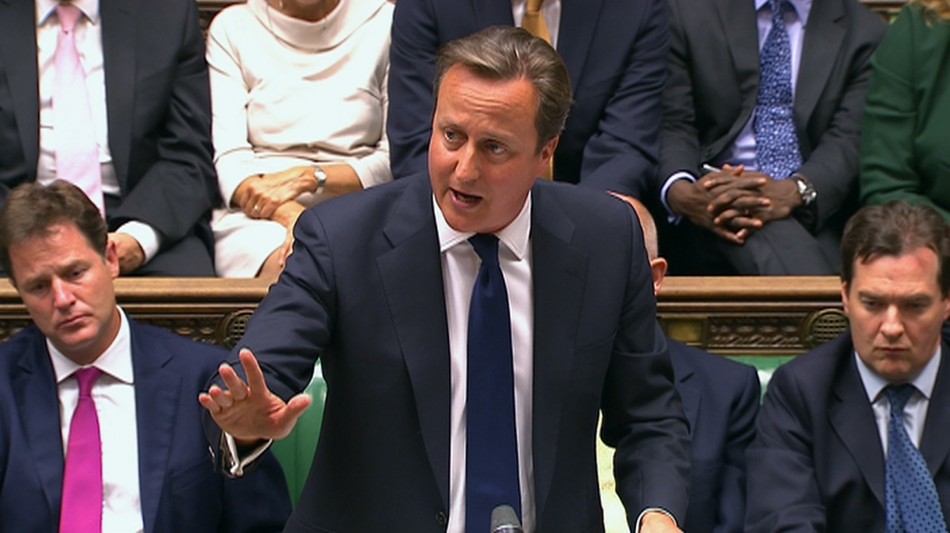
David Cameron, the man who wanted to be Prime Minister because he thought 'I'd be rather good at it,' (or words to that effect). How will he be judged by posterity for June 23rd 2016? What A-level essays will students write about him, taking the views of other historians into account and always remembering to achieve a balanced view?
He will undoubtedly be remembered as the man who successfully united and rebranded the Conservative Party after many years in the wilderness. A presentable PR man, he spoke and debated well and was plausible and convincing, they'll write. (Apart from his propensity for blushing, if they've seen footage of his early time in office.) Years of austerity will be evaluated - its effects on the economy as a whole and on individuals. The NHS, the BBC, the energy decisions and so on.
His gamble with the Scottish referendum will certainly come up. It was a risk that some will say paid off, as Scotland stayed within the United Kingdom and Labour lost their seats in Scotland as a result of being tainted by the Tory brand during the campaign. Two birds with one stone. However it didn't make the debate on independence go away - far from it.
And then Cameron gambled again, and this is the one that might put him on the wrong side of history. In offering an in-out referendum on the UK membership of the EU, Cameron is known to have been attempting to appease his backbenchers; to hold his party together, going into the next election. And so far so good. It worked, it even unexpectedly won them the next election, among other factors.
The problem was, he then had to make good on a promise he never expected to have to deliver on.
For the first time in his political career, the press are not supporting him. Has he lost his gamble? In two weeks time, we'll know, but it will take longer for the effects of the decision to unfold. If it should be an out vote, and, astonishingly, the polls are pointing to it, how will history remember David Cameron? The Prime Minister who took Britain out of Europe? The Prime Minister who presided over the break up of the union, not at the first referendum, but at the second? The Prime Minister who jeapordised Northern Ireland's fragile peace which predecessors Major and Blair worked so hard to achieve? The Prime Minister, even, who finally lost Gibraltar? Who caused an economic crash and a plummeting of the pound and the property market? Who began a long slow decline into isolation for England?
Image result for eu flag imagesNone of these things are what David Cameron wants to be remembered for. There's no doubt he passionately wants to stay in the EU, but this time, he has not succeeded in putting his arguments across without support from certain newspapers. No bacon-eating photos of the Leave Trio have so far been forthcoming. But whether he wants it or not, Cameron's name will be very firmly attached to whatever happens - a lucky escape or a disastrous exit. He gambled and won - or lost.


Is this the kind of analysis future A-level students will have to write? This would definitely only get a D grade, as it lacks close analysis and the opinions of historians. I'm fortunately not a history student - I just dabble. Future students will also be able to discuss, unlike me, whether the exit (if it happens) was a good or a bad thing for the UK in the long term. Something that we, on this side of this historic event, have no way of judging. When you're in the middle of history being made, it doesn't necessarily feel exciting. It can feel very, very frightening.

Monday, 15 February 2016

Review of The Mystery of the Clockwork Sparrow

The Clockwork Sparrow is a lively adventure for 9-12 year old readers, by Katherine Woodfine, set in Edwardian London, in a world that was rapidly changing. There are omnibuses, an American tycoon is opening a department store and threats of war are rumbling in the distance.
I'm probably late to this one as there is a sequel out on February 25th, but I read it over Christmas and enjoyed it. I loved the portrayal of a city in the process of such huge change, including the widening opportunities for young women. 

The main character Sophie, an orphan, gets a job at the new department store Sinclair's. She's really happy there preparing for the grand opening and making friends right up until there is a break in and she is blamed. Sophie loses her job, but determined to solve the mystery of who stole the clockwork sparrow, she turns detective.

As an adult reader, I was less interested in the plot than in the portrayal of the time and place, but the story moves along at a fast pace. I really enjoyed the fashion details, newspaper clips, illustrations and the feeling that this was all very real (even though the actual department store is fictional). Of course Sophie and her friends solve the mystery and save the day, but there was plenty of mystery around Sophie herself which wasn't revealed, so I'm hazarding a guess there will be more to come in the next books.
I'd really recommend this to anyone who has children to buy books for (or wants to read it themselves, of course). I hate to be superficial, but I should also mention it has a lovely cover.

Review by Marie-Louise Jensen
Follow me on twitter: jensen_ml


Tuesday, 15 December 2015

Norse-Style Ploughing

by Marie-Louise Jensen


I always get excited when I learn something new about one of the eras I write about. Of course there's masses I don't know, but some things reshape your view of the past more than others.
I've written three books about Vikings and am beginning a fourth for younger readers at present. I haven't researched agriculture in huge detail. I know which animals were domesticated and taken to Iceland during the era of settlement and I know which crops were grown across Scandinavia. But a chance reference of mine to a plough threw up a query from my editors and I discovered I knew very little about the agricultural methods of the Viking age.  
I discovered a wealth of rather contradictory information. Firstly, that the Vikings were known for using horses for ploughing rather than strong but slow oxen. It got the job done faster and left more time for raiding during the summer. However, the modern-style collar which enables horses to pull the plough safely had not yet been invented. So horses used for ploughing often became injured. Oxen were less prone to injury.
It appears to possibly be the case that while the Vikings used horses (and ploughs) for ploughing in the European countries they settled, they continued to use oxen in Scandinavia.
I was also fascinated to read that throughout the Norse era, the archaeological evidence points to the fact that ploughs weren't used in the Viking home countries - there they were still using a forerunner of the plough known as an ard (arðr) which scratched furrows into the soil rather than turning it as a plough does. A field near the Viking settlement of Lindholm Høje in Denmark was uncovered from a 900-year-old sand drift recently and found preserved as it had been when the sand blew over it - recently furrowed by an ard for planting.
The evidence points to the same tools and methods being used throughout Scandinavia in the Norse era, certainly in Icelamd. And an ox was used with an ard - the field worker walking beside the ox as he drew it.
So, given that my story is set in Iceland, I probably need to mention an ox, not a horse and almost certainly an ard not a plough.
I also learned two other fascinating facts. Viking-age sheep were tiny and horses were the only animals the Vikings selectively bred on Iceland.
Research really is an education.


Thursday, 15 October 2015

Executions

by Marie-Louise Jensen

This is a gruesome post. If you are squeamish, don't read on.

I was asked to talk to Year 7s and 8s last week about my book the Lady in the Tower and about the Tudors. It's not a recent book and I've never spoken specifically about it before, so I had a reread and a think and the thing that struck me most was the deaths by execution.
Really, the monarchs of that time, and especially Henry VIII were unfettered psychopaths and mass murderers.

Execution was so common; and it was a grand day out for all the family - take a picnic, take the kids.
Poor people were hanged at Tyburn. Mostly their main crime was just that; poverty. The same law for rich and poor, but as we know, the rich have no need to steal. Although they often do, just in more sophisticated ways.

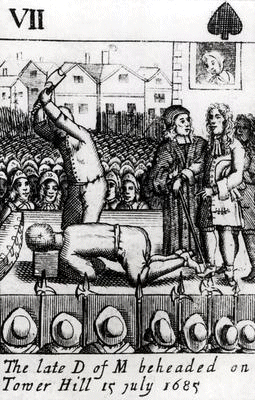
But hanging was deemed too brutal for the nobility. They got to be beheaded instead on Tower Hill instead. Lucky them. Interestingly they also got to step up onto the scaffold with a priest, who would be offering religious comfort, and there they had to pay and forgive the executioner before execution. Yes, really.
I asked the class how much they'd pay him. The overwhelming response was 'nothing'. But I think I'd pay him an awful lot.
Because what good is money once you're headless? And if you've got to lose your head, you really, really want to do it quickly and cleanly. You don't want him taking eleven goes at it, which I believe is the record. There's nothing non-brutal about that.
Anne Boleyn, as is common knowledge, was so afraid of the axe that she begged and was granted, execution by sword instead.
She was also one of only seven nobles to be granted a 'private' execution inside the Tower of London at Tower Green, rather than the public spot of nearby Tower Hill. Five of these nobles were women, revealing that even unleashed psychopaths who murdered on trumped-up charges to protect their own position were aware that some sensitivity was required executing women.
Even inside the tower grounds, there might have been privacy from the masses, but the audiences still numbered up to 200.
And that nice little habit of picking up the severed head to show it to the crowd? Anyone who has always believed that this was to show the head to the crowd is wrong, or at least only partly right. It was mainly intended to triumphantly show the head itself its own body as it lay on the block: we remain conscious for at least 8 seconds after our head is severed, before lack of oxygen causes brain death. I didn't share this detail with the students; I find the brutality of this deeply disturbing as an example of what human beings are willing to do to one another. If only beheading was a practice that belonged firmly in the past in the world.

As for my main character's father, Sir Walter Hungerford: he was beheaded at Tower Hill, with Father Bird, the vicar of Bradford-on-Avon, a month after the execution of his friend and ally Thomas Cromwell. Reportedly he raved and fought his executioners on the scaffold. That's considered to be a sign that he was mad. But you could see him as the only sane and normal person in a sick charade (if it hadn't been for some of his more dastardly acts towards his own family).

After an execution, the family were handed the body to bury while the head was boiled ready for display on a spike on London Bridge. The final step in the gruesome pageant of power and death.

As for hanging, drawing and quartering or burning at the stake - well, that wasn't divided into commoner and nobility. These tortured fates were reserved for those the king really, really hated.


Saturday, 15 August 2015

The Church that was Buried


by Marie-Louise Jensen

One of the characteristics of northern Jutland in Denmark is that the peninsula is formed of sand, not bedrock. And sand shifts with wind, tide and currents.

Just south of Skagen, lies an area which is dunes from coast to coast:

It's a beautiful, windswept area. In the summer, wild flowers and heather bloom; autumn and spring, migrating birds stop on the wet areas.

In the 14th century, a large church was built just two kilometres south of Skagen. It was in use for several hundred years, but the dunes began to drift. The congregation grew weary with digging the entrance free every time they wanted to hold a service there and eventually, in 1795, it was finally abandoned and partially demolished. The sand was free to drift and now only the tower remains free of the engulfing dunes


From a distance it looks for all the world like a complete Danish church. But when you reach it, there is just the tower:
:

Drifting sand isn't a thing of the past up here in the north of Denmark, either, This summer I was over on the West coast where a different church, once several miles inland, is now on the point of falling into the sea as the sand cliffs it stood on are gradually eaten by the North Sea. (This church is called Maarup kirke and was a location for the filming of the Danish film Babette's Feast). Several summer-houses out near the coast are being slowly buried by dunes too, as the sand drifts and the sea draws nearer.


There is also a wandering sand dune in this area south of Skagen. It moves some 15 metres a year and it's hard to convey in photos how vast an area it covers in its slow march from west coast to east with the prevailing winds:


Not a beach; a cool Nordic desert formed of millions of cubic metres of sand:

 
At the top there's a view from coast to coast Sadly, I couldn't get that in the shots with my camera, so here's some more inland sand-dune:
The dune is called Raabjerg Mile and is correctly known as a migrating coastal dune. Most of these dunes, which caused so many problems for the population in the 16th and 17th centuries, have been tamed with plantations and other measures. But this one is still allowed to roam free.

@jensen_ml


Wednesday, 15 July 2015

The Viking Faeroes

by Marie-Louise Jensen

For a number of years, I had a bit of an obsession with the Faeroe Islands, dating from receiving a postcard from there aged 20. The islands looked so weird and wonderful, distinctive green mountains rising steeply out of the sea, and I instantly wanted to visit.

It was 20 years before I got there, but in the intervening time, I read a fair bit of Faeroese literature (in Danish) and was generally fascinated by the remoteness of the islands and the isolated life there. A life that was isolated not just from other countries but by being a series of islands with treacherous seas running between them.

In the Viking era, the islands must have seemed less of a remote outpost than they do now, despite all that cheap flights and bridge-building between islands by the Danish government can do. The Fareoes were very central in the North Atlantic trade and exploration routes - a handy stop over on a voyage to Iceland, Greenland or even Scotland from the rest of Scandinavia.

The Vikings settled them early - duly driving out the Irish monks, as they did in Iceland. They even had their own saga - Faereyinga Saga - though the manuscript has sadly been lost.
In the sagas where they are mentioned, ships stop over on their way to Iceland, and I was inspired by that for my travellers in Daughter of Fire and Ice to stop there for fresh water; a life-changing stopover for my characters as it turned out.

Most of the literature I read about set in the islands was about mu
ch later periods - priests who were deeply mortified about being posted to such a backwater, or who tried desperately to stop their incorrigible flock spending their days in drunkenness.  And - an eye-opener for me - about the leper colony on one of the islands. The over-riding theme of the later literature (19th century and prudish) was the issue of sexual licence. A small colony was in need of new blood to avert in-breeding, so the women reputedly tumbled into bed with every sailor who visited. Myself, I suspect this was either much exaggerated by the male authors (who also told tales of stoning brothers and sisters to death for incest) or down to the Faeroese men being jealous or perhaps they just didn't know how to treat their women properly?

There's no doubt it was a hard life and a poor one for much of the islands' history.

I'm still fascinated by the islands' history and geography and am currently drooling with jealousy over photos my mother has been emailing to me (she's just been there). I've now shared these! Trip, anyone?


Friday, 15 May 2015

Settings

by Marie-Louise Jensen

I love having a real place to set my books. It helps me see the story playing out if I know the place. I used real settings which I named in my first two books. A little tricky, because I was then bound to the real history of the place. I made freer with my Icelandic books. I knew the places, but I didn't name them. So I was free to visualise the bay and hillsides, but could play a little with them.

In Runaway, I needed a big stately home for my setting. I chose Dyrham Park, which was just the right era, built in the early Georgian period, but wary of my experience of using Farleigh Castle, I renamed it Deerhurst Park. Now I had all the freedom I could want, to explore the beautiful setting on visits and imagine it, but without tying myself to its actual history and the people who lived there.

I could imagine the horses and carriages travelling down the wide sweep of the carriageway into the picturesque park. I could place characters at the lodge house (now a ticket office). I could describe negotiating a team of horses through the sharp turn into the gates and the archway into the stableyard:
I even knew what the stable yard was like - though it's now a tea room and a shop; as mentioned in an earlier post:
Here, I was able to imagine tethering and grooming the horses, harnessing them, riding them in and out, even walking them when they had colic. And I could imagine and describe all the daily coming and going of a busy stable yard and the people who once worked there.
I even felt familiar with the gardens and the view of the back of the house, which the servants would have crossed to go to church on Sundays:

An image of Dyrham Park even made the back cover of the paperback. So it's an open secret, but I still got to invent my own people and story for the place. 
I'm sure other authors can successfully use imagined settings, but I definitely find real ones easier and more vivid. And it gives me an excuse to post all these lovely pictures. Perhaps the real secret is that when I visit these incredible places, I love to imagine what it must have been like to live there. I suspect that might be the basis of a lot of our historical fiction.
Follow me on twitter: @jensen_ml