Showing posts with label Talking History. Show all posts

Friday, 9 February 2024

Great Minds: 2500 Years of Thinkers and Philosophy (Haig, Lennon, Ducci) - Joan Lennon

I joined the History Girls as a writer of historical fiction for 8-12 year olds, way back in 2012. 

And now I write historical non-fiction for 8-12 year olds. It's not as different to writing historical fiction as I used to think. You still do the research - you still get that big grin on your face when you unearth the diamond detail - you're still telling a story. And you're still spending time with compelling characters who quickly become as real, or realer, than your own family. They certainly occupy a lot of brain space.

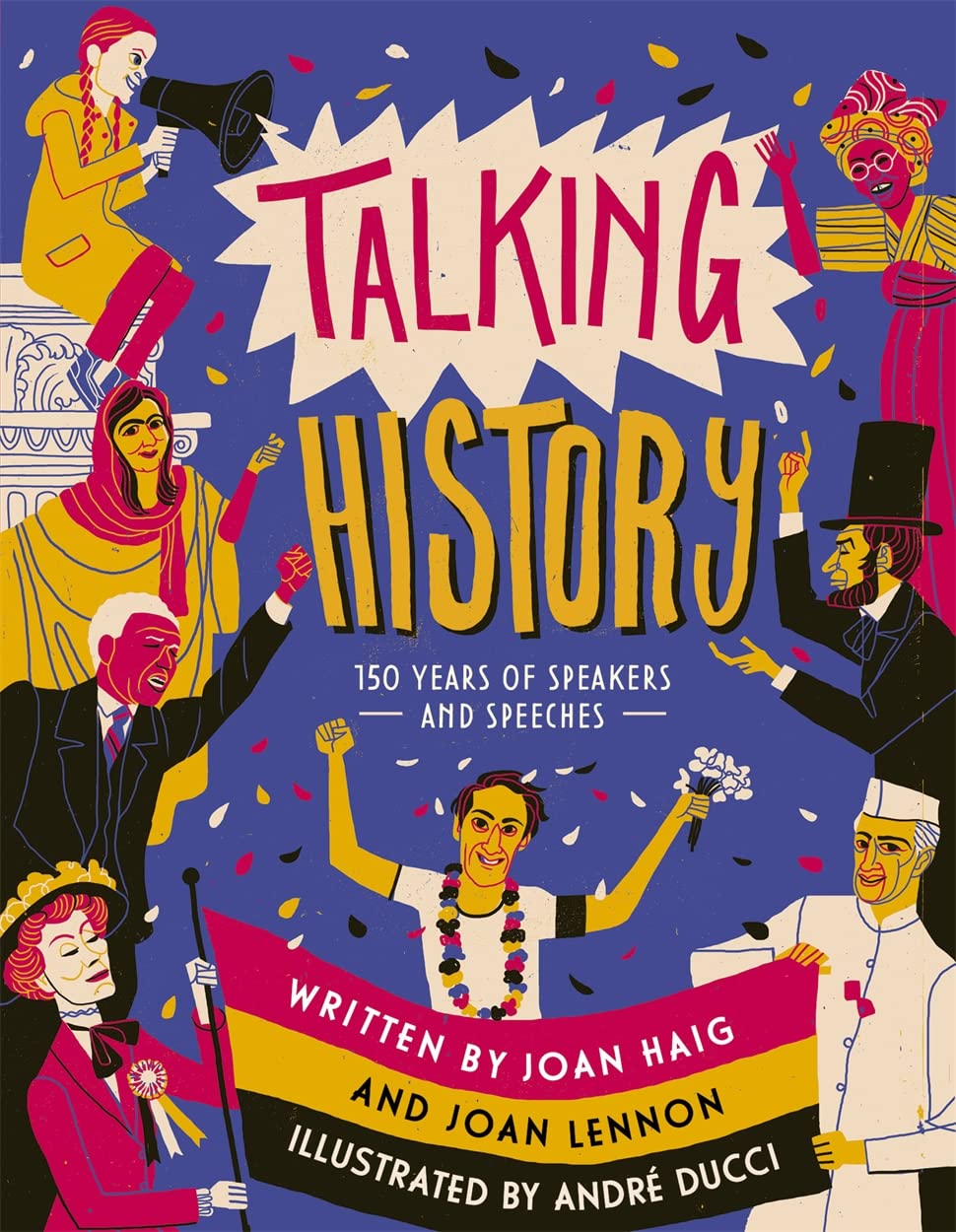
In Talking History: 150 Years of Speakers and Speeches, the pattern was laid for the collaboration between the writers - Joan Haig and me - and Andre Ducci the illustrator. 


Our second book is about philosophy. In Great Minds: 2500 Years of Thinkers and Philosophy we spread the historical net even further. 


If you want to talk about philosophy, the 8-12 year old group is the way to go - low on preconceptions, assumptions and prejudices, high on curiosity, energy and questions. Which is perfect for an area of human endeavour based on looking at questions and then looking at answers. Questions like:

What does it mean to be good?

Who am I?

What is time?

How can we tell if something is true?

What makes something beautiful?

And dozens more.

In the book we looked at questions and answers from different countries, cultures and times. And we introduce the reader to the people who have shaped the way we see the world. 

Fascinating is an overworked word, but the back stories of these people are just that. 

Of course, each story is different, but it was interesting how many of them start with being mediocre at school, described as too shy, only average, messy, female or black or both (and therefore really shouldn't be schooled at all). A goodly number, like Gandhi and Marx, had terrible handwriting, though a notable exception was the Ethiopian philosopher Zera Jacob who made a living by his beautiful calligraphy. As often as not, they came from poverty or lived in war-torn times or experienced colonialism. But not always - there is no template for a philosopher!

Something that shone out for me particularly was how often these philosophers were also polymaths. The specialism of the present day is so sure of itself that it can blind us to how this has not always been the case. Ibn Rushd was also a medical doctor, a musician and an astronomer; Gandhi was a lawyer who also hand-spun cotton; Mary Midgley studied animal behaviour and raised children. Philosophy speaks to every part of life.


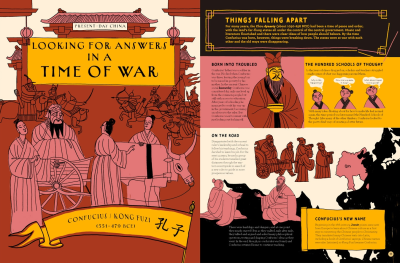


P.S. We've had some lovely reviews - thank you! And to learn more about Andre's fabulous work on the book, visit My Book Corner's Meet the Illustrator interview with him here.


Joan Lennon website

Talking History: 150 Years of Speakers and Speeches Templar Books (2022)

Great Minds: 2500 Years of Thinkers and Philosophy  Templar Books (2023)

The Slightly Jones Mysteries - Victorian detective stories for 8-12 year olds

The Wickit Chronicles - Medieval adventure stories for 8-12 year olds

Friday, 11 February 2022

Talking History: 150 Years of Speakers and Speeches - Joan Lennon


Talking History:150 Years of Speakers and Speeches
by Joan Haig and Joan Lennon
illustrated by André Ducci
Templar Publishing
20 Jan. 2022
aimed at ages 8-12


'Two Joans and an André Talk about Talking History'

Hi, I’m Joan.
And so am I.
And I’m André.
So, let’s talk Talking History: 150 Years of Speakers and Speeches

Joan L. to Joan H.:
How did you get the idea for this book?

Joan H:
I was on the lookout for a kids’ book on famous speeches – but the book I was looking for didn’t exist. So, over pots of tea, we put our heads together and decided to write it ourselves!

Joan L. to Joan H.:
Do you remember those first versions of the book – the coloured pen diagrams on big sheets of paper that we did on your kitchen table? We were so excited – and so rubbish!

Joan H.:
I still have some of those original scribbles we made! Thank goodness they asked André Ducci to do the artwork!

André:
Illustrating this book was one of the coolest projects I’ve participated in for bringing together history and social causes, subjects particularly interesting to me. In addition there was the possibility of learning - after all many of the personalities portrayed were unknown to me.

The difficulties, however, were not a few, starting with the challenge of representing so much information in a few pages.

Joan L. to Joan H.:
We found that too, didn’t we? And only having room for 16 amazing speeches out of so many was hard too.

Who didn’t make it into the book that you wish could have?

Joan H.:
I still have the first list of speeches we drew up. On it was an emotional surrender speech by Chief Joseph of the Nez Perce or Niimíipuu people of North America. Like the speeches that did end up in our book, the speaker’s voice is distinct and carries us back to a powerful moment in history.

What about you?

Joan L.:
Early on, I was keen to have a section on technology – a history of who hears what and how, and how can you trust the source. Newspapers, the invention of photography, radio, cinema newsreels, TV, internet and social media. In the end, there wasn’t room in Talking History – and really, it’s more of a whole new book on its own!

Joan H. to Joan L.:
What favourite story about the speakers who are in the book wasn’t there room for?

Joan L.:
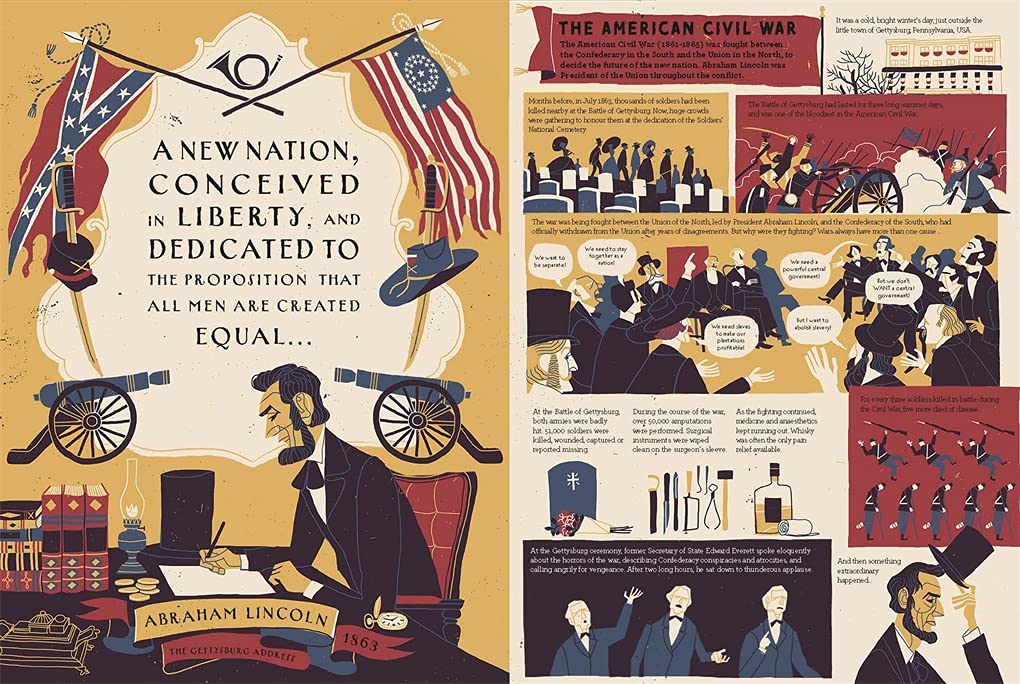
There was the one about Abraham Lincoln’s beard. All American Presidents have been men so far, but only 5 of them had beards while in office - and Abraham Lincoln was the first! There is a story that, during the campaigning for the election, an 11-year-old girl called Grace Bedell wrote to Lincoln and suggested he would look better with a beard. She couldn’t vote, being 11, but more importantly she never would be able to vote, being female. Still, ‘All the ladies like whiskers and they would tease their husbands to vote for you and then you would be President.’ That story really makes you think!

How about you?

Joan H.:
In the book, we write about how Winston Churchill had special false teeth made to help him keep his distinctive lisp. But here’s a bonus fact – one set of his upper dentures sold at auction in 2010 for over £15,000!

And what about favourite chapters from the book – did you have one?

Joan L.:
If I had to choose just one, maybe it would be the chapter on Helen Keller. The 1962 movie The Miracle Worker had a big effect on me when I first saw it and ever since. I love the way Helen Keller was interested in so many issues, equal rights but also votes for women, the fight against racism, an end to war. And the story of Braille is a fascinating one.

André:
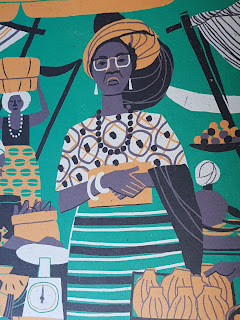
It's a hard task to choose a favourite chapter, but among them is certainly Funmilayo Ransome-Kuti's. It is one of the chapters that moved me most during its execution and that turned out to be one of the most beautiful as well.


Joan H.:
For me, I think it would be Nelson Mandela’s ‘Statement from the Dock’. I grew up in Southern Africa and he was one of my childhood heroes. Perhaps because I already knew so much about the story, I also found it one of the hardest chapters to write – we couldn’t include everything!

Joan L.:
Some of the chapters were definitely harder than others. There was such suffering in the backgrounds of so many of the speeches that we tried really hard to be true to. And yes, each chapter could make a whole book on its own!

Were there some chapters that were harder than others to illustrate?

André:
To portray the speakers in such a way as to maintain resemblance was not always a simple task. In some cases reference photos were missing, as happened with Pearl Gibbs. In others the person is so present in the media that it becomes very familiar, which requires more attention to be portrayed properly, as it was with Greta Thunberg.

Curiously I think the easiest one to portray was also the first chapter in which we worked, the one about the great Abraham Lincoln!


Joan L.:
Sometimes things that would take many words to get across were made clear with a single image.

It’s hard to choose, but do you have a favourite bit of André’s artwork?

Joan H.: 
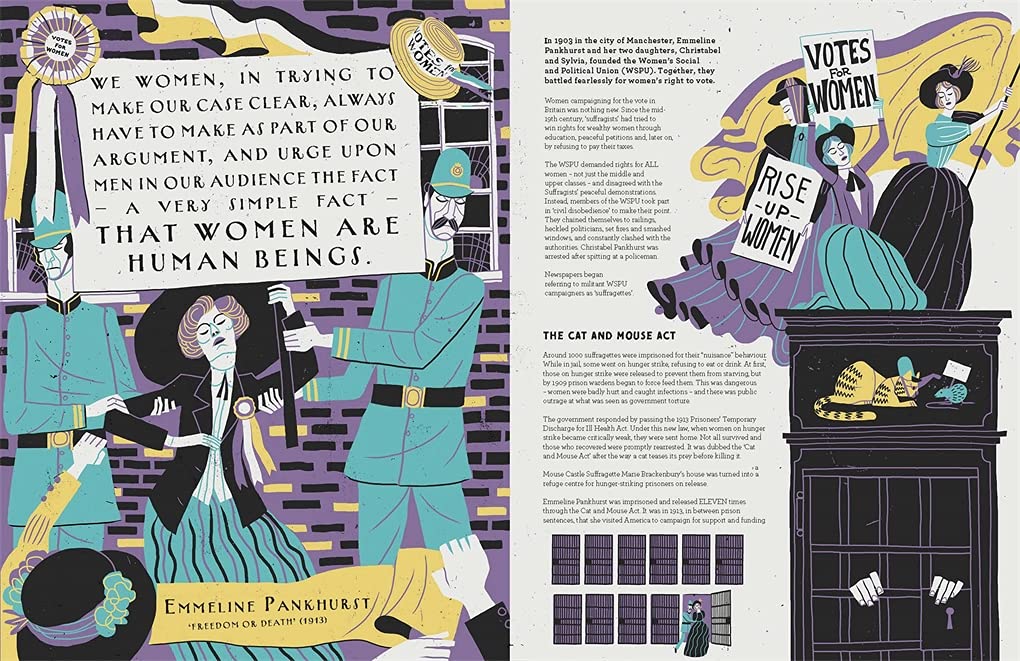
André makes big, bold statements, but there are also little gems - like the cat and mouse image in the chapter on Emmeline Pankhurst. 


I would love to have a framed print of each chapter opening - they would definitely brighten up my walls!

Joan L.: 
I love André’s sense of humour, too. In the parade scene in the Harvey Milk chapter, he drew a big floating dog balloon, in honour of Milk’s Pooper Scooper bill. 


And the way each chapter had different colours and layouts – there was never a dull moment!

From two Joans and an André – we hope you enjoy Talking History as much as we have!

And when will these three meet again? There is another book in the pipeline from Joan Haig, Joan Lennon and André Ducci… Watch this space!


(This is an extended version of an article written for Paperbound Magazine.)


Joan Lennon's website 

Joan Lennon's Instagram

Joan Haig's website

André Ducci's Instagram


Friday, 14 August 2020

Tom Lehrer and the Cold War by Joan Lennon

Watch this, recorded in September 1967.  Does it bring back memories, or is it something new?

We Will All Go Together

Or how about this one, recorded at the same time:

So Long, Mom (A Song For World War 3)

I've been thinking about the Cold War a lot lately.  Joan Haig and I are writing a non-fiction book on 17 speeches from Abraham Lincoln to Greta Thunberg, aimed at  8-12 year-olds and called Talking History: 150 Years of Speeches and Speakers (due out from Templar in July 2021).  I've been working on a chapter on Rene Cassin and another on Yuri Gagarin and Sally Ride.  So I've been trying to find ways to present the Cold War to primary school and first year secondary school pupils in a way that makes sense.  Sadly, I realise Tom Lehrer isn't exactly the way to do that.  But it brought him back to mind - that sardonic humour - the piano playing - the voice - the smile - those eyes -

Tom Lehrer, who is 92 now, was a ferociously talented mathematician, entering Harvard aged 15 and going on to teach political science and mathematics at MIT and University of California - where he also taught a course in musical theatre.  He is alleged to have invented the Jello Shot.  He started out producing and hand selling his own records, a process of which he said, "Lacking exposure in the media, my songs spread slowly. Like herpes, rather than ebola."  He performed; he wrote; he composed; he recorded; he produced work for television comedies and academic mathematical journals; and he spoke with brilliant intelligence to a world gone crazy-stupid.

I grew up in the Cold War.  I was taught to Duck and Cover in school.  The possibility that the world might end in a nuclear holocaust was an ongoing reality.  And those are perhaps the things that made Lehrer's dark satire so vividly one of the voices of the time.  It would be interesting to know if others feel the same.  I listened to his songs with my dad; I introduced my children to Lehrer (I let them get to 15 or so first) via Poisoning Pigeons in the Park on YouTube; Joan Haig remembers her father singing Lobachevsky and The Elements around African campfires; Isaac Asimov heard Lehrer in a nightclub and quotes some of his lyrics in his autobiography.  Is he new to you, or do you have memories of your own of when you heard Tom Lehrer first?  

And, as a dark little theme song for our own times, I leave you with Lehrer's 1997 recording of I Got It from Agnes -