Showing posts with label Joan Lennon. Show all posts

Friday, 6 February 2026

Fly Me to the Moon - Joan Lennon

"Do you remember where you were on 20 July, 1969?" *

I do. I was in the basement with my dad. We'd put the TV down there because it was so hot in a Canadian summer (no air conditioning) and the basement had a particular sort of cooler air that I would recognise the feel of immediately if I ever came across it again. Walter Cronkite's mellifluous voice filled the room. It took a long time, but then, at last, those fuzzy images... We had gone to another world.

We'd finally done it.

Humans have been intrigued by the possibility of going to the Moon for as long as there have been people to look up into the sky. (Not a statement I can prove, of course, but I'm sure anyway.) Here are just a few of the ways we know that have been mooted. "It's only science fiction!" you may say. And I say, "There's nothing 'only' about it." Without science fiction, without that human desire to get there in any way we can imagine, the space programme would never have got off the ground. So to speak.

How about Lucian of Samosata in 125 CE, who imagined a waterspout so huge it carried a ship on a lunar adventure? (Meeting the inhabitants - three-headed vultures - did not go well.)


Or Francis Godwin in The Man in the Moone, or a Discourse of a Voyage Thither, who suggested using swans for the trip in 1638? 


How about using a hot-air balloon, which was Edgar Allen Poe's take on the problem in 1835, or 
building your rocket out of anti-gravity metal, as H.G. Wells proposed in 1901, or blasting off using a cannon a la Jules Verne, as illustrated by Henri de Montaut? 


Have a look at  fabulously chaotic and wonderfully badly acted Le Voyage dans la Lune ** from 1902, loosely based on Verne's novels. It was the first science fiction film and well worth a watch, if only for all those ladies' legs on display! Heavens to Betsy***! 


20 July, 1969 was only a continuation of all those wild, weird and wacky dreams. Though there's nothing 'only' about it.


* Yeah, all right, lots of you weren't even born.

** Not the music I would have chosen, but you can always mute it.

*** Etymology unknown.


Joan Lennon website

Joan Lennon Instagram

Friday, 8 August 2025

Miscellany - Joan Lennon

Historical research makes use of venerable sources and texts held in reputable libraries and unimpeachable online sites, methodically uncovered and assessed - essential ingredients for writing historical fiction and non-fiction alike. But sometimes, we stumble across books that might not even have anything to do with the work in hand but which, months or years later, become our go-to place of inspiration and those precious tiny telling details that give our writing savour and life.

Today I'm celebrating a miscellany of books like that - just a few - there are many more! - acquired from charity shops, unexpectedly come upon in second- and first-hand bookshops, or at the bottom of boxes inherited from the clear-outs of family homes.


For example, during a visit to the Natural History Museum in London donkeys years ago, I bought Alfred Waterhouse and the Natural History Museum by Mark Girouard - the visit and the book planted the seeds of four Victorian mystery novels about Slightly Jones. Afterlives by Ruth Johnston gave me more wonderfully ghoulish material than I was able to use (but then, you shouldn't force everything you know into a book anyway!). Manners for Women and Manners for Men by Mrs Humphry (which I blogged about on History Girls many years ago here and here) were separate charity shop finds, and helped me enormously with the Slightly Jones series. Linda Cracknell's The Beat of the Heart Stones fed into the historical narrative poems of Never Still Nivver Still. Culpepper's English Physician and Complete Herbal came into my hands from my mother-in-law's bookshelves and provided depth and texture to the medieval series The Wickit Chronicles. Mary Kingsley's Travels in West Africa and Albert Robida's The Twentieth Century contributed to the non-fiction books Talking History and Great Minds, and also Revolution! (due out in 2026 from Templar Press).

If you come across any of these sometime, somewhere, make sure you give them a second glance - you are in for a treat! What books have you stumbled upon in unexpected places, maybe at times when you were thinking about something else entirely, that have helped bring your historical research to life? Serendipity is the writer's friend...

Joan Lennon website.

Joan Lennon Instagram.


Friday, 7 February 2025

Tom Lehrer is Still Alive - Joan Lennon


Tom Lehrer in 1960 (wiki commons)

We live in insane times. And the Cold War was an insane time. And so I guess it's not surprising I've been thinking a lot about what it was like growing up during that craziness and now being old in this craziness.

The Berlin Wall did come down, though it was impossible to imagine it ever would. What will be our symbol of a new and better time? Whatever it'll be, we can't stop working towards it.

And meanwhile, please spend some time with the inimitable Tom Lehrer here. I wrote about him back in 2020. He's 96 now, still alive, and still my hero.


Joan Lennon website
Joan Lennon Instagram

Friday, 9 August 2024

Crofting in the 1940s - Joan Lennon


A lovely film. Make yourself a cup of tea and let the voices wash over you. It's wartime and has been for some time, but the sheep still need gathered and clipped and the children still are in the midst of everything. And the dogs!

Joan Lennon website

Joan Lennon Instagram

Friday, 9 February 2024

Great Minds: 2500 Years of Thinkers and Philosophy (Haig, Lennon, Ducci) - Joan Lennon

I joined the History Girls as a writer of historical fiction for 8-12 year olds, way back in 2012. 

And now I write historical non-fiction for 8-12 year olds. It's not as different to writing historical fiction as I used to think. You still do the research - you still get that big grin on your face when you unearth the diamond detail - you're still telling a story. And you're still spending time with compelling characters who quickly become as real, or realer, than your own family. They certainly occupy a lot of brain space.

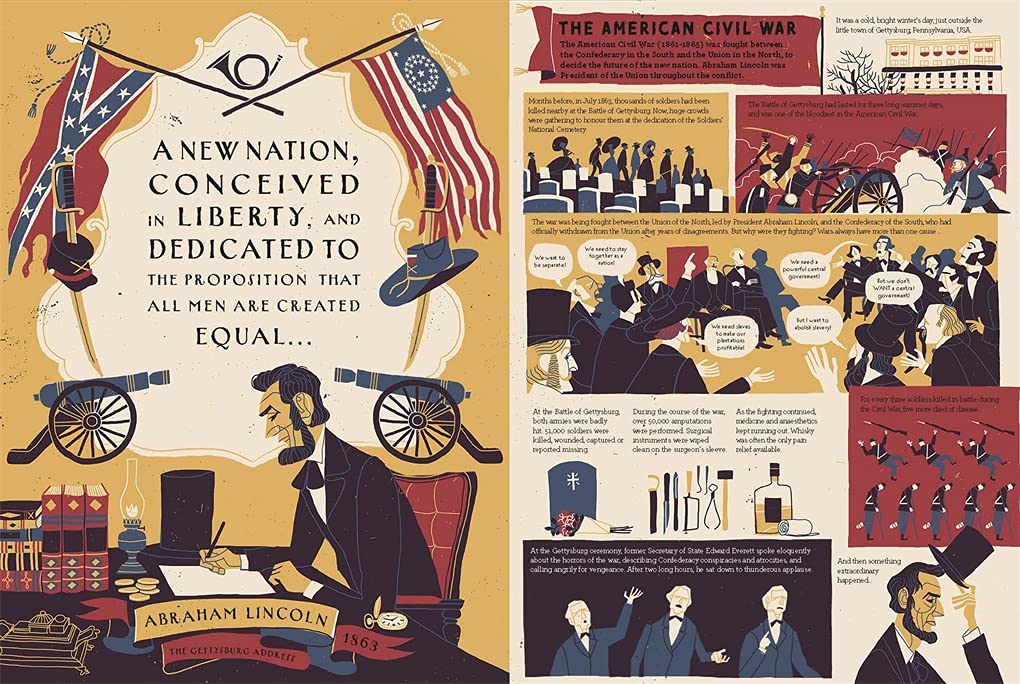
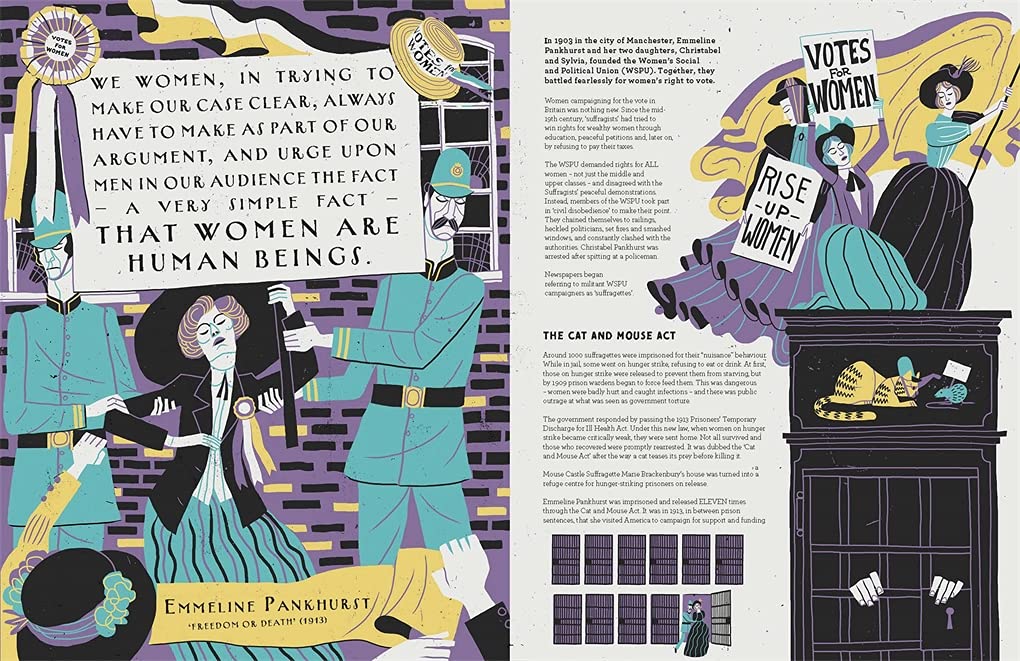
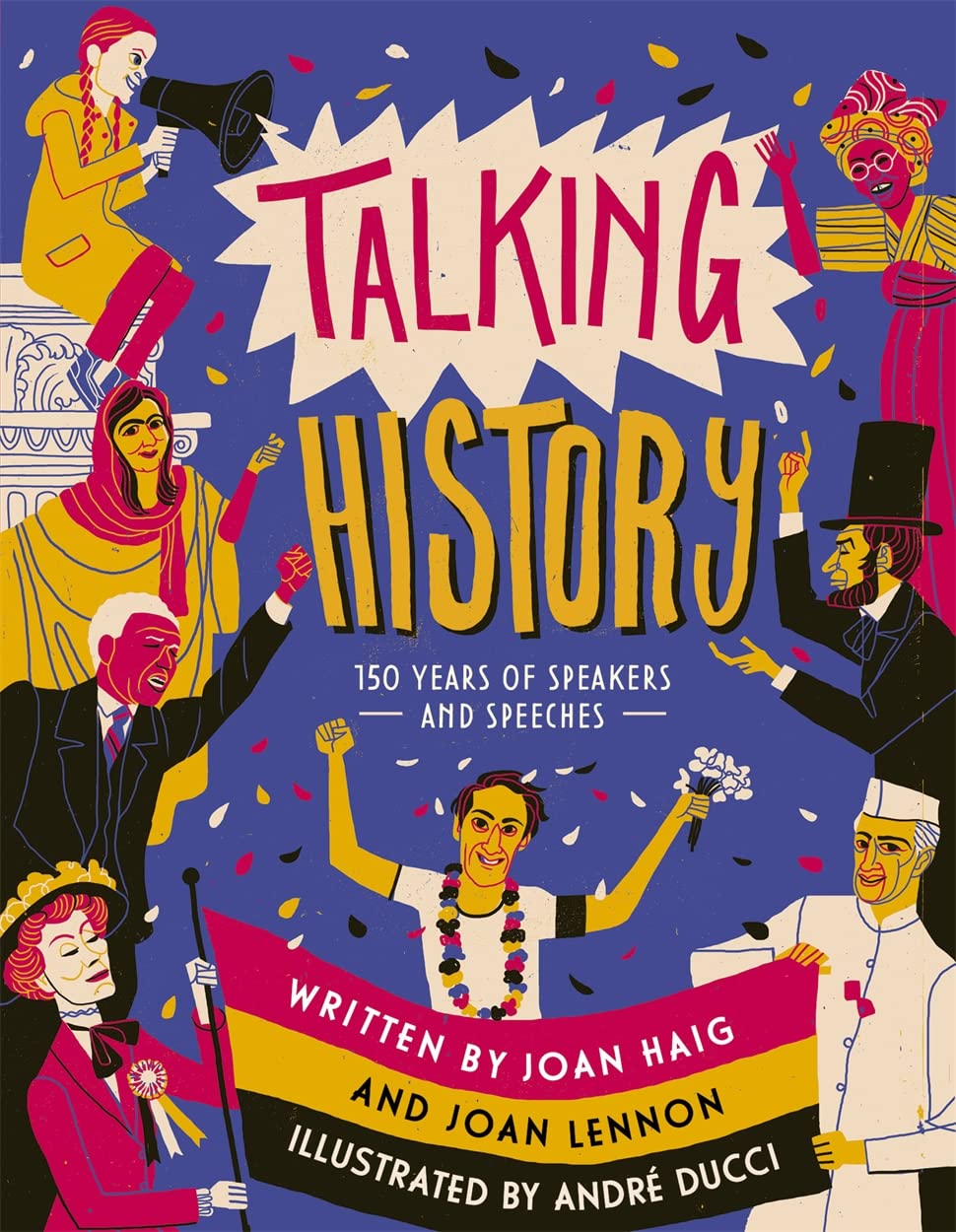
In Talking History: 150 Years of Speakers and Speeches, the pattern was laid for the collaboration between the writers - Joan Haig and me - and Andre Ducci the illustrator. 


Our second book is about philosophy. In Great Minds: 2500 Years of Thinkers and Philosophy we spread the historical net even further. 


If you want to talk about philosophy, the 8-12 year old group is the way to go - low on preconceptions, assumptions and prejudices, high on curiosity, energy and questions. Which is perfect for an area of human endeavour based on looking at questions and then looking at answers. Questions like:

What does it mean to be good?

Who am I?

What is time?

How can we tell if something is true?

What makes something beautiful?

And dozens more.

In the book we looked at questions and answers from different countries, cultures and times. And we introduce the reader to the people who have shaped the way we see the world. 

Fascinating is an overworked word, but the back stories of these people are just that. 

Of course, each story is different, but it was interesting how many of them start with being mediocre at school, described as too shy, only average, messy, female or black or both (and therefore really shouldn't be schooled at all). A goodly number, like Gandhi and Marx, had terrible handwriting, though a notable exception was the Ethiopian philosopher Zera Jacob who made a living by his beautiful calligraphy. As often as not, they came from poverty or lived in war-torn times or experienced colonialism. But not always - there is no template for a philosopher!

Something that shone out for me particularly was how often these philosophers were also polymaths. The specialism of the present day is so sure of itself that it can blind us to how this has not always been the case. Ibn Rushd was also a medical doctor, a musician and an astronomer; Gandhi was a lawyer who also hand-spun cotton; Mary Midgley studied animal behaviour and raised children. Philosophy speaks to every part of life.


P.S. We've had some lovely reviews - thank you! And to learn more about Andre's fabulous work on the book, visit My Book Corner's Meet the Illustrator interview with him here.


Joan Lennon website

Talking History: 150 Years of Speakers and Speeches Templar Books (2022)

Great Minds: 2500 Years of Thinkers and Philosophy  Templar Books (2023)

The Slightly Jones Mysteries - Victorian detective stories for 8-12 year olds

The Wickit Chronicles - Medieval adventure stories for 8-12 year olds

Friday, 11 August 2023

Bicycling Ladies Revisited by Joan Lennon

In 2012, I wrote a History Girls post about Bicycles and Revolution - I was just a reservist back then, and it was just a casual interest. Eleven years later, it is becoming a bit more than that as I return to the topic for an upcoming book. So here is the post from then to enjoy for now!

(The original video I got off YouTube has disappeared, but the one below is a longer version of the same event, beginning with a rather anxious parade of ladies, carefully bracketed by 'wheelmen', and then showing some skills not dissimilar to those displayed at Crufts.)


As we watch these elegant, white-clad, straight-backed ladies weave genteelly in and out, it is hard to remember that they were commiting an act of rebellion. Snooks were being cocked. Gauntlets flung.

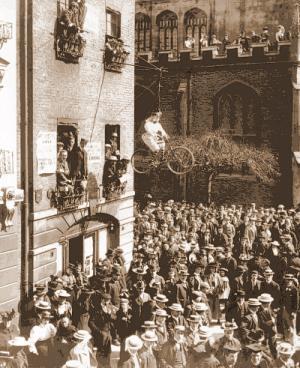
At the end of the 19th century, a bicycle with a woman astride was still a disconcerting sight - a challenge to trouser-wearing men. In Cambridge, when the question of full degrees for females was being discussed in the Senate, an effigy of a "rationally dressed" lady on a bicycle was hung out of the window of the building opposite, flanked by banners declaring “No Gowns for Girtonites” and “Varsity for Men”.


(Image: Cambridge Daily News, 21 May 1897.)

The effigy was burned later in the day, and the motion was defeated. But the ladies went on riding. They wore bloomers. They went places without being taken by a man. They started carrying toolbags.

"Let me tell you what I think about bicycling," said Susan B. Anthony, American campaigner for Votes for Women, in 1896. "It has done more to emancipate women than anything else in this world. It gives her a feeling of self-reliance and independence the moment she takes her seat; and away she goes, the picture of untrammeled womanhood. I stand and rejoice every time I see a woman on a wheel."

It was a wheel that would not be turned back. But completely "untrammelled womanhood"? Not quite. Even in a world full of "new women" there had to be some standards ... In 1895 the New York World printed a list of Don'ts for Lady Cyclists, which included the following admonitions:

Don’t be a fright.
Don’t faint on the road.
Don’t forget your toolbag
Don’t imagine everybody is looking at you.
Don’t go to church in your bicycle costume.
Don’t wear a garden party hat with bloomers.
Don’t contest the right of way with cable cars.
Don’t wear white kid gloves. Silk is the thing.
Don’t ask, “What do you think of my bloomers?”
Don’t let your golden hair be hanging down your back.
Don’t allow dear little Fido to accompany you
Don’t scratch a match on the seat of your bloomers.
Don’t discuss bloomers with every man you know.
Don’t scream if you meet a cow. If she sees you first, she will run.

Still good advice about cows, though.

Also see YS Lee's 2015 History Girls post Bikes, Bars and Bloomers for more on this fascinating subject.

Joan Lennon website

Joan Lennon Instagram

Friday, 10 February 2023

Wheel Fiddle by Joan Lennon


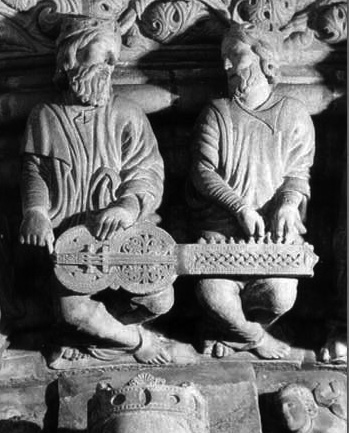
Elders playing a two-person organistrum
Santiago de Compostela, Spain
12th century
(wiki commons)

What has more than 90 moving parts, was once the instrument of choice in churches, in its earliest version needed two people to play* and has been making music for over 1000 years?

It's the hurdy-gurdy. Aka the wheel fiddle, symphonia, organistrum, vielle a roue, zanfona. Its music is made by a rosined wooden wheel turned by a crank moving against melody strings, plus drone strings and a buzzing bridge or 'dog'**.


Illustration of two symphonia from the Canticles of Holy Mary
during the reign of Alfonso X of Castile El Sabio (1221-1284)
(wiki commons)

Are you reading or writing medieval historical fiction? Would you like a sound track? Try these (though there is a certain irony in the ones where there's an organ accompaniment ...):


Though the organ as we know it took over as the instrument of ecclesiastical music, the hurdy-gurdy remained popular in the secular world. Once you start looking you see it illustrated everywhere - Leonardo da Vinci, Hieronymus Bosch, Brueghel, Jacquet, Millais - not all on wiki commons, so sadly I can't show them here, but keep an eye out. It even makes a brief appearance on the film
The Polar Express.


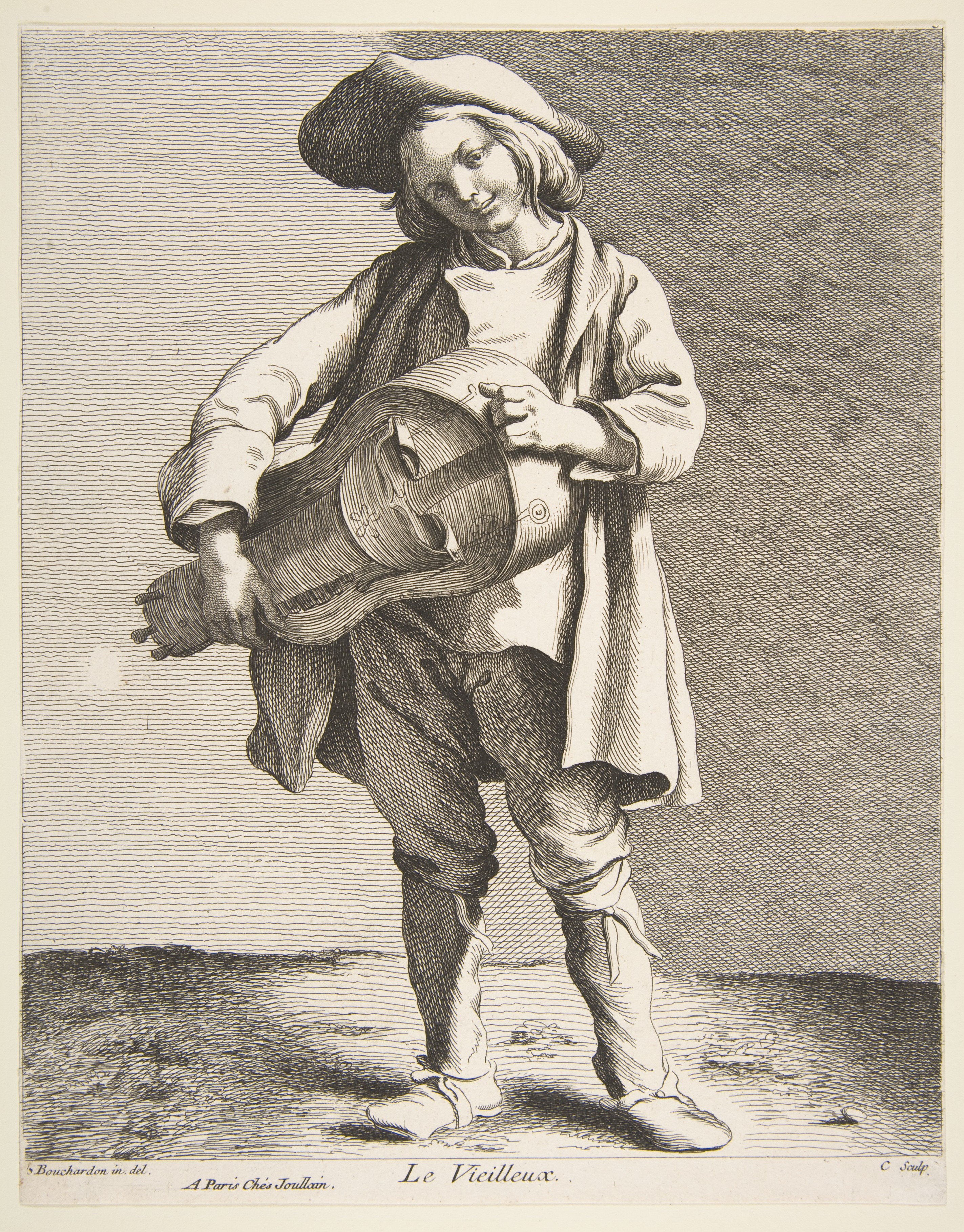
The Hurdy-Gurdy Player
by Anne Claude de Caylus 1737
(wiki commons)

For a modern take on the hurdy-gurdy, here is a beautifully creative work by Guilhem Desq called Le chateau magique:


I couldn't resist leaving you with this version of the Game of Thrones theme played on hurdy-gurdy:


* The history of instruments that need more than one person to play them is a fascinatingly odd one, and includes 'the courting dulcimer' from the Southern States of the US in the 1850s. A protective mama was reassured by the sound of the music from the next room because the dulcimer required four hands to play, so the courting couple could be left alone without fear of hanky-panky taking place.

I'm also quite fond of the two person octobass, but that's a story for another day.

** It's called a dog because (to someone, not me) the noise it makes sounds like barking.


Joan Lennon website

Friday, 12 August 2022

Eye Marvels - Joan Lennon

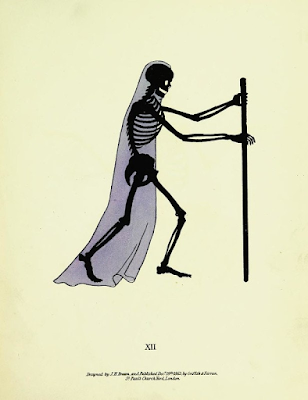
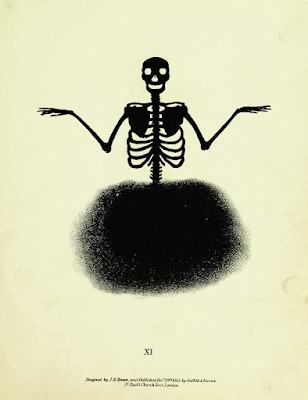
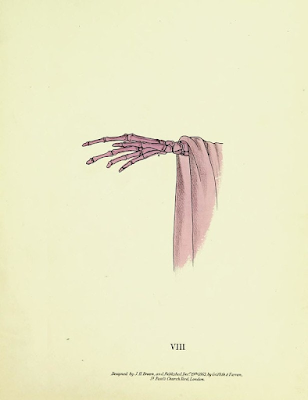
The last year or so I've been eye obsessed, as my cataracts got thicker and my outlook got blurrier. Two operations later (plus some months of having to be patient while my sight settled down) and I am thoroughly enjoying my shiny new eyes. But don't worry if you are squeamish - I'm not going to post a history of cataract surgery, fascinating (and toe-curling) though that is. Instead, I'd like to share with you J. H. Brown's fabulously-titled book Spectropia: or, Surprising Spectral Illusions, Showing Ghosts Everywhere, and of any Colour, published in 1865 by Griffith and Farran, whose offices were to be found in the Corner of St Paul's Churchyard (Entered at Stationers' Hall). 

It is a book about seeing ghosts.
 

To see the spectres, it is only necessary to look steadily at the dot, or asterisk, which is to be found on each of the plates, for about a quarter of a minute, or while counting about twenty, the plate being well illuminated by either artificial or day light. Then turning the eyes to the ceiling, the wall, the sky, or better still to a white sheet hung on the wall of a darkened room (not totally dark), and looking rather steadily at any one point, the spectre will soon begin to make its appearance, increasing in intensity, and then gradually vanishing, to reappear and again vanish ; it will continue to do so several times in succession...


J.H. Brown created his book to speak out against the 'mental epidemic' of such 'absurd follies' as 'spirit-rapping and table-turning'. He goes on to explain the wonderful mechanics of the eye and its heightened deceivability. And then, on with the show!  


Thanks to The Public Domain Review it's possible for us to have a go at experiencing these surprising spectral illusions ourselveshere, even if we don't own a physical copy of the book - which, though it may not have been a absolute best seller, was still popular enough to go into a 4th edition.

Enjoy!


(I would love to have a read of some of Griffith and Farran's other publications, such as the New and Popular Books for the Young advertised on the back cover, including The Headlong Career and Woful Ending of Precocious Piggy and the slightly dodgy sounding The Loves of Tom Tucker and Little Bo-peep.)


Joan Lennon website

Joan Lennon Instagram

Friday, 11 February 2022

Talking History: 150 Years of Speakers and Speeches - Joan Lennon


Talking History:150 Years of Speakers and Speeches
by Joan Haig and Joan Lennon
illustrated by André Ducci
Templar Publishing
20 Jan. 2022
aimed at ages 8-12


'Two Joans and an André Talk about Talking History'

Hi, I’m Joan.
And so am I.
And I’m André.
So, let’s talk Talking History: 150 Years of Speakers and Speeches

Joan L. to Joan H.:
How did you get the idea for this book?

Joan H:
I was on the lookout for a kids’ book on famous speeches – but the book I was looking for didn’t exist. So, over pots of tea, we put our heads together and decided to write it ourselves!

Joan L. to Joan H.:
Do you remember those first versions of the book – the coloured pen diagrams on big sheets of paper that we did on your kitchen table? We were so excited – and so rubbish!

Joan H.:
I still have some of those original scribbles we made! Thank goodness they asked André Ducci to do the artwork!

André:
Illustrating this book was one of the coolest projects I’ve participated in for bringing together history and social causes, subjects particularly interesting to me. In addition there was the possibility of learning - after all many of the personalities portrayed were unknown to me.

The difficulties, however, were not a few, starting with the challenge of representing so much information in a few pages.

Joan L. to Joan H.:
We found that too, didn’t we? And only having room for 16 amazing speeches out of so many was hard too.

Who didn’t make it into the book that you wish could have?

Joan H.:
I still have the first list of speeches we drew up. On it was an emotional surrender speech by Chief Joseph of the Nez Perce or Niimíipuu people of North America. Like the speeches that did end up in our book, the speaker’s voice is distinct and carries us back to a powerful moment in history.

What about you?

Joan L.:
Early on, I was keen to have a section on technology – a history of who hears what and how, and how can you trust the source. Newspapers, the invention of photography, radio, cinema newsreels, TV, internet and social media. In the end, there wasn’t room in Talking History – and really, it’s more of a whole new book on its own!

Joan H. to Joan L.:
What favourite story about the speakers who are in the book wasn’t there room for?

Joan L.:
There was the one about Abraham Lincoln’s beard. All American Presidents have been men so far, but only 5 of them had beards while in office - and Abraham Lincoln was the first! There is a story that, during the campaigning for the election, an 11-year-old girl called Grace Bedell wrote to Lincoln and suggested he would look better with a beard. She couldn’t vote, being 11, but more importantly she never would be able to vote, being female. Still, ‘All the ladies like whiskers and they would tease their husbands to vote for you and then you would be President.’ That story really makes you think!

How about you?

Joan H.:
In the book, we write about how Winston Churchill had special false teeth made to help him keep his distinctive lisp. But here’s a bonus fact – one set of his upper dentures sold at auction in 2010 for over £15,000!

And what about favourite chapters from the book – did you have one?

Joan L.:
If I had to choose just one, maybe it would be the chapter on Helen Keller. The 1962 movie The Miracle Worker had a big effect on me when I first saw it and ever since. I love the way Helen Keller was interested in so many issues, equal rights but also votes for women, the fight against racism, an end to war. And the story of Braille is a fascinating one.

André:
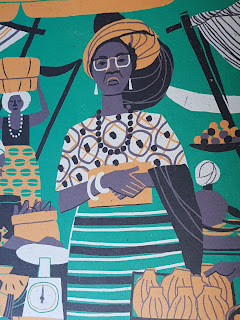
It's a hard task to choose a favourite chapter, but among them is certainly Funmilayo Ransome-Kuti's. It is one of the chapters that moved me most during its execution and that turned out to be one of the most beautiful as well.


Joan H.:
For me, I think it would be Nelson Mandela’s ‘Statement from the Dock’. I grew up in Southern Africa and he was one of my childhood heroes. Perhaps because I already knew so much about the story, I also found it one of the hardest chapters to write – we couldn’t include everything!

Joan L.:
Some of the chapters were definitely harder than others. There was such suffering in the backgrounds of so many of the speeches that we tried really hard to be true to. And yes, each chapter could make a whole book on its own!

Were there some chapters that were harder than others to illustrate?

André:
To portray the speakers in such a way as to maintain resemblance was not always a simple task. In some cases reference photos were missing, as happened with Pearl Gibbs. In others the person is so present in the media that it becomes very familiar, which requires more attention to be portrayed properly, as it was with Greta Thunberg.

Curiously I think the easiest one to portray was also the first chapter in which we worked, the one about the great Abraham Lincoln!


Joan L.:
Sometimes things that would take many words to get across were made clear with a single image.

It’s hard to choose, but do you have a favourite bit of André’s artwork?

Joan H.: 
André makes big, bold statements, but there are also little gems - like the cat and mouse image in the chapter on Emmeline Pankhurst. 


I would love to have a framed print of each chapter opening - they would definitely brighten up my walls!

Joan L.: 
I love André’s sense of humour, too. In the parade scene in the Harvey Milk chapter, he drew a big floating dog balloon, in honour of Milk’s Pooper Scooper bill. 


And the way each chapter had different colours and layouts – there was never a dull moment!

From two Joans and an André – we hope you enjoy Talking History as much as we have!

And when will these three meet again? There is another book in the pipeline from Joan Haig, Joan Lennon and André Ducci… Watch this space!


(This is an extended version of an article written for Paperbound Magazine.)


Joan Lennon's website 

Joan Lennon's Instagram

Joan Haig's website

André Ducci's Instagram


Friday, 13 August 2021

Making Music Visible Part 1 - Norman McLaren - by Joan Lennon

I'm proud to be a History Girl.  But I'm also a Historical Girl, in so far as many things I grew up with are now considered History.  One of those things was the National Film Board of Canada,* home to all sorts of quiet revolutions in animation and film-making.  And from 1941, it was home to Norman McLaren. 

My dad was a film buff, though that term may be Historical now as well, and he shared his enthusiasm with me.**  Not everything we watched together way back then has stood up to the test of time, but Norman McLaren has. In spades.

One aspect of McLaren's work was the technique he pioneered of creating sound scores by scratching and gouging the physical film strip.  We can look more into that in Part 2. But he also collaborated with many of the prominent musicians of his time, making wonderfully abstract short films that both illustrated the music and made it visible. 

He was drawn to music of widely different sorts and styles.  Sometimes he was inspired by folk songs like the French Canadian sequence song in 1958, Le Merle (The Blackbird). In this film he worked with fellow animator Evelyn Lambart and the Trio Lyrique of Montreal.


Or Boogie-Doodle (1940) where African-American jazz pianist Albert Ammons provided the boogie, and McLaren created the doodle:


Eldon Rathburn's jazz ensemble piece came together with McLaren's images hand-scratched and hand-painted directly onto the film strip to become Short and Suite (1959):


But perhaps the most mesmerizing of all was Spheres (1969) where McLaren and Rene Jodoin collaborated with the Canadian pianist Glenn Gould:


(There is yet another layer of richness that you can hear if your ears are keen. One of Glenn Gould's quirks was to hum an improvised other line of music while playing Bach fugues.  Drove some people crazy but as a kid smitten by and grappling with the gorgeousness of Bach, Gould was my hero.)

People speak about 'passion pieces' and for me, the passion of these short collaborative films comes through as vividly today as it did way back then, in History. But perhaps that's enough for now, and Part 2 of Making Music Visible will appear in due course.


*Still going strong, the National Film Board of Canada champions new works and also has a wonderful archive of films and documentaries.  Have a look here.

** Back in 2014 I did a HG post on Norman McLaren's 1957 film A Chairy Tale.  The music was by Ravi Shankar and Chantur Lal.

Joan Lennon Instagram
Friday, 12 February 2021

Revisiting Mary Kingsley - Joan Lennon

[I've been thinking about travel, in these times without, and would like to repost something I did back in 2013 about the intrepid, fiercely intelligent, witty Mary Kingsley.] 

Mary Kingsley was a model Victorian female. She was a good little girl who lived with her parents, helped her mother with the house and her father with his hobbies and interests. She was a good young woman who nursed her parents in their final illnesses. And, at the age of 30, she was all set to become a good old maid, when something amazing happened. She fell in love ...


... with Africa. West Africa, 'the white man's grave'. The Africa of mangrove swamps and malaria, cannibals and crocodiles, 'Fetish' and undiscovered species of fish. It is impossible to do the next seven years of her life any kind of justice in the space of a blog post - this is a woman who collected insects and fish for the British Museum, continued her father's studies in 'pagan' religions, journeyed down rivers and through swamps and up mountains, encountered - and had clear ideas of the differences between - dozens of tribes, and by the end of the her life was advising the British government on their African policies - and doing it all in a long skirt and several layers of petticoats.* She held some views that were very much of the time, and some that were very much her own.**  And she wrote about it all with a turn of phrase as elegant as a lady's ankle.

Take crocodiles, for example:

Now a crocodile drifting down in deep water, or lying asleep with its jaws open on a sand-bank in the sun, is a picturesque adornment to the landscape when you are on the deck of a steamer, and you can write home about it and frighten your relations on your behalf; but when you are away among the swamps in a small dug-out canoe, and that crocodile and his relations are awake - a thing he makes a point of being at flood tide because of fish coming along - and when he has got his foot upon his native heath - that is to say, his tail within holding reach of his native mud - he is highly interesting, and you may not be able to write home about him ...

Or, this discussion of a traveller's options, who finds him, or as it might be, herself tide-trapped in a mangrove swamp:

Of course if you really want a truly safe investment in Fame, and really care about Posterity, and Posterity's Science, you will jump over into the black batter-like, stinking slime, cheered by the thought of the terrific sensation you will produce 20,000 years hence, and the care you will be taken of then by your fellow-creatures, in a museum. But if you are a mere ordinary person of a retiring nature, like me, you stop in your lagoon until the tide rises again ...

Or, the description of a chance meeting with a leopard in a storm:

His forepaws were spread out in front of him and he lashed the ground with his tail, and I grieve to say, in face of that awful danger - I don't mean me, but the tornado - that depraved creature swore, softly, but repeatedly and profoundly ...


Commemorative stamp, May 1969, Great Britain


And this is what she says about this love that took over her life:

The charm of West Africa is a painful one: it gives you pleasure when you are out there, but when you are back here it gives you pain by calling you ... you hear, nearer to you than the voices of the people round, nearer than the roar of the city traffic, the sound of the surf that is breaking on the shore down there, and the sound of the wind talking on the hard palm leaves and the thump of the natives' tom-toms; or the cry of the parrots passing over the mangrove swamps in the evening time; or the sweet, long, mellow whistle of the plantain warblers calling up the dawn; and everything that is round you grows poor and thin ... and you want to go back ...


Mary Kingsley (1890s)


The Victorian era produced many fine, strong, distinctive voices, and hers was certainly one of them - as personal and engaging as if she were in the same room. I wish she were!


Mary H. Kingsley (1862-1900)
Travels in West Africa (1897)


* Plenty of petticoats prove an excellent defence when attacked by village geese, or when falling into a fifteen-foot deep game pit studded with 12-inch spikes. It is at these times you realise the blessing of a good thick skirt.

** She defended, for example, the practice of polygamy - it was clear to her that women were far better off being able to share the work and the child care. She also felt strongly that some of the tribes had intellectual strengths greater than the capacity of their language. And she valued the work of the trader over the contributions of the missionary.


[Mary Kingsley died at age 37 from typhoid contracted while nursing Boer prisoners of war in a South African hospital.]


Joan Lennon Instagram
Friday, 14 August 2020

Tom Lehrer and the Cold War by Joan Lennon

Watch this, recorded in September 1967.  Does it bring back memories, or is it something new?

We Will All Go Together

Or how about this one, recorded at the same time:

So Long, Mom (A Song For World War 3)

I've been thinking about the Cold War a lot lately.  Joan Haig and I are writing a non-fiction book on 17 speeches from Abraham Lincoln to Greta Thunberg, aimed at  8-12 year-olds and called Talking History: 150 Years of Speeches and Speakers (due out from Templar in July 2021).  I've been working on a chapter on Rene Cassin and another on Yuri Gagarin and Sally Ride.  So I've been trying to find ways to present the Cold War to primary school and first year secondary school pupils in a way that makes sense.  Sadly, I realise Tom Lehrer isn't exactly the way to do that.  But it brought him back to mind - that sardonic humour - the piano playing - the voice - the smile - those eyes -

Tom Lehrer, who is 92 now, was a ferociously talented mathematician, entering Harvard aged 15 and going on to teach political science and mathematics at MIT and University of California - where he also taught a course in musical theatre.  He is alleged to have invented the Jello Shot.  He started out producing and hand selling his own records, a process of which he said, "Lacking exposure in the media, my songs spread slowly. Like herpes, rather than ebola."  He performed; he wrote; he composed; he recorded; he produced work for television comedies and academic mathematical journals; and he spoke with brilliant intelligence to a world gone crazy-stupid.

I grew up in the Cold War.  I was taught to Duck and Cover in school.  The possibility that the world might end in a nuclear holocaust was an ongoing reality.  And those are perhaps the things that made Lehrer's dark satire so vividly one of the voices of the time.  It would be interesting to know if others feel the same.  I listened to his songs with my dad; I introduced my children to Lehrer (I let them get to 15 or so first) via Poisoning Pigeons in the Park on YouTube; Joan Haig remembers her father singing Lobachevsky and The Elements around African campfires; Isaac Asimov heard Lehrer in a nightclub and quotes some of his lyrics in his autobiography.  Is he new to you, or do you have memories of your own of when you heard Tom Lehrer first?  

And, as a dark little theme song for our own times, I leave you with Lehrer's 1997 recording of I Got It from Agnes -


Friday, 14 February 2020

Creative Non-Fiction, into the Past - Joan Lennon


I'm a History Girl.  I'm an advocate of fiction as a way into the past.  And non-fiction as a way into the past.  Then, in-between them, there's creative non-fiction.  When asked - which doesn't happen a great deal - what creative non-fiction is, I tend to flounder, usually ending up with something like "It's, um, factual, but, er, written up pretty.  Er."  Online definitions are more elegant, but the comment by critic Chris Anderson that it is a genre "currently defined by its lack of established conventions" is very much on the money.

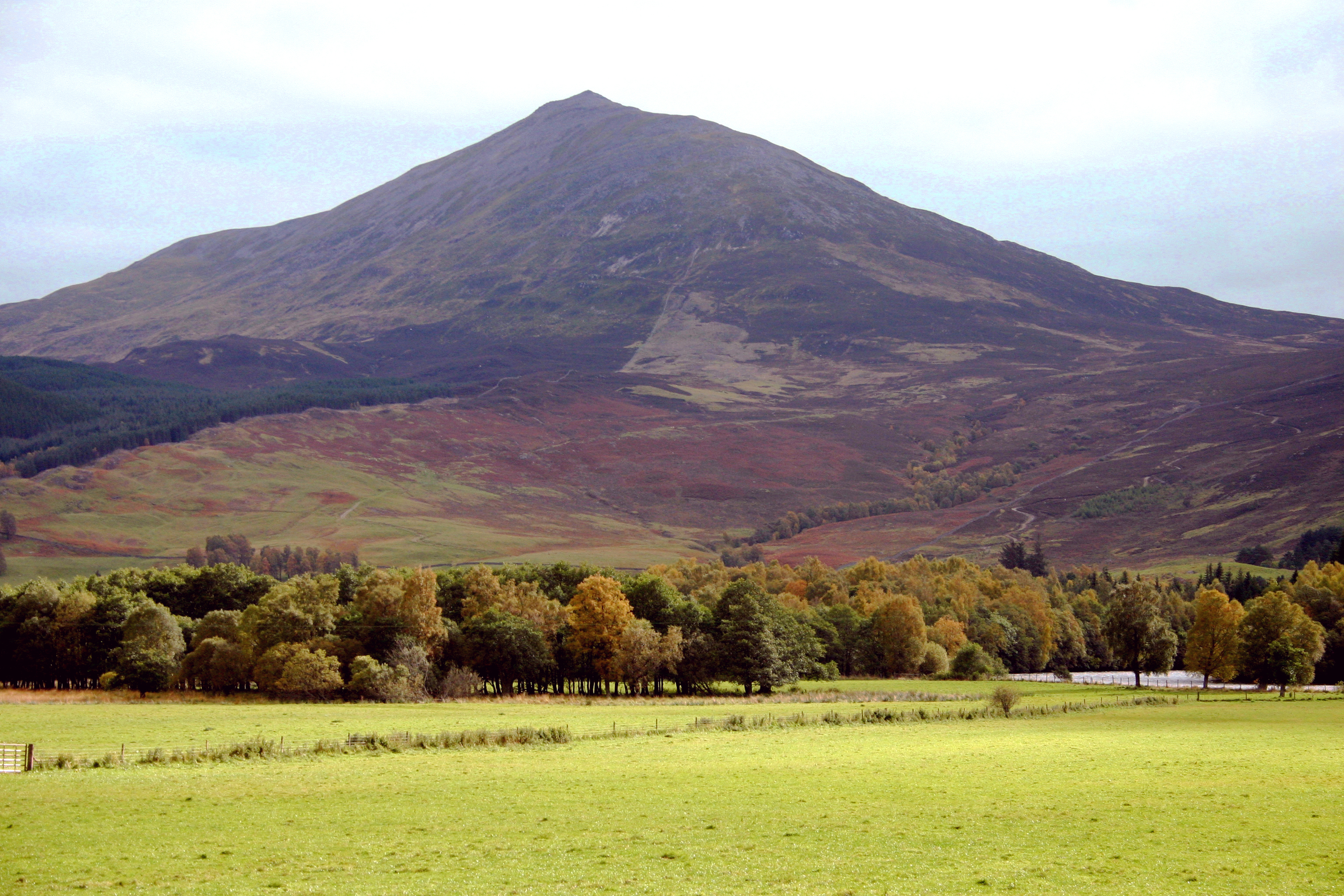
I think maybe we know it when we read it.  I certainly knew it when I read Linda Cracknell's The Beat of the Heart Stones.  In this tiny, beautiful book, there is a conversation, between the present and the past, between a walker and a wall.  The Dyke was built up the side of Schiehallion in the late 18th century, and in The Beat, the writer begins to climb the mountain, following along the path of the wall.  More quickly than you'd think, the idea that the dyke can speak becomes completely believable.  Here is a snippet of their conversation:

So they used whatever was close by?  Here's a block of quartz, the glitter of mica schist.  Here a seaweed green section, here bare grey.

What the Earth spits out.  Would you want to heave it far across the hills? ...


It was weans and women and tinkers hauled these rocks - left them in a rickle each side of the line, within reach of the hands that built my long slow uphill spine.


Whose hands?


One craftsman each side.  Raising two inward-leaning walls that kissed just before they were capped.  Think of the men as you walk ...


They saw at a glance how one stone would nudge and slide against another, the shape and ache of a gap ...


They made it a rule - never pick up a stone more than once.  Assess them where they lie.


The author's line drawings of the wall climb across the pages and intermingle with the words.  For me, it was a way in to the past that wasn't fiction or non-fiction, but both.  

The book ends with a question, as the present overtakes the past.  I wanted it to be longer, except it is the perfect length.


Schiehallion (1083 metres), viewed across the River Tay 
(wiki commons)


P.S. This little gem of a book, and Linda Cracknell's other fiction, non-fiction and creative non-fiction can be bought here.


P.P.S.  A short distance from the Dyke, the slopes of Schiehallion had also been the site of Maskelyn's Observatory.  "The Schiehallion Experiment" of 1774 aimed to estimate the weight of the earth.  (In the process, it also gave us what became known as contour lines.)  You can watch a short video here that describes the basics of what happened, before the whole thing came to a dramatic end.  As Wikipedia tells us,

"During a drunken party to celebrate the end of the surveying, the northern observatory was accidentally burned to the ground, taking with it a fiddle belonging to Duncan Robertson, a junior member of the surveying team. In gratitude for the entertainment Robertson's playing had provided Maskelyne during the four months of astronomical observations, he compensated him by replacing the lost violin with a Stradivarius."


But that's a bit of creative non-fiction for another day.


P.P.P.S. When you read this, I will be in the middle of a month's writing residency on Fair Isle.  I think I will be working on historical narrative poetry, but who knows?  Maybe I'll be busily engaged in historical creative non-fiction.  Time will tell ...


Joan Lennon's blog.
Silver Skin.

Friday, 5 July 2019

Log Driver's Waltz - Joan Lennon

The Log Driver's Waltz was one of a series of short films made by the Canadian Film Board to use as "interstitial programming" - in other words, to tuck in between other TV programmes to make the scheduling work.  The song was written by Wade Hemsworth in the sixties, the animation was made in 1979, and both became well-loved favourites.


The lyrics are:

If you ask any girl from the parish around
What pleases her most from her head to her toes
She’ll say I’m not sure that it’s business of yours
But I do like to waltz with the log driver

For he goes birling* down and down white water
That’s where the log driver learns to step lightly
Yes, birling down and down white water
The log driver’s waltz pleases girls completely

When the drive’s nearly over I like to go down
And watch all the lads as they work on the river
I know that come evening they’ll be in the town
And we all like to waltz with the log driver

For he goes birling down and down white water
That’s where the log driver learns to step lightly
Yes, birling down and down white water
The log driver’s waltz pleases girls completely

To please both my parents, I’ve had to give way
And dance with the doctors and merchants and lawyers
Their manners are fine, but their feet are of clay
And there’s none with the style of my log driver

For he goes birling down and down white water
That’s where the log driver learns to step lightly
Yes, birling down and down white water
The log driver’s waltz pleases girls completely

Now I’ve had my chances with all sorts of men
But none as so fine as my lad on the river
So when the drive’s over, if he asks me again
I think I will marry my log driver

For he goes birling down and down white water
That’s where the log driver learns to step lightly
Yes, birling down and down white water
The log driver’s waltz pleases girls completely
Birling down and down white water
The log driver’s waltz pleases girls completely


*birl - a good old Scottish word for twirl or spin.  Birling is now the name of log-rolling as a so-called "heritage sport".

The Canadian Film Board also did documentary films, such as this one about logging in Quebec in the 1950s, which was narrated and sung by Hemsworth.  In amongst being appalled at the sheer scale of the tree felling and the far too enthusiastic use of dynamite, it is still possible to be impressed by the men's physical courage, stamina and agility.


(If you just want to watch some fancy footwork, scroll to 14:12 - 15:30 and 19:41 - 21:14 - including the opening shots from the Log Driver's Waltz!)


P.S.  Thanks to my dad, I grew up watching Canadian Film Board films - see my post from way back in 2014: A Chairy Tale


Joan Lennon's website.
Joan Lennon's blog.
Silver Skin.

Wednesday, 5 June 2019

Journalism from a More Leisurely Time - Joan Lennon

My sister has been writing a biography of our grandmother, based on her letters from China, which my cousin has painstakingly transcribed.*  I've had nothing to do except read and be fascinated.  However, when I take my glasses off, I can read very tiny print.  So, when on a recent visit to my sister, a scanned page from The Perth Courier (a rural/small town Ontario newspaper) for 26 February, 1892 emerged, I de-spectacled myself and got stuck in.  My task was to see if there was any mention of our great-grandfather's musical activities.  I found several, but that wasn't all that was happening at that time, not by a long shot.  Let me share with you two pieces of heart-stopping drama and horticultural/geological interest -

RUNAWAY - A runaway of an unusual nature took place last Thursday.  Mr. John Lally, of North Burgess, called at the house of Mr. Murphy, 3rd Line Bathurst, leaving his team untied while in the house.  A passing train frightened them and off they went towards town.  Upon reaching the 3rd Line tollgate, they took to the railway track as a shortcut to the Wilson Street crossing, but had not proceeded far when they met a freight train going west.  The horses turned out in time to save themselves, but the locomotive caught the cutter and smashed it.  A horse blanket fell out on the rails, which was cut in two by the wheel of the engine as neatly as if done with scissors.  The horses were not injured.

and -

QUEER PEBBLE - Mr William Scott, Manion post office, Bathurst, brought us on Wednesday a stone or pebble, marvellously like a potato, and which looks as if it were one of those vegetables turned into stone.  It is about three inches long and two thick.  It is the best counterfeit potato we ever saw.

Just in case you might be thinking that it was nothing but sturm and drang in Ontario back then, I was also able to decipher and note down the following calmer, poetic advertisement for clothes, which begins -


NOW

That the cold stormy winds of winter are about to depart, to make place for the more genial and balmy breezes of spring, and old mother earth is about to lose her white winter robe, and the thousands of lower animals are losing their heavy and shaggy old coats - man, that he may live in harmony with nature, finds it necessary to lay aside his cumbersome winter clothing and don the 


LIGHT SPRING ATTIRE

Which is always so acceptable after wearing the heavy robes necessary during our Canadian winter.

In order that everyone in Perth and the surrounding country may make this change conveniently, and at the first appearance of spring, I wish hereby to intimate to them that I have just opened my spring stock of


HATS AND CAPS,
GLOVES,
SPRING UNDERWEAR,
NECKWEAR, ETC.

And, in case the reader had not yet completely caught the writer's drift, he continues -

As Nature in the childhood of the year which is the spring given to the year a complete change of clothing, the beauty of which none will dispute, so Nature, through the agency of fathers and mothers, expects that all the boys, youths and children will also receive a change, thereby imitating as nearly as possible the example of nature, which example few, if any, will lead you astray.

Even if the sentence itself may have wandered off track a little.

Journalism and the art of advertising from a more leisurely time.  Worth taking your glasses off for.


* I blogged on The History Girls about my mum as a small girl in China here, and my grandfather's experiences as a medical missionary here.


Joan Lennon's website.
Joan Lennon's blog.
The Slightly Jones Mysteries
(A fiction series for 8-12 year-olds set in the 1890s, 
featuring girl detective, Slightly Jones)

Sunday, 5 May 2019

Ancient Egyptian Gallery - Joan Lennon

This month marks the 200th anniversary of the National Museum of Scotland (then the Society of Antiquaries of Scotland*) acquiring its very first ancient Egyptian artefact.**  So it is fitting that they are opening the new Ancient Egyptian Gallery ...

... and it is fabulous!  Every cabinet and display has something riveting.  From Nubian horses -


c1550-1295 BCE


c1390-1186


to a long-kilted wealthy man -


c1855-1650 BCE


to a tiny bewigged woman -


c1550-1295 BCE

But perhaps, as many of us are writers, I should share the headless scribe with the lovely ripply belly, with these words on the information board:

"In an ancient Egyptian poem, a father advises his son to become a scribe to avoid hard physical labour, declaring, 'I will make you love writing more than your mother!'"


c1479-1425 BCE


Says it all.

The next time you are in Edinburgh, give it a visit if you possibly can.  If that isn't likely to be anytime soon, the links below offer a taste of what's on offer, and also some more in-depth information about individual objects.


Joan Lennon's website.
Joan Lennon's blog.
Silver Skin.