
Showing posts with label trains. Show all posts

Thursday, 5 March 2015

Mrs Humphry, Miss Post and the Last Word on Bananas - Joan Lennon

It is World Book Day today - World Book Week/Fortnight for many writers - as schools and libraries up and down the land get into the spirit of the celebration and invite us to get out of our jammies/big sweaters/baggy jeans/slippers/the house.  And, frequently, onto public transport where we, blinking in the sudden light, meet the wide world in a small space.

Be gentle with us.

(Some of the advice below may appear to come from another world, but many of us live in other worlds a lot of the time, so it seemed appropriate.)


I love Mrs Humphry.  (I've posted before about her Manners for Women and Manners for Men and barely scratched the surface of her awesomeness.)  Listen to her words from the 1897 edition of Manners for Men on omnibus travel -

"True courtesy ... will prevent a man from infringing the rights of his neighbours on either side by occupying more than his own allotted space.  Very stout men are obliged to do so, but at least they need not spread out their knees in a way that is calculated to aggravate the evil.  Nor need they arrange themselves in a comfortable oblique position, with the result of enhancing the inconvenience ... Even a thin man can take up a quantity of room by thus disposing himself at an angle of forty-five ...

The morning paper may be converted into an offensive weapon in the hands of the rude and careless ... Newspapers are rather unwieldy things to turn and twist about in a limited space, but this very circumstance affords a man an opportunity of displaying his skill in manipulating the large, wide sheets without dashing them in the face of his nearest neighbour, or knocking against anybody in a series of awkward movements that a little care could easily convert in leisurely, graceful ones ...

It can never be out of place for a man to give up his seat in favour of the old and infirm, or for a woman with a baby in her arms.  But such matters as these belong to the region of heart and mind beyond mere manners, and it is useless to suggest any line of action on such subjects.  The impulse must come from within."


And, moving from bus to train, and forward a decade or two -
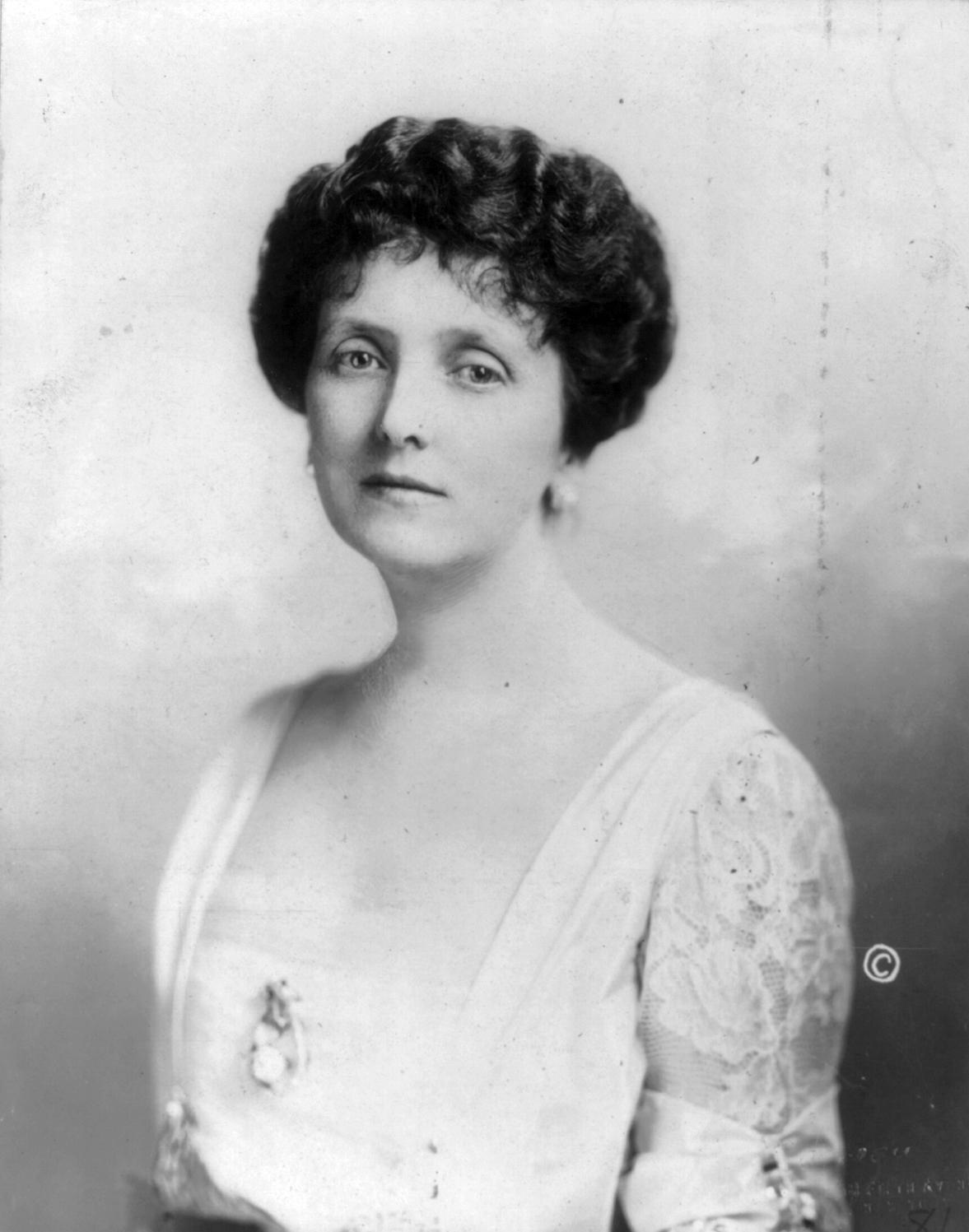


(Miss Emily Post 1912)

Miss Emily Post's Etiquette in Society, in Business, in Politics, and at Home has been revised and reprinted many times, but I like the 1922 original best.  And out of all her words of advice, I'd like to select these for your consideration as you pack your leather valise -

"On a railroad train you should be careful not to assail the nostrils of fellow passengers with strong odors of any kind. An odor that may seem to you refreshing, may cause others who dislike it and are “poor travelers” to suffer really great distress. There is a combination of banana and the leather smell of a valise containing food, that is to many people an immediate emetic. The smell of a banana or an orange, is in fact to nearly all bad travelers the last straw. In America where there are “diners” on every Pullman train, the food odors are seldom encountered in parlor cars, but in Europe where railroad carriages are small, one fruit enthusiast can make his traveling companions more utterly wretched than perhaps he can imagine." 

Just a thought.


(If you want to browse more in Miss Post's or Mrs Humphry's books and don't have well-thumbed copies on your shelf, you can do so here - and here - but be politely warned - they are incredibly addictive!)


Joan Lennon's website.
Joan Lennon's blog.

Saturday, 17 September 2011

Watching the History Train by Penny Dolan

I am just back from a short Field Studies Council Course: “Steaming Through The Lakes.” It was a very last minute decision, inspired by a friends who had been on a similar course a couple of weeks just before and a wish for some kind of break that would get Us Indoors out there into the landscape. My interest was very general. and I saw the trip as a vague research opportunity, probably about trains in the Victorian era.

We travelled by steam and diesel engines on standard and small gauge track, crossed lakes by various boats, both beautiful – the Gondola – and boat less so. We watched slides and short videos in the evenings.

This is where I came across a short black and white documentary film. “Terminus” was made in 1961, and directed by a young John Schlesinger, keen to impress with his sense of the dramatic. Maybe Terminus doesn’t sound historical enough to mention on History Girls? Having seen it, I’m sure it is.

Waterloo station is the "terminus" of the film. There are shots of steaming trains and essential station activity but essentially this is a film about the people using the station way back then. Schlesinger fills the screen with sharply selected images, often stylishly angled and knowingly intercrossing. He teases the viewer with fragments of stories, each with details and emotions that - as a writer - you’d want to notice or learn more about. And over and over again, I found myself thinking, “That’s not like that now.” Here's the opening.


Of course, I'd left my notebook was up in my room but here are some moments I recall from the full thity minute showing:

The lingering journey over the panorama of long engine sheds, now mostly gone under real estate.

The shots of hurrying feet. So many well-polished masculine lace-up shoes, indicating gleaming moral character and employment. So many neat trit-trotty ladylike heels, tapping along like type-writer keys, trying to keep up among all the men.

The lack of litter. Stations then were serious, places for travel and work, not grazing. There's an urge to keep everything respectably tidy, to show life must be orderly, on time, running on rails. These crowds are not the “me” generation and nor are they glamorous, other than a single limousine. This was not The Hour.

At one point, a heavy folding platform gate is slung shut in an annoyed city man’s face. The railwayman behind shrugs, a cockney underdog with rules and the union behind him. Now crowds are fed through electronic barriers with pale shining arms, while the corporate staff stand aloof in carefully designed uniforms, carrying clipboards, more business-like than most travellers.We are distanced.

The stories offer other, older contexts. A fluttering of Sisters of Charity, faces almost obscured by the white wings of their headdresses, see a Sister off to a mother house in France or Belgium. The pattern of faith does not look like that now. 

Some are still similar. A loud, tipsy party gather to set off to the races, as annoying then as they can be today. A coffin is escorted down a platform though the crowds, undertaker clutching his top hat and people pause out of respect.
Elsewhere, a group of women huddle together, one doubling up with grief and lamentation as her sister or daughter boards the train. Down another platform come the people of the Windrush generation, dazed at the end of their journe, arriving tono greeting at all. 

Distances were so much longer in those days, borders less friendly. Who wails now, when they could hop on a plane and meet in a couple of hours.  Who travels such journeys by train now anyway? How can the writer convey this sense, especially to children and young people who travel so swiftly and globally?

In one controversial sequence, a little boy waits on a case before bursting into tears because he has lost his mummy.:


The child is carried by one of the station staff off into his small secluded office, lifted over the counter and left to play on the typewriter while his mother is called over the loudspeaker.  This was a time before there was Child Protection or Health and Safety. (The Youtube comments about how this was filmed are interesting) Sad though the child's anguish is, this - along with several other moments in the film - did remind the writer in me why the past is so roomy and attractive to write about.

The film shows a phalanx of policemen pass, escorting a gang of handcuffed prisoners briskly on or off a train. Justice being seen to be done, and no darkened glass windows in an anonymous van to hide shame. .   

There are no casual photographers or i-phones busily capturing potential images of fame either, other than the camera crew. Now it must be hard to film a documentary without people reacting, slipping into "observed" poses or grimacing boldly into camera. Now, in the cosnatnt screen age, we are conscious of being "in our own film". In Terminus, the ordinary people seem to be themselves doing what is important in their lives. They do not seem to be driven to offer responses learned from the tv screen. Their eyes slip swiftly away from the camera. Is this a desire for privacy or a national lack of confidence?

Times are different now for film-makers. Maybe Schlesinger’s beautiful artwork would now be a compilation of the wierdest images from the station’s CCTV footage?

Even the haunting musical score tells the time, using a bluesy “modern jazz” style that speaks, reminding the viewer that this 1961 Waterloo is being observed by a sharp witty eye, by the coming of the new cool generation. Now long gone.
Was it history? I think so.
www.pennydolan.com

A Boy Called MOUSE by Peny Dolan (Bloomsbury)