Showing posts with label American War of Independence. Show all posts

Monday, 4 November 2013

"The Black Loyalists" by Ruth Holmes Whitehead, reviewed by Katherine Langrish


“They had a passion for freedom, and they acted upon it.”

This wonderful book is by my friend Ruth Holmes Whitehead, a distinguished historian and ethnologist who worked for over forty years at the Nova Scotia Museum. Ruth is the author of several books on the history, culture and stories of the Mi’kmaq, the Native American nation which still inhabits New Brunswick and Nova Scotia. We met while I was writing my third book for children, the story of a 10th century viking ship’s landfall on the coast of North America and the crew’s encounters with Native Americans. I approached Ruth for guidance after reading her collection of Mi’kmaq tales: ‘Stories from the Six Worlds’. She lent me the benefit of her years of study, and helped me escape many a pitfall.

Now she has turned to a different but equally fascinating subject: the “more than four thousand black men, women and children [who came] to Nova Scotia as a direct result of the American Revolution (1755-1783).  They came as freeborn persons, as former slaves who had seized freedom from the chaos of war, or as indentured servants. Some came still chained to their enslavers. They came fleeing the British surrender of the thirteen American colonies… [As] these colonies fell to the Americans, mass evacuations of British forces and supporters to their remaining centres of power began to take place.”  The book concentrates on the South Carolina Black Loyalists, many of whose names survive in ‘The Book of Negroes’, a record of black people evacuated from the port of New York.

Early in the war, the British government had offered emancipation to any slaves who would desert their rebel masters.  This was no moral imperative, but a pragmatic attempt to impoverish the American economy and weaken the rebel war effort. Motives aside, however, freedom was on the table, and many enslaved men, women and children took advantage of the offer, escaping behind the British lines, or to the British ships patrolling the east coast from Maine to Georgia.

Runaways risked much.  There were severe punishments on recapture – up to and including death:

“Whoever apprehends the said run away, and delivers him to the warden of the workhouse, shall have Three Pounds reward…” wrote William Harris in 1752, “but whoever brings his head alone, shall be paid Ten Pounds.”  The price of murder continued to rise. Three years later, Thomas Smith offered £10 for Frank, alive, but promised £20 for his head. By 1770, William Waight was offering £10 for a man named May, alive, and £100 for his head alone.

Such savage penalties were clearly designed to terrify.  Ruth Whitehead describes how the wealth and economy of the Carolinas depended upon slaves; many slave-owners were extremely rich. The estate of Thomas Shubrick, a South Carolina landowner, was valued at his death at “the Sum of two Million, one hundred three thousand, eight hundreds Pounds Currency”; this sum was inclusive of over three hundred enslaved people, whose names are tersely recorded in a seemingly endless list: “Dye, Will, Moll, Peter, Philander, Ammon, Dick, Attus, Duke, Richmond, Mingo, London, George, Cuff, Bram, Cato, Molly, Castalia, Jemmy, Mary, Phillis, John, Tony, Nancy…”

A pass issued by the British to Cato Rammsay: illustration from the back cover of the book

The Black Loyalists illuminates a fascinating and moving episode of history which I’d known nothing about. There are so many paradoxes, not least that black people should fight on the side of the King – for the promise of freedom – in the very war which Americans fought for independence. It was not an easy transition. Many of the men joined the Loyalist armies as soldiers. But what about families, what about the women? The children? And what happened when the British surrendered? The American forces under George Washington demanded the restoration of property, including slaves, and it fell to individual British commanders to interpret orders and make decisions on whether to honour early promises. Some Black Loyalists were abandoned, but for those who made it to Nova Scotia, there were still many challenges to face: home-building, earning a living, and coping with often hostile attitudes from local communities.

Each and every one of their stories, if we could fully know it, would be an adventure. What about Savinah Miles, twenty-five years old, who “ran from John Miles’s plantation in the Indian Lands of South Carolina, taking her daughter, Venus, with her. Venus was only nine years old when she escaped with her mother, who kept her free for the next nine years, before boarding L’Abondance [the Royal Navy transport which took the largest complement of Black Loyalists to Nova Scotia].”

‘Kept her free for nine years.’ If only we could know more.

Ruth Holmes Whitehead took eighteen years to write and research this book which is both a work of scholarship and a labour of love, gracefully and clearly written with some poignant personal touches. Ruth herself was born in South Carolina and has found slave owners among her own ancestors; her co-researcher Carmelita Robertson has “multiple Black Loyalist ancestors who escaped … during the American Revolution.”  As Ruth says:

I sat beside a dying woman once, at Remley’s Point, South Carolina.  She liked the sofa in the living room where she could gaze out all night long through her open door. “I lies here,” she said, “and dead people come and put their hands on my head.” Dead people come and put their hands on my head: a really good metaphor for living in the Carolinas. The weight of a past that includes slavery lies heavily on the landscape, yet there have always been moments of grace and basic goodness. Those who were enslaved here experienced that dichotomy of good and evil.


Sunday, 17 February 2013

The Independent State of Hastings by Penny Dolan


Last week I was wandering around Hastings with my brother, idly sight-seeing.  

Among the tall black-painted net huts below RockaNore Cliff was the Fisherman’s Museum, empty enough on that cold weekday to examine all the exhibits in enjoyable detail, even the huge model of the Great Harry.

I clambered on to the deck of the old fishing boat in the centre. The walls - although I’m sure that’s not the right word - barely reached the height of my knees. I felt slightly dizzy, even without the swell of the sea. 

I bought a copy of "Voices from the Stade" The man at the desk was very pleased as he'd been one of the people involved in the collecting the old fisherman's tales and was keen to share his experiences.

We ambled on, past “Winkle island” with its shiny new sculpture, eyed the windows of the arty, gift and goth shops, and chatted over lazy tea and cake. 

Then I saw it. An image painted across a pub wall: The America Ground.

It was one of those moments to do with writing when something remarkable happens. 

Oddments of information loosely connected to a certain topic suddenly start appearing everywhere, even when you aren’t searching or researching for them.

Is it that you just didn’t notice such things before? 

Or does some animus start flinging fascinating details at you, intent on luring you away for weeks or months or years?

My current writing project is partly involved with the passion for independence that grew among the people of Europe and America in the late eighteenth century and beyond: a deep longing for rights, equality and liberty, combined with that questioning of the crown, clergy and gentry that led to rebellion and revolution.

There, in Hastings, was the story of a small revolution, a time when the local people rebelled and seized their land for themselves. The “land” wasn’t new. It belonged to nobody. Officially, it wasn't there. 

Back in the thirteenth century, great storms had reshaped the South Coast. The old cinque ports of Rye and Winchelsea were locked inland and the natural harbour behind Lydd island transformed into the Romney salt-marshes. 

Even the harbour at Hastings was altered. A long shingle bank was thrown up by the waves, blocking the harbour and making land where there was sea before. This new ground lay outside the bounds of the Borough of Hastings so anyone who settled there need pay no rent or taxes to the town.

Over time, this No Man’s Land of shacks and upturned boats grew until it held more than a thousand inhabitants. 

While the great landowners - Lord Cornwallis, the Earl of Chichester, Battle Abbey Estates and the Hastings Corporation – fought each other through the courts for ownership, the place thrived in its own happy rate-free state.


Originally a haven to fishermen and boat repairers, by now it had tradesmen, lodging houses, livestock keepers, a rope walk, a bakery and a brewery. More enterprises followed: limekilns, stonemasons, a tallow factory, a sawing house, a gin palace and even a small school.

In 1822, inspired by the American Revolution, the people proclaimed their own independence. They raised the Stars and Stripes and named the strip of shingle shore “The America Ground.”

However, with seaside resorts becoming fashionable, the Hastings councillors decided that this undesirable collection of shacks and huts must be removed. A Crown Commission offered seven-year leases to the inhabitants, after which the land would belong to the Crown. Most refused, taking their shacks and moving further along the coast to St Leonards.

So, by 1834, just twelve years later, the America Ground was empty.

The Councillors got their way and development followed. 

Now all that is left to commemorate that small stand for independence is the painting on the outside wall of a pub near Robert Street and the raising of the Stars and Stripes nearby every Fourth of July.

Meanwhile, up here in Yorkshire, there’s another area of land that’s nominally part of England but covered by the Stars and Stripes. 

Menwith Hill. 

A different kind of independence.


Penny Dolan 
www.pennydolan.com


Monday, 7 January 2013

THE SCENT OF DEATH by Andrew Taylor: review and interview by Adèle Geras

I first came across Andrew Taylor's work when I read one of his Roth Trilogy novels in the 1990s. I was attracted to the cover image of a stone angel. This trilogy of novels so impressed me that I wrote a longish critical article about them in a periodical called BOOKS AND COMPANY, and you can find this if you go to http://www.lydmouth.co.uk/page3/page5/page13/page13.html

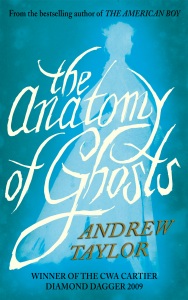
Taylor is a historical novelist of long standing. His book, THE AMERICAN BOY, was chosen for Richard and Judy's Book Club and his THE ANATOMY OF GHOSTS is a cracking story set in 18th Century Cambridge, at almost exactly the same time as THE SCENT OF DEATH. He's known as a crime writer and one of his best series, THE LYDMOUTH NOVELS is set in the 1950s. If you look at his books, you'll see he's both prolific and a bit uncategorizable, which is good news for his fans, because there's always something new and different coming from his direction.

His new novel is called THE SCENT OF DEATH and it's set in Manhattan in 1778. This part of America is still under British rule and it's a place full of soldiers, loyalists, refugees, and a maelstrom of corruption, fighting, and everything you might expect in a country where there are at least three sides to every problem that arises. Edward Savill is our hero and as he arrives from London, almost the first thing to greet him in the New World is a dead body. From these beginnings, Taylor spins an intricately woven plot which not only takes in adventures, such as a memorable journey to the Debatable Ground, outside the city limits, but also a very slowburning, almost Jamesian love story. Savill is billeted on the Wintour family and it did cross my mind to wonder at the name, which nowadays means a lot to fashionistas everywhere but especially in Manhattan.

Taylor is very good at conveying what interior spaces are like. He manages to make us feel part of the household, and it's a very interesting place in which to spend some time. There are several generations of Wintours living here. Arabella is the woman mentioned in the very good first sentence of a terrific first paragraph: "This is the story of a woman and a city." and she's as beautiful, enigmatic and mysterious as you'd expect of a romantic heroine. We are in the era of slavery, of course and this strand of the narrative is among the most interesting, with several slaves among the protagonists. There is a painting of a house that's part of the central mystery and, as in many of Taylor's books, we also find a child. Savill hears one weeping in the night, and the motif of missing/dead/ghostly children is something Taylor returns to again and again in his work, to good effect.

This is the kind of thriller you can recommend to people who are not normally readers of crime fiction. I mean this as a compliment. Absent from its pages are a)frenetic pace b)hideous torture and evisceration and c)overly explicit 'scenes of a sexual nature' as they're called on Sky tv. Andrew kindly allowed me to ask him some questions, and here they are, together with his answers.

1)This book is set in a very familiar place in a most unexpected time: New York in 1778. What was it about both (the time and the place) that attracted you?

I was reading a book about the American War of Independence - Barnet Schecter’s The Battle For New York - and one detail stuck like a burr: that embankments on the North River served as the last resting places for the corpses of rebel POWs. It’s one of those historical details that carry a lot of metaphorical weight. For most of the War, New York was the military and administrative capital of the British Empire in America. It seemed a perfect setting for a novel because it showed somewhere we know so well in other guises, New York City, from such a a different angle - and that always appeals to me. The germ for The American Boy was very similar in that sense - Poe, such a quintessentially American figure from the Victorian age, seen as an English schoolboy in Jane Austen’s London.

2)This book is at the same time a) a historical novel of a traditional kind, b) a thriller and c) a slowburning love story. Were you conscious of the difficulties of blending these three kinds of book together?

No - but perhaps I should have been. I don’t really structure my novels before I begin. I knew a lot about the characters and the setting. I knew that for me it was going to be a book about loyalty, both personal and political, and whether or not it’s an absolute value. (The working title was in fact The Loyal American.) I had vivid pictures in my head that I wanted to find a way of realizing - the ice on the North River, for example, the shanty-town slums they called Canvas Town, the burned-out wreck of Trinity Church, the double portrait of master and slave, etc. I also knew that there would be a corpse or two - I am, after all, usually labelled as a crime writer - and that there would be a woman... For the rest - it emerged, in the way that stories do, a way that I still find quite magical.

3)The question of slavery is important in the novel and yet you write about such matters in a low-key but devastating way. Was it your intention that your readers should learn something as they read? In other words, is there any didactic intention behind the book?

No. It goes without saying that slavery is a revolting and unacceptable practice. But in the eighteenth century they saw such things very differently, particularly in some of the American colonies where it was woven into the texture of all levels of society. What interested me was slavery’s normality: and what this might have meant for those who were slaves and those who were free citizens. Personally I don’t think it’s the job of a historical novelist to impose his or her modern views on the past; the reader provides that perspective in any case. But I do think we can write as honestly as we can about it - and how it seemed to people at the time. Perhaps that helps us towards a better understanding of the present, and how it seems to us.

4)You're a very convincing 18th century gentleman and speaking for myself, I was delighted to see a book in the past tense. Do you have views about the use of the present tense in so many books written these days?

Thank you - I’m glad the voice was convincing. In a historical novel, I try (within reason) to create a plausible pastiche of how people might have spoken and thought in a particular period. The narrative fell naturally into the past tense - I had an image in my mind of the central character writing it after the event. In general, though, I’m not a huge fan of the wholesale use of the present tense in fiction unless it serves a very definite purpose; I agree with Philip Pullman that, as a writer, you can achieve more if you have the full range of tenses at your disposal. Having said that, I’m at present writing a novel with two narrative voices - one of which is present tense. Horses for courses...

5)I read about your RSI on the website. Can you tell us a bit about how you manage this?

I’ve had chronic RSI for nearly twenty years, the result of writing too much, too fast and in unergonomic positions. So I began dictating everything, and my wife would type it up. Then she got RSI herself - and far worse than I have it. We have tried - and tried and tried - voice recognition software. I can’t get on with it at all - it doesn’t like my voice, my vocabulary or my method of writing. My wife copes better, though it’s very frustrating for her. I dictate the first drafts of most books into a machine; my wife transfers it to the computer via voice recognition, adding her comments etc on the way, and then I revise on screen to make a second draft. RSI comes in many shapes and forms, of course, and varies enormously in severity. If you get it as badly as we have it, you never get rid of it entirely. But you can learn to manage it and to reduce its impact.

Follow Andrew on Twitter: @andrewjrtaylor