Showing posts with label slavery. Show all posts

Friday, 29 October 2021

STUDLEY ROYAL WATER GARDENS AND SOUTH SEA BUBBLES by Penny Dolan.

Over this last while, “History” has given me a hard time, bringing its echoes too worryingly close. The swirl of the pandemic sings of Plague and Pestilence; the sewage regulations swamping Westminster brought Bazalgette to mind and rule by media release makes me wondering how future historians, if any exist, will unpick meaningful facts and figures from the tangle of false news. 

And so, in need of balm, I visited Fountains Abbey, one of my favourite places.


                File:Fountains Abbey crop, Yorkshire, UK - Diliff.jpg ...

From Studley Roger, the deer park drive leads towards the spire of St Mary’s church, beautifully made in Victorian High Gothic style. Behind, still, in the autumn mist, are the two square towers of Ripon cathedral from where, each Boxing Day, a procession of pilgrims walk the long straight path, turning away well before they reach the spire. The walk passes into the valley of the River Skell, going towards the great ruined abbey, echoing the route of the twelve Cistercian brothers who founded the original abbey.


However, on its way, the path now leads them through the beauty and vanity of the Studley Royal Water Garden. Created in the eighteenth century by John Aislabie and son, the garden is a model of eye-catching Georgian landscape art. Surrounded by rich woodland, the garden contains closely-mown lawns, precisely positioned classical statues, a “natural” lake, a few ornate dams, a stretch of canal made for leisure not toil, and a set of mathematical perfect ponds designed to reflect the sky.


File:Water Garden - Studley Royal Park, North Yorkshire ...

Winding carriage-paths brought small parties of guests, along with refreshments and servants, to any one of the small follies, each sited to offer a particular View. The Temple of Piety, down in the valley, has a particularly beautiful sound quality, so it is easy to imagine the Aislabies and guests listening to sweet music as they gaze across at the surface of the perfect, circular Moon Pond.

John Aislabie needed this watery retreat, because his personal circumstances became badly muddied. As Chancellor of the Exchequer from 1718, he knew the British Government needed to fund the vast debts incurred by the French wars. 

He, and others, became closely involved with the South Sea Company who, setting up a public-private enterprise, bought a contract from the British Government for a large proportion of that national debt. The shares changed hands at increasing value, which led to a frenzy of share-buying schemes spreading through many levels of society, bringing the promise of pensions increased and growing riches to anyone with savings to invest.


John Aislabie - Wikipedia

However, there were problems with the scheme. Profits were far less than promised and the South Sea bubble famously burst. The market collapsed, followed by bankruptcies, penury, suicides, riots, threats to the Crown and a change in both Prime Minister and party. An enquiry decided that those – in particular officials and members of the government - who had profited from the scheme should have their riches confiscated.

John Aislabie, as Chancellor, was expelled from Parliament, held for a time in the Tower of London and was never given a peerage. Although the profits he made through South Sea deals were confiscated, after legal battles, he retained the property and wealth he owned before the crash. Disgraced, though still wealthy, he returned to Studley Royal in Yorkshire and devoted his energies to developing his garden. He had, as one might say, great plans for the place.

High up, along one ridge, reached through the pitch-dark point of a serpentine tunnel, is a row of small follies: a classical pillared temple stands above a steep drop; on another crest stands an octagonal gothic tower, and another has a sheltered cooking area outside where servants could heat food or drink. One, reached by a steep path, is known as Surprise View. Suddenly, far below through the trees, runs a stretch of the River Skell with the fashionably picturesque ruins of the abbey rising in the distance. Back then, it was a borrowed view: those holy stones were not yet estate property. John Aislabie had tried to buy the abbey grounds, imagining Fountains as his own genuinely gothic folly, but the owner refused to sell. Nevertheless, from that position, guests could appreciate what was certainly a “stolen” view.

Eventually, Aislablie’s son William purchased the estate so both Fountains Abbey and Studley Royal were owned by the family. William also took his father’s place as one of the two Members of Parliament for Ripon, serving long enough to becoming “Father of the House” so the indignity did not seem to overshadow the name for long.

Always, when I visit the garden, I admire the charm and perfection of that eighteenth century vision and feel glad that the National Trust takes care of the place. Yet, whenever there is a whiff, or breeze or gale of financial corruption in high places, I cannot help think of the small folk thrown into poverty by the South Sea Bubble crash and its engineers.

But today, as I put together this post?

Looking into the story, I found something not mentioned when I wrote “South Sea Bubble” in my school Economic History O-Level notes, adding a small pencil drawing of a sailing ship in the margin. South Sea Bubble seemed such a noticeable, almost pretty name. We never questioned nor were told by our teachers quite what it involved, other than it was a big financial event that had caused trouble and we might need to remember it for an exam.


Slave ship - Wikipedia


Today, as I thought of Aislabie and that crash, I started googling what exactly the South Sea Bubble Company did. What was it trading in at this time? There is much complicated analysis of the Treaty of Utrecht and schemes and plantations and territories and other matters. 

But - and obviously - there is also, with awful inevitability, a horrifying fact and a terrible number. 

The contract that the South Sea Company signed was to supply almost 5,000 slaves to the Spanish Plantations in Central and Southern America.

Annually, for thirty years.


Atlantic slave trade - Wikipedia

It was so obvious, once I'd looked beyond the South Sea Bubble here-at-home story. 

Studley Royal is still that peaceful place to visit, but the water in John Aislabie’s great garden seems less clear today. 


All thos echoes, still echoing.


Penny Dolan

@pennydolan1


Thursday, 7 December 2017

SUGAR MONEY by Jane Harris Reviewed by Adèle Geras + an interview with Jane Harris.


Jane Harris, in her acknowledgements at the end of SUGAR MONEY, tells us of her love for the work of Robert Louis Stevenson and anyone reading this novel will notice the influence. On one level, the book is an adventure story: a dangerous mission, a journey across seas in a rust bucket of a vessel with a rackety and drunken captain; obstacles, perils, dreadful suffering, suspense, and through everything, like a chain of gold, the touching love between two brothers.

Lucien is our narrator. He's a lively, optimistic, chatty teenager and devoted to his elder brother, Emile, who is pining for his own lost love, Celeste. Lucien works for Father Céophas, on Martinique and the two brothers are sent by him to Grenada to bring back 42 slaves,  stolen by the British.

What begins as a typical 'ripping yarn' changes as we progress through the book, into something a great deal darker and the horrors of slave owning are not glossed over. What carries us through is the voice of Lucien which is  the main achievement of this novel. 

Jane Harris is the most astonishing ventriloquist. It's hard enough to write in the first person when the character you're writing about is more or less talking in a language like your own, but here, the mixture is rich and strange: Créole and an unusual Caribbean English which seizes the reader at the start and carries her through the book, enchanted by the humour, the poetry and eloquence  of the young narrator.  This is a case of 'show' rather than 'tell' and only by quoting a passage can I hope to give any of the flavour of the speech.  Here is a passage from quite near the beginning of the book: 

"All at once I became aware that - from his place at the tiller -  Bianco was watching me close-close.  A kind of uneasiness settled across my heart, for I dislike the way his pale eyes seem to stare into my soul. Jésis-Maia! In haste I turn to face the prow.That way I could keep lookout for sharks and make sure that Emile slept safe. I had no fear of the Béké, not one iota, but if he could not get sight of my countenance then that was an added bait and bonus."

This is a full-tilt, richly- patterned and thrillingly exciting story, brilliantly told. 

And now, here are the questions I have asked Jane Harris to answer.


1) The voice in this book is that of a young boy who is also a slave in Martinique a very long time ago. The novel is about slavery, at least in part. Have you had any criticism on account of 'cultural appropriation?' How do you deal with such criticism?

I knew that the notion of cultural appropriation might be an issue from the moment I had the idea for the book. With this awareness, I asked various friends of colour whether they thought I was insane to even tackle the subject and they told me that yes, I probably was insane (ha ha!) but that it wouldn’t matter – as long as the book was good enough. So, I had my task clearly delineated for me from the start: I had to write an extremely good novel. 

My personal opinion is that an author ought to be able to write about any subject. I tend to write about characters on the margins, people who have no voice. I’m not much interested in kings and queens etc. Every novel I write is making a point, even if I don’t wear my politics on my sleeve. I felt there was an important story to be told in Sugar Money and I felt compelled to tell it. However, I never forgot my white privilege and did my best to honour the subject matter.

Only one reviewer so far has seemed to be criticising me for writing about slaves and slavery, albeit in a veiled way. You asked how I deal with it. I suppose I just accept that people have their own opinions or their own reasons for being critical. In sum, it’s up to individual readers to decide whether I’ve written a successful novel or not. 


2) Are you a slow writer? I say this as someone who wanted another book from you the minute I finished Gillespie and I. 

Well, that’s nice to hear! I suppose I am a slow writer. Historical fiction requires an enormous amount of research, not all of which appears on the page – and what does appear on the page has to be carefully hidden. In addition, my first two books were very long, so that took more time. Also, I’m incredibly anal, so I rewrite endlessly. My motto is, you can have it good, or you can have it quick. I’d rather have it good. All good things are worth waiting for. 

Lastly, real life has a habit of getting in the way of writing, ‘the stuff of life’ etc., which (in my case, over the past decade) has caused many delays.

3) The research you've done is eye-watering. Can you tell us a little about that? Do you enjoy research? 

I do love research but it’s time-consuming. I’m thinking of tackling a contemporary book next, just because it will be much easier not to have to carry out the scale and depth of research that I’ve done for the past three books. To write a good historical novel, one has to hold up every word and phrase, every sentence, every fact, every detail, every assumption, every idea, in order to check whether it’s correct for the period. Of course, I accept that it may be necessary to research a contemporary book, but if (say) I live in Manchester and am writing about contemporary Manchester, it’s just obvious that far less research is required. So, although I adore research, I’d quite like a break from it!


4) What does your writing day look like?

It depends what stage of the process I’m at. When I’m actually writing, I start as soon as I wake up (that could be any time between 5am and 8am) and carry on until about 5pm or 6pm, with regular breaks every hour or so to check messages and social media.  

However, I do spend a lot of time promoting my books and so on, and there can be periods of weeks and months when I’m not writing at all. I’m not one of those writers who can write ‘on the road’. I need to be at home, living like a hermit. Most of this year has been spent finished then proofing and promoting Sugar Money, plus organising other aspects of my life, for instance, moving home.

5) Can you tell us a bit about what you're doing next?

I’d love to but – as I said above, other than that I’m hoping it will be contemporary - I haven’t decided yet. 


6) Please tell us about the kind of book you like to read, and/or any writers you admire.

I tend to prefer fiction to non-fiction, and realism to magic realism or fantasy. I love short stories as well as novels and I do like fiction to have a sense of humour, even if it deals with weighty subject matter.   

I don’t really enjoy formulaic, plotty novels. However, I love clever novels that pay some attention to character and narrative, as opposed to the kind of stream-of-consciousness thing I enjoyed when I was younger which now feels a bit lazy to me. 


Having said that, if a non-realist novel is good enough, I can be transported by it, and if an experimental novel is hard-working and captivating enough, then I’m on board. 

---------------------------------------------------------------------------------


Jane’s best-selling debut, The Observations, was shortlisted for the Orange Prize and chosen by Richard and Judy as one of 100 Books of the Decade. Her novel, Gillespie & I, was shortlisted for the National Book Awards. Jane’s work is published in 20 territories. Sugar Money is her third novel.


Friday, 12 September 2014

The tragedy of John Glasgow by Tanya Landman


JOHN GLASGOW

When researching Buffalo Soldier I came across some heartbreaking stories, perhaps none more so than that of John Glasgow  (related in Slave Life in Georgia, a Narrative of the Life, Sufferings and Escape of John Brown a Fugitive Slave).


Born a free man in British Guiana,  John Glasgow went to sea as a cabin boy and worked his way his way up on vessels that sailed between Britain and the West Indies.

He married a woman from Lancashire and they took on a small farm.  He had saved his money while he’d been at sea and invested in three horses, a plough and a cart.   But John Glasgow knew nothing of farming and so, leaving his wife to manage their land,  he returned to sea.  The couple prospered, but in 1830, when John Glasgow was around twenty five years old and the father of two children, he signed for an English vessel bound for Savannah, Georgia, for a cargo of rice. He promised his wife that this would be his last voyage to a distant country, and that in future he would confine his trips to the English coast.

Georgia law required black seamen to remain on board their ships from 6pm until 5am.  As soon as John Glasgow set foot on shore he was seized, handcuffed and incarcerated in gaol.  There he was kept confined for several days until the ship had discharged her cargo, re-loaded and was ready to start the return journey to England. His fate lay in the hands of the ship’s captain who would have  to pay the high gaol fees to release him.  The captain – who’d had to pay for a slave to do John’s work while he was in gaol - chose not to do so and set sail without him. On the day John’s wife and children expected him home he was put on an auction stand and sold as a ‘green hand’ to a Georgia farmer for  $350.

John Glasgow had the carriage and bearing of a free man.  His ‘brave look’ offended his new master, Thomas Stevens, who swore to flog the pride out of him. 

There was no hope of escape for John Glasgow.  He couldn’t read or write; he was utterly friendless in a distant country.   After three or four years in Georgia his master ordered him to find himself a wife.  John picked Nancy – a young woman from a nearby plantation but Thomas Stevens didn’t approve his choice.  Any children Nancy bore John would be the property of Thomas Steven’s neighbour and it was his own ‘stock’ he wanted to increase.  Stevens commanded John to pick a woman from his own plantation but John Glasgow refused to do so.   For slipping away on Christmas Day to see Nancy once more he was punished.  When John still refused to choose a different woman Thomas Stevens vowed,   “He’d cure him of Nancy any how.”


This time John Glasgow was given ‘the Picket.’  In his autobiography John Brown describes the procedure in detail and it makes gruesome reading.  After that particular punishment John Glasgow,   “could not stand, much less walk, so they carried him to his quarters where the usual application of salt and water and red pepper was made to his wounds.  It was a month before he stirred from his plank, and five months elapsed ere he could walk.  Ever after he had a limp in his gait.”

John Brown made his escape from the plantation some time afterwards.  “The last I know of John’s history is that in 1840, or thereabouts, the poor fellow was felling a white oak in the woods, which in falling struck him on his right thigh, just above the knee, and broke it in two.  As he was thus rendered comparatively useless for field-work, Thomas Stevens gave him to his son, who kept him to shell corn off the cob.”

John Brown eventually made his way to England. “One of my chief regrets is that I cannot remember the name of the place where John’s wife lived.”

I am haunted by the idea that John Glasgow’s English wife never knew what had happened to her husband, that his children grew up without their father.  But there’s a small gleam of light in this sad, sad story.  I like to think the spirit of John Glasgow remained intact and unbroken because John Brown concludes his account with this tribute,   “To John (Glasgow) I owe a debt of gratitude, for he it was who taught me to love and to seek liberty.”


Friday, 13 June 2014

SLAVERY IN THE DRAWING ROOM – Elizabeth Fremantle

One thing retelling history can do is remind us of the horrors of the past in the hope that they will not be  repeated. Narratives like Toni Morrison's harrowing novel Beloved and Steve McQueen's Oscar winning film Twelve Years a Slave have served to remind us of the story of slavery from an insider perspective, bringing the cruelty home to us in a powerful and uncomfortably intimate way – they give a voice to the victims. But it has been easy for us English to respond from a distance, thinking of it as something essentially that happened elsewhere. It is true there has been much post-colonial discourse on the slave trade, with commentary on why it is never mentioned in Jane Austen; and novels like Heart of Darkness demonstrated anxiety about the destruction of Africa and its people more than a hundred years ago, but now we are beginning to see narratives that put slavery right into the gentile drawing rooms of Georgian England.


Imogen Roberston's latest novel Theft of Life describes a multi-cultural eighteenth century London, its hands drenched, up to the elbows, in blood. In her notes she says, 'Our institutions, our monuments and our culture are all stained and coloured by slavery, and it's not talked about enough,' and what her novel seeks to do, aside from entertain, is open that conversation in an unexpected arena: that of crime fiction. Drawing on stories of Oludah Equiano and Frances Glass she shapes her narrative around the atrocities of slavery, allowing us to see, with each  teaspoon of sugar, that they existed as much in Europe as they did across the Atlantic. She gives her protagonists, whether black or white, a voice and a space to express themselves, showing them all as equally part of the fabric of society even if their status was often unequal. Within Robertson's gripping novel, stories emerge of a bookseller who was once a slave, as was a teacher in the art of swordsmanship; the mixed-race children of slave owners and their female slaves, carry the weight of a past that asks questions about how those, surely one-sided, relationships.

One such story is Belle, which tells of the mixed-race daughter of a naval Admiral and a slave. She was gathered into her aristocratic English family and raised by her grandfather, Lord Mansfield a man who had a hand in the abolition of slavery. Based on a true story, the film addresses issues of race – Belle though well loved is not quite treated as equal to her white siblings – from an oblique angle, placing ideas about 'otherness' at the heart of what is essentially a traditional tale of romance, only here the obstacle to love, so necessary to the genre, is the heroine's skin colour. The impact of the young woman being named Belle highlights both the similarities of this story with that of Beauty and the Beast whose simpering Disney protagonist bears the same name, placing it at the heart of its genre whilst also commenting upon the story of 'otherness' it has to tell. People may want to judge films with a romantic imperative such as this as trivialising an issue that deserves more weight but it is by siting those narratives into genre fictions, be they crime or romance, that they inform a wider audience and that can only be a good thing.


Theft of Life is published by Headline and is out in hardback and ebook

Belle is out in cinemas nationwide from 13th June

Elizabeth Fremantle is the author of Tudor fictions Queen's Gambit and Sisters of Treason.

Visit her website for information on those and future projects – elizabethfremantle.com

Monday, 4 November 2013

"The Black Loyalists" by Ruth Holmes Whitehead, reviewed by Katherine Langrish


“They had a passion for freedom, and they acted upon it.”

This wonderful book is by my friend Ruth Holmes Whitehead, a distinguished historian and ethnologist who worked for over forty years at the Nova Scotia Museum. Ruth is the author of several books on the history, culture and stories of the Mi’kmaq, the Native American nation which still inhabits New Brunswick and Nova Scotia. We met while I was writing my third book for children, the story of a 10th century viking ship’s landfall on the coast of North America and the crew’s encounters with Native Americans. I approached Ruth for guidance after reading her collection of Mi’kmaq tales: ‘Stories from the Six Worlds’. She lent me the benefit of her years of study, and helped me escape many a pitfall.

Now she has turned to a different but equally fascinating subject: the “more than four thousand black men, women and children [who came] to Nova Scotia as a direct result of the American Revolution (1755-1783).  They came as freeborn persons, as former slaves who had seized freedom from the chaos of war, or as indentured servants. Some came still chained to their enslavers. They came fleeing the British surrender of the thirteen American colonies… [As] these colonies fell to the Americans, mass evacuations of British forces and supporters to their remaining centres of power began to take place.”  The book concentrates on the South Carolina Black Loyalists, many of whose names survive in ‘The Book of Negroes’, a record of black people evacuated from the port of New York.

Early in the war, the British government had offered emancipation to any slaves who would desert their rebel masters.  This was no moral imperative, but a pragmatic attempt to impoverish the American economy and weaken the rebel war effort. Motives aside, however, freedom was on the table, and many enslaved men, women and children took advantage of the offer, escaping behind the British lines, or to the British ships patrolling the east coast from Maine to Georgia.

Runaways risked much.  There were severe punishments on recapture – up to and including death:

“Whoever apprehends the said run away, and delivers him to the warden of the workhouse, shall have Three Pounds reward…” wrote William Harris in 1752, “but whoever brings his head alone, shall be paid Ten Pounds.”  The price of murder continued to rise. Three years later, Thomas Smith offered £10 for Frank, alive, but promised £20 for his head. By 1770, William Waight was offering £10 for a man named May, alive, and £100 for his head alone.

Such savage penalties were clearly designed to terrify.  Ruth Whitehead describes how the wealth and economy of the Carolinas depended upon slaves; many slave-owners were extremely rich. The estate of Thomas Shubrick, a South Carolina landowner, was valued at his death at “the Sum of two Million, one hundred three thousand, eight hundreds Pounds Currency”; this sum was inclusive of over three hundred enslaved people, whose names are tersely recorded in a seemingly endless list: “Dye, Will, Moll, Peter, Philander, Ammon, Dick, Attus, Duke, Richmond, Mingo, London, George, Cuff, Bram, Cato, Molly, Castalia, Jemmy, Mary, Phillis, John, Tony, Nancy…”

A pass issued by the British to Cato Rammsay: illustration from the back cover of the book

The Black Loyalists illuminates a fascinating and moving episode of history which I’d known nothing about. There are so many paradoxes, not least that black people should fight on the side of the King – for the promise of freedom – in the very war which Americans fought for independence. It was not an easy transition. Many of the men joined the Loyalist armies as soldiers. But what about families, what about the women? The children? And what happened when the British surrendered? The American forces under George Washington demanded the restoration of property, including slaves, and it fell to individual British commanders to interpret orders and make decisions on whether to honour early promises. Some Black Loyalists were abandoned, but for those who made it to Nova Scotia, there were still many challenges to face: home-building, earning a living, and coping with often hostile attitudes from local communities.

Each and every one of their stories, if we could fully know it, would be an adventure. What about Savinah Miles, twenty-five years old, who “ran from John Miles’s plantation in the Indian Lands of South Carolina, taking her daughter, Venus, with her. Venus was only nine years old when she escaped with her mother, who kept her free for the next nine years, before boarding L’Abondance [the Royal Navy transport which took the largest complement of Black Loyalists to Nova Scotia].”

‘Kept her free for nine years.’ If only we could know more.

Ruth Holmes Whitehead took eighteen years to write and research this book which is both a work of scholarship and a labour of love, gracefully and clearly written with some poignant personal touches. Ruth herself was born in South Carolina and has found slave owners among her own ancestors; her co-researcher Carmelita Robertson has “multiple Black Loyalist ancestors who escaped … during the American Revolution.”  As Ruth says:

I sat beside a dying woman once, at Remley’s Point, South Carolina.  She liked the sofa in the living room where she could gaze out all night long through her open door. “I lies here,” she said, “and dead people come and put their hands on my head.” Dead people come and put their hands on my head: a really good metaphor for living in the Carolinas. The weight of a past that includes slavery lies heavily on the landscape, yet there have always been moments of grace and basic goodness. Those who were enslaved here experienced that dichotomy of good and evil.


Monday, 14 October 2013

The Barretts of Wimpole Street ( and Trenchtown, JA) Catherine Johnson

This post was going to be a review of one of my all time favourite books which I recently re-read; Andrea Levy's The Long Song. There doesn't have to be a good reason although it is, here in the UK at least, Black History Month. Yesterday's post by H. M. Castor was a review of the book, 12 Years A Slave,  a wonderfully written and thorough look at 19th century American slavery. The Long Song, although fiction, looks at the demise of that industry from a distinctly British perspective.

The book is beautifully written and a wonderful read, and it illuminates a period of history often forgotten but hugely important to Jamaican and British history, the 1830s and what were known as The Baptist Wars, the rebellions and reprisals in the fight for emancipation. But as I was thinking and writing I thought that while many of us here in the UK have no knowledge - or at least only a little - about this time in the West Indies, we might also have forgotten something else.

Although the British Empire had outlawed the slave trade in 1807, the practice and ownership of slavery went on until well into the 1830s, even after formal abolition in 1833.  It only ended when slave owners - not slaves, not their families, the slave owners - were paid huge sums (in total over £20 million - what would that be worth today?) in compensation by the British government. All slave owners could apply to the government for compensation and payouts continued way into the 1840s.

Can you imagine that? Not the victims, not those who suffered, not their families, uprooted and tortured on an industrial scale, but their exploiters. Each and every one paid enormous amounts by the UK government, funded by all British taxpayers. The reasoning was that the owners had lost their 'property' and deserved compensation. Of that 20 million pounds, 10 million stayed in Britain, that is it went to slave owning families who resided wholly in the British Isles.


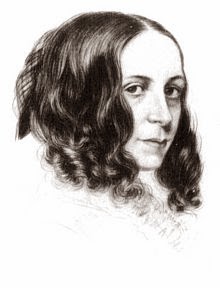
Elizabeth Barrett Browning

These slave owning families lived in country estates and town houses all across Britain. They might have been the owners of grand plantations or maybe simply owned a handful of niggers to toil for them thousands of miles away conveniently out of sight and mind across the Atlantic. Many of these people might have no idea of the root of their wealth. Or maybe they just shut their eyes and looked away, like many of the German population did during World War II.

Some of these families may even have been against slavery, as, no doubt, many of us rail against, but end up buying cheap clothes from Primark or use computers that have been assembled by people exploited and worked in conditions we cannot imagine and do not want to think about.

One of these numerous beneficiaries included the poet Elizabeth Barrett Browning. Her family owned mining rights and plantations across Jamaica, they had made huge fortunes in their 300 years of slave owning on the island. In fact there are many Jamaicans today that share the name and most probably the genes - brothers Aston and Carlton Barrett might just be the most famous. They were The Wailers' rhythm section  and played with Bob Marley as well as with many of reggae's foremost musicians.

But hey, let's get back to Elizabeth, She was very sensitive, she thought slavery awful, terrible, she even wrote a poem - The Runaway Slave at Pilgrim's Point - in which she imagines herself into the skin of a black slave raped by her master. But she was also completely sure of the fact that her family deserved to be compensated for the loss of family property, all the while believing slave owning a 'bad' thing.

Her poem is of its time, overlong and overwrought - unlike a good tune. This one, Small Axe, by Bob Marley and The Wailers is in my mind infinitely preferable  and I do hope we're all sharp and ready when it comes to exploitation and art.
Aston 'Family Man' Barrett
Carlton Barrett
http://www.youtube.com/watch?v=ia6Tvpj6dPw

People are and always will be complicated, but I do know I'd take the Wailers or The Heptones or anything Aston or Carlton Barrett played on over Victorian long form poetry. (Except maybe small doses of Hiawatha).

 Here's another gem,   Watch This Sound by Slim Smith, bass by Aston Barrett which is also lovely.
http://www.youtube.com/watch?v=vRuG86cEz98   - skip the ad though!


Catherine Johnson's latest book - SAWBONES is out now, a forensic murder mystery set in 18th century London - 'thoughtful and impressive' -Booktrust.


Saturday, 12 October 2013

Twelve Years a Slave, by H.M. Castor

The main role in the film is played by
award-winning British actor Chiwetel Ejiofor.

In a few days’ time, Twelve Years a Slave will open in UK cinemas: a new film by the mightily talented – and strikingly named – British director Steve McQueen, who has been the recipient not only of various film gongs, but also of the Turner art prize. The film features McQueen’s long-term collaborator, the (equally talented) actor Michael Fassbender, and, as with the duo’s other recent films Hunger (about Bobby Sands) and Shame (about sex addiction), I fully expect that Twelve Years will be both brilliant and, in places, hard viewing. Brutally hard viewing, in fact: as the title makes clear, the subject is slavery. Indeed, the film’s unflinching depiction of the punishments and physical abuse inflicted on slaves has already caused controversy: reportedly, at a screening at the Toronto Film Festival, several people walked out.

During a recent BBC news item on the film, Michael Fassbender said of the violence: “I just felt it was necessary – because that’s the reality of it. And if we really wanted to do justice to [the] story, who are we to decide where to censor?”

I agree with him, and yet – lacking a strong stomach myself, and dreading not just the physical but the emotional abuse depicted (one review says that a scene in which a female slave is separated from her young children is even more gruelling) – I’ve been wondering whether I’ll have the courage to watch this film. I don’t want to wimp out – especially when the subject is such an important one. But violence and trauma on the big screen can be overwhelming, in a way that they aren’t on the page. And so, to give myself at least an idea of what to expect, I decided that first I should read the book on which the film is based.


I’m very glad I’ve read it – and not just because it’s given me a heads-up on the film. I’m wondering, in fact, why on earth I’ve got to grand old age of 43 without someone pressing this book into my hands. It is an extraordinary memoir, and an extraordinary primary source: a first-hand account of what it was like to be a slave working in the cotton and sugar cane plantations of the southern United States, written by a man who had a great narrative gift.

That man was Solomon Northup, a free-born African-American who, in his 30s (a married man, with 3 young children), was kidnapped and sold into slavery in Washington. The year was 1841. Twelve years later he regained his freedom, and embarked immediately on writing an account of his experiences. The finished work - which was first published that same year, 1853 - is a gripping, desperately moving read.

Northrup was clearly a talented writer: his story has as many vividly drawn characters, as much fascinating detail, as much drama, conflict and heartache as any novelist could wish for. In addition, however, what makes this book agonisingly compelling is its intense flavour of recent personal experience, plus Northrup’s constant awareness that those of his fellow slaves who had not died in the weeks since he regained his freedom were still, even as he wrote, enduring the inhuman treatment he was describing, without any prospect of release except through death.

Not only that, but Northup knew there were many people in his country at the time who argued that the life of a slave was a happy one; he stresses repeatedly that the astounding brutality he describes is not an exaggeration. This brings Michael Fassbender’s comment to mind again: “If we really wanted to do justice to Solomon’s story, who are we to decide where to censor?” How could they justify underplaying the suffering that Northup had described so eloquently and urgently?

But Northup’s is not a story of unremitting brutality. Bought and sold several times, he encounters kind slave owners as well as cruel ones, and what makes the memoir yet more fascinating is this breadth of experience and the fact that his views are so nuanced. The kind slave owner is a rare creature, Northup says, but he wants the reader to know that such a person does exist. One such is William Ford:

…there never was a more kind, noble, candid, Christian man than William Ford. The influences and associations that had always surrounded him, blinded him to the inherent wrong at the bottom of the system of Slavery. He never doubted the moral right of one man holding another in subjection…. Brought up under other circumstances and other influences, his notions would undoubtedly have been different. Nevertheless, he was a model master… and fortunate was the slave who came to his possession. Were all men such as he, Slavery would be deprived of more than half its bitterness.
[p.90]

Another is a twenty-year-old single woman called Mary McCoy, whom Northup describes in such angelic terms that I was reminded of Dickens:

She owns about a hundred working hands, besides a great many house servants, yard boys, and young children…. She is beloved by all her slaves, and good reason indeed have they to be thankful that they have fallen into such gentle hands. Nowhere on the bayou are there such feasts, such merrymaking, as at young Madam McCoy’s. Thither, more than to any other place, do the old and the young for miles around love to repair in the time of the Christmas holidays; for nowhere else can they find such delicious repasts; nowhere else can they hear a voice speaking to them so pleasantly. No one is so well beloved – no one fills so large a space in the hearts of a thousand slaves, as young Madam McCoy…
[p.284]

While Northup’s sojourns with humane owners are unfortunately brief, his discriminating eye does not desert him when he comes to describe those who have done him terrible wrongs. He can see, for example, the damage done to the family of the hideously cruel slave owner Edwin Epps, as his twelve-year-old son, who “possessed some noble qualities”, is taught to mistreat slaves, young and old, in imitation of his father.

Northup also paints arresting portraits of the slaves about him, from the elderly Uncle Abram, to the young mother Eliza who is separated, agonisingly, from both her children; from Lethe, consumed with violent rage at her situation, to Patsey, who suffers horribly because she is a target for the lustful attentions of Epps (played by Fassbender in the film), thereby earning the hatred of his wife – a hatred that turns out to be life-threatening.

Northup brings us among these people, and takes us with them to the cotton fields, where we see in detail the slaves’ punishing daily routine. Being a resourceful, intelligent man, with useful skills – for example in engineering and violin playing – Northup gains a few privileges from some masters (though not all these ‘privileges’ are desirable). With Northup we experience an attempted escape through a crocodile-infested swamp, the hard-earned comfort of Christmas celebrations, endless fear-filled working days, and his extraordinarily courageous attempts to fight back (literally) against a cruel master (with Dickens already in mind I inevitably thought of Nicholas Nickleby here, although Northup – unlike Nicholas – suffers an attempted lynching for his pains).

The story of how he came, ultimately, to regain his freedom is so nail-bitingly dramatic that it could have come straight from the pen – or laptop – of a Hollywood scriptwriter. It is simply breathtaking to remember that this is a true story. But what is most heart-rending about the denouement is the reaction of the other slaves as Northup – or ‘Platt’, as his owners have called him – says goodbye:

“Oh? Platt,” she cried, tears streaming down her face, “you’re goin’ to be free – you’re goin’ way off yonder, where we’ll nebber see ye any more. You’ve saved me a good many whippins, Platt; I’m glad you’re goin’ to be free – but oh! De Lord, de Lord! What’ll become of me?”
[p.308]


An enslaved woman with her slaver - 1850s, New Orleans.The Burns Archive (Burns Archive via
Newsweek, 2.4.2011.) [Public domain],
via Wikimedia Commons


The UK premiere of Twelve Years a Slave will take place on October 18th.
You can view the film's trailer here.

H.M. Castor's website is here.