Showing posts with label Charles Walton. Show all posts

Friday, 6 May 2022

Local History - Celia Rees

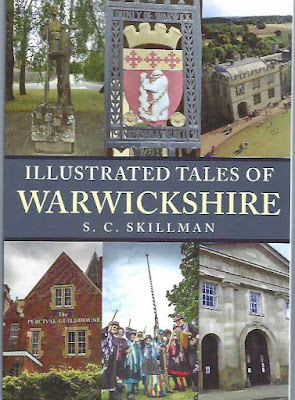
Publisher: Amberley Books
 (Images Jamie  Robinson)

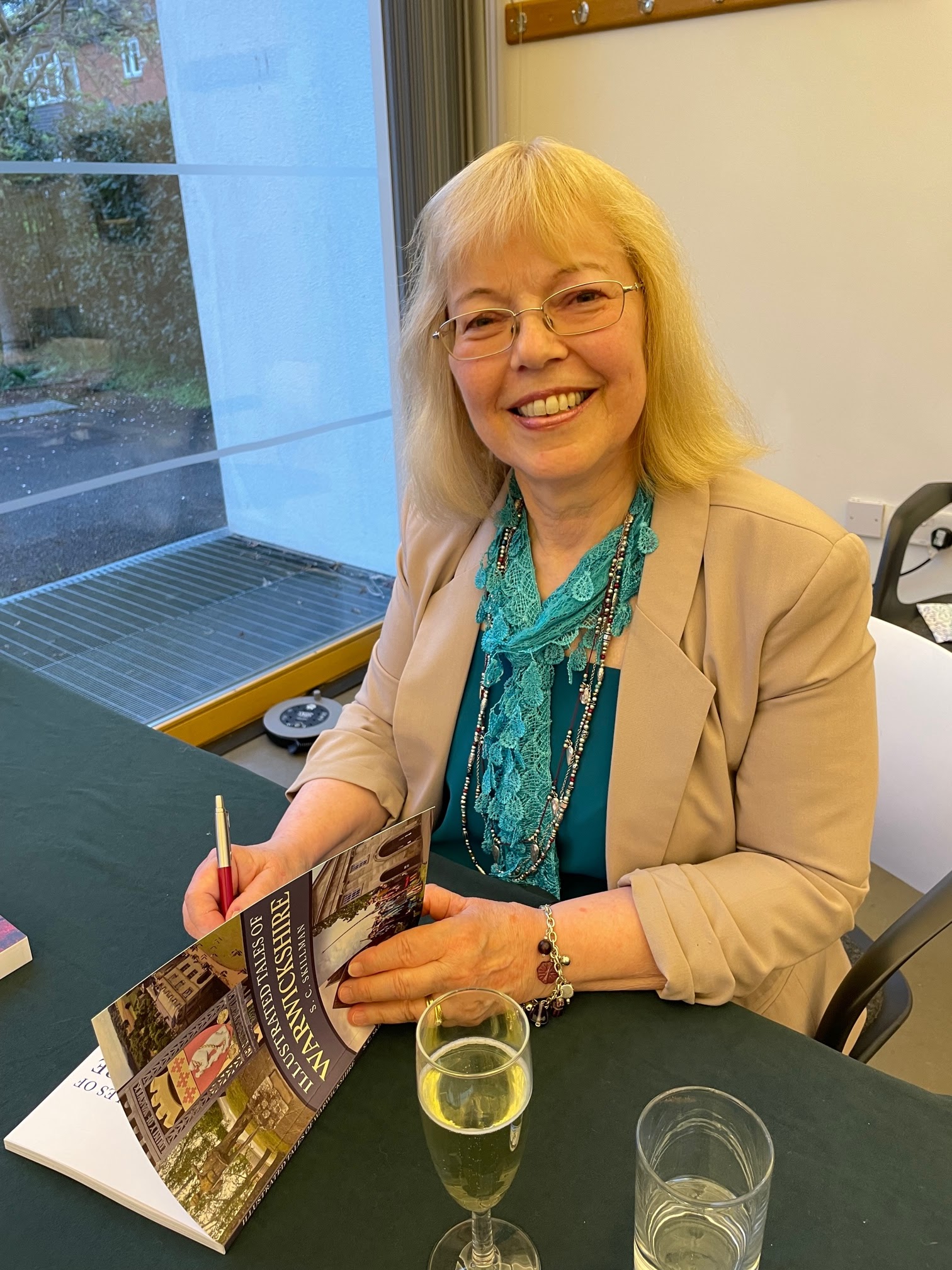
I was very excited recently to be able to go to a real, live event hosted by wonderful Warwick Books, my closest Indie bookshop. I went to hear Warwick writer, S. C. Skillman, talking about her latest book: Illustrated Tales of Warwickshire. This was the first live event I'd attended since before the pandemic, so it was nice to see the author in person talking about her book, answering questions and engaging with an audience. Zoom is a poor substitute, especially as the event took place in the Visitors' Centre of Hill Close Gardens, a rare survival of original Victorian gardens once used by Warwick townsfolk to escape from the crowded town. Once under serious threat from development, these gardens have been lovingly restored and still present a haven of birdsong, peace and quiet. If you are ever in or around Warwick, they are well worth a visit. 

Author - S. C. Skillman (Celia Rees)

I'm Warwickshire born and bred and I love local history and local stories, especially of the spooky kind. S. C. Skillman's previous book was entitled Paranormal Warwickshire, so it is not difficult to locate where her interest also lies. I have used local stories in my writing. The notorious St Valentine's Day murder of agricultural labourer, Charles Walton, on Meon Hill in 1945 was inspiration for my third novel, Colour Her Dead. The crime is unsolved to this day. Surrounded by a wall of silence, accompanied by whispers of witchcraft, carried out in a place with its own strange and sinister legends, the story has a prominent place in modern Warwickshire folk lore. I blogged about it here in 2012 and it is well covered in Illustrated Tales of Warwickshire in chapters, Tales of Warwickshire Witchcraft and Rural Crimes, with accompanying photographs of Lower Quinton, Charles Walton's home village hard by Meon Hill, and the hill itself.  

Meon Hill (Celia Rees)

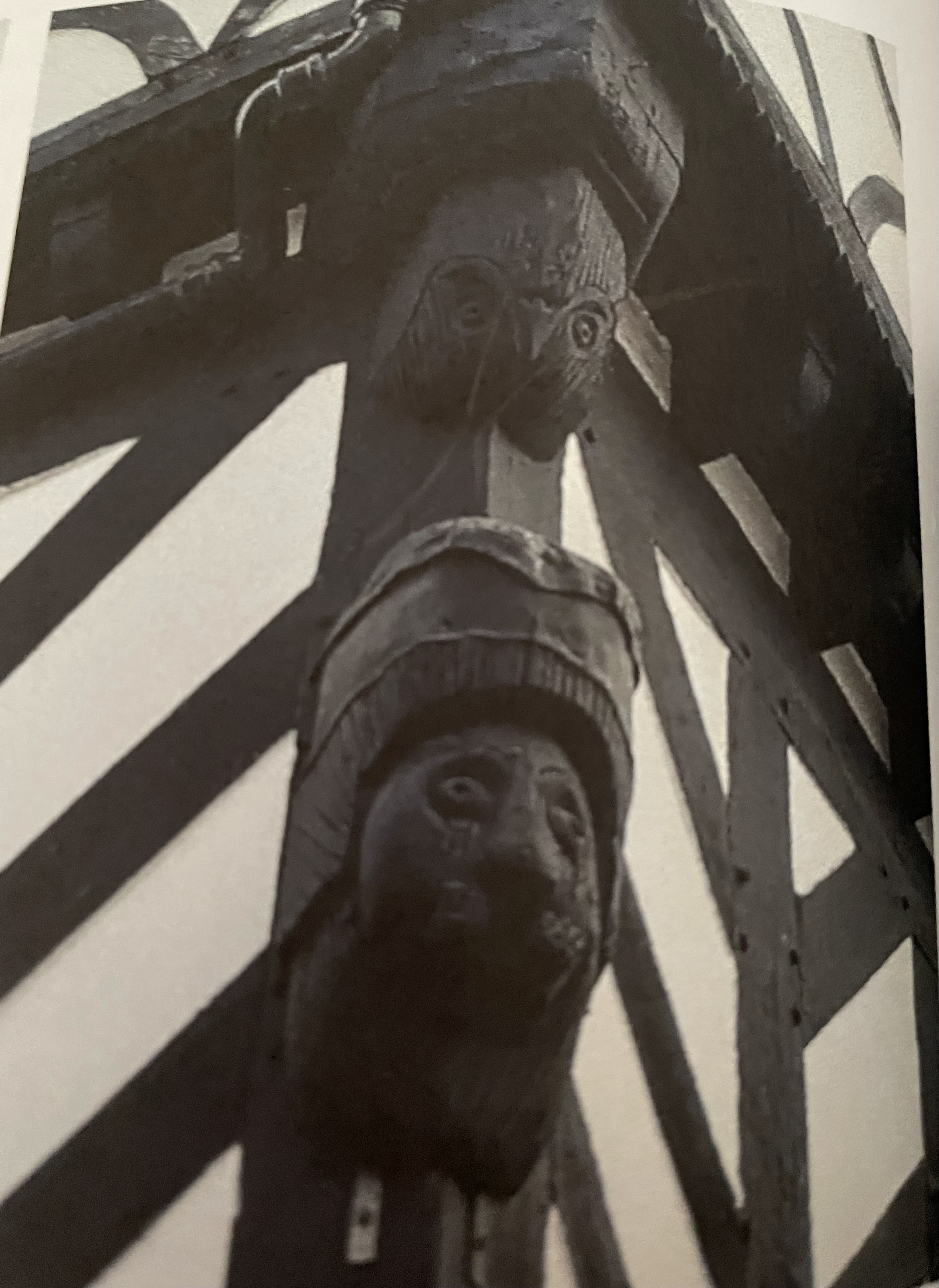
S. K. Skillman covers many of my own favourite places and stories. Some I already knew, others I didn't know at all. I had no idea, for example, that J.R.R. Tolkien had an association with Warwick town and may have referenced Warwick Castle in his work. Neither did I know that the Old Coffee Tavern in Warwick was haunted and I've never noticed the carving of Old Tom in the Market Square. I'll look out for it and other apotropaic carvings next time I'm in Warwick. 
Old Tom, Swan Street, Warwick (S.C. Skillman)

Illustrated Tales of Warwickshire ranges across the whole county and covers all sorts of fascinating local stories and legends, some from the deep past but others happening as recently as 2018 with a big cat sighting on the golf course of the Ardencote Manor Hotel.  The author covers Warwickshire notables, from William Shakespeare to Larry Grayson. Some famous, like Daisy, Countess of Warwick, others not so famous like traditional toymaker, Cyril Hobbins. 

I'd like to thank Warwick Books and Sheila Skillman for a fascinating evening in a magical place. I'm from Warwickshire, so I'm biased, but it was good to be reminded of the rich and varied history of this ancient county. The evening ended with a performance from a local Morris Side, Plum Jerkum. My family come from Warwickshire and this was what my brother called slivovitz, or any plum based schnapps,  Sheila explains that it was the name for a plum cider - something I've never tried. The cider was made from a local plum, the Warwickshire Drooper. My dad had a tree on his allotment and they are still dotted all over local allotments. I've never tried plum cider but they do make the most delicious jam!


Warwickshire Droopers
Plum Jerkum Morris Side (Terence Rees)

Celia Rees
www.celiarees.com
Insta: celiarees1
Twitter: @CeliaRees



Saturday, 18 February 2012

Meon Hill - A Valentine's Day Death - Celia Rees


For me, Valentine's Day is not just a time for cards and flowers. I grew up in the West Midlands and every Valentine's Day, the local T.V. (ATV Today, we had it on before Crossroads) had a feature about the gruesome murder of of Charles Walton up on Meon Hill, just outside Stratford-on-Avon. Walton was killed in 1945 but the case was unsolved and had overtones of witchcraft. Enough to fascinate my brother and me (we were both fans of Dennis Wheatley) and to stick in my head.

The details of the murder were, indeed, bizarre. Walton was murdered on 14th February, a significant date in itself, but associated by the old calendar with the Celtic Festival of Imbolc. He was an old man, in his seventies, and out on the hill hedging and ditching. He was a farm labourer, living in a little cottage in the small village of Lower Quinton. When he didn't come back for his dinner, his niece went to look for him. She found him with his throat slashed with his own bill hook which was still embedded in his neck. He was pinned to the bank by a two pronged pitch fork and a large cross had been carved into his chest. It looked very like a ritual murder and Walton had a reputation for witch craft. The only thing that was missing from his body was an old tin watch. He was rumoured to carry a scrying mirror, a piece of mica, in the back of it which he used to overlook people and ill wish them.

Whatever the motives, the locals shut up like clams and eventually the famed Fabian of the Yard was brought in to try and crack the case. He never did, It was his only unsolved murder. It was said that he came back every year to walk the hill, re-visit the site, go for a pint in the pub and remind the villagers that he had not forgotten. He always believed that they knew the perpetrator but held to a code of silence. The village of Lower Quinton, which lies beneath the hill, is a small place, a few farms and a collection of cottages clustered round a green and a pub, the College Arms. It must have been quite isolated back in 1945 and, even now, it often seems eerily deserted. It's rare to see anyone about and it is still impossible to find anyone willing to talk about the case.

On one of Fabian's visits, he encountered a black dog. When he asked a boy if he had seen the beast, the child ran away. Later that day, a black dog was found hanging in a tree. This might just have been an incident of macabre cruelty, perhaps to warn him, but there were long associations with black dogs in the area. Walton himself was known to have encountered a black dog nine times in his youth. After the last occasion, he learnt that his sister had died. These black dogs were not regarded as ordinary hounds, but manifestations of the Barghest and the other black dogs of British Folklore. Meon Hill was said to be hunted over by the Cwn Annwn, the spectral hounds of the Mabinogion; another legend says it was the Yell Hounds, the Devil's Dandy Dogs, following Herne the Hunter, harrying the souls of the unshriven down to hell. Meon Hill itself is rumoured to be the haunt of fairies - and of witches who still gather there. It is a place regarded with superstition, even dread, by some living thereabouts. There are those will not walk on the hill in the daytime, let alone at night.

The stories are many and odd and exert a fascination. I've revisited the place several times in fiction. The first time was with Colour Her Dead, now long out of print. I changed the name of the hill, the village beneath it, the details of the case, but kept the unsolved nature of the crime. What interested me was the missing watch. With so much time elapsing, I began thinking: what if it turned up in a junk shop somewhere - in nearby Stratford, say? Put there by someone clearing somebody's effects with no idea that this is vital clue to an unsolved murder. What could happen then? So are books born. I changed the victim to a child and the watch to a handful of beads found in a junk shop by 17 year old Jude who likes to make her own jewellery. It has been out of print for ages, but I was pretty proud of Colour Her Dead. Very Ruth Rendell, even though I say it myself.

The next time Meon got a mention was in The Fool's Girl. Shakespeare coming home on May Day, after Beltane. I took a bit of poetic licence, but the hill is visible for miles around and he might just have been able to see it from the old road between Stratford and Oxford. He would certainly have known it and its reputation. The hill even appears in my new book, This Is Not Forgiveness, under the guise of Beldon Hill, casting its spell, exerting its powerful natural magic in a whole new way.