Showing posts with label Ruth Downie. Show all posts

Friday, 13 January 2023

Wonders and Warnings - by Ruth Downie

Head and shoulders drawing of a bearded man labelled "Pline lAncien"

Maybe Pliny the Elder was born 1900 years too early. As a man who was interested in everything and who needed very little sleep, he would have loved the possibilities of the Internet. As it was, he gathered together everything he’d learned in an early handwritten version of Wikipedia that stretched to 37 volumes, and if you want a splendid and entertaining overview of it, click back to LJ Trafford’s 2019 post on "The Curious Roman".

Pliny’s daylight hours were filled with a series of highly responsible jobs, so his writing was done largely at night. His reading relied on what we now call audiobooks, achieved by having his staff follow him around and read to him in every spare moment. With limited opportunities for fact-checking, he adopted an early version of the retweet – not claiming that what he wrote was accurate, merely reporting that someone else had said it.

I’ve restricted myself to a few highlights from his writings about the Human Animal, some of which may come as a surprise but all of which were thought to be accurate by somebody… unlike the picture of him above, which as far as I can make out is based on no evidence whatsoever.

First: wonders and marvels.

Should you travel where the north wind rises, you may run into the Arimaspi, people with one single eye in the middle of the forehead. You may also encounter the local griffins. Try not to be there when they meet each other. The Arimapsi have a bad habit of stealing the gold that the griffins have painstakingly mined out of their burrows, and there will probably be a fight.

There are wild men in the woods of Abarimon whose feet are fitted on back to front, but you may never see them because they can run very fast. Also, they’re unable to breathe in a foreign climate, so they don’t travel well.

Everything is bigger in India, and at this point I should probably mention the dog-headed men. They do little of interest beyond barking and hunting using only their nails, but as Pliny’s source says there are 150,000 of them, you are more likely to spot one than either a griffin or a man with his feet on backwards.

Drawing of various men with one leg, one eye, no head and dog head.

India is also the home of the men who have only one leg and jump everywhere. When the sun is fierce, the jumping stops and they lie down to shade themselves under their one foot.

Sadly Pliny does not dwell on the details of the men who are enveloped by their ears, nor the men without necks whose eyes are in their shoulders.

A little more time is devoted to the Astomi, a hairy people who clothe themselves in cotton-wool, have no mouths and get all their nourishment from smell. This is a mixed blessing, as a stronger-than-usual stench can easily be fatal.

Further away lies the mountainous home of the pygmies, which would be delightful were it not blighted by plagues of cranes. In spring the pygmies saddle up their goats, gather their bows and arrows and set out on a three-month cull of the crane breeding-grounds.

Drawing of horse with man's head and torso, waving a club

If you feel your credulity being stretched by any of this, bear in mind that Pliny actually saw a Hippocentaur - the exciting result of breeding a horse with a human. It was preserved in honey and had been brought from Egypt to show to the Emperor Claudius. 

Which brings me to reproduction – and here I want to change Pliny’s order slightly. It is no good starting with his warning that it is potentially fatal to yawn during childbirth. We need to lay down a few fundamentals first.

Since men can turn into women and vice-versa, it may be useful to know that a woman has fewer teeth than a man. Also, women are never left-handed.

If you are indeed a woman, you should be aware of the dangers of the menstrual flow. Should you venture abroad at the relevant time of the month, disaster will follow you. New wine will turn sour, crops will fail, seedlings will shrivel, fruit will fall prematurely from the tree, knives will go blunt, bees will die, metal will rust and even the local ants, should they catch a whiff of you, will drop the food they were carrying and run away. 

Photo of Roman iron dagger and sheath
Stay away, ladies. 

On a brighter note – should you wish for a beautiful child, take care to keep your gaze on something beautiful at the moment of conception. Remember that children can inherit birthmarks, moles, scars and – in the case of Dacian children – tattoos.

I’ve already mentioned the yawning. Also, try not to propel the infant out feet first. This is how both Caligula and Nero were born, which does not bode well. 


You may have noticed that the human race as a whole is getting smaller. This is because the earth is getting warmer and the heat dries up the fathers’ semen.

Despite all this, be encouraged. Your child has the potential for a bright future. Not only has Rome produced more outstanding individuals in every field than all the other nations put together, but Romans are the most virtuous people in the world.

The length of a human life is an uncertain business, but claims of humans living 500 or even 1000 years are only made by people who don’t understand that a year lasts for a whole twelve months. There are plenty more reliable records from Italy, including one region where fifty-four men were recorded as over 100 and three of them were over 140. 

-----


Pliny was adamant that “nature’s supreme gift” of death was the end of every human existence, and there would be no afterlife beyond it. He received that gift himself at the age of only 55, while on a research and rescue mission during the eruption of Mount Vesuvius. His nephew, who witnessed the disaster from across the bay, described the cloud above the volcano as in the shape of a pine tree.

Here, in honour of the splendidly enthusiastic and energetic Pliny the Elder, is the pine tree that now looms over the Getty Roman Villa.
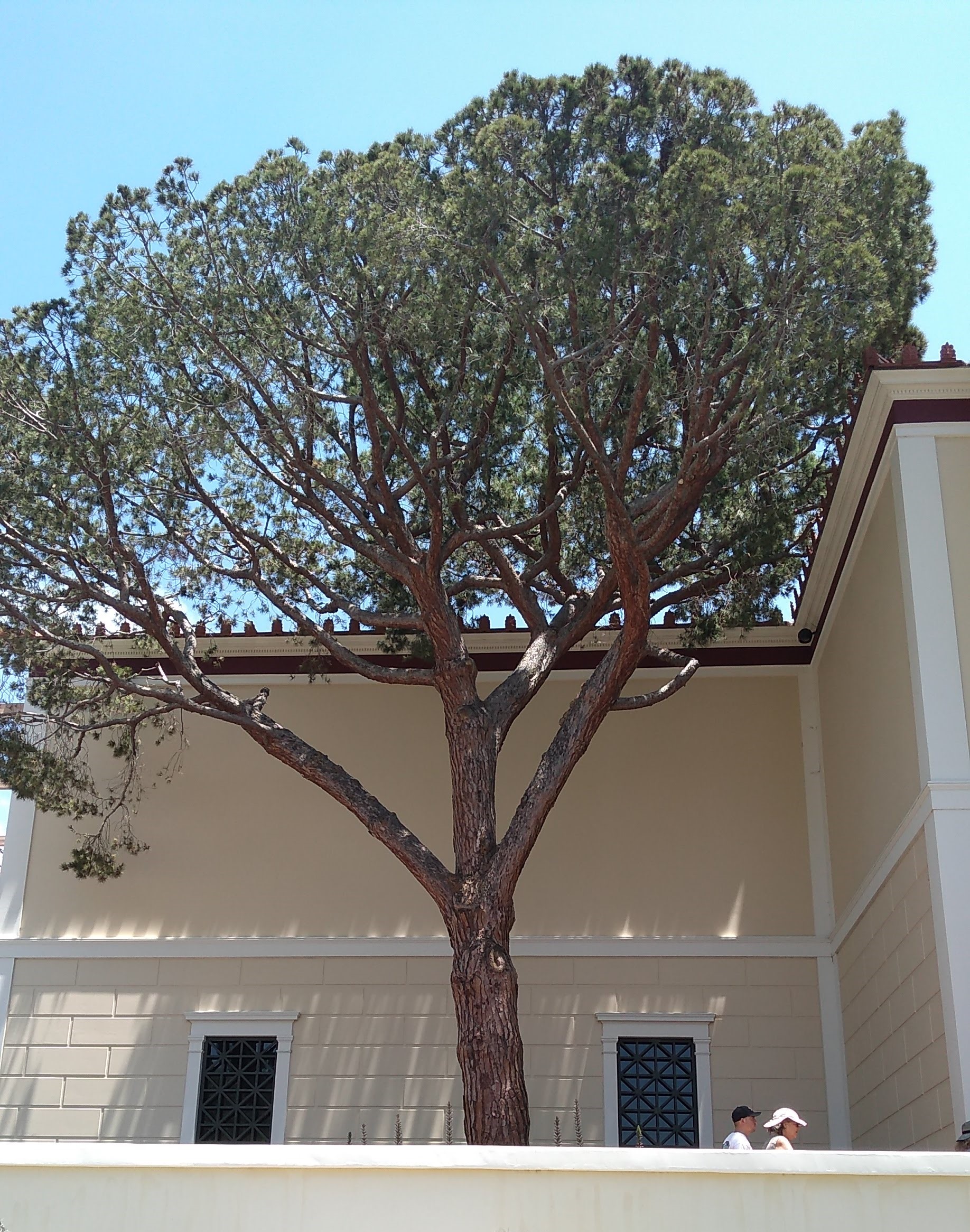
Photo of pine tree with branches spread above roof of building.

Ruth Downie writes the MEDICUS series, featuring Roman Army medic Gaius Petreius Ruso - a man whose desire for a quiet life is thwarted both by unwanted murder investigations and by his British partner, Tilla.

www.ruthdownie.com

This post was inspired by Mary Beagon’s “The Elder Pliny and the Human Animal – Natural History Book 7" – published by Clarendon Ancient History series. There is a fine selection of the complete Natural History published by Penguin Classics.

Photo credits -  

Pline L'Ancien -
https://upload.wikimedia.org/wikipedia/commons/3/37/Plinyelder.jpg
Library of Congress, Public domain, via Wikimedia Commons

Curious creatures in Zoology -
https://www.flickr.com/photos/biodivlibrary/15382861990
Public Domain

Hippocentaur -
Centaur with bull and maiden - edited
Metropolitan Museum of Art, CC0, via Wikimedia Commons
https://upload.wikimedia.org/wikipedia/commons/d/db/Centaur_with_Club_and_Maiden_on_Bull_MET_63.712.23.jpg 

Dagger - author's own photo

Pine tree - author's own photo


Friday, 15 July 2022

Romans in Los Angeles? by Ruth Downie

Marble basilica hall with columns and statue displayed at the far end
Rise early, work hard, strike oil. Sound advice on acquiring wealth from the lips of J. Paul Getty, whose own success allowed him to indulge his passion for collecting art. Once acquired, though, what was he to do with it? Cost was no object: Getty was the richest man in the world. He followed the ancient practice of building a sumptuous seaside residence where it could be displayed.

Mosaic floor in "tumbling blocks" patternThe Getty Villa is based on the shape of an original that was buried by the eruption of Vesuvius in 79AD. Almost 1900 years later it was clear that Getty’s version could never be an accurate replica, because nobody knew what the Villa of the Papyri had looked like above ground. Most of what remained was at floor level, and at the time much of that had only been explored via tunnels hacked through the buried remains in the eighteenth century. Where the evidence failed, Getty’s site drew inspiration from other villas of the time, along with necessary adaptations (such as a wide, accessible staircase) for modern use.

View from balcony past trees to the oceanHis creation is cleverly placed so external roads, service buildings and the Museum car park can’t be seen from the gardens. It lies between Malibu and Venice beach – a location that makes surprisingly good sense despite being on a continent of which the Caesars knew nothing. The Romans would have felt more at home in this climate than in Britain, where imperial attempts to live in a traditional Roman courtyard house (some were optimistically built for fort commanders) must have left the occupants chilly, damp and homesick.  Room with multicoloured marble floor and walls and painted and coffered ceiling

For a pair of modern and seriously overheated Britons, though, one of the unexpected delights of a stroll through the Getty villa was to linger on a cool marble bench, admire the splash of the fountains and feel the breeze wafting through the open doorways and colonnades. We had escaped the Los Angeles traffic jams just as powerful Roman families might have fled from the summer heat and bustle of Rome. 

Something else that struck home was the number of people needed not only to create this sort of luxury but to maintain it. Especially in an age before electricity and telephones, there would have been not only personal slaves but squads of cooks and cleaners and gardeners and clerks and people scurrying around refilling oil lamps and carrying messages. All of these necessary workers must have been housed and fed and expected to be “seen and not heard”. (Although given the numbers of columns and niches, ornamental trees and full-size statues, perhaps they were supposed to slip in and out without being much seen, either.)

Large formal garden with long pool in the centre and colonnaded walk all around

This vast area is the same length as the original. I suspect the water here is much cleaner, but it is nowhere near as deep. The Roman owner (probably Lucius Calpurnius Piso) may have had to contend with the insults of Cicero, who described him as “profligate, filthy and intemperate,” amongst other things, but at least he was not restricted in his ambition by having a car park directly underneath his pool. 

A few favourites from the collection:

Sculpted head


This head of Tiberius had his nose and chin reconstructed in 2013. Is such restoration helpful, or is it unwarranted interference? It’s a question raised elsewhere in the collection. For those of us who had seen too many statues with no noses over the years, it was a welcome change.

Carved figure of woman lying on couch


As Getty suspected, this is not an ancient item. It was actually made sometime after 1875 but, with the passage of time, it’s become interesting in its own right. 


Getty’s inspiration – the Villa of the Papyri - is named after the vast number of charred scrolls found in it. Decades of work have destroyed some and still others remain undecipherable. What’s legible is mostly in Greek, leading to hopes that there might be a Latin library as yet undiscovered. 

Screenshot of charred scroll being examined


Mosaic of peacock


A peacock - noisy as a pet, tasty on the dinner table.


Head and shoulders of man carved on tombstone


The late Publius Curtilius Agatho, Silversmith. Such a lifelike portrayal that I feel we would all recognise him if we met him in the street.    


Meanwhile, the anonymity of the two below is deliberate. Nobody has destroyed the faces - they're just waiting to be carved to resemble whoever might be buried in here.
Very ornately carved coffin with classical scene: on top two very roughly shaped reclining figures

Hard not to see this as “Aphrodite plays air guitar.”

Terracotta figure of goddess with one hand raised and the other drooping down 

Our only eye-witness description of the eruption of Vesuvius comes from Pliny the Younger, who describes the cloud as looking like a pine tree, rising into the sky on a long “trunk” with branches spreading out at the top. This pine spreading over the villa is a reminder of the tragedy that struck the people living around the volcano. 

Tall, spreading pine tree very close to villa and extending over the roof

"The true collector," Getty believed, “...is willing and even eager to have others share his pleasure.” Yet although he was heavily involved in the design, Getty never visited the villa and could not have witnessed the pleasure that it gave to others. He died two and a half years after the opening, leaving the Museum a bequest of four million shares of Getty Oil stock and making it the richest art institution in the world.

Find out more here - https://www.getty.edu/visit/villa/

Guide to the Getty Villa – Getty publications – ISBN 9781606065471


Friday, 14 January 2022

Joy, Happiness, Culture and Refinement - by Ruth Downie

It’s hard to imagine now, but there was a time when, if you didn’t know something and neither did your neighbours, you had to find a book and look it up. When I first worked in a library it was not unusual for people to phone us in search of answers to quiz questions, because unless you owned your own encyclopaedias, there was only one place to find help. So when I started to look at the story of one local library I was amazed at what a struggle its creation had been. Surely everyone would have thought a library was a Good Thing? 
 
Evidently not. 

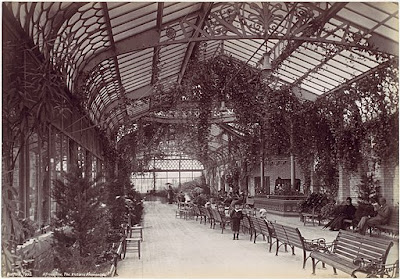
Large Victorian pavilion with plants and seating
Ilfracombe's seafront pavilion, c.1870  

By the later years of Queen Victoria’s reign the small town of Ilfracombe, on the coast of North Devon, was a thriving holiday destination. In the first decade of the 20th century the reading tastes of locals and visitors alike were catered for by no less than five subscription libraries. Readers could thrill to stories by Conan Doyle, Rudyard Kipling and Louis de Rougemont, whose controversial adventures included “Round the World on Wheels”, “Twenty-eight Days Without Food” and the alarming “Shot Through the Head with a Ramrod.” 
 
Victorian gentleman
Louis de Rougemont


Keen to attract customers, the libraries advertised their stock in the newspapers. JS Fletcher’s mystery novel “The Death that Lurks Unseen”, Florence Warden’s “A Lowly Lover” or AEW Mason’s “Miranda of the Balcony” could be borrowed for 3d (just over 1p). Eager readers could have three books at a time for an annual subscription of 21s (£1.05). However, if you couldn’t pay, your chances of enjoying any of the latest tales - including my absolute favourite title, LT Meade’s “Maid with the Goggles” - were slim. There was no mention at all of reference works.

From about 1850 onwards local councils were empowered to set up free public libraries, but take-up was slow. There was a flurry of activity around Victoria’s Golden Jubilee in 1887 but Ilfracombe’s attempts to join in did not begin until early 1899. On 14 January The Ilfracombe Chronicle & North Devon News printed a letter of support from an anonymous ratepayer who hoped the proposed library would prove “a counteractive influence to the public house.” 

The Chronicle’s local columnist, “Man about Town,” was also delighted with the idea, declaring in the same issue that “A library open to all classes, rich and poor, is a great boon to professional men and artizans [sic] alike”.

Unfortunately not all the town’s councillors agreed with him.

“The… speeches of the members,” declared the disgusted Man About Town in his column the following week, “proved… that many of them know nothing at all about the question.” This, he felt, was the only possible reason for the Council’s “utterly inexplicable” veto of the proposal despite widespread public support.

He dismissed the counter-suggestion of a “voluntary library” as “twaddle,” and saw no sense in the decision to consult the ratepayers. Indeed, 94 out of 99 letters sent to the Council chairman were in favour of the scheme.

“In the course of my professional duties,” declared one, “I am constantly brought in contact with students who are hampered in their studies for want of a good reference library.”

Another claimed, “The people of this town are endowed with great natural intelligence, but have been unfairly handicapped in the pursuit of knowledge by the absence of such an institution.”

On 28 January Man About Town returned to the subject for a third week, confident that despite this setback the ratepayers of Ilfracombe would see their own public library before long. Other local papers were not so sure. He quotes the North Devon Journal as being “astonished” at the decision, but the Exeter Gazette concluded that it was “a wise one” in view of other pressing needs for funds. Meanwhile the North Devon Herald pulled no punches. There was, it said, “no valid reason whatsoever why the ratepayers should be taxed… to furnish folks with a very limited selection of books, which they would only grumble and cavil over… the public will always clamour for anything they can see a chance of getting for nothing.”

Portrait photo of smartly-dressed man with white hair and beard
Andrew Carnegie
The Council finally voted to adopt the Public Libraries Act in 1903, but little changed until 1904/5. That was when a knight on a white charger rode into town. In spirit, at least. In body, Dunfermline-born Andrew Carnegie remained in the USA. A man of humble origins, Carnegie had educated himself largely by reading, and subsequently made a fortune in the steel industry. In 1901 he sold his company for $480 million, which made him about twice as rich as Bill Gates is now. Carnegie then devoted himself to philanthropy and, along with much else, his generous grants enabled the setting up of 2509 public libraries across the world. £3000 of his money (about £375,000 today) was on offer to Ilfracombe.

Should the town accept? A Carnegie grant would come with strict conditions, and the recipients were expected to find the library’s running costs for themselves. The council voted to receive the money, but in January of 1905 the Chronicle reported “great differences of opinion” at a lively public meeting:
 
Mr W Pile said "they should put every opportunity of improvement in the way of the young men of the town. (CHEERS)

"…Mr Dadds went on to say that public libraries were a failure nearly everywhere. (HEAR HEAR) What did they read in these libraries? (RUBBISH) The town was expecting to get a Higher Grade School, and did not need the library."

The report offers a great deal more in this vein, suggesting everyone present was having a marvellous time – until the vote. The count was 85 for the library, 100 against.

Nevertheless, plans for a library were approved in 1912. There then follows a long silence, only partly explained by the interruption of the Great War.

On 23 May 1925 the Ilfracombe Chronicle Gazette and Observer ran the subtitle, “Carnegie Trustees want something definite”. This was not unreasonable, as “It is now more than 20 years since the promise was made by Mr Carnegie” and there was neither a library nor any obvious sign of one. The council, still mired in complications over the site, voted to adjourn.

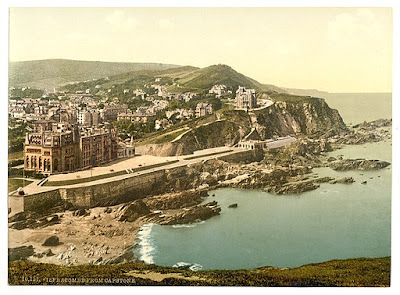
It was not until 1934, 35 years after it was first proposed, that Ilfracombe’s Free Public Library finally opened in the rest room of the magnificent Ilfracombe Hotel - “lofty and airy, flooded with light from the glass dome roof.” (The hotel is the large building on the left in the picture.) There were 820 fiction, 300 juvenile fiction, and 440 non-fiction and reference books. It was created with help of the Devon County library service, which had received substantial help from the Carnegie fund and had set up 463 branches across Devon. The Ilfracombe Chronicle & North Devon News shared the good news on 14 December. 

Picture of rocky beach with large seafront hotel
Ilfracombe seafront

“I feel convinced,” announced County Councillor Mr RM Rowe, “that the provision of a public library will not only add to the amenities of this township, but will also bring a large measure of joy, happiness, culture and refinement to the inhabitants.”

The Ilfracombe Hotel is long gone, but the public library which began life there is still bringing joy, happiness, culture and refinement to the town. Sadly I have searched the catalogue in vain for “Maid with the Goggles”. 

*****

Thanks to Ilfracombe Library, who inspired the original research, and Ilfracombe Museum, who provided most of the material. All errors are of course my own.

For a brief summary of the rise of English public library (with occasional refs to NI, Scotland & Wales) visit the Historic England website.

For more on Andrew Carnegie, visit the website of the Carnegie Corporation

 *****
When she isn't hanging around museums, libraries and archaeological holes in the ground, Ruth Downie writes a series of murder mysteries. They're set mostly in Roman Britain and feature army medic Gaius Petrieus Ruso, and his British partner Tilla. To find out more, visit www.ruthdownie.com

*****

Photo credits -
Pavilion - Francis Bedford, CC0, via Wikimedia Commons
Louis de Rougemont - George Newnes, Public domain, via Wikimedia Commons 
Andrew Carnegie -User Magnus Manske on en.wikipedia, Public domain, via Wikimedia Commons
Ilfracombe sea front -Photochrom Print Collection, Public domain, via Wikimedia Commons