
Showing posts with label genre. Show all posts

Monday, 22 October 2018

Historical Fiction and Historical Fantasy: A Question of Genres by Catherine Hokin

This is a slightly different blog this month, a picking-all-your-brains exercise if you will. I've been asked to be the historical fiction voice in a discussion about the differences/overlaps and, who knows, clashing points between historical fiction and historical fantasy and I'd love your help. Actually I'm desperate.

 Tom Gauld, The New Yorker 2016
Trying to get an historical novelist to pinpoint  the bit of this widespread genre we all write in can feel a bit like a trip to the pick and mix counter. As authors we want to sell our books so the temptation is to try and slot our work into as many sectors as possible - it's historical yes, but it's also got a crime and a bit of a romance and it's got these great sweeping themes of loss and guilt and... Booksellers and publishers also want to sell books (not necessarily the same ones as us but that's a different post). They, however, take the opposite approach, and want neat pigeonholes which signpost readers in a clear direction. To keep them happy, your historical crime-busting romance needs to pick one category and stay there.

The point is that the genre historical fiction covers, and doesn't cover (bear with me) a lot of ground. Obviously the story has to be set in the past but even that is open to interpretation - the period has to be fifty years ago or more according to the Historical Writers' Association but only thirty for the Historical Novel Society. However, even if a novel fits that criteria, it may not be counted as historical. Joanna Cannon's The Trouble With Goats and Sheep is set in the 1970s and therefore, by the HNS definition, is an historical novel. It wasn't marketed that way but to anyone under 35 it's evocation of the period would surely feel that way. So perhaps it's a question of perspective, or life lived. Author Emma Darwin has talked about a period passing out of adult living memory for it to be counted as historical. She also suggests we consider historical novels as being a marker of historical change, not in the sense of  there being different "haircuts and menus" but "hearts and minds." There is also the question of what "counts" in our examining of the past. For some commentators, historical novels must deal with real events and real people, with all the problems of privilege this brings. For others it is the previously unheard voices that need to be brought to light. 

 The Daily Snooze
Add up all that and then throw the word literary into the mix and the whole thing gets even more complicated - Hilary Mantel's Wolf Hall was definitely historical but also, according to those who decide such things, definitely literary. A category Philippa Gregory's The Other Boleyn Girl, which was a huge commercial hit, would never find itself slotted into. And should we even care?

So, if defining historical fiction is complicated, what about historical fantasy? The accepted definition (yes, Wikipedia but I also asked some people who know) is the addition to an historically-based (and Earth-based) story of an element which comes from outside reality - vampires, werewolves, dragons and magic, that kind of thing. All very straightforward: something like Jane Eyre and Zombies is an obvious fit, as is Game of Thrones (let's not even talk about the people who don't believe that statement). But what about Susanna Clarke's Jonathan Strange and Mr Norrell? Or stories that cross into Arthurian myths or Celtic legends and relate them to actual events? Where do the boundaries start to blur? What about time-slip novels? Or novels set in a period when things we can now explain through science were considered as witchcraft or magic? If a medieval character firmly believes an illness or misfortune was caused by a demon and the novel follows this line of thought through, is that historical fantasy or historical realism? What about if your preacher sees angels? Or your healer sees ghosts? And where oh where do we put Lincoln in the Bardo? Real events, real people, contemporary texts quoted - and a whole cast of ghosts. Is that where we throw in the towel and just call it literary?

Readers, my head is exploding which I think puts me firmly into the fantasy genre. While I go off and harness a dragon, please send me your thoughts.

Wednesday, 2 May 2018

Lace and blade... and historical fiction, by Gillian Polack


This month, whenever I read a book I react to it. My reactions are visceral. The systems of names in fantasy worlds (historical and other) gave me negative ones. I wanted to invite the authors over, get out my trusty whiteboard, talk them through all their decisions and show them what they did then I wanted to sit back and watch them do better. “Their next novel,” I said,’ Would work for more readers. And it would have more resonance. And it would be more sparkly.” I stopped myself there, for ‘sparkly’ made me think of another negative visceral reaction: the one I had to sparkly vampires. Bingo. My reaction to poor naming systems in any kind of fiction is the same as my reaction to sparkly vampires. 

This cute realisation led me into temptation. Grand and gross temptation. I wanted to write about all the ways some writers get names wrong because they want to use the history they know and they really don’t know as much history as they think… but in this company (where the writers and readers don’t make such daft assumptions) it would be nothing more than me sounding off. In fact, it’s probably my body telling me that I need a coffee.

The feelings I got a month earlier when I read a kinda-historical sword and sorcerer series (“lace and blade” they call themselves) were more comforting. I find it interesting that a couple of volumes of lace and blade stories took some of the key facets of good historical fiction and transformed them into fantasy without triggering my ‘this is wrong!’ emotions. So many of my historian friends read fantasy rather than historical fiction. This might be one of the reasons why.


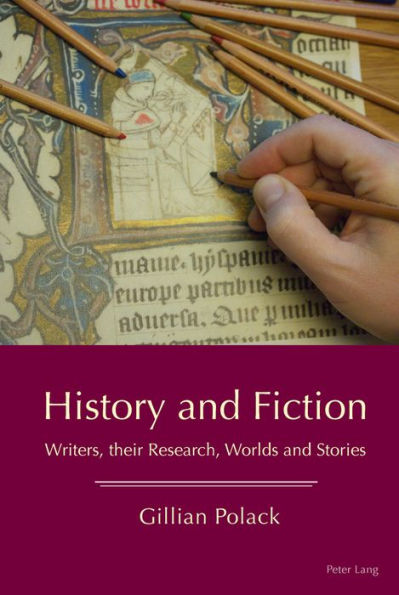
Every genre and sub-genre has something that tells readers “this is us.” I’ve talked a lot to writers – for I teach these things – about word choice and sentence structure, period-of-preference and place-of-preference (some of my serious thoughts and other writers thoughts on this can be found in History and Fiction) and all of these are important genre attributes. They’re not, however, what lace and blade fiction borrows so successfully from historical fiction.

Let me start with historical fiction, for it isn’t a single genre, and lace and blade doesn’t borrow from all historical fiction. I could equally start with sword and sorcery , for lace and blade still has some of sword and sorcery’s bold language and larger-than-life events. Today, however, I’m interested in the historical side.

There were several concepts that pushed the stories in a certain direction. I want to call them names; the highwayman one; the smuggler one. Where criminal activity is presented as sexy. Vampires in lace, but with more action and less drinking from humans. Some of Anne Rice’s vampire fiction comes close in how it’s framed, which is why I thought of vampires. Rice also has a sense of place and a sense of time (the novels have a historical sense), and that’s closer to lace and blade (or lace and blade is closer to it. Which is closer to the other depends on who one asks and how much of a fan of a given writer that reader is) but it’s not our world. It’s not our history.

This is where lace and blade starts. Almost our world, but not. It has a bit in common, too, with the movies of the 1950s, like Burt Lancaster swashbuckling around a ship in The Crimson Pirate. Very romanticised, often somewhat tongue in cheek and slightly sophisticated. The past as it could have been, with magic and more derring-do. 


This is one area of overlap with historical fiction novels. Going back as far as anything that contains Sir Percy Blakeney, derring-do and charm and elegant deception and derring–do, redeeming someone from an impossible situation has been an aspect of historical fiction for a log time. Some novels contain it in spades. Especially the derring-do. 

As far as Sir Percy, however? That’s drawing a line where no line is. Sir Percy is a point of time to remember, not the first. Nor even close to the first. Horace Walpole’s The Castle of Otranto is another first-but-not-first. If we go back earlier, there are some wonderful romps by Italian writers, who use French heroes and ...change the stories. 

Lace and blade, therefore, belongs to a long tradition of stories that make life more exciting in a safe way. I already knew that. This wasn’t what I was reacting to.

I felt the emotions. For some stories, I felt the dream “This is the way the world could be.”
These reoccurring themes come straight from historical fiction. Some sword and sorcery work also contain them, but in all cases it’s possible to trace it back to a sense that honour and love and, in many cases, tricking evil into doing good that itself comes from a particular type of historical fiction. This historical fiction was dominant in the twentieth century but really began with Jane Austen’s England and with John Gay’s operetta.

My change of vocabulary in that last sentence means I need to stop soon. I’m turning into my academic self and she’s capable of being terribly tedious on this subject, albeit more accurate. Just think of highwaymen in love (John Gay), of manners and people and a quietly elegant society (Jane Austen). Add Georgette Heyer into the mix, and a dozen other writers. Transform the story, step by step and lo, lace and blade emerges. If I were writing lace and blade then I’d say ‘emerges triumphantly from the ruins’ for the sub-genre really enjoys a magnificent turn of phrase. It’s not for the subtle. 


It’s also strongly linked to historical fiction, but it’s a fantasy genre. The history is part of the fabric. The power, the passion* and the elegance are its hallmarks. Magic, mystery and a certain trickiness.

What struck me was that the passion side of it comes from historical fiction. Each emotion can be traced and, in the best stories, it matches rage of love and loss in historical fiction. By this, I mean that it can be passive, and it can be deep, and it can govern the whole story. While lace and blade is a variety of adventure fiction, it’s one that shares something very important with one less fantastical genre in particular.

*Australian political jokes creep in on weeks like this