
Showing posts with label prison. Show all posts

Thursday, 9 May 2019

The Scent of Hemlock

hemlock in spring (Wikimedia Commons)
by Caroline Lawrence

As I write this, in May 2019, I’m working on a book set in ancient Athens. As usual, I’m seeking out as much sensory detail as possible: sight, sound, taste, touch and smell. I do that to spark synapses in the imaginative right brain, thereby bringing the book alive to young readers. But I’m also doing it for the same reason I write my books: to transport myself back in time. 

In my latest book, The Time Travel Diaries, a 12-year-old London schoolboy named Alex goes back to third century Roman London to find a blue-eyed girl with an ivory knife. She was a real girl whose grave was found not far from the site of Shakespeare’s Globe. In the sequel, which I’m working on now, Alex goes back even further to witness the death of Socrates. 
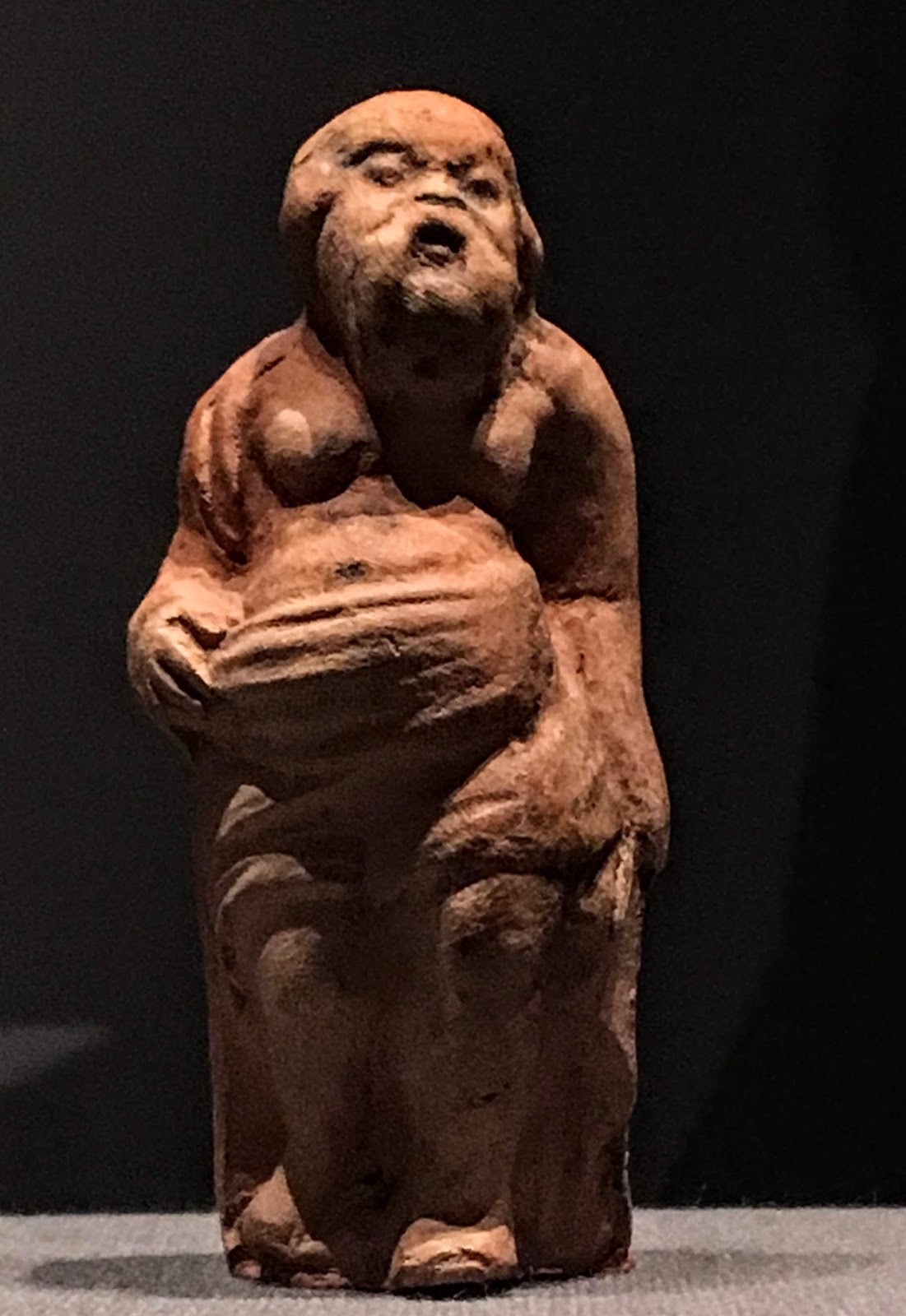

figurine of Socrates in the British Museum
Socrates was the famous fifth century BC Greek philosopher who was the first to bring philosophy down from the stars and into men’s lives. He buzzed around Athens like an annoying mosquito, challenging ancient Greeks to make sure their souls were noble. He’s the one who claimed that ‘The unexamined life is not worth living’.  Finally the politicians and the people he’d pestered decided that enough was enough. They charged him with impiety and sentenced him to death. 

And so, in early summer of the year 399 BC, seventy-year-old Socrates had to drink poison hemlock. 

Apart from a possibly spurious verse, Socrates left not a single written word. But like Jesus, who also died a martyr’s death, he was immortalised by his disciples, the most famous of whom was Plato. Plato is, of course, a giant of western philosophy. All his so-called dialogues have survived and he has been studied avidly without ever going out of fashion for two and a half thousand years. Plato taught Aristotle and Aristotle taught Alexander the Great. 

But it was Socrates who started it all. Without him, our culture would look very different.
David's famous 'Death of Socrates' (1787) Wikimedia Commons

Over the past two and a half millennia scholars have debated the accuracy of Plato’s portrayal of Socrates. For example, at the end of the dialogue called Phaedo, Plato writes vividly of Socrates’ death. He describes how Socrates bravely downed a cup full of hemlock and asked the executioner what he should do next. ‘Walk around until your legs begin to go numb, then lie down.’ Socrates duly walked around, gently rebuking a dozen or so of his friends for wailing and weeping. He reminded them that it is right to die in dignified silence. 

As the paralysis worked its way up, he lay down on his prison cot. The executioner pinched his calves and then thighs, asking if he could feel anything. As the pinches went higher, Socrates calmly said he could not feel anything. ‘When it reaches your heart,’ said the man who had given him the hemlock, ‘it will be over.’ Socrates covered his face and lay quietly. Suddenly he uncovered his face and spoke his last words to his aged best friend: ‘Crito, we owe a rooster to Asclepius; pay it and don’t forget.’ Then he covered his face again. A little later Socrates twitched and when the executioner uncovered his face they saw that he was dead. Crito gently closed his friend’s mouth and eyes. 

The death of Socrates is so calm and dignified that many commentators argued that Plato was sugar-coating the description. They claim that real hemlock poisoning would have included violent convulsions and other unpleasant symptoms. This is because over the years several different plants have received the name hemlock, including ‘water hemlock’ and a kind of fir tree. Although Plato only refers to the poison as the pharmakon (the drug) in this particular dialogue, he mentions hemlock by name in a few other places (e.g. the dialogue called Lysis) using the Greek word konion


In an article published in 2001 by Enid Bloch: Hemlock Poisoning and the Death of Socrates: Did Plato Tell the Truth? Bloch concludes that if konion refers to conium maculatum also known as ‘poison hemlock’, then ‘Plato not only told the truth, he did so with astounding medical accuracy.’ You can read the article online HEREA slightly longer version of this paper was published in 2002 in The Trial and Execution of Socrates: Sources and Controversies. This version of Blochs article contains sixty-five footnotes, some of which describe the smell of hemlock and the bodily sensations it arouses. 

One feature of the plant that everyone from Pliny the Elder to Dioscorides has mentioned is the strong or ‘heavy’ smell. Some commentators have likened the smell of hemlock to that of mice or even cat urine. In footnote 64, Professor Bloch confesses that she has never lived with either cats or mice so she can neither confirm nor deny this observation. 


hemlock in winter (Chelsea Physic Garden)
In footnotes 12 & 63 Bloch tells how a gardener at Cornell University’s Poisonous Plants Garden showed her various types of hemlock and other toxic plants. Krissy Faust even gifted Bloch with some poison hemlock plants so she could study them in the privacy of her own home. When Bloch remarked on the gnarled appearance of the roots, Faust explained that in loose or sandy soil the roots would have grown straight down, like carrots, but ‘in the hard clay of Ithaca, New York’ the roots become bent and twisted in a way which perfectly illustrates one Greek description of the roots as koilay kai ou bathia (twisted and not deep). 

In footnote 65 Bloch relates how on several occasions she has brought hemlock into her Socrates classes. She offers students the opportunity to examine the stalks, always warning them of the possible toxic effect of merely sniffing the plant. ‘Virtually everyone’ who has a sniff reports an ‘immediate feeling of car-sickness and a mild but sharp headache’. Bloch herself describes the queasy sensation as something closer to morning-sickness than car-sickness but acknowledges that most of her students might not be familiar with that particular kind of nausea. 


Elsewhere in the article Bloch says the scent of hemlock is ‘like a very heavy, peculiar tea, clinging obnoxiously in the mouth and nose, as if it had entered the body and not let go.’ A 12-year-old Time Traveller like Alex might describe the smell as Cat Pee Tea. 

So, although Bloch believes that Socrates died peacefully and with dignity, her findings also persuade us that drinking hemlock was nonetheless very unpleasant.

Kids, don
t try this at home! 

The Time Travel Dialogues, Caroline’s sequel to The Time Travel Diaries, will be published in 2020.

Thursday, 27 October 2016

Your Last Paper Five Pound Note by Janie Hampton

For the past fifteen years, all of us who live in Britain have looked at this woman many thousands of times. But within the next few months she will disappear from public view as paper notes are replaced with plastic ones.. Who is she? 
The last paper £5 note
She is Elizabeth Fry, the woman on the “back” of the £5 note. (The woman on the “front” is Queen Elizabeth II, who appears on all British sterling notes.) So why was she chosen?
Elizabeth Fry changed the lives of prisoners in the 19th century, in Britain and all over the world. Much is already known about her extraordinary humanitarian work , so I’ll tell you a bit about her early life.
Betsy, as she was known, was the daughter of devout Quakers from East Anglian banking families – her mother Kitty (1755-1794) was a Barclay; and her father John Gurney (1749-1809) was a partner in Gurney’s bank. Eventually the two banks married too.  Born in 1772, Betsy grew up the third of eleven children in Earlham Hall, a country house in Norfolk built over many centuries. It had 80 cupboards for ‘hide and seek’ and was set in beautiful park land - now the site of the University of East Anglia. There were at least two dozen indoor and outdoor staff, who were treated as part of the larger family.
The Gurneys of Earlham were known as ‘Gay Quakers’ – they loved to dance and sing, and they wore cloaks with colourful linings. Kitty believed in liberal and equal education so Betsy and her six sisters were taught French, Latin, Botany, History and Geography, as well as needlecraft and family economics. Drawing lessons were given by John Crome and John Sell Cotman, leading members of the Norwich School. As part of their social and moral education, Kitty would fill jugs with soup and march her children off to feed the local poor.
Unlike her rowdy siblings, her mother described her third daughter as ‘my dove-like Betsy, scarcely ever offends and is truly engaging’. Her sisters found her moody, self-absorbed and difficult. She resisted joining them in the North Sea at Cromer or duck-shooting on the Norfolk Broads. Following Quaker practice, the children were encouraged to write their true feelings, and faults, in daily journals – and then had to read them out to the family. Betsy was unsparingly honest about the sins of both herself, and her sisters. Her four younger sisters were often irritated by her goodness: ‘she does little kindnesses, even to those who ignore her.’
When she was only 37, Kitty died of erysipelas, a skin infection which is easily treated nowadays. The Gurney children were then aged between one and 16 years; Betsy was just 12. To keep them cheerful, their father would hire a blind fiddler on Saturday evenings who could not know that the sound of laughter and dancing came from Quakers. Despite being shy, Betsy had a beautiful singing voice and danced with grace. She observed in her journal that dancing made her flirt more and at 17 she wrote, ‘I must beware of being a flirt, it is an abominable character’. Much to the disapproval of the Plain Quakers, her father invited guests belonging to other Christian denominations, and encouraged his children to know about the world. Just as many of us boycotted South African wine to bring down apartheid, as early as 1800 the young Gurneys resisted eating sugar to try and end slavery.
On Sunday mornings, the family walked the three miles into Norwich for “Goats”, the Goat Lane Friends Meeting House. On the way there any child who lapsed from speaking French was fined a farthing. Quaker meetings lasted three or four hours, sometimes in complete silence. For children who loved riding, swimming in the river, dancing and drawing, this was an agony of self-sacrifice and they found  it “extremely dis” [disagreeable]. By the end they felt “thoroughly goatified” until they got home to Earlham for a “romp and a dance”. Their journals refer as often to dancing, as they do to their sins.
A watercolour of Betsy's Quaker cousins at Friends Meeting House, Gracechurch Street, London in 1778.  Twenty years later, Betsy would have been sitting on the left and William Savery speaking from this platform.  Note the speakers hat hanging above him.
One Sunday in February, 1798, the seven sisters were sitting in the front row at Goats. Betsy intended to spend the meeting contemplating the beauty of her new pair of purple boots with red laces. But she became transfixed by the speaker, an American Quaker called William Savery (1750-1804). ‘I had a feint light spread over my mind…it has caused me to feel a little religion,’ she wrote. Determined to hear Savery speak again, she asked her father to take her to London. During the week, she attended Drury Lane theatre, Covent Garden opera, saw performances of Hamlet and Bluebeard, went dancing, had her hair done, and finally on Sunday went to hear Savery again. Her life was never the same again. Much to her family’s annoyance, she gave up dancing and singing, wore only plain grey clothes, spoke quietly and determined to overcome her fear of the dark. She visited the sick and poor with clothes and food, started a Sunday school and became a Plain Quaker. Two years later she married a fellow Quaker, Joseph Fry (1777–1861) – whose family made their fortune in chocolate, although Joseph was an unsuccessful banker.
The 'Angel of Prisons' reading in Newgate Gaol.  The man on the left wearing spectacles is her brother-in-law Thomas Fowell Buxton MP. Painting by Jerry Barrett, 1816, on which £5 note is based.
The couple lived in London where in 1813 Betsy visited Newgate Prison. She was horrified by the filthy, overcrowded conditions of women, many imprisoned with their children. Five years later she became the first woman to present evidence to Parliament, which led to the MPs John Peel and  Thomas Fowell Buxton supporting the ‘Gaols Act of 1823’. She formed the “British Ladies' Society for Promoting the Reformation of Female Prisoners”, the first national women's organization in Britain; and campaigned against capital punishment. She established a "nightly shelter" in London for the homeless,and in towns all over Britain she organized volunteers to help the poor in their homes. After Betsy set up a college for nurses, Florence Nightingale took some of them to the war in the Crimea. Queen Victoria supported her work and the King of Prussia even joined her on a visit to Newgate Prison. Betsy visited over 100 convict ships before they set sail, giving each woman a ‘useful bag’ for her transportation. She wrote, “My mind is too much tossed by a variety of interests and duties — husband, children, household accounts, Meetings, the Church, near relations, friends, and Newgate....it is a little like being in the whirlwind and in the storm; may I not be hurt in it, but enabled quietly to perform that which ought to be done.”
Betsy died of a stroke aged 65 and was buried in Essex. There are many buildings named after her, including an 1849 women’s refuge in Hackney; part of the Home Office headquarters; and a school in Greensboro, North Carolina, USA. There are statues of her in Wormwood Scrubs Prison, East Ham Library, and the Old Bailey Court, London.
“Oh Lord, may I be directed what to do and what to leave undone.”
Statue of Betsy in The Old Bailey,  the site of Newgate Prison, London.
There’s even a National Elizabeth Fry Week in Canada every May. Many thousands of people, mostly unknown to her, benefited from her humanitarian work. Nevertheless some people criticized Elizabeth Fry for neglecting her domestic duties - despite the fact that all but one of her eleven children reached adulthood. Sadly, this is a problem women still face today. So before you spend your last paper five pound note, think about this woman who changed the way we think about the homeless, prisons and slaves - and yet still managed to annoy her sisters!
Elizabeth Fry, née Gurney, 1780-1845.
Janie Hampton is descended from four of Elizabeth Fry’s Gurney siblings.
This blog uses her mother's book: 'Friends and Relations - three centuries of Quaker families', Verily Anderson, Hodder & Stoughton, 1980.