Showing posts with label Arvon. Show all posts
Monday, 28 November 2016
Wall to Wall by Julie Summers
I have just spent a magical, exhausting but immensely rewarding week as a tutor on an Arvon Foundation non-fiction course. As I write I am sitting up in bed in what used to be John Osborne's study at the Hurst, his home for the last years of his life. It is one of the most beautiful places I have ever spent time in though I have scarcely been beyond the front door. The study is large and sparsely furnished. The only true reminder of his presence is his leather topped writing desk at which I have sat every morning and evening reading work submitted by the students. While I am no believer in ghosts or spirits, it certainly feels slightly unreal and mystical to be inhabiting the same space as the great man. I suspect that much else in the room has changed since his day and I am sure there was no green Exit sign with a running man and an arrow on the wall... But I digress.
The Arvon Foundation was set up by two poets, John Moat and John Fairfax, and Antoinette Moat who helped buy the first Arvon property, Totleigh Barton in Devon. The original aim was to provide time and space away from school for young people to write poetry. Today residential courses take place in one of three houses situated in remote rural locations in Devon, Shropshire and Yorkshire. Over the last almost fifty years it has helped countless writers to spend time honing or developing new skills or simply learning to come to terms with how they wish to express themselves, whether through poetry, prose, drama or non-fiction.
The recipe is simple: take up to sixteen people of mixed age, background, ability, ambition and sex. Shut them up in a remote house - in this case in the heart of Shropshire - with two tutors and plenty of food and see what happens. The structure of the course is up to the tutors but fits into a framework that has been well tried and tested: the mornings spent in a workshop and the afternoons writing or attending half hour tutorials with one or other of the tutors. It doesn't sound like hard work when written down but it is intense, let me tell you, especially from the tutor's point of view.
All meals are enjoyed together and the evening meal is prepared by the students, with washing up and table laying done in teams. Inevitably the table talk focuses on writing so in the event the only time you are not either thinking, talking about working on writing is when you are asleep. At least that was the case for me. Yet it was hugely enjoyable and something I would do again if I were asked.
While it would be out of order to name names, we have been lucky enough this week to work with a dozen fabulous writers who each has a major project they want to bring to a wider audience. Stirring tales from family history were predominant and I have enjoyed learning about the author, Charles Lee, who wrote down the Cornish language; a trio of women connected with the Garden City movement and bawdy women in history to name but three.
There is something energising about being with a group of people who are wholly focused on writing historical non-fiction. It reminds me of the immense richness and variety of possibilities there are to focus on an aspect of real life and bring it out in written form. I admire writers of fiction for their ability to conjure up worlds in their heads but I am equally in awe of writers who can corral and tidy up the messiness of life and show it to us in ways that make some sense, drawing strings together to weave a story that does more than just lay down facts, dates and names.
In one of our workshops we looked at the old chestnut: oral history. To write historical non-fiction is to some extent to be an eyewitness to history. Yet as anyone knows, to claim to have the only view on an historical event is to ignore the human mind's ability to process what it sees, hears, feels, smells and senses. I remember chairing a panel one this topic a few years ago at a literary festival and concluding that one person's view can differ so radically from another's that it is as if they had witnessed two different events.
We tried this out in a controlled experiment at Arvon this week. The results were nothing short of hilarious. On the evening prior to the exercise, so just over twelve hours earlier, four members of the group, including my fellow tutor, Ian Marchant, had performed a reading-with-actions of a fourhanded play written by Charles Lee and first performed in 1913. The resulting accounts from both players and audience were so diverse as to make me wonder whether we had all been in the same room together. The only thing that convinced me that we had was the overwhelming sense of place and atmosphere. That is something that often links people's experiences and - if they are unfortunate to suffer a bad or dangerous one - can form lifelong and exclusive closeness. I suspect in the case of our experience any allusion to the Revered Becksmith will just raise a broad grin of recognition.
I knew the experience of teaching on an Arvon course would be a good one but I had no idea beforehand just how rewarding it would be. I cannot remember enjoying the company of a dozen or so fellow writers as much as I have this week and I return to my desk and the second half of my book - now known thanks to my 'colleague' (as he always addressed me) Ian Watt as the Shitty First Draft.
If you ever fancy an indulgent sojourn with fellow writers, I cannot recommend an Arvon course highly enough, either as a tutor or a student. The staff at the centres are wonderful, supportive and unflappable and make the whole experience easy to enjoy. But it is the writers who make it special and memorable. It has reminded me of the joys and pitfalls of writing historical non-fiction and how the joys win every time.
Labels:
Arvon,
creative writing,
Historical Writing,
John Osborne,
Julie Summers,
non-fiction,
The Hurst,
the writing life
Sunday, 18 October 2015
Arvon Magic - Celia Rees
I'm sure that some of my fellow History Girls and our blog readers will have either tutored or attended an Arvon Course during their writing lives. For anyone who doesn't already know, Arvon runs a programme of residential creative writing courses and retreats for schools, groups and individuals. The five day courses are held at three centres: Totleigh Barton, in Devon, Lumb Bank in West Yorkshire and the Hurst in Shropshire and cover a wide range of genres, including fiction, poetry, screenwriting and playwriting.
![]() |
| Lumb Bank |
My first Arvon Course as a tutor was at Lumb Bank. The 18th century mill owner’s house once belonged to Ted Hughes and is set in a distinctive Pennine landscape with woods all around, a river at the bottom of the steep bank and the ruins of old mills just visible along the valley. It is about half a mile from the village of Heptonstall where Sylvia Plath is buried. Her grave is an object of pilgrimage. Writers leave pens and other offerings. If I'm there, I always find time to make the steep climb up to the village to visit her grave.
My co-tutor on my first course was the late and much missed Jan Mark. A writer of considerable stature, huge talent and enormous erudition, we will not see her like again. It is good to see some of her books being re-published in the admirable Hachette Hodder Silver imprint. They serve as reminder of just how good she was. She was also a highly experienced tutor, who had taught on numerous Arvon courses as well as being a regular at Ty Newydd in North Wales. I couldn't have had a better co-tutor; I learnt a great deal from her.
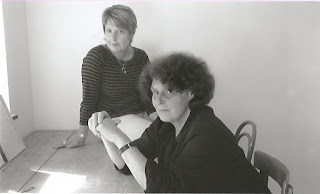
Each day at Arvon is divided into workshops in the morning with individual tutorials and free writing time in the afternoon. The workshops are designed to look at aspects of the craft but also to stimulate new writing and can often be testing and challenging, pushing those participating out of their comfort zones. The one-to-one tutorials offer feed back and constructive criticism on work produced. The week is intense and draining for tutors and tutees alike, but at its best it can be transformative. Jan was a formidable tutor. Her workshops were brilliantly crafted to spur creativity and spark the imagination. She was quite willing to read anything and everything offered to her and she read every word. Her analysis was forensic and the criticism she offered, although not always welcome, was meticulously fair. Her advice was often to go away, try again, make it better. Wise words to any writer. She was also adamant that, while at Lumb Bank, writers had to engage in new work, not carry on with something that they had been writing before coming on the course. The last night is reserved for readings and new work was what Jan expected to hear. So that's what would be happening. No-one argued with Jan.
![]() |
| Jan and me - photo: Claire McNamee |
Jan was right, of course. Arvon has to be allowed to work its magic. And it is a kind of magic, a creative alchemy that comes from those five intense days and nights, the mixing of writers together, the focus on writing and only writing, the place itself. I still remember some of those Friday Night Readings, from this and other courses, how writers were transformed, how they wrote out of themselves.
The most satisfying thing for a tutor is when a piece of writing that you remember, that was conceived at Arvon, becomes a book. One of the writers on that course was Tricia Durdey. She came with a book already finished, she was just going to do a bit of final editing but Jan wasn't going to allow that. Tricia had to go away and think again. She came back with an idea for something she'd long wanted to write. A story set in war time Holland, involving a dance teacher and her class. It sounded intriguing, different. I told her to give it a go. She did. I can still remember her Friday night reading. Powerful, arresting, moving. Even Jan was nodding and smiling. I told Tricia that she should develop it into a novel, which she did, only to fall foul of mainstream publishers with their 'Not quite right for our list/the market'; 'If you could just change this, change that, make it for Young Adults/Real Adults/Children, give it another title...' and so on - we've all heard it - but she did not give up. Tricia has written about her experience of writing the book here.
By happy coincidence, another writer on the same course, Jan Fortune, went away and co-founded Cinnamon Press . Even more Arvon Magic. Not only are they writing books and getting them published but they are starting their own publishing houses. How brilliant is that?
Jan has now published Tricia's book, The Green Table. My congratulations to both of them. Tricia has fulfilled her ambition to tell the story of dance teacher Hedda Brandt's struggle against Nazi oppression in wartime Holland. As Hedda's class dwindles, first the Jewish girl goes, then the girl handicapped by polio, we are reminded of bleak choices to be made, the heroism and sacrifice of ordinary people and the words of Pastor Niemöller:
First they came for the Socialists, and I did not speak out—
Because I was not a Socialist.
Then they came for the Trade Unionists, and I did not speak out—
Because I was not a Trade Unionist.
Then they came for the Jews, and I did not speak out—
Because I was not a Jew.
Then they came for me—and there was no one left to speak for me.
underlying all is the eternal question: what would you do?
The Green Table is a story of love, loyalty and courage. Tricia makes fine use of dance and music to express spirited defiance in the face of brutal occupation. The book is beautifully produced and contains all the originality and passion I first heard on that Friday Night Reading in the sitting room at Lumb Bank.
Celia Rees
www.celiarees.com
Labels:
Arvon,
Celia Rees,
Cinnamon Press,
Green Table,
Hachette,
Hodder Silver,
Jan Fortune,
Jan Mark,
Lumb Bank,
Sylvia Plath,
Ted Hughes,
Tricia Durdey,
Ty Newydd
Subscribe to:
Posts (Atom)