Showing posts with label Pliny the Elder. Show all posts

Friday, 13 January 2023

Wonders and Warnings - by Ruth Downie

Head and shoulders drawing of a bearded man labelled "Pline lAncien"

Maybe Pliny the Elder was born 1900 years too early. As a man who was interested in everything and who needed very little sleep, he would have loved the possibilities of the Internet. As it was, he gathered together everything he’d learned in an early handwritten version of Wikipedia that stretched to 37 volumes, and if you want a splendid and entertaining overview of it, click back to LJ Trafford’s 2019 post on "The Curious Roman".

Pliny’s daylight hours were filled with a series of highly responsible jobs, so his writing was done largely at night. His reading relied on what we now call audiobooks, achieved by having his staff follow him around and read to him in every spare moment. With limited opportunities for fact-checking, he adopted an early version of the retweet – not claiming that what he wrote was accurate, merely reporting that someone else had said it.

I’ve restricted myself to a few highlights from his writings about the Human Animal, some of which may come as a surprise but all of which were thought to be accurate by somebody… unlike the picture of him above, which as far as I can make out is based on no evidence whatsoever.

First: wonders and marvels.

Should you travel where the north wind rises, you may run into the Arimaspi, people with one single eye in the middle of the forehead. You may also encounter the local griffins. Try not to be there when they meet each other. The Arimapsi have a bad habit of stealing the gold that the griffins have painstakingly mined out of their burrows, and there will probably be a fight.

There are wild men in the woods of Abarimon whose feet are fitted on back to front, but you may never see them because they can run very fast. Also, they’re unable to breathe in a foreign climate, so they don’t travel well.

Everything is bigger in India, and at this point I should probably mention the dog-headed men. They do little of interest beyond barking and hunting using only their nails, but as Pliny’s source says there are 150,000 of them, you are more likely to spot one than either a griffin or a man with his feet on backwards.

Drawing of various men with one leg, one eye, no head and dog head.

India is also the home of the men who have only one leg and jump everywhere. When the sun is fierce, the jumping stops and they lie down to shade themselves under their one foot.

Sadly Pliny does not dwell on the details of the men who are enveloped by their ears, nor the men without necks whose eyes are in their shoulders.

A little more time is devoted to the Astomi, a hairy people who clothe themselves in cotton-wool, have no mouths and get all their nourishment from smell. This is a mixed blessing, as a stronger-than-usual stench can easily be fatal.

Further away lies the mountainous home of the pygmies, which would be delightful were it not blighted by plagues of cranes. In spring the pygmies saddle up their goats, gather their bows and arrows and set out on a three-month cull of the crane breeding-grounds.

Drawing of horse with man's head and torso, waving a club

If you feel your credulity being stretched by any of this, bear in mind that Pliny actually saw a Hippocentaur - the exciting result of breeding a horse with a human. It was preserved in honey and had been brought from Egypt to show to the Emperor Claudius. 

Which brings me to reproduction – and here I want to change Pliny’s order slightly. It is no good starting with his warning that it is potentially fatal to yawn during childbirth. We need to lay down a few fundamentals first.

Since men can turn into women and vice-versa, it may be useful to know that a woman has fewer teeth than a man. Also, women are never left-handed.

If you are indeed a woman, you should be aware of the dangers of the menstrual flow. Should you venture abroad at the relevant time of the month, disaster will follow you. New wine will turn sour, crops will fail, seedlings will shrivel, fruit will fall prematurely from the tree, knives will go blunt, bees will die, metal will rust and even the local ants, should they catch a whiff of you, will drop the food they were carrying and run away. 

Photo of Roman iron dagger and sheath
Stay away, ladies. 

On a brighter note – should you wish for a beautiful child, take care to keep your gaze on something beautiful at the moment of conception. Remember that children can inherit birthmarks, moles, scars and – in the case of Dacian children – tattoos.

I’ve already mentioned the yawning. Also, try not to propel the infant out feet first. This is how both Caligula and Nero were born, which does not bode well. 


You may have noticed that the human race as a whole is getting smaller. This is because the earth is getting warmer and the heat dries up the fathers’ semen.

Despite all this, be encouraged. Your child has the potential for a bright future. Not only has Rome produced more outstanding individuals in every field than all the other nations put together, but Romans are the most virtuous people in the world.

The length of a human life is an uncertain business, but claims of humans living 500 or even 1000 years are only made by people who don’t understand that a year lasts for a whole twelve months. There are plenty more reliable records from Italy, including one region where fifty-four men were recorded as over 100 and three of them were over 140. 

-----


Pliny was adamant that “nature’s supreme gift” of death was the end of every human existence, and there would be no afterlife beyond it. He received that gift himself at the age of only 55, while on a research and rescue mission during the eruption of Mount Vesuvius. His nephew, who witnessed the disaster from across the bay, described the cloud above the volcano as in the shape of a pine tree.

Here, in honour of the splendidly enthusiastic and energetic Pliny the Elder, is the pine tree that now looms over the Getty Roman Villa.
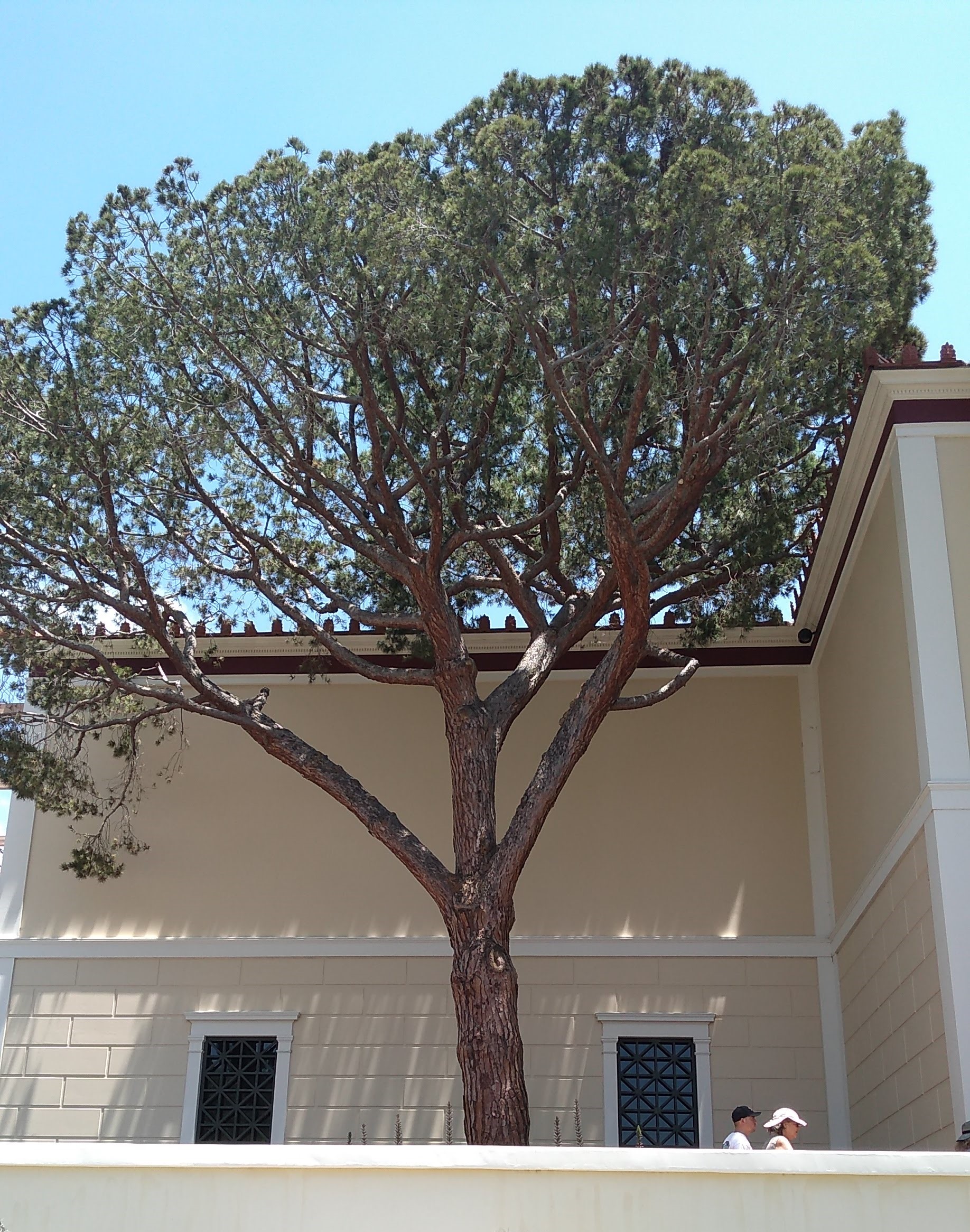
Photo of pine tree with branches spread above roof of building.

Ruth Downie writes the MEDICUS series, featuring Roman Army medic Gaius Petreius Ruso - a man whose desire for a quiet life is thwarted both by unwanted murder investigations and by his British partner, Tilla.

www.ruthdownie.com

This post was inspired by Mary Beagon’s “The Elder Pliny and the Human Animal – Natural History Book 7" – published by Clarendon Ancient History series. There is a fine selection of the complete Natural History published by Penguin Classics.

Photo credits -  

Pline L'Ancien -
https://upload.wikimedia.org/wikipedia/commons/3/37/Plinyelder.jpg
Library of Congress, Public domain, via Wikimedia Commons

Curious creatures in Zoology -
https://www.flickr.com/photos/biodivlibrary/15382861990
Public Domain

Hippocentaur -
Centaur with bull and maiden - edited
Metropolitan Museum of Art, CC0, via Wikimedia Commons
https://upload.wikimedia.org/wikipedia/commons/d/db/Centaur_with_Club_and_Maiden_on_Bull_MET_63.712.23.jpg 

Dagger - author's own photo

Pine tree - author's own photo


Thursday, 9 May 2019

The Scent of Hemlock

hemlock in spring (Wikimedia Commons)
by Caroline Lawrence

As I write this, in May 2019, I’m working on a book set in ancient Athens. As usual, I’m seeking out as much sensory detail as possible: sight, sound, taste, touch and smell. I do that to spark synapses in the imaginative right brain, thereby bringing the book alive to young readers. But I’m also doing it for the same reason I write my books: to transport myself back in time. 

In my latest book, The Time Travel Diaries, a 12-year-old London schoolboy named Alex goes back to third century Roman London to find a blue-eyed girl with an ivory knife. She was a real girl whose grave was found not far from the site of Shakespeare’s Globe. In the sequel, which I’m working on now, Alex goes back even further to witness the death of Socrates. 


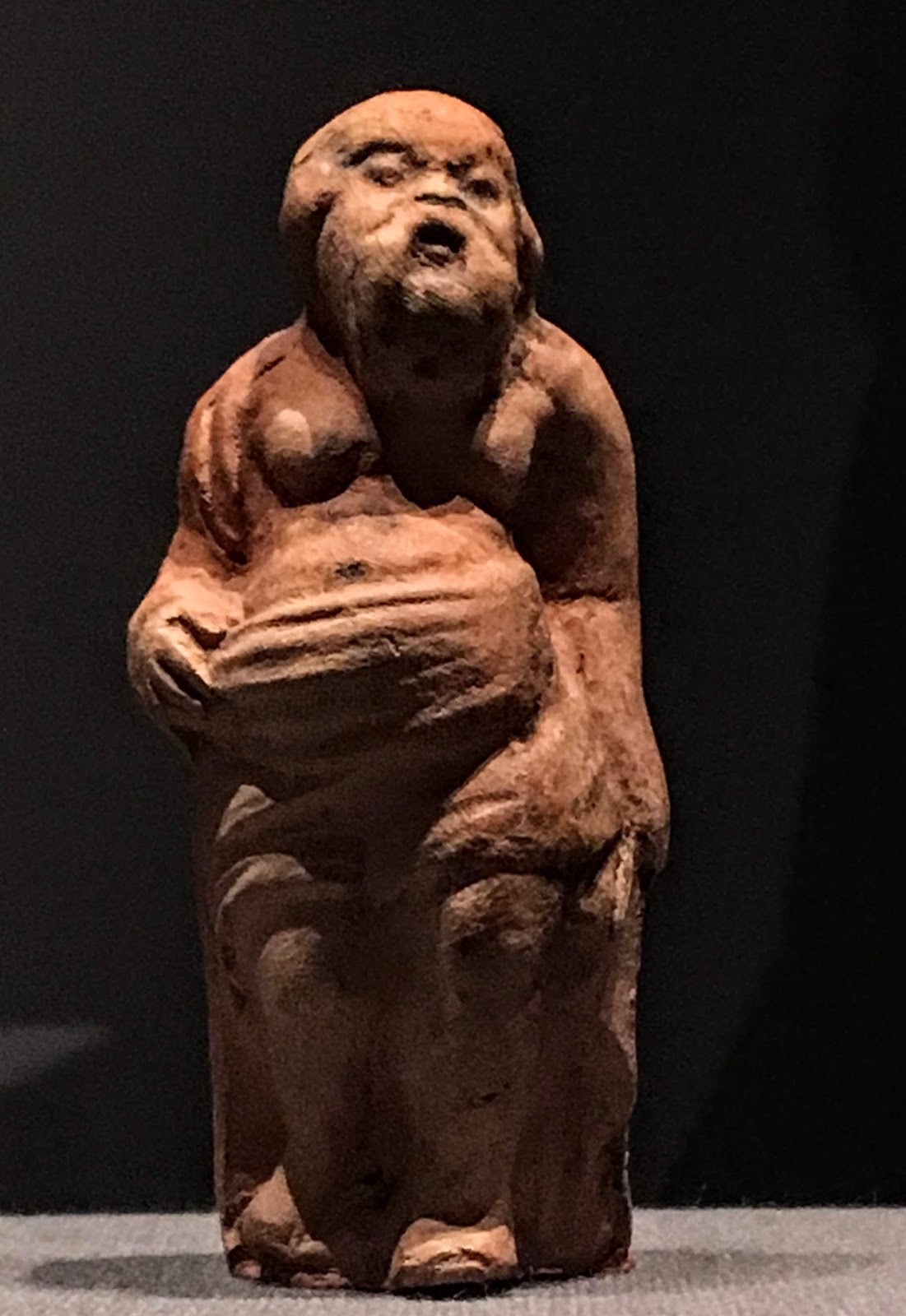
figurine of Socrates in the British Museum
Socrates was the famous fifth century BC Greek philosopher who was the first to bring philosophy down from the stars and into men’s lives. He buzzed around Athens like an annoying mosquito, challenging ancient Greeks to make sure their souls were noble. He’s the one who claimed that ‘The unexamined life is not worth living’.  Finally the politicians and the people he’d pestered decided that enough was enough. They charged him with impiety and sentenced him to death. 

And so, in early summer of the year 399 BC, seventy-year-old Socrates had to drink poison hemlock. 

Apart from a possibly spurious verse, Socrates left not a single written word. But like Jesus, who also died a martyr’s death, he was immortalised by his disciples, the most famous of whom was Plato. Plato is, of course, a giant of western philosophy. All his so-called dialogues have survived and he has been studied avidly without ever going out of fashion for two and a half thousand years. Plato taught Aristotle and Aristotle taught Alexander the Great. 

But it was Socrates who started it all. Without him, our culture would look very different.
David's famous 'Death of Socrates' (1787) Wikimedia Commons

Over the past two and a half millennia scholars have debated the accuracy of Plato’s portrayal of Socrates. For example, at the end of the dialogue called Phaedo, Plato writes vividly of Socrates’ death. He describes how Socrates bravely downed a cup full of hemlock and asked the executioner what he should do next. ‘Walk around until your legs begin to go numb, then lie down.’ Socrates duly walked around, gently rebuking a dozen or so of his friends for wailing and weeping. He reminded them that it is right to die in dignified silence. 

As the paralysis worked its way up, he lay down on his prison cot. The executioner pinched his calves and then thighs, asking if he could feel anything. As the pinches went higher, Socrates calmly said he could not feel anything. ‘When it reaches your heart,’ said the man who had given him the hemlock, ‘it will be over.’ Socrates covered his face and lay quietly. Suddenly he uncovered his face and spoke his last words to his aged best friend: ‘Crito, we owe a rooster to Asclepius; pay it and don’t forget.’ Then he covered his face again. A little later Socrates twitched and when the executioner uncovered his face they saw that he was dead. Crito gently closed his friend’s mouth and eyes. 

The death of Socrates is so calm and dignified that many commentators argued that Plato was sugar-coating the description. They claim that real hemlock poisoning would have included violent convulsions and other unpleasant symptoms. This is because over the years several different plants have received the name hemlock, including ‘water hemlock’ and a kind of fir tree. Although Plato only refers to the poison as the pharmakon (the drug) in this particular dialogue, he mentions hemlock by name in a few other places (e.g. the dialogue called Lysis) using the Greek word konion


In an article published in 2001 by Enid Bloch: Hemlock Poisoning and the Death of Socrates: Did Plato Tell the Truth? Bloch concludes that if konion refers to conium maculatum also known as ‘poison hemlock’, then ‘Plato not only told the truth, he did so with astounding medical accuracy.’ You can read the article online HEREA slightly longer version of this paper was published in 2002 in The Trial and Execution of Socrates: Sources and Controversies. This version of Blochs article contains sixty-five footnotes, some of which describe the smell of hemlock and the bodily sensations it arouses. 

One feature of the plant that everyone from Pliny the Elder to Dioscorides has mentioned is the strong or ‘heavy’ smell. Some commentators have likened the smell of hemlock to that of mice or even cat urine. In footnote 64, Professor Bloch confesses that she has never lived with either cats or mice so she can neither confirm nor deny this observation. 


hemlock in winter (Chelsea Physic Garden)
In footnotes 12 & 63 Bloch tells how a gardener at Cornell University’s Poisonous Plants Garden showed her various types of hemlock and other toxic plants. Krissy Faust even gifted Bloch with some poison hemlock plants so she could study them in the privacy of her own home. When Bloch remarked on the gnarled appearance of the roots, Faust explained that in loose or sandy soil the roots would have grown straight down, like carrots, but ‘in the hard clay of Ithaca, New York’ the roots become bent and twisted in a way which perfectly illustrates one Greek description of the roots as koilay kai ou bathia (twisted and not deep). 

In footnote 65 Bloch relates how on several occasions she has brought hemlock into her Socrates classes. She offers students the opportunity to examine the stalks, always warning them of the possible toxic effect of merely sniffing the plant. ‘Virtually everyone’ who has a sniff reports an ‘immediate feeling of car-sickness and a mild but sharp headache’. Bloch herself describes the queasy sensation as something closer to morning-sickness than car-sickness but acknowledges that most of her students might not be familiar with that particular kind of nausea. 


Elsewhere in the article Bloch says the scent of hemlock is ‘like a very heavy, peculiar tea, clinging obnoxiously in the mouth and nose, as if it had entered the body and not let go.’ A 12-year-old Time Traveller like Alex might describe the smell as Cat Pee Tea. 

So, although Bloch believes that Socrates died peacefully and with dignity, her findings also persuade us that drinking hemlock was nonetheless very unpleasant.

Kids, don
t try this at home! 

The Time Travel Dialogues, Caroline’s sequel to The Time Travel Diaries, will be published in 2020.