
Showing posts with label hemlock. Show all posts

Thursday, 9 May 2019

The Scent of Hemlock

hemlock in spring (Wikimedia Commons)
by Caroline Lawrence

As I write this, in May 2019, I’m working on a book set in ancient Athens. As usual, I’m seeking out as much sensory detail as possible: sight, sound, taste, touch and smell. I do that to spark synapses in the imaginative right brain, thereby bringing the book alive to young readers. But I’m also doing it for the same reason I write my books: to transport myself back in time. 

In my latest book, The Time Travel Diaries, a 12-year-old London schoolboy named Alex goes back to third century Roman London to find a blue-eyed girl with an ivory knife. She was a real girl whose grave was found not far from the site of Shakespeare’s Globe. In the sequel, which I’m working on now, Alex goes back even further to witness the death of Socrates. 
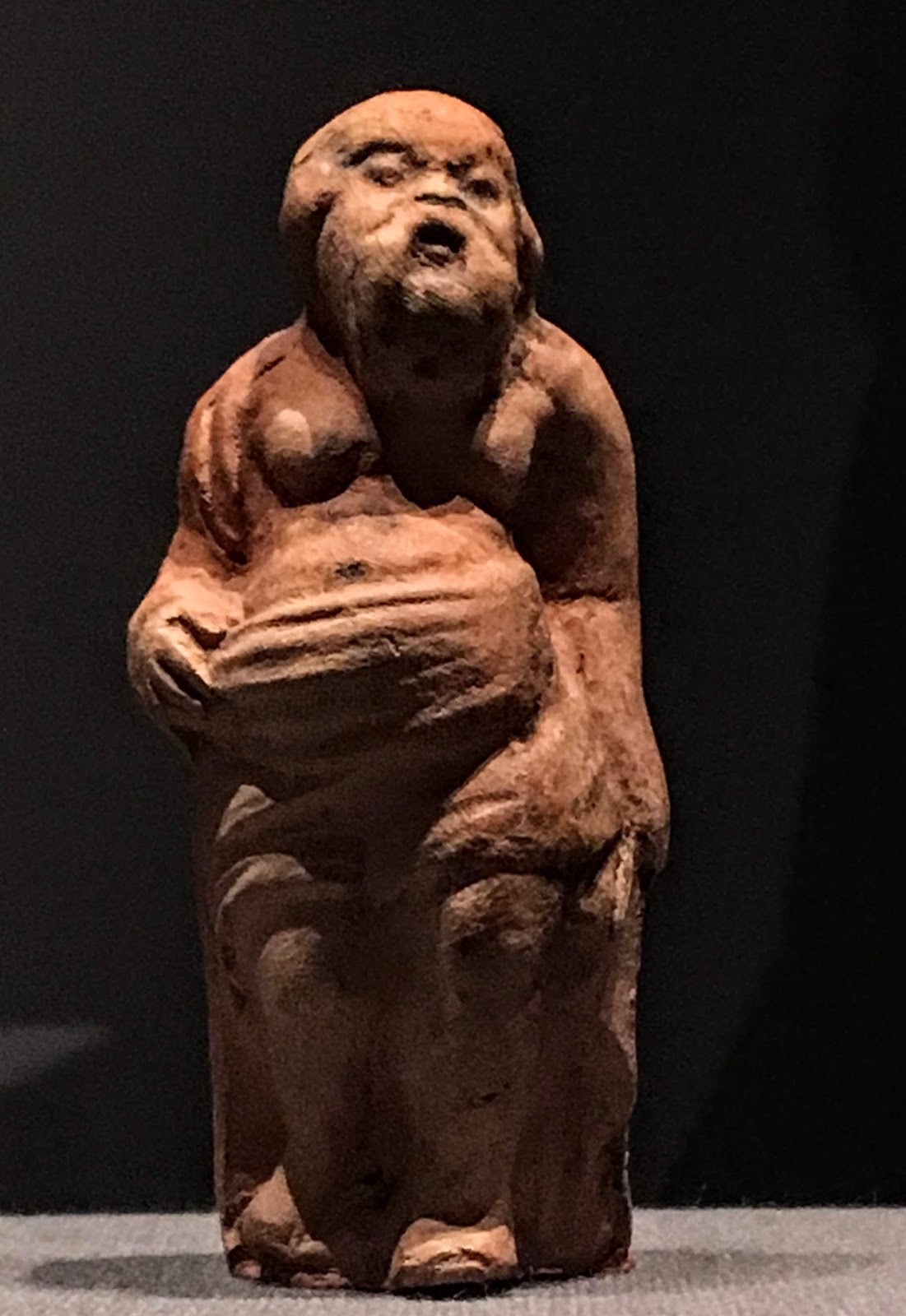

figurine of Socrates in the British Museum
Socrates was the famous fifth century BC Greek philosopher who was the first to bring philosophy down from the stars and into men’s lives. He buzzed around Athens like an annoying mosquito, challenging ancient Greeks to make sure their souls were noble. He’s the one who claimed that ‘The unexamined life is not worth living’.  Finally the politicians and the people he’d pestered decided that enough was enough. They charged him with impiety and sentenced him to death. 

And so, in early summer of the year 399 BC, seventy-year-old Socrates had to drink poison hemlock. 

Apart from a possibly spurious verse, Socrates left not a single written word. But like Jesus, who also died a martyr’s death, he was immortalised by his disciples, the most famous of whom was Plato. Plato is, of course, a giant of western philosophy. All his so-called dialogues have survived and he has been studied avidly without ever going out of fashion for two and a half thousand years. Plato taught Aristotle and Aristotle taught Alexander the Great. 

But it was Socrates who started it all. Without him, our culture would look very different.
David's famous 'Death of Socrates' (1787) Wikimedia Commons

Over the past two and a half millennia scholars have debated the accuracy of Plato’s portrayal of Socrates. For example, at the end of the dialogue called Phaedo, Plato writes vividly of Socrates’ death. He describes how Socrates bravely downed a cup full of hemlock and asked the executioner what he should do next. ‘Walk around until your legs begin to go numb, then lie down.’ Socrates duly walked around, gently rebuking a dozen or so of his friends for wailing and weeping. He reminded them that it is right to die in dignified silence. 

As the paralysis worked its way up, he lay down on his prison cot. The executioner pinched his calves and then thighs, asking if he could feel anything. As the pinches went higher, Socrates calmly said he could not feel anything. ‘When it reaches your heart,’ said the man who had given him the hemlock, ‘it will be over.’ Socrates covered his face and lay quietly. Suddenly he uncovered his face and spoke his last words to his aged best friend: ‘Crito, we owe a rooster to Asclepius; pay it and don’t forget.’ Then he covered his face again. A little later Socrates twitched and when the executioner uncovered his face they saw that he was dead. Crito gently closed his friend’s mouth and eyes. 

The death of Socrates is so calm and dignified that many commentators argued that Plato was sugar-coating the description. They claim that real hemlock poisoning would have included violent convulsions and other unpleasant symptoms. This is because over the years several different plants have received the name hemlock, including ‘water hemlock’ and a kind of fir tree. Although Plato only refers to the poison as the pharmakon (the drug) in this particular dialogue, he mentions hemlock by name in a few other places (e.g. the dialogue called Lysis) using the Greek word konion


In an article published in 2001 by Enid Bloch: Hemlock Poisoning and the Death of Socrates: Did Plato Tell the Truth? Bloch concludes that if konion refers to conium maculatum also known as ‘poison hemlock’, then ‘Plato not only told the truth, he did so with astounding medical accuracy.’ You can read the article online HEREA slightly longer version of this paper was published in 2002 in The Trial and Execution of Socrates: Sources and Controversies. This version of Blochs article contains sixty-five footnotes, some of which describe the smell of hemlock and the bodily sensations it arouses. 

One feature of the plant that everyone from Pliny the Elder to Dioscorides has mentioned is the strong or ‘heavy’ smell. Some commentators have likened the smell of hemlock to that of mice or even cat urine. In footnote 64, Professor Bloch confesses that she has never lived with either cats or mice so she can neither confirm nor deny this observation. 


hemlock in winter (Chelsea Physic Garden)
In footnotes 12 & 63 Bloch tells how a gardener at Cornell University’s Poisonous Plants Garden showed her various types of hemlock and other toxic plants. Krissy Faust even gifted Bloch with some poison hemlock plants so she could study them in the privacy of her own home. When Bloch remarked on the gnarled appearance of the roots, Faust explained that in loose or sandy soil the roots would have grown straight down, like carrots, but ‘in the hard clay of Ithaca, New York’ the roots become bent and twisted in a way which perfectly illustrates one Greek description of the roots as koilay kai ou bathia (twisted and not deep). 

In footnote 65 Bloch relates how on several occasions she has brought hemlock into her Socrates classes. She offers students the opportunity to examine the stalks, always warning them of the possible toxic effect of merely sniffing the plant. ‘Virtually everyone’ who has a sniff reports an ‘immediate feeling of car-sickness and a mild but sharp headache’. Bloch herself describes the queasy sensation as something closer to morning-sickness than car-sickness but acknowledges that most of her students might not be familiar with that particular kind of nausea. 


Elsewhere in the article Bloch says the scent of hemlock is ‘like a very heavy, peculiar tea, clinging obnoxiously in the mouth and nose, as if it had entered the body and not let go.’ A 12-year-old Time Traveller like Alex might describe the smell as Cat Pee Tea. 

So, although Bloch believes that Socrates died peacefully and with dignity, her findings also persuade us that drinking hemlock was nonetheless very unpleasant.

Kids, don
t try this at home! 

The Time Travel Dialogues, Caroline’s sequel to The Time Travel Diaries, will be published in 2020.

Wednesday, 8 June 2016

'Medieval Murder -Ten Handy Ways to Poison Your Spouse' by Karen Maitland

Throughout the Middle Ages people were terrified of being poisoned and with good reason. Writing in 1470, Peter of Abano, identified 70 different substances that were deadly poisons, and this did not include the venomous animals or their body parts. Wealthy men employed tasters who would try every dish before their master ate it, even pressing their masters’ napkins to their lips before they were used, in case the cloth had been soaked in poison. With so many interesting lethal substances to choose from, who can blame them for being nervous. Here are ten poisons that they most feared -

Monkshood growing wild in Devon. Photographer: Tom Jolliffe
1. Monkshood or Aconite (Aconitum napellus) – This plant was originally called Odin’s helm or Tyr’s helm after the northern gods. It was also known as wolf’s bane. It was dedicated to Hecate, the moon goddess of the witches and together with deadly nightshade was one of the ingredients in the flying ointment, a powerful hallucinogen. It was such a lethal poison that growing it in Roman times was punishable by death. The juice was frequently used in warfare to poison the wells and the sources of drinking water of the enemy. It was favored by the lower classes as a means of dispatching troublesome spouses, or other family members. But the nobility preferred hemlock.


Hemlock
2. Hemlock (Conium maculatum) – known as devil’s blossom, bad man’s oatmeal, scabby hands or kex, it is in fact a member of the carrot family. It causes extreme dizziness, numbness then death. In Greek and Roman times one of the methods of execution was to force the condemned to drink hemlock and this is how Socrates died in prison. It is so much associated with witchcraft and the devil that the plant symbolizes death by poisoning.

3. Cantharides also known as Spanish Fly – is made from an emerald green blister beetle, Lytta vesicatoria. It was an early and powerful Viagra for both men and women, and often used to spike drinks, causing the victim to become highly sexual aroused. But too much could be fatal. The Marquis de Sade was tried for accidently killing prostitutes at an orgy, by feeding them aniseed-flavored Spanish fly pastels.

The favorite poison of the Medicis was Aqua toffana, a mixture of arsenic and Spanish fly and as little as four drops in water or wine could prove fatal. Aqua toffana had the convenience of being both undetectable in food and taking several hours to kill, giving the poisoner ample time to escape.

If death from Spanish fly was suspected, the victim’s organs were ground up in oil and smeared on the shaved skin of a rabbit. If the victim had died from Spanish Fly poisoning, the rabbit’s skin would blister.


Deadly Nightshade
 4. Deadly Nightshade (Atropa belladonna) which Chaucer called dwale, was a well-known sleeping draught. It is believed to have been the poison added to the water-wells during the Parthian Wars which killed Marcus Antonius’ troops. According to folklore, in the 11th century the Scots who had signed a truce with Sueno the Dane, were able to take advantage of the truce to add the juice of Deadly Nightshade to the Danish army’s provisions. It didn’t kill the Danes, but made them so drowsy that the Scots were able to attack and slaughter them. Most modern historians now argue that this battle never took place, but it lingers on in legend.

 5. The Composition of Death – This was a poison recipe found in a medieval book of spells, known as Grand Grimoire. Those who wanted to prepare it were told to use a new, glazed pot and add – red copper, nitric acid, verdigris, arsenic, oak bark, rose water and black soot. It took a long time to prepare as you had to boil the mixture for about an hour after each new ingredient was added.

 6. Fly agaric (amanita muscaria) – a fungi with a red top studded with white spots that looks like the classic pixie toadstool. It first produces a sensation of being drunk, then delirium, with death usually occurring in twenty-four hours. Deadly fungi were popular poisons in the Middle Ages because they were so easy to obtain without anyone knowing, and simple to slice up and add to stews and soups. Fly agaric, steeped in milk was used to kill flies, so it was often found in homes and kitchens. It was only one of twenty-five poisonous fungi and the symptoms generally produced by consuming any of these deadly mushrooms or toadstools included stomach cramps, vomiting, diarrhoea, delirium and convulsions. In the Middle Ages, these symptoms could easily be mistaken for fevers such as dysentery or from eating bad meat, so many poisoners must have escaped justice if they used this poison.
Fly Agaric. Photographer - H.Krisp

 7. Pig’s Blood and Salvia – Normally fresh pig’s blood was harmless and used to make blood puddings, but the medieval Italian poisoners, who were experts in the art, had perfected a poison made by allowing a pig carcass to decompose then mixing its blood and saliva with arsenic to create an exquisite poison combining both the mineral poison and those toxins produced from putrefaction.

 8. Toads – In the Middle Ages it was widely held but erroneous belief that the fluid excreted through the skin of a toad was poisonous. Indeed a rumour which circulated after his death suggested that King John had been murdered by a member of the Knights Templar or a friar who had squeezed a toad inside the king’s goblet. The fluid dried, creating an invisible coating inside the goblet, before the King unwitting added the wine to produce a lethal combination. In fact, King John probably died of dysentery, but such was the belief in poison conspiracies in those days, that the toad story was much more widely believed.
European Toad Bufo bufo. Photographer - Thomas Brown

 European toads do excrete two poisonous substances through the skin which have a numbing and mild hallucinogenic effect, though they are nowhere near as toxic as toads and frogs of South America.

 9. Bacterial poisoning – Although virus and bacteria were not understood in past centuries, they did recognise that decaying corpses gave off a ‘poison’ which could be lethal to the living, so throughout the centuries since ancient times, armies have frequently poisoned their enemy’s water supplies by dumping rotting corpses of animals or people into wells or rivers upstream of where the camped army was taking its drinking water. Caltrops, spiked metal balls designed to pierce the feet of horses and men, were often dipped in the fluids of rotting animal carcasses or festering wounds to poison the blood of any who stepped on them.

A ancient caltrop. Photographer: Gunnar Creutz

 10. Arsenic - No poisoner’s tool kit would be complete without arsenic. Although the symptoms of slow arsenic poisoning were not recognised until the 1700s, yellow arsenic trisulphide called orpiment was known as a medicine as early as 5th Century BCE and the alchemists believed it to be a key ingredient of the Philosopher’s Stone. Nero may have used yellow arsenic to murder his stepbrother, Britannicus, so as he could become Emperor of Rome. But it was in 8th Century that the Arabic alchemist, Jábir ibn Háyyan, became the first in Europe to produce white arsenic (arsenic trioxide) by roasting orpiment and inadvertently produced the poisoner’s dream, the first reliable and lethal poison that was odourless, tasteless and colourless and would work in powder, solution or gaseous form.

If all this talk of poisons is making you nervous, in my next blog I will let you into the secret of the favourite medieval antidotes.