Showing posts with label Virginia Woolf. Show all posts

Friday, 5 June 2026

The Bloomsbury Set at Charleston by Judith Allnatt


I recently had the opportunity to visit Charleston Farmhouse in East Sussex,  which was home to some members of the Bloomsbury group including Vanessa Bell who was a painter and the sister of Virginia Woolf. 

Both sisters were fragile. In 1911 Vanessa had a mental breakdown following a miscarriage and was nursed by Virginia. Virginia, of course, suffered from depression and was tragically to take  her own life in 1941. 
In this photo of Vanessa, which sits on the mantelpiece in her studio, one can clearly see the family likeness, not only physically but in the pensive expression, both sisters having rather soulful eyes. Virginia and Leonard Woolf had a home nearby, Monks House at Firle. They were playfully referred to as 'the Woolves' by the Charleston household. 
Vanessa settled at Charleston in 1916 with her two sons, her art critic husband Clive Bell, the painter Duncan Grant and the writer David Garnett. (Grant and Garnett were lovers). Vanessa and Clive Bell had an open marriage, reflecting the freedoms espoused by the Bloomsbury group who were searching for new ways of living and loving. Vanessa had previously had an affair in France with Roger Fry (whom Virginia was also in love with) and later had a  relationship at Charleston with Duncan Grant. 

I was interested in the complex relationships playing out within the group and wanted to find out what drew them to Charleston.  They were a fairly affluent set, at home in London or Paris, whereas Charleston was an isolated rundown farmhouse with no hot water, electricity or telephone. After reading around this, two main factors seem to be involved. The group perhaps wanted a secluded place where they could feel free to pursue their unconventional art and lifestyle but also, at the height of the First World War, men were either conscripted or had to find 'Work of National Importance'  such as farming; Grant and Garnett were able to do the latter living at Charleston.
Visiting the house one feels as if its twentieth century inhabitants have just popped outside for a moment. Everywhere there is evidence of their artistic life. Many paintings, mainly portraits, hang in every room,  but also doors, tables, mantlepieces and cupboards are painted with figures or decoration. The studio, where Duncan and Vanessa painted side by side, is still scattered with paintbrushes and oils and, in a parlour, fire bricks have been  built out onto the hearth in a DIY effort to draw heat into what must have been a freezing room in winter. 


Charleston also houses a collection of dinner plates commissioned by Kenneth Clark the art historian. Vanessa Bell and Duncan Grant were commissioned to decorate them with paintings of famous women. There are four sets of twelve comprising famous Queens, famous beauties, famous writers and famous performers, plus two portraits of the artists themselves. The slant towards the arts is noticeable here -  no mathematicians such as Émilie Du Châtelet or scientists such as Marie Curie. Although the artists were avante garde, perhaps their view of gender was still  influenced to some extent by the assumptions and prejudices of the time.

One also cannot help but question whether the complicated sexual relationships brought freedom equally to both genders. Duncan Grant was the father of Vanessa's third child, Angelica. However, Angelica was not told of this until she was seventeen and had grown up believing that Clive Bell was her father. In her 
memoir 'Deceived by Kindness', she describes the unease she felt as a child, created by an awareness  that the adults were keeping something from her. It also appears that neither man really took on the responsibilities of fathering and that this lack affected her  profoundly. 

On top of this complicated emotional situation, in her twenties Angelica was pursued by David Garnett, (her father Duncan Grant's one time lover).  Angelica, inexperienced and full of doubts was nonetheless persuaded by the older man to marry him, much against the wishes of both Vanessa and Clive Bell.  David Garnett's comment years before on seeing the newborn Angelica was : "I think of marrying it. When she is 20, I shall be 46 - will it be scandalous?" Presumably at the time it was seen as a flippant joke but one wonders whether the whole idea had its roots in jealousy, perhaps over Duncan's relationship with Vanessa or even because of a rejection by Vanessa of Grant's own advances. (Angelica writes that " . .  he had proposed bed to Vanessa and been rejected" and that his purpose in marrying her daughter, "at least in part, was to inflict pain on Vanessa".)

As well as giving a beautifully rendered account of life at Charleston, the memoir shines a strong light on some of the members of the iconic Bloomsbury Set: their personalities, relationships and all-too-human failings. 


For those interested in finding out more, "Deceived by Kindness"  by Angelica Garnett is published by Pimlico, Penguin Random House


Friday, 20 September 2024

Secret Voices by Sarah Gristwood

We at the History Girls are grateful to Sarah Gristwood for this guest post about her latest, fascinating, book.  

It was way back, in my early twenties, that I first developed an interest in the diaries of other women. A lot has changed since then - for me, but also, more significantly, for the field of women’s studies.

At the risk of painting the 1980s as the Dark Ages, the challenge then was to persuade a reader that women had voices distinct from those of men. That they might possibly be worth hearing…Today, we can all assume a ‘yes’ to that.

Today, the questions are more nuanced. Things have moved on. Academia has seen a lot of work on women’s writing, tv has seen the unmissable diaries of Nella Last (Housewife, 49) and the coded records of Anne Lister (Gentleman Jack). And yet, if you look at the anthologies still out there on the shelves, it’s shocking how few women’s voices feature. That’s why, when Batsford offered me the chance to edit Secret Voices: A Year in Women’s Diaries, I frankly jumped at it.


Because one thing remains constant, whether you’re reading them in the 1980s or the 2020s - the astonishing variety, excitement , frankness and relevance of these women’s voices. 

There are some simply extraordinary stories, like that of the Inuit woman who found herself sole survivor of an Arctic expedition. Of Anne Morrow Lindbergh -wife to the famous aviator Charles and herself a pioneering flyer - writing about the kidnap and murder of her infant son (the story behind Agatha Christie’s Murder on the Orient Express). Of the Victorian wife cast by her husband into the streets…

There’s Lady Bird Johnson describing Kennedy’s assassination and life in the White House, or Barbara Castle and Oona King casting a cool eye on the House of Commons. Voices, you might say, from the powder rooms of power … Queen Victoria recounting the moment she was told of her accession to the throne (to say nothing of her first night with Prince Albert). But I was almost more struck by finding, so often, the unexpected hiding within the ordinary. 


Dilemmas that we view as modern can actually be seen echoing down the centuries. Quaker reformer Elizabeth Fry admits how, after a difficult labour, she couldn’t welcome her new baby as she felt she should; socialist Naomi Mitchison discovers the challenge of combining work and family. Nella Last describes how World War II had unexpectedly liberated her from the limiting expectations of her marriage: Edwardian socialite Lady Cynthia Asquith  the difficulties of having what she saw as a disabled child. 


In the privacy of the diary format, women in the past wrote more freely about sex and the life of the body than we might expect. Near the turn of the nineteenth century, we have Anne Lister on her lesbianism and Hester Thrale on her menopause. In the first half of the twentieth, Anne Frank on menarche and Joan Wyndham on masturbation. There are the well-known writers who nonetheless, in their diaries, sound an unexpected note. Would we expect to find Virginia Woolf gleefully describing the delights of a car, and the excitement of being shingled; or Beatrix Potter proclaiming the age of knickerbockers? Or Barbara Pym on the pleasures of peach-coloured underwear - ‘disgraceful I know’, but chosen, she confessed, ‘with a view to it being seen!’?


Sometimes it’s our knowledge of what lies ahead that renders the words of the unconscious diarist even more extraordinary. Anne Frank in the summer of 1944 rejoices that the war is almost over and she may be back at school by the autumn - when we know the fate that actually awaited her, in Bergen-Belsen concentration camp.  Louisa May Alcott describes the decline of her real-life sister Beth, and how the needle with which she used to sew finally grew ‘too heavy’ … What lover of Little Women can read that without remembering the death of Alcott’s fictional Beth?

That question of our knowledge, of well-known women and professional writers does open up a can of worms for the anthologist. One has to accept that, historically, the diaries most likely to have been written - and, crucially, preserved - come largely (though not entirely) from the professional and upper classes. And that, by the same token, this often (though not always) means the diarists will be white. Happily, today a good deal of work  - especially in the States - is being done to remedy that situation, so that we can hear Charlotte Forten, the African American activist, in 1855 wondering ‘that every colored person is not a misanthrope…fearing, with too good reason, to love and trust hardly anyone whose skin is white’.   

It’s just one reason why we need to hear our grandmothers’ voices to understand the big issues - race and rebellion, love and death, pain and identity. And why, where women’s voices are concerned, there has never been a better time to edit an anthology. 


Rebecca Alexander will be back next March.


Tuesday, 17 July 2018

MRS WOOLF AND THE SERVANTS by Alison Light. A reflection by Penny Dolan.


While visiting Helmsley Walled Garden, within the grounds of the castle, I was lucky enough to find MRS WOOLF AND THE SERVANTS by Alison Light, published in 2007, on the second-hand book shelves.
 
A single scan of the book’s main headings drew me in: The Family Treasure; Housemaid’s Souls; The Question of Nelly and The Lavatory Attendant. Each is followed by a pair of names, one the famous writer and the other a domestic servant. Light’s Bloomsbury servants get almost equal billing with the famous social set.

Light begins by pointing out that in the great Bloomsbury archives, there is little evidence of the other women who were part of  households, the ones who “lived-in”, though far less comfortably, the same walls. Yet the free, independent and creative lives of Virginia the writer and Vanessa Bell the artist depended on the servants who worked for them: in other words, on other women not being free.

Despite the silent archive, Alison Light noticed how frequently Virginia, Leonard and their circle wrote about their servants in their letters and diaries, and so she set out to discover these missing women. Light writes about three servants in particular: Sophie Farrell, who had first worked for Virginia’s beloved mother, charity-case Lottie Hope and the cook Nellie Boxall. She shows a pattern where servants often stayed for many years, although they were passed between members of the wider family as need or as tempers suggested, and poaching of prized servants was often attempted.

The book is a pleasingly thorough inquiry, sharpened by having the viewpoint of someone whose own mother was in service. Light read unpublished letters and documents, visited houses and places where the servants had worked and interviewed descendants and local historians. She looked into their childhood homes, their education, the changing patterns of their employment and at the practical and emotional relationships that existed between a mistress and servant sharing the same roof year after year.

I did enjoy the variety within  this book. Thoughtfully written, each section opens with a long passage of Woolfian lyrical  prose which contrasts well with Light’s brisker accounts of a world where long hours, the collecting of chamber-pots, the carrying of coal-buckets, the lack of hot water taps, the management of unreliable ovens, and days spent in dank basements or cold bedrooms were a constant part of the servants life. Incidentally, she makes it clear that the wealthy rarely saw any need for new labour-saving devices or domestic improvements: they already had household servants saving them labour.

As the new century progressed, the distant mistress and servant relationship was harder to maintain. Back in 1892, Vanessa and Virginia’s childhood home, 22 Hyde Park Gate in Kensington, had been an elegant five-storied mansion where the servants slept in the spaces under the eaves or lived down in the basement. 

Almost two decades later, when Virginia and Leonard Woolf were running their small printing press at Hogarth House and Vanessa and Duncan Grant lived a paint-spattered bohemian existence at Charleston farmhouse in Sussex, there was only a wall marking the distance between the rooms of mistress and servant .

Through several different lives, including glimpses of the Bloomsbury "stars", Alison Light brings in topics as diverse as the popular habit of “poor-visiting”, agricultural changes, the development of the kitchen and celebrity cooking for Charles Laughton. She looks at Virginia’s troubled life both as a feminist writer trying to develop a new style of writing and as an independent woman whose mental health forces her into dependence on her servants. Her own worst instincts often flare out against the servants but they seem to have a way of responding: an uneasy relationship that cannot have been calm.

Furthermore, national events, such as the outbreak of war in 1914, epidemics, the growth of factory work for women, female education and emancipation, new taxes and economic depression brought on more social change. The ideal of “service” no longer fitted the modern world with its increasing demand for equality for all, and the Woolfs – and their servants – had to change along with it. Even so, I wonder how easily discussions went at the Labour party meetings at Rodmell House, which included the Woolf’s servants and employees among its members. 
 
MRS WOOLF AND THE SERVANTS by Alison Light was a useful if sometimes uncomfortable book to read. I enjoyed it because, from a writing point of view, one has to consider the role of any servants “attending” to a story set in the past, as appropriate to the time and place. 

Are the servants to be included or not, named or not?  Are the servants who live closely with the family, like the Sterkarms in Susan Price’s historical sci-fi novels? Or are they hired servants and bearers, as in Sue Purkiss’s Jack Fortune and the Hidden Valley adventure?

Or are they invisible, with the place run, like Nampara on screen in Poldark, with barely a servant evident? Or would they be no more worth mentioning than a washing machine in a modern house? I suppose it all depends on when: different times have brought different relationships, and that is maybe what I need to think about for the work in progress.

Moreover, reading MRS WOOLF AND THE SERVANTS rather makes one think about  celebrity and other households and the kinds of domestic help and helpers that are needed today.

Penny Dolan

Sunday, 1 July 2018

A Room of someone else's by Mary Hoffman

At the Pallant House Gallery in Chichester (till 16th September, then 2nd October to 9th December at the Fitzwilliam Museum in Cambridge) "Virginia Woolf: an exhibition inspired by her writings.

Full disclosure: I am not a big fan of Virginia Woolf. The books of hers I like most are Orlando and Flush, which are not considered the best. Oh and everyone likes Mrs Dalloway, which really is rather fine. But I don't think I will ever read The Waves again.

Still, I liked the idea of artworks inspired by her writings and all by women. My mother-in-law had two pen and ink drawings by  Laura Knight (who was almost her contemporary) in her bedroom, so I was interested to see more of her work, which is among the better art in this very uneven exhibition. It is Knight's The Dark Pool that is featured on the poster, showing a young women in a red dress blown about by the wind, standing on a boulder looking down at a rock pool, which might or might not be on a beach in Cornwall.

Dame Laura Knight
As you might expect, the star is Virginia's older sister Vanessa Bell and her portrait of Virginia was was my favourite piece (though could you say that was "inspired by her writings"?). I am hampered by copyright here and can't show you what I saw.

Virginia Woolf and Vanessa Bell as children

The story of the two sisters has been told many times. Both their parents, Leslie Stephen and Julia Chadwick, had children from their first marriages when, as bereaved spouses they married and had four more. Vanessa and Virginia were the oldest, followed by two brothers. For the first thirteen years of Virginia's life, until her mother died, she spent every summer in St. Ives, in Talland House, with a view of the Godrevy Lighthouse. She wrote in 1939 in "A Sketch of the Past," of this childhood memory of lying in bed in the nursery:

Hearing the waves breaking, one, two, one, two, and sending a splash of water over the beach, and then breaking one, two, one, two, behind a yellow blind.

It's quoted at the beginning of a very good essay by the curator of the exhibition, Laura Smith, in Pallant House's magazine for May to October.

The holidays ceased with Julia's death and it was ten years later, after their father died, before Virginia and Vanessa returned to St. Ives. But you can see how much those long Cornish summers had on both their lives' work. Virginia described it as "the best beginning conceivable."

I wanted to see that lighthouse, waves on the beach and all but the closest you get (apart from the Laura Knight) is Frances Hodgkins' Wings over Water (1930) and Wilhelmina Barns-Graham's Rocks, St. Mary's Scilly Isles (1953). Perhaps I am just too literal.

If Virginia Woolf gave women one undying concept it is that of "A Room of One's Own," symbolising financial independence and intellectual freedom.  As Laura Clark says, "the room becomes a metaphor for autonomy and choice within patriarchal limits, a sort of reclamation of the room's function to contain. Landscape, however, becomes a metaphor for freedom and power beyond existing culture."

Hence, landscape seen through the window of a room combines both these important concepts. The only flaw with this beguiling theory is that many, many male painters use the same image.

Some of the women artists in this exhibition are associated with dominant males, unlikely Woolf herself.
Dora Carrington
Carrington is for ever associated with her passion for Lytton Strachey. In spite of her affairs with both men and women and her marriage to Ralph Partridge, Strachey was the love of her life and she shot herself two months after his death, feeling there was no further point to her life.
Carrington and Strachey at Ham Spray

She was at least known by Woolf and other members of the Bloomsbury Group, Woolf writing of her in her diary: "She is odd from her mixture of impulse & self consciousness. I wonder sometimes what she’s at: so eager to please, conciliatory, restless, & active.... [B]ut she is such a bustling eager creature, so red & solid, & at the same time inquisitive, that one can’t help liking her."

It's hard exactly to see how Carrington was "inspired" by Virginia Woolf's writings.

Another woman artist overshadowed by a man is Gwen John, in her case, her much-admired younger brother Augustus.

Gwen John Self-portrait (1902)
It wasn't Augustus' fault: he acknowledged her greater talent and said that in time she would be valued more highly than him. But in their lifetimes her work was seen as "quiet" (I can hear women, particularly women writers, sighing).

So, if Virginia Woolf were alive today and visited this exhibition, would she recognise any of her ideas? She would certainly know some of the names though other later artists shown include Ithell Colquoun, Gluck and Romaine Brooks. But she was a very stringent critic of others' work and a perfectionist about her own. And there is a lot of very inferior stuff in this exhibition.

As I was writing this post, an email came from the Management Committee of the Society of Authors, embargoed till the next day, which is now past, so I can tell you all about it. You have probably all read it in the press by now anyway.

It was the results of the latest ALCS survey on authors' earnings. It was not a well-designed questionnaire, as I can attest, having filled it in myself, but the results show that such earnings have dropped from £11K in 2013, at the time of the last survey, to £10,500 per annum. In 2005 it was £12,500. To tease this out, average earnings are down by 42% on 2005 and 15% on 2013. It is well below the minimum wage.

Only 13.7% of writers can now make a living from this and no other work. And women get 75% less than men who write.

So how many of us can afford that room of our own in which to write freely without financial worry about how to pay for it? What would Virginia say? It's all very well being inspired by her writing but where does that get us if we don't have the freedom to act upon our ideas?

(All photos Wikimedia Commons)

PS: If your views of Virginia Woolf are not TOO respectful, may I recommend my friend Sue Limb's sublimely funny radio 4 series Gloomsbury?


Thursday, 18 January 2018

Literary Pilgrimages - Celia Rees

I'm sure we have all been on at least one Literary Pilgrimage.  Writers are fascinated by the lives of other writers, where they lived, where they wrote, the things they used and owned. The same fascination grips readers. Famous writers' homes have become places of pilgrimage. We feel compelled to visit, whether it is Monk's House in Rodmell, Dylan Thomas' Boat House, the Wordsworth home at Dove Cottage, C.S. Lewis' The Kilns or Kipling's Bateman's.

 Most particularly, we want to see where the write plied his or her craft. 

Virginia Woolf's Writing Room, Monk's House, Rodmell

Dylan Thomas' Shed


,
C.S. Lewis' Desk
We shuffle round and past, gazing through glass or from behind a rope, much as a pilgrim might when visiting a holy site. We are often enjoined not to take photographs (but we do anyway) and definitely not to touch anything (if we are allowed to get that close) even though that is exactly what we want to do. The writer's possessions, particularly those associated with the act of writing: pens, desks, letters and manuscripts have become objects of veneration, taking on the religious aura of holy relic. Just as the face of a saint is worn away by countless fingers and lips, we feel the need to touch, as if  holding Virginia Woolf's pen or operating the keys of C.S. Lewis' typewriter, will bring us closer to the hand that created the work we so admire and by some kind of sympathetic magic, bestow on us some of their power. 
C.S. Lewis' Typewriter

It is not just the instruments they used that command this fascination. The first time I saw actual written scripts in the British Library I felt a childlike awe. This was the actual writing of the actual person, the way they had written it, with blots, doodles, crossings out. I'm still fascinated by notebooks and manuscripts, especially the scorings out and changes that show the writer's mind at work. And I feel a kinship - even writers of genius collected ideas, jotted them down on whatever came to hand, had to search for words and didn't get it right first time.  

Dylan Thomas: list of words 

The things that a writer owned can, through time, as his or her fame grows, take on the aura of relic, just as the writer becomes mythic, iconic, but those very possessions, those very objects, can also help to restore the writer's humanity. Few writers are as iconic as the Brontës. Even people who have never read any of their books know their myth. Their story is a marketer's gift and so it has proved. Unfortunately, each turn of the myth making mill takes the reader further from the writer and even further from their books. An unusual biography of the Brontës, Deborah Lutz' The Brontë Cabinet, Three Lives in Nine Objects seeks to reverse this process.


No writers have been more mythologised than the Brontës. From their sudden appearance on the literary scene as Currer, Ellis and Acton Bell, stories have swirled about them. Their use of male pseudonyms began the mystery; their achievement, their singular, unique voices, so unlike anything before them, added to it. The early deaths of Emily and Anne so soon after their success; their brother Branwell's wreck of a life, made their story as poignant and tragic as any work of fiction. Charlotte's death following, so early in her marriage and in her pregnancy, seemed to add a further cruel coda. All of them survived by their father, Patrick. Their home, Howarth Parsonage, soon became a place of pilgrimage, as it is to this day. Among the visitors, those who would themselves become iconic. Sylvia Plath, nose pressed to the glass in the Parsonage Museum, hiking up to Top Withens with Ted Hughes. Their possessions were eagerly collected from the beginning, Patrick cutting up Charlotte's letters for fans pleading for examples of her handwriting. Now, their original manuscripts, letters and possessions are in museums and are considered priceless - relics, indeed.  In her book, Deborah Lutz seeks to return the objects to their original use and place in the lives of their owners and through that to re- discover the Brontës' humanity and put us in fresh touch with them as people.

Tiny Book written by Charlotte 
Through the tiny books they wrote, they come alive as children writing the adventures of Branwell's wooden soldiers on whatever they could find, making books out of wrapping paper, sugar bags - already inventing, making up stories, honing their craft and declaring their ambition to be published writers, even if they had to produce the books themselves.


Emily's Painting Box & Charlotte's Sewing Box

Charlotte's portable desk, Emily's paint box, a sewing box, a stout walking stick, a dog collar, each of the objects describes something of the different Brontë siblings' lives, bringing them back from the realm of myth, making each one real again and human, occupied and pre-occupied by day to day concerns. 


Emily's dog, Keeper's, Collar

Many of the Brontës' belongings are on display at Brontë Parsonage museum . They re-pay more than a casual glance. These ordinary, everyday objects, often worn and well used, help us see the Brontës as real people who not only wrote but sewed and painted, went for walks, made bread and peeled potatoes. The things they used and owned help to place their writing firmly in lived experience and bring their extraordinary achievement into fresh perspective. 

Saturday, 4 March 2017

Seven Pattle Sisters, a Woolf and a Bell by Sophia Bennett

Our extra guest for March is Sophia Bennett


Sophia Bennett’s debut novel, Threads, won The Times/Chicken House Children’s Fiction Competition in 2009. She has since published several further teen novels, including The Look and Love Song. Sophia has been called “the queen of teen dreams” by journalist Amanda Craig, for her exploration of the worlds of fashion, art and music. Her books have sold internationally to over 16 countries. Following Ophelia is her first historical book.
www.sophiabennett.com

Do you play the dinner party game? And if so, do you always imagine inviting the same people?

My ideal guest list changes all the time. David Bowie and Iman are regulars, along with Shakespeare, for the laughs and theatrical anecdotes, and Jane Austen for the ‘fine eyes’ –  I’m sure she was describing her own – and the wry looks. The Queen is endlessly fascinating: think who she’s met. Right now I’d add Omar Sharif. I’d want Douglas Adams, for the essential babelfish; Carrie Fisher, Peggy Guggenheim, Nora Ephron, and Lady Gaga, so I could thank her for her politically restrained but meaningful performance at the Superbowl … My ideal dining room is large, and situated in New York. There are white roses on the table. Jimi Hendrix is tuning up in a room nearby. Ella Fitzgerald or Nina Simone may be persuaded to sing. I am, needless to say, an insanely successful novelist and screenwriter. This is my tribe.


Once upon a time, there were seven sisters who grew up in India. They were rich and beautiful and when they settled in London they didn’t need to play an imaginary dinner party game. Their lives were one endless, enchanted version of it.

They were the Pattle sisters and their names were Adeline, Sarah, Maria, Julia, Louisa, Sophia and Virginia. I discovered them when I was researching my new book, Following Ophelia, set in the world of the Pre-Raphaelites. Their father James was an Anglo-Indian merchant and “"the biggest liar in India”, acccording to his great-granddaughter, Virginia Woolf*. When he died, he was shipped back to England in a barrel of rum that, according to legend, exploded on the journey. Their grandfather on their mother’s side was exiled to India from France after ‘flirting excessively with Marie Antoinette’ as her pageboy. They were never going to be boring.

The main character in Following Ophelia is a redheaded muse to a fictional acolyte of Dante Gabriel Rossetti. The Pre-Raphaelite girls were known as ‘stunners’ and my most treasured resource for research was Wives and Stunners, by Henrietta Garnett, who it turns out is a descendant of the brilliant Pattle girls.
My Lady Betty by Val Prinsep


Through Garnett’s account, the sister I encountered first was Sarah. She was one of the three most famous, known in London society as ‘Beauty’, ‘Dash’ and ‘Talent’. Sarah, though very attractive, was ‘Dash’. She married a director of the East India Company called Henry Prinsep and in 1850 came to live with him at Little Holland House in Kensington, where she hosted a brilliant salon for the great and good (and somewhat scandalous) in Victorian society, whose guests regularly included Alfred Lord Tennyson and William Thackeray.

In those days Kensington was on the edge of London proper and though large mansions were springing up, it still had a rural appeal, with lanes bordered by hawthorns and cherry trees. Little Holland House was the dower house to the baronial home nearby, with an expansive garden. George Watts, one of the leading Pre-Raphaelites, lived with the Prinseps there, and Sarah’s son, Val Prinsep, became a follower too, introducing her to Millais, Rossettti and Burne-Jones. Meanwhile, Henry Prinsep was now an aspiring MP, so she knew everyone in the British political establishment.


‘Dash’ described Sarah’s charm, wit and energy. Her eye for interior design was extraordinary. According to Garnett, “The walls were painted Venetian red and bottle-green, the furniture was black lacquer with gold inlay and many of the objects and curios had been brought back from India. Watts had painted murals in the great drawing room … There was about the place the aura of an enchanted kingdom”. I simply had to have Sarah in my book. There wasn’t really room for her, so I ripped out a key scene and replaced it with a costume party ruled over by the hostess, dressed as Cleopatra.

Sadly, Little Holland House was pulled down in 1871 when the Prinseps’ lease ran out, to make way for the rapid building projects that were going on. However, one of the neighbours to build a house on its border was Sir Frederick Leighton, later the President of the Royal Academy, who filled his own mansion with treasures from his travels. The Leighton House museum has strived to recreate the interiors as closely as possible to the way he had them – complete with indoor fountain, Moorish tiles, stuffed peacock and Venetian-style mosaics in the Arabic room – so if you want a whiff of the enchanted kingdom, I recommend a visit there.

I’d have put the other Pattle sisters in my story too, but it would have started to take on War and Peace proportions if I had. However, I was sorry to miss them out, so here are three of my favourites.

Beauty, Virginia Pattie, Countess Somers by GF Watts
‘Beauty’ was Virginia, the youngest girl, who outshone even her elder sister. By now I’m thinking of the Dancing Princesses. Thackeray was friends with the Pattle family from childhood and always admired Virginia the most. He even wrote an article praising her beauty in Punch. Thackeray lost his fortune so could not hope to marry her himself, but on her marriage to Viscount Eastnor in 1850, he graciously wrote, "She looked beautiful, and has taken possession of Eastnor Castle and her rank as Princess, and reigns to the delight of everybody."

She never was a princess, but became Countess Somers. A similar offer is made to my character in book two. She finds it very tempting.

‘Talent’ – reputedly the only plain sister of the seven – was Julia Margaret Pattle, who married another Indianl colonial official called Charles Cameron. For her 48th birthday her daughter gave her a camera. She soon became a pioneering photographer, with leading exhibitions in her lifetime,and a long list of important artistic and literary clients for her photographs. She would have been perfect for my series, but only got the camera in 1863, five years after my story is set. Dammit.

Four Young Women holding flowers by Julia Margaret Cameron. Wellcome Images
Once established, Julia was usually to be seen in dark dresses stained with chemicals from the developing process. Her work was used to illustrate Tennyson’s Idylls of the King and other poems, and there was recently a small exhibition of her photographs at the V&A. In 1860, she moved to Freshwater in the Isle of Wight, near Tennyson’s estate, and many of the Pattles and Prinseps are buried there, in a churchyard very much like the Cornish one where my wedding pictures were taken. This is my closest link to the Pattles, and I’m keeping it.

Maria Pattle (born at sea – why am I not surprised?) didn’t get a famous nickname, but she did have famous grandchildren. Her third daughter Julia, named after her eponymous aunt, I assume, married Herbert Duckworth and then Leslie Stephen. She was the mother of Virginia Woolf and Vanessa Bell.
Julia Stephen by Julia Margaret Cameron
I visited the Vanessa Bell exhibition at the Dulwich Picture Gallery recently, and as well as loving the obvious influence of Matisse, Dufy, Picasso and Cezanne in her work, combined with her equally compelling natural talent for line and colour, I was fascinated to look out for Pattle family characteristics in her self-portraits and family sitters. I think I found them, but perhaps I was being wistful. It’s a glorious exhibition, by the way, full of wonderful examples of her work. If you like Charleston House and that era and aesthetic at all, you should really go.

Virginia and Vanessa Stephen playing cricket
Henrietta Garnett, the author of Wives and Stunners, is Vanessa’s granddaughter, and Virginia Woolf’s great niece. Seeing her family tree brought home to me how the salons and family connections of Vanessa’s Victorian great-aunt Sarah repeated and replayed themselvses in the Bloomsbury Group. At an event at the Charleston Festival last year, I was lucky to hear Virginia and William Nicholson talk about visiting the house – Vanessa’s home – as family and friends, and what a welcoming place it was. The family were riculously well-connected, but more than that, their lives sang with energy, talent and warmth. They made friends, looked after them, played hostess and created exquisite houses where the literary and artistic talent of the day wanted to stay and play.

Vanessa even painted a bedhead for her husband’s lover. It’s a very sexy nude. As the Dulwich Picture Gallery exhibition note points out, this was either extremely generous, or a sardonic comment on the woman in question. There was tragedy too. The complicated love lives created confused children. Henrietta’s mother Angelica was devastated to discover, at 18, that her beloved ‘uncle’, Duncan Grant was really her father. Virginia battled mental health problems, ending in suicide. But that’s not the lasting impression that Charleston gives you: it’s a place of retreat and acceptance, where art flourished above everything.

Going back to the Victorians, the story of the Pattle sisters is one where women are feminine and domestic, but also intelligent, productive and influential. I’m not saying it’s a model for us now, but looking back into history we can make assumptions about women being subservient and overlooked. They so often were, of course, but here are some fascinating exceptions. It helped that they were very rich, beautiful, talented and charming. It always does. But they broke rules, expressed themselves and shaped their society as much as it shaped them.

So, if my time machine buttons were set to mid-Victorian London, I would witout question choose to emerge in Little Holland House. I doubt Sarah Prinsep would turn much of a hair – she’d seen a lot since her Calcutta days, and the stories of her grandfather escaping pre-Revolutionary France. I’d look around for signs of Tennyson in the conservatory, or Thackeray and possibly Rossetti on the lawn. I’d check out Val Prinsep and George Watts’s paintings in the studio. I’d see if Julia Margaret Cameron was setting up a photo somewhere. And I’d hope, very much, that they would invite me to dinner.

"VIRGINIA WOOLF AND THE CASK OF RUM"(A talk by Prof. Joan Stevens, Victoria University, Wellington, New Zealand.)

 ‘Wives and Stunners: The Pre-Raphaelites and Their Muses’, by Henrietta Garnet


Competition Question:

"If you could pose for any artist who has ever lived, who would you pick and why?"


Just answer in the Comments below and then copy your answer to maryhoffman@maryhoffman.co.uk


Closing date: 11th March


Our competitions are open to UK Followers only

 

Saturday, 28 January 2017

Baby, it's cold outside by Julie Summers

Seventy seven years ago today Great Britain was paralysed by the most dramatic cold snap of the twentieth century. Winter 1947 was cold. Very cold indeed and there was a lot of snow for a very long time and people who lived through it will assure you it was the worst on record. But the end of January 1940 saw weather of such severity that even at the time the forecasters predicted it would be considered, in the future, the weather event of the century.

London, 28 January 1940

On 28 January 1940 there was an ice storm which Virginia Woolf described in her diary: ‘Everything glass glazed. Each blade is coated, has a rim of pure glass. Walking is like treading on stubble. The stiles and gates have a shiny, green varnish of ice.’ The cause of the weather was a warm Atlantic front meeting continental high pressure over England. The rain fell on ground already frozen and covered with drifting snow and was engulfed by the freezing air. 

Bolton under feet of snow, January 1940

Antony Woodward and Robert Penn published a book in 2007 called The Wrong Kind of Snow. As a keen weather-watcher I cannot recommend this delightful book highly enough. It charts the extremes of British weather day by day over the last 350 years. Of that fearful ice storm they wrote:
On impact, the rain turns instantly to ice: plants turn to glass rods, machines become ice sculptures, trees are split in two, wild ponies in the mountains of Wales are entombed in ice. In Kent, birds die in flight when their wings lock solid. Roads are like skating rinks, railway points cannot be change, thousands of telegraph poles collapse. The country is paralysed.

Birds on the Thames at Oxford, December 2016
I could not bring myself to show frozen birds or ponies!

What a sight it must have been and how miserable to wake up to towels frozen solid in bathrooms, no running water anywhere, ice on the inside of bedroom windows and a complete lack of any transport for essentials such as bread, milk, coal. The ice storm lasted for five days and left a deep impression on those who lived through it.

My friends in the USA or continental Europe raise their eyes to the (weather bringing) heavens when I talk about the weather. 'You British are fixated by it!' they laugh. It is true. When I lived in Germany in the 1980s we had snow on the ground in my village south of Munich from December to April and I was once caught in a full-blown ice storm in Philadelphia which made a strong impression on me but those were both weather events that occur quite regularly and in countries that are used to dealing with them.


Enjoying the British weather at an outdoor concert, Summer 2016
Watching the weather is a national pastime. I have never been able satisfactorily to explain to people living on vast continents why we talk about it incessantly. In The Wrong Kind of Snow I think you might find the answer. It is the lack of extremes and the minute variability which we cherish. Woodward and Penn point out that London gets less rain that many places in the USA, and Paris for that matter. But it gets it in drizzle form. Britain is, on the whole, damp, mild and benign. They point out that overcast skies and persistent drizzle have given Britain the best grass in the world and helped us to become one of the most advanced economies in the world from wool.


The 'perfect lawn', Trinity College Oxford

It has given us perfect turf for cricket, lawn tennis, hockey and bowls and it nurtures the English Garden to be the envy of the world. Dr Johnson once said: 'In our island every man goes to bed unable to guess whether he shall behold in the morning a bright or cloudy atmosphere.' With modern weather-forecasting we do a little better than that but I still like to think that the unpredictability of our weather brings us something worth talking about. One extreme weather event such as that of 77 years ago is a blip, something stupendous and unimaginable. Well worth remembering but as for tomorrow... I'm expecting light rain all day, winds of 11 miles per hour, north veering north westerly and a temperature of around 9 Celsius. Hm. Might even get out into my garden...

Add caption


Sunday, 13 March 2016

MUSING ON MUSES – Elizabeth Fremantle


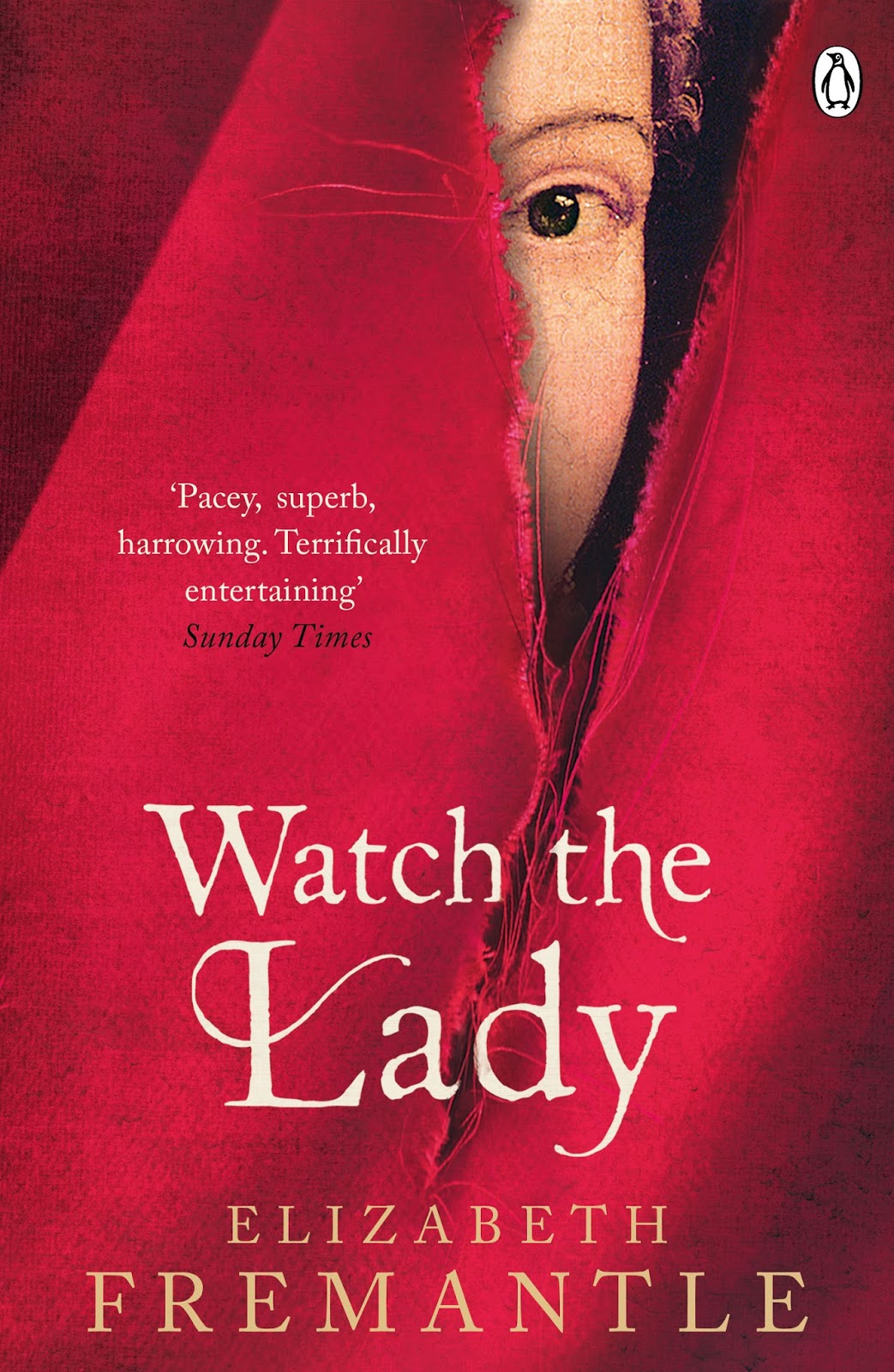
My latest novel Watch the Lady is about a celebrated Elizabethan muse. Lady Rich was the inspiration behind Sir Philip Sidney's groundbreaking sonnet cycle Astrophel and Stella, a heartrending account of Sidney's adoration, longing and bitter jealousy for a woman who slipped through his fingers and was married to another man.

We tend to think of the artist's muse as a passive symbol but when I began to look into the life of Lady Rich I discovered this was far from the case. I was drawn to consider the role of the literary muse in a more general way finding that muses come in all forms all inspiring in completely unique ways. Here are some of my favourites:

Holiday's rendition of Dante's encounter with Beatrice 

BEATRICE

Renaissance poet Dante Alighieri was utterly captivated by a girl named Beatrice when he met her aged only nine and she eight. Though he only encountered her one further time and she was married to another, he tirelessly wrote poetry in praise of her, which collected together became La Vita Nuova a work that would form the paradigm for love poetry for centuries. Beatrice’s role as the pure object of an unrequited yet transcendent love conformed to the expectations of the courtly love tradition. Her early death, aged twenty-four only increased her power to inspire Dante and she appeared in his masterpiece, The Divine Comedy as his heavenly guide.

LADY RICH 
Penelope Devereux was forced to marry the fantastically wealthy and aptly named Lord Rich as a
Lady Rich
means to replenish the coffers of her noble but impoverished family. Prior to her marriage she had caught the eye of the man to whom she had been betrothed as a child, the soldier and poet Sir Philip Sidney. Sidney wrote Astrophel and Stella, a sequence of sonnets and songs telling of his profound devastation and jealousy provoked by her marriage to Rich. Though Penelope was disguised as Stella in the poems, Sidney made frequent plays on the word ‘rich’ which made her identity easily decoded, suggesting that his love for her was common knowledge in the court circles where the poems would have been circulated. Astrophel and Stella was only published after Sidney’s tragic early death on the battlefield.


THE DARK LADY AND THE FAIR YOUTH
Shakespeare’s sonnet sequence subverted convention, as it was inspired by more than one muse. Indeed, many of the poems are addressed to a ‘fair youth’, described as the poet’s ‘master mistress,’ giving rise to a belief that he might have been homosexual. Other poems in the sequence, though, praise a dark lady, whose features were entirely at odds with contemporary notions of beauty. The identity of the bard’s muses has remained a mystery and puzzled Shakespeare scholars for centuries.


Fanny Brawne

FANNY BRAWNE

Romantic poet Keats was struck by the sixteen-year-old Fanny Brawne, describing her in a letter to his brother as a, ‘minx.’ But he was soon deeply enamoured with her, as his biographer Richardson put it, she became, ‘the reconciliation between real life and his poetic quest.’ During the time they were betrothed Keats was at his most prolific but he was to contract consumption and die in Italy before they were ever able to marry.


JEANNE DUVAL

French poet Charles Beaudelaire met the mixed race Jeanne Duval in 1842 and they spent two turbulent decades as lovers. He called her his ‘Venus Noire’ and dedicated many poems to her dangerous beauty, depicting himself as entrapped and helpless in his love for her, as in these lines from Le Balcon: The night was growing dense like an encircling wall,/My eyes in the darkness felt the fire of your gaze/And I drank in your breath, O sweetness, O poison!

VITA SACKVILLE WEST

Virginia Woolf’s gender morphing hero/heroine Orlando was inspired by Vita Sackville West, a woman with whom she had a long love affair and a longer friendship. Woolf was fascinated by Sackville West’s aristocratic heritage as she wrote in her diary, ‘I trace her passions – 500 years back, and they become romantic to me, like old yellow wine.’ With Orlando Woolf sought to address the injustice of Sackville West’s gender, which barred her from inheriting of her beloved ancestral home, Knole, that went to a male cousin.

Vita Sackville West
  

ZELDA SAYRE

Zelda was the emblem of the Jazz Age and was described by her author husband, F Scott Fitzgerald, as ‘the first American flapper.’ He was utterly captivated by her wild spirit but their heavy drinking and mad partying took a terrible toll on Zelda and she ended up in an asylum. Zelda was also an author but never found a way to emerge from her husband’s shadow. Elements of Zelda can be found in many of the women of Fitzgerald’s novels but it is Nicole Diver, the tragic heroine of Tender is the Night who most greatly and poignantly embodies her.


NEAL CASSADY

Neal Cassady grew up in the slums of Denver but was determined to make something of himself and though he lacked education he had a soaring intellect and made a profound impression on the young author Jack Kerouac. Neal became the inspiration for both Dean Moriarty in Beat Generation bible On the Road and Cody Pomeray in Kerouac’s later work and is credited with helping the author develop the spontaneous style that made his voice so original.