Showing posts with label Sarah Gristwood. Show all posts

Friday, 20 September 2024

Secret Voices by Sarah Gristwood

We at the History Girls are grateful to Sarah Gristwood for this guest post about her latest, fascinating, book.  

It was way back, in my early twenties, that I first developed an interest in the diaries of other women. A lot has changed since then - for me, but also, more significantly, for the field of women’s studies.

At the risk of painting the 1980s as the Dark Ages, the challenge then was to persuade a reader that women had voices distinct from those of men. That they might possibly be worth hearing…Today, we can all assume a ‘yes’ to that.

Today, the questions are more nuanced. Things have moved on. Academia has seen a lot of work on women’s writing, tv has seen the unmissable diaries of Nella Last (Housewife, 49) and the coded records of Anne Lister (Gentleman Jack). And yet, if you look at the anthologies still out there on the shelves, it’s shocking how few women’s voices feature. That’s why, when Batsford offered me the chance to edit Secret Voices: A Year in Women’s Diaries, I frankly jumped at it.


Because one thing remains constant, whether you’re reading them in the 1980s or the 2020s - the astonishing variety, excitement , frankness and relevance of these women’s voices. 

There are some simply extraordinary stories, like that of the Inuit woman who found herself sole survivor of an Arctic expedition. Of Anne Morrow Lindbergh -wife to the famous aviator Charles and herself a pioneering flyer - writing about the kidnap and murder of her infant son (the story behind Agatha Christie’s Murder on the Orient Express). Of the Victorian wife cast by her husband into the streets…

There’s Lady Bird Johnson describing Kennedy’s assassination and life in the White House, or Barbara Castle and Oona King casting a cool eye on the House of Commons. Voices, you might say, from the powder rooms of power … Queen Victoria recounting the moment she was told of her accession to the throne (to say nothing of her first night with Prince Albert). But I was almost more struck by finding, so often, the unexpected hiding within the ordinary. 


Dilemmas that we view as modern can actually be seen echoing down the centuries. Quaker reformer Elizabeth Fry admits how, after a difficult labour, she couldn’t welcome her new baby as she felt she should; socialist Naomi Mitchison discovers the challenge of combining work and family. Nella Last describes how World War II had unexpectedly liberated her from the limiting expectations of her marriage: Edwardian socialite Lady Cynthia Asquith  the difficulties of having what she saw as a disabled child. 


In the privacy of the diary format, women in the past wrote more freely about sex and the life of the body than we might expect. Near the turn of the nineteenth century, we have Anne Lister on her lesbianism and Hester Thrale on her menopause. In the first half of the twentieth, Anne Frank on menarche and Joan Wyndham on masturbation. There are the well-known writers who nonetheless, in their diaries, sound an unexpected note. Would we expect to find Virginia Woolf gleefully describing the delights of a car, and the excitement of being shingled; or Beatrix Potter proclaiming the age of knickerbockers? Or Barbara Pym on the pleasures of peach-coloured underwear - ‘disgraceful I know’, but chosen, she confessed, ‘with a view to it being seen!’?


Sometimes it’s our knowledge of what lies ahead that renders the words of the unconscious diarist even more extraordinary. Anne Frank in the summer of 1944 rejoices that the war is almost over and she may be back at school by the autumn - when we know the fate that actually awaited her, in Bergen-Belsen concentration camp.  Louisa May Alcott describes the decline of her real-life sister Beth, and how the needle with which she used to sew finally grew ‘too heavy’ … What lover of Little Women can read that without remembering the death of Alcott’s fictional Beth?

That question of our knowledge, of well-known women and professional writers does open up a can of worms for the anthologist. One has to accept that, historically, the diaries most likely to have been written - and, crucially, preserved - come largely (though not entirely) from the professional and upper classes. And that, by the same token, this often (though not always) means the diarists will be white. Happily, today a good deal of work  - especially in the States - is being done to remedy that situation, so that we can hear Charlotte Forten, the African American activist, in 1855 wondering ‘that every colored person is not a misanthrope…fearing, with too good reason, to love and trust hardly anyone whose skin is white’.   

It’s just one reason why we need to hear our grandmothers’ voices to understand the big issues - race and rebellion, love and death, pain and identity. And why, where women’s voices are concerned, there has never been a better time to edit an anthology. 


Rebecca Alexander will be back next March.


Monday, 18 March 2019

When History meet Hollywood by Sarah Gristwood

There’s been a bit of a boom in historical films recently - and I was lucky enough to get a preview of several at a film festival. Not, however, the one that’s attracted all the controversy: the new Mary Queen of Scots film which has been criticised so freely – it shows a meeting between Mary Stuart and Elizabeth Tudor which absolutely never happened. Though actually, every single drama about them has imagined that meeting, from Schiller back in 1800 to the old Vanessa Redgrave/Glenda Jackson movie. 

There is no such thing as a fully historically accurate movie – hasn’t been, since The Birth of a Nation in 1915 painted the Ku Klux Klan so favourably. How could there be, when there is no one single fully authentic version of history? But each generation (maybe even each person) makes their own demands as to the kind of accuracies they do and do not need- what Simon Schama called selective fastidiousness -  and that can change quite dramatically.

Each generation giving a take on history reflects its own preoccupations; so that Laurence Olivier’s Henry V tells us first about the England of World War 2 - then, about Shakespeare’s England – and by the time we get round to its version of Agincourt, we’re hardly talking history.

So, what is a historical film? The great ancient world epics beloved of old Hollywood? The heroics of Errol Flynn? Or the kind of costume dramas once made by our own Gainsborough Studios – what one film historian called ‘trash history’?. Arthur Schlesinger reckoned that to count as a historical film, a picture has to turn on public events as well as private ones, and I think that’s fair. 

War and Peace film 1956
So you’ve got all war films – and some, but not all Westerns – and War and Peace but not Anna Karenina; and Gone With the Wind is certainly a history movie. Spartacus, and Lawrence of Arabia, Gandhi and Gallipoli, and Charlie Chaplin’s Gold Rush, actually. We like to pride ourselves today on having got past the cliched kind of movie history, and certainly it’s easy to sneer now at the obvious falsity of the old`costume dramas. A Margaret Lockwood lookalike making riding motions, while the scenery scrolled along behind her . . . But there is nothing new under the sun. We today don’t have the franchise on attempted accuracy. Yes, a charioteer in Ben Hur was wearing a wristwatch; and no, that probably wouldn’t happen today. But the costumes for Gone With the Wind were made from fabrics specially woven from museum samples, and on Errol Flynn’s Charge of the Light Brigade, replica Victorian stamps were used on inter-office correspondence to set up an on-set mood of authenticity.

But all that attention to that kind of detail takes us so far and no further. There are some territories on which history and Hollywood must always disagree. I once attended a talk where one of the panellists was a playwright commissioned to write a biopic of Bonnie Prince Charlie and not finding it easy. The problem was all those drunken years in foreign courts with which the real Charles Stuart’s life petered out, ineffectually and inconveniently. A film story needs a definite ark. If only the Prince had the decency to die at Culloden, then they might have had a movie . . .

At that same talk, I heard the man who wrote the film Elizabeth praise the importance of research. You read it all, he said, then you write it all down. He recommended a roll of wallpaper lining, to fit in the exact chronology. And then – he said -  you take all that research, and you throw it away. Because film has its own agenda. The language of film is emotion, as I once heard Harrison Ford say. Or to quote an earlier producer: if you can cheer the hero and boo the villain, if the action is also fast and plentiful, then go into production straight away.

 Action isn’t necessarily a problem with historical subjects – but heroes and villains? Real, past people are never going to slot themselves easily into those categories. Take one of those two films I saw just recently, the wonderful The Favourite with Olivia Colman as Queen Anne, Rachel Weisz as Sarah Churchill, Emma Stone as Abigail Masham and a colourful line in dialogue. Him: ‘I should have you stripped and whipped.’ Her: ‘I’m waiting.’ Think Fifty Shades of Eighteenth Century - but, the emotional dynamics of the tale reflect a real truth, while making a cracker of a movie. Mike Leigh’s Peterloo, on the other hand - the important story of the 1819 cavalry charge that slayed British citizens on British soil -  suffers from treating the historical facts a bit too respectfully. Know what? I can forgive Mary Queen of Scots, and that ahistorical meeting. And I say that as a historian of the sixteenth century.

That said, historical movies matter. The sequence of events shown in the groundbreaking Soviet film Battleship Potemkin has, in the 80 years since, been co-opted as the official version of the story; nor does it matter (said one of the director, Eisenstein’s, colleagues) since ‘the film is more historical than history’. Gore Vidal suggested we all`accept movies as the only source from which people will soon take their history.

I worry that the makers of historical films have a responsibility they don’t – or can’t afford to – acknowledge . . That each age get the historical films it deserves; and our school report would be ‘tries hard, could do better’, basically. Mary Stuart and Elizabeth Tudor featured hugely in each other’s lives and each other’s imaginations. The movie meeting, in a sense, only dramatises one, emotional, kind of reality.

But I do believe that if film makers are going to blend fiction and fact, they have a responsibility at least to aim for the best version they can, of the great movements of the past, as their own age most carefully understands them. Not just to grab a convincing splash of historical colour for another kiss kiss bang bang story.

(Celia Rees is laid low with the flu and will be back next month. We are grateful to Sarah Gristwood for filling in for her)

Monday, 18 September 2017

Why Historians are Hoarders by Sarah Gristwood


Blame it on too many women’s mags, but I started sorting out the other day. Not before time - the piles of papers had reached the point where we burrowed between them like tunnellng moles. But that doesn’t mean, as I threw anything towards the dustbin bags, that I didn’t feel a little guilty. Some of those papers had been there longer than I had. Some were there before I was born, actually.

In one chest of drawers, they went in layers, like the strata of rock they taught us in geology. In others, previous attempts to sort (or simply to find something for the taxman!) have resulted in an earthquake-like overthrow, so that my father-in-law’s World War II permission to travel is in among a stack of 1980s press releases.


A backstage pass to join Bruce Willis’ band in Berlin, some time in the 1990s. A shooting script for Last Tango in Paris. A letter, dating back to the Fifties, from the then head of an Oxford college, pouring out his affection for my husband’s mother. A handful of share certificates, a thousand old German marks . . . And an enormous quantity of sheer junk, naturally.

The point is, how to distinguish? Fashionable (essential!) though it might be to minimalise, how can you really be sure of what will and won’t be valuable some day? And by valuable, I don’t mean the German marks, or the share certificates - I mean something that makes me feel I’m touching history. Even if it is only my own history.

Those press releases can go, surely? Or the letter from a press officer making arrangements for me to travel to an interview, and giving details of a flight that landed several decades ago? Except . . . Don’t I want to remember that once (before I left journalism for the ultimately more rewarding, but certainly less glamorous, world of Tudor history) I used to jet around the world interviewing Hollywood celebrities? That ladies-only lunch with Sharon Stone at the Hotel du Cap, outside Cannes? That LA lunch with Clint Eastwood, that flight back from a film location in Ireland, with Anthony Hopkins giving me life advice I remember to this day?

OK, so maybe that remembering is the point? Maybe I don’t need the paper to remind me? But somehow there’s a need almost to prove my case - as if someone else might be interested, some day.

Many years ago I wrote a book about women’s diaries, and one of the questions that came up then was why so many of us, ordinary people, feel impelled to leave a record of ourselves for posterity. I remember one diarist declaring openly that it was in case, one day, someone wanted to write her biography.

Most of us can’t flatter ourselves with that possibility - but all the same I was aware that, researching the subjects of biographies I’ve written, I’d have been ecstatic to come across hoards of the kind I was about to throw away.

It doesn’t, after all, have to be the person themselves who is so notable, to whet a historian’s appetite in future years. Sometimes ordinary people find themselves acting extraordinarily. The papers in our flat, transported in their crates from my husband’s old home, and simply dumped unsorted in a boxroom, have already helped him write a book, Family Secrets, about a murder in his family. Sometimes they are simply swept up in an extraordinary event. That wartime ‘permission to travel’ - the card that came with a WWII medal - carry with them the whiff of a whole world turned upside down, of courage and of tragedy.

But what about the souvenirs of more mundane occasions? What about the playbill from the 1950s, featuring my husband - as ‘A Gaoler - in a university production of a Shakespeare comedy? (It’s lying on top of a season’s programme for the Guardian cricket club, and a pair of handcuffs. Handcuffs. I like to think they were sent to us as a publicity gimmick for some movie.)


If, perish the thought, I’d had done amateur dramatics in my own youth in the Eighties, I’d have no illusions that I was keeping that flyer from anything but pure vanity. But this, older, one feels like an artefact, a message from a vanished era. Even the yellowing paper seems to have something to say.
So what - does junk become valuable after x many years, and if so, how many? Does someone ring a bell and the past becomes history? It’s a question for Antiques Roadshow, maybe. But meanwhile, you know what, I think I’ll stick to throwing away old make-up bottles. That’s safe - surely?

Our thanks to Sarah for this "anytime" post. Celia Rees will be back soon.

Monday, 31 October 2016

October competition

To win one of five copies of Sarah Gristwood's Game of Queens, just anser the following question in the Comments section below:

"Which powerful woman from continental Europe deserves to be better known in the English speaking countries, and why?"


Then put your answer in an email and send it to maryoffman@maryhoffman.co.uk, so that you can be contacted if you win.


Closing date: 7th November


We are afraid our competitions are open to UK Followers only


Saturday, 29 October 2016

The girlie side of history by Sarah Gristwood

Our October guest is Sarah Gristwood, who - as well as being a well-respected historian -  is a History Girl Reserve, one of that splendid band of writers who give us "anytime posts" that can be used when one of our regulars needs to take a break for a month.

Sarah has written two bestselling Tudor biographies, Arbella: England’s Lost Queen and Elizabeth and Leicester; and the eighteenth century story Perdita: Royal Mistress, Writer, Romantic which was selected as Radio 4 Book of the Week.  In  2012 she brought out a new  book – Blood Sisters: the Women Behind the Wars of the Roses. Her latest title is  Game of Queens, about the chains of women and power running through the sixteenth century.

Shortlisted for both the Marsh Biography Award and the Ben Pimlott Prize for Political Writing, Sarah is a Fellow of the RSA, and an Honororary Patron of Historic Royal Palaces.
sarahgristwood.com

Sarah Gristwood by Oliver Edwards
 

The name of the group demands it, really. The History Girls . . , and what I’d call the girlie moments from my particular chunk of history! When, in a publicity meeting for my new book, Game of Queens: The Women Who Made Sixteenth-Century Europe I offered a list of top ten girlie moments, the women got it instantly. My male commissioning editor was too nice to say anything. But I swear his eyes roamed around the room, hoping the cricket scores would materialise on the walls and sweep him spiritually away.

Where to start, chronologically? The sixteenth century saw an explosion of female rule. Large swathes of Europe were under the hand of a reigning queen or a female regent - mothers and daughter, mentors and proteges. Game of Queens traces the passage of power from Isabella of Castile to her daughter Katherine of Aragon, and on to Katherine’s daughter Mary Tudor. From the French regent Anne de Beaujeu to Louise of Savoy, through Louise’s daughter Marguerite of Navarre to her own daughter Jeanne d’Albret, as well as to Marguerite’s admirer Anne Boleyn and finally to Elizabeth Tudor.

Anne de Beaujeu, regent of France, wrote a manual of instruction for powerful women. Lessons for My Daughter. One piece of advice was not to pay too much attention to clothes - ‘Past 40, no finery can make the wrinkles on your face disappear’. Perhaps Margaret Tudor should have read it. When her brother Henry VIII sent her the present of some wonderful dresses, Margaret was in such pain from sciatica she couldn’t even bear to be turned in bed. But she still made her attendants hold up the dresses so she could see them, every day.

And there was, after all, a serious point here. Clothing was an important signifier of rank. Margaret - widowed when her brother’s armies killed her husband, James of Scotland - had now been forced to flee that country. She wasn’t being treated as a queen any longer - but the dresses made her seem queenly.

While Henry VIII was looking for a new bride, after beheading Anne Boleyn, his eye lit on Marie de Guise. He said that they should get on together, because they were both ‘large in person’. ‘I may be large in person’, she retorted, ‘but I have a little neck!’ Christina of Denmark, similarly honoured, said that if only she had two heads, one of them would be at the English king’s disposal. Sometimes girl power means talking sassy.

And it’s something, after all, to be allowed to be girlie. In the early part of the sixteenth century, the heyday of what I see as the Age of Queens, Margaret of Austria not only ran the Netherlands during the minority of her nephew, the future Charles V, she was at the very heart of European diplomacy. Margaret ‘is the most important person in Christendom, since she acts as mediator in almost all the negotiations between the princes’, wrote her one-time father-in-law Ferdinand of Aragon, flatteringly.

Margaret of Austria

The childless Margaret was called ‘the great mother of Europe’ - but by the time she was succeeded as Regent of the Netherlands by her niece Mary of Hungary, ambassadors were reporting gleefully that Mary was ‘a little mannish’, and that everyone knew she wouldn’t have children - she was far too sporty. When Mary in turn was succeeded by her niece, Margaret of Parma, there was much talk of her moustache . . . After all in a woman in power couldn’t be entirely a woman, could she?

It was Mary Queen of Scots who liked actually actually to dress up in men’s clothes and go roistering around the Edinburgh streets with her ladies. (There was always the joke that the best way to end the troubles between Scotland and England would be for Mary and Elizabeth I to marry.) Her own minister would describe Elizabeth as ‘more than a man - and in truth sometimes less than a woman’. But how’s this for a girlie scene? - in that stereotyping, cat fight kind of way. When Mary sent Sir James Melville on a diplomatic mission to Elizabeth, the Tudor queen kept pressing him as to whether she or Mary were the taller, the better dancer, the prettier. Mary was the fairest queen in all Scotland and Elizabeth in all England, answered Melville - diplomatically.

It all depends, after all, what we mean by ‘girlie’. In 1572 when Catherine de Medici and Jeanne d’Albret met to negotiate the marriage that was supposed to end France’s Wars of Religion, they broke off their discussions for a day’s shopping round the Paris boutiques, disguised as ordinary bourgeoises. Or so it was reported, anyway . . . Were the men who reported it trying to point up their womanly weakness, or did they understand that this could be a real bonding ritual? (‘As woman to woman, make her mad, while remaining calm yourself’, one negotiator on the Catholic side had urged Catherine de Medici.)

When Mary of Hungary heard about the execution of Anne Boleyn, and Henry VIII’s hasty marriage to Jane Seymour, she declared that she had to be glad, in a way. Anne had been a Francophile, and thus no friend to Mary’s Habsburg family. But, all the same, Mary wrote ‘It is to be hoped, if one can hope anything from such a man [as Henry], that if this one bores him he will find a better way of getting rid of her. I believe that most women would not appreciate it very much if this kind of habit becomes general. And although I have no inclination to expose myself to dangers of this kind, I do after all belong to the female sex. . .’ It was an expression of sisterhood, even if the term is of today.

Because I’d say this was a sisterhood - at least in that earlier part of the century, before religious differences tore Europe apart, and fractured bonds A band of powerful women, of sisters, who recognised both their own bonds as female, and their ability to exercise power in a specifically feminine way.

Louise of Savoy

In 1529 Margaret of Austria, the Habsburg emperor’s aunt, and her former playmate Louise of Savoy (now mother to the French king François) met to negotiate the ‘Ladies’ Peace’ of Cambrai. War between France and the Habsburgs was the curse of the century, but the women agreed they could probably do something about it, if their men would only stay out of the way. The men would be concerned about their honour, as Margaret put it tactfully. ‘On the other hand, how easy for ladies… to concur in some endeavours for warding off the general ruin of Christendom, and to make the first advance in such an undertaking!’

This idea - of women coming together in the interests of peace - would recur through the sixteenth century and beyond. Perhaps no others would achieve the success of Margaret or Louise . . . But perhaps, too, this is what we ought to mean by ‘girlie.'


Friday, 26 August 2016

The Novel that got Away by Sarah Gristwood


It’s the writer’s equivalent of the dress you can’t quite fit into - but, if you lose a few pounds, then maybe . . . Every author has that back-of-the-wardrobe box of unwritten stories; the ones you can’t quite bear to throw away. But we’re always being urged to de-junk our lives, aren’t we?

So let’s accept this is one historical novel I will never write - I would have called it The Valois Bride. Good title, do we think? A bit old fashioned, maybe?

Elisabeth de Valois

In December 1559, the 14 year old Elizabeth de Valois arrived on the Spanish frontier to marry King Philip II of Spain – a man twenty years her senior, and twice a widower already. We all know a version of the story from Verdi’s opera Don Carlos, itself based on Schiller’s play - though some of us (forgive me) remember it better from Jilly Cooper’s novel Score!. That set Cooper’s trademark Rutshire rumpy-pumpy against the shooting of a film version of the opera; and its trick of making the Spanish royals into Britain’s present day royal family - and the Inquisition into the tabloid press - worked rather well, actually.

There is no historical truth in Verdi’s fantasy of Philip’s son Don Carlos’ spying out the wedding party on their way to Spain, and there falling in love with the French princess destined to become not his bride, but his stepmother. Of Elizabeth choosing duty over love to make peace between their countries . . . Though she would called Isabel ‘de la Paz’, actually. And it’s true Elizabeth had originally been destined for the son rather than the father but, hey, that was tame, by the standards of the royal marriages of the sixteenth century.

Verdi's Don Carlos

But the real Elizabeth seemed more than content with a husband who was after all in a worldly sense the catch of the century, while Philip’s son and heir would soon be spiralling downwards into his brutal madness. The teenage bride awoke a response in her dour husband, and the extravagant chit who never worse the same dress twice was nonetheless allowed, just six years later, to represent Spain in official negotiations with her own formidable mother, Catherine de Medici.

Philip goes down in English history as a dutiful but essentially uncaring husband to his previous wife Mary Tudor, but when Elizabeth was giving birth, he sat by her bed clutching her hand through every pain. When Don Carlos died in 1568, incarcerated and insane, Elizabeth wept for two days, but ten weeks later she herself was dead from another childbearing, still only 23.

She was survived not only by Philip, but by two other women whose voices I might have used to tell her story. One of them was the Italian painter Sofonisba Anguissola, invited to Spain by Philip and given rank as a lady of Elizabeth’s court. The other was the Princess of Eboli, with her beauty and her patch over one eye. In Verdi’s version, she is Philip’s mistress and an arch manipulator. In real life she was a schemer indeed - widow to Philip’s first great minister, Ruy Gomez (more than twenty years older than she), whose intrigues only mounted after his death - but one who loved and mourned Elizabeth sincerely. Her involvement in a scandalous political murder saw her spending the last ten years of her life under house arrest in one of her castles from where, looking back (yes, cue a time-honoured writer’s device here!), she had no doubt her memories.

Sofonisba Anguissola self-portrait


So why won’t I ever write it? One reason is, I don’t know enough. My limited experience of writing historical fiction (and my far larger experience of writing historical fact) has shown me that the former is more demanding, in many ways. You don’t just need to know the great political events against which the character is placed - you need to know what someone of that age and rank, in that day, would have done when they go out of bed each morning. The sixteenth century court equivalent of switching off the radio and shoving a piece of bread in the toaster . . . And I don’t, for sixteenth century Spain, quite simply.

Could I research it? Maybe - though factual information on that kind of detail can be quite hard to come by. And the trouble is that with Spain, I don’t even have a gut feeling for the rhythm of the seasons or the way the light falls on the landscape - the things that don’t change through the centuries. Research might hack it, for a story set in England, or any country I know well. But I suspect the research would lie dead on the page if I were to write about a place still truly foreign to me.

The other reason is that I know too much. The real Elizabeth is making a very minor - but her mother Catherine de Medici a major - appearance in the non-fiction I’m currently writing: Game of Queens, about the chains of women and power running, from mother to daughter through the sixteenth century.
Catherine de' Medici


So I know about the stream of self-revelatory letters Catherine sent across the border to and about her daughter in Spain: I know that the last of them, a maternal warning as to what should be done about her daughter’s increasing weight, arrived only after Elizabeth’s death. I know that when the two met for that summit meeting, as queen regent of France and queen consort of Spain, Elizabeth would have felt the tug of loyalties known to so many a princess, between her natal and her marital country. ‘How Spanish you have become, my daughter’, said Catherine to Elizabeth, coldly.

I know that as a child in France, Elizabeth was set to sleep in the same room as that other little girl newly arrived at court - her future sister-in-law, Mary Queen of Scots. I’ve read the letters Mary wrote after Elizabeth’s death - distraught not just by the death of her old playfellow, but by the loss of a possible ally, who might have persuaded King Philip to help the Scots queen in her long English captivity.

Of course I’d love to explore these things further - but I’m not sure fiction is the way, for me. Of course anyone who were writing a Valois Bride would have read up on all this and much, much more - but I’m not sure I’d be able to get past the huge rock of facts I’m still discovering, to let the fiction fly free.

Though mind you, the madness of the historical Don Carlos did in the end lead him to an obsessive crush on his step-mother . . . Hmm. Maybe I was a bit quick to jettison this one, actually.

Thanks to Sarah Gristwood for this post. Carol Drinkwater will be back on 26th September.

Friday, 13 May 2016

WHO IS THE GIRL IN THE GLASS TOWER ? Elizabeth Fremantle

Arbella as a girl
In advance of the publication of my new novel I thought I'd introduce my extraordinary protagonist, Lady Arbella Stuart.

Through her great grandmother Margaret Tudor, and as the nice of Mary Queen of Scots, Arbella had a strong claim to the English crown and was raised in the belief that she would be the heir of Elizabeth I.

In the final years of Elizabeth's long reign there was much covert political jostling to establish who would eventually take the throne. But the fear of being usurped meant that the ageing Queen refused to publicly name her successor. The nearest she came to doing so was to say of Arbella, 'One day she will be even as I am.'

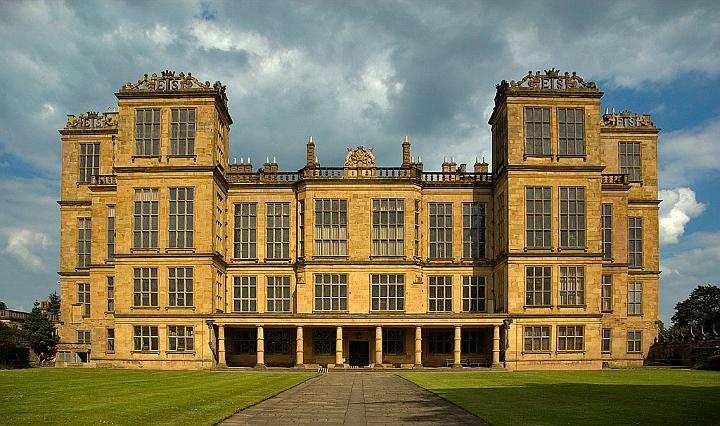
Arbella's position as presumed, though unofficial heir, made her a potential focus for Catholic plots. Though she was raised a Protestant the prevailing fear was that she might be kidnapped and encouraged to convert whilst still young so the plotters could then launch a coup to place her on the throne as a Catholic puppet queen. For this reason she spent her youth in virtual imprisonment, cloistered away at the magnificent Hardwick Hall in Derbyshire under the strict rule of her ambitious grandmother Bess of Hardwick.

Hardwick Hall

However the political climate changed irrevocably in the last year of Elizabeth's reign and it was Arbella's cousin James who eventually succeeded, leaving Arbella in political limbo. She was released from Hardwick and called to court but her royal blood made her at best a valuable bargaining chip on the royal marriage market or, at worst, a dangerous pretender to the throne. But Arbella refused to be held a fugitive at her cousin's court and made a courageous bid for freedom at great personal cost.

Arbella later in life
A remarkable, highly intelligent and complex woman, yet headstrong and deeply flawed, Arbella with her poignant and profound desire for freedom, fascinated me from the moment I first read about her. She was a prolific letter writer so it was easy to engage with her authentic voice and thereby build a sense of how she might become a character in The Girl in the Glass Tower.

In my novel I have claimed poetic license and woven Arbella's story through with that of the poet Aemilia Lanyer. Lanier was another extraordinary woman of the period, remarkable for being the first English female published poet. 

Possibly Aemilia Lanyer
Lanyer is sometimes cited as a candidate for Shakespeare's 'Dark Lady' but as I found no hard evidence for this I have not included it in the book. At age 18 she became the mistress of the Queen's cousin henry Hudson who was forty years her senior and thereby had an entry to court circles. Her groundbreaking, project was a long poem in defence of Eve and other misunderstood women and as a tragically misunderstood woman herself, Arbella fits well into Lanyer's scheme. 

The actual link between the women is tenuous but Lanyer addressed a poem to Arbella and they may well have known one another at court. But it seemed to me apt to place these two women side by side in The Girl in the Glass Tower as their stories chime together.


READ AN EXTRACT ON THIS LINK

Tap. Tap. Tap on the window.
Something, someone wanting to be heard. Waiting to be free.
​Tudor England. The word treason is on everyone's lips. Arbella Stuart, niece to Mary Queen of Scots and presumed successor to Elizabeth I, has spent her youth behind the towering windows of Hardwick Hall. Her isolation should mean protection – but those close to the crown are never safe.

Aemilia Lanyer – writer and poetess – enjoys an independence denied to Arbella. Their paths should never cross. But when Arbella enlists Aemilia's help in a bid for freedom, she risks more than her own future. Ensnared in another woman's desperate schemes , Aemilia must tread carefully or share her terrible fate...

​The Girl in the Glass Tower brilliantly explores what it means to be born a woman in a man's world, where destiny is strictly controlled and the smallest choices may save – or destroy – us.
The Girl in the Glass Tower will be published by Michael Joseph on June 2nd

For those interested in reading more about Arbella's life Sarah Gristwood's excellent biography, Arbella: England's Lost Queen, is a must.

Wednesday, 27 April 2016

The Passionate Pilgrim by Sarah Gristwood

One of the best-loved games in literary history has always been to spot the identity of Shakespeare’s Dark Lady - the heroine of some of the most powerful sonnets, whose magnetism and whose infidelity he laments. Never mind that she may never have existed, that she may just have been some long-forgotten woman of easy virtue, who for a moment caught Shakespeare’s eye - or that ‘she’ may have been a dark gentleman . . .

In some cases the grounds for the ‘identification’ are positively derisory. (Elizabeth Hatton? Her husband’s stepbrother once sold property to Shakespeare. That’s it. The brothel keeper ‘Lucy Negro’, who may or may not once have been the queen’s maid Lucy Morgan? She was mentioned in a Gray’s Inn masque of 1595 and sent to gaol in 1599. That’s it.)

But the idea simply won’t go away. So, let’s turn it on its head a little. Think instead of the women we know were in his orbit, at the right time. Take a date of 1593, or near offer - just ten years before the old queen’s death. The sonnets (not published until 1609) could have been written anything up to fifteen-odd years before, though the likeliest bet spans the mid 1590s.

These can’t accurately be described as women Shakespeare knew – in his London life none such exist, barring a couple of women who went up against him in dispute over property, and the landlord’s daughter whose husband called him as a witness in another row over the non-delivery of a dowry. But they are women bound to him by a tenuous web of patronage or profession - or of political hopes and fears.

One name is well known in this context. Emilia Lanier (1569 - 1645), anybody? Illegitimate daughter of a family of Venetian musicians, the Bassanos, in the service of the Tudor monarchs, Emilia was orphaned young and brought up in the household of the Countess of Kent, before becoming the mistress of Lord Hunsdon, the Lord Chamberlain, maintainer of the Lord Chamberlain’s Men to which company Shakespeare belonged. Pregnant in 1593 she was married off ‘for colour’ to another court musician, Alphonse Lanier.

She was presumably dark and Italianate looking; musical (like the ‘dark lady’); obviously possessed of considerable sexual magnetism - and described as having a mole on her body in the same place as the heroine of the sonnets. Later in her long life, in 1611, she published a lengthy poem, Salve Deus Rex Judaeorum, defending the women of the Bible, and it has been suggested that this anachronistic piece of feminism may have been triggered by indignation at having been ‘outed’ by the publication of Shakespeare’s sonnets in 1609 . . . though maybe she just needed to make money.

But the courts saw a number of other women bounds to Shakespeare by a web of connection - women we sometime, but not always, associate with his name. Far above his station, of course - but who’d have figured in his imagination, maybe.


First of these court ladies is Mary Fitton - herself sometimes considered a candidate for the dark lady. One of Queen Elizabeth’s more adventurous maids of honour, Mary was conducting an illicit affair with William Herbert, himself a possible candidate for ‘Mr W.H.’, the ‘onlie begetter’ of the sonnets, slipping out to meet him in male disguise. In 1600 she became pregnant by him but, the baby dying, he refused to marry her, even when the queen sent him to the Fleet prison.

In 1601, meanwhile, William had become Earl of Pembroke (in which capacity he would be dedicatee of the First Folio). His father had been a patron of a company of players to which Shakespeare may have belonged. His mother the Countess of Pembroke had been Mary Sidney, sister to Sir Philip Sidney. Herself a noted writer and patron who may have entertained Shakespeare, she was also a dedicatee of Emilia Lanier’s poetry.


The other most influential woman in Philip Sidney’s life, before his untimely death, had of course been Penelope Rich - the muse to whom Sidney wrote as ‘Stella’, and another candidate for Shakespeare’s ‘dark lady’.

Born Penelope Devereux, sister to the queen’s last favourite the Earl of Essex, she had for years been unhappily married to ‘the rich Lord Rich’, but after Sidney died became also the mistress of Sir Charles Blount, later Lord Mountjoy. Together they were leading members of her brother’s Essex House circle, and deeply implicated in his rebellion of 1601.

Also implicated in the Essex rebellion was the Earl of Southampton, Shakespeare’s patron and Essex’ great friend. Damaged by connection were his womenfolk: his mother the Catholic Dowager Countess of Southampton, and his wife the young Countess Elizabeth. Elizabeth (yet another putative ‘dark lady’, if Shakespeare wrote sonnets for Southampton to present to her) and the earl had fallen in love in 1598, but their secret marriage saw him flung into prison, while she went to have her baby at Penelope Rich’s house.

The Dowager Countess Mary, meanwhile, had her own Shakespearian connections. In 1599 she married, as her third husband, the younger Sir William Hervey, himself another candidate for ‘Mr W.H.’ – who, some years later, would take as his second wife one Cordell (or Cordelia) Annesley. In 1603 Cordell famously petitioned the authorities about the machinations of her two sisters, who were trying to have their father declared insane so as to obtain his lands . . . . King Lear was first performed in 1605.

And there is yet another Southampton connection. In 1597 the then-unmarried earl had been sought by one Mrs Pranell, born Frances Howard of the noble family but married off beneath her status to the son of a rich Alderman. The writer Sir William Davenant was once in youth Mrs Pranell’s page – that same young man, Jane Davenant’s child, who always claimed he was Shakespeare’s illegitimate son. Sheer coincidence? Maybe.

There is another name I haven’t mentioned here - but that one I’m not going to, actually. Let’s be clear: I don’t actually go for the game of ‘spot the dark lady’. I think we need to take Shakespeare’s power of imagination more seriously than that. But just suppose for a minute that I were going to play . . .

There’s someone else we know, who certainly moved in Shakespeare’s circles. Who fits the implication of foreign-ness, perhaps Catholicism, and whose life and death fit with what seem to be the dates of his story.

But I’m not going to mention that name - who knows, I may want to write the book some day!

Thanks to Sarah Gristwood, who is one of our invaluable History Girls Reserves. Janie Hampton will be back next month.

Saturday, 23 April 2016

Tales of the Bard - Shakespeare and the History Girls by Charlotte Wightwick


Today is the 400-year anniversary of Shakespeare’s death (and the 452nd anniversary of his birth.) 

To mark the occasion, we’ve been blogging about The Bard all month, but today we thought we’d bring you a round-up of some of our best and worst Shakespearean experiences – from ketchup-based blood and being trapped in purgatory to stunning sets and intimate ‘before they were famous’ moments.

There’s also the opportunity to see how well you know our History Girls, with our Shakespearean quiz. 

William Shakespeare, 1564- 1616. Image courtesy of the University of Texas Libraries, The University of Texas at Austin.

Almost all of us have some memories of Shakespeare – whether from tortuous experiences at school or inspirational moments which will never leave us. The History Girls are no exception to this rule.

When asked about her best memories, Tanya Landman says of Shakespeare’s continued ability to engage with modern audiences that she and her then 11-year-old son “came out buzzing” from the RSC/Baxter Theatre’s 2009 production of The Tempest:
“It was visually stunning, with amazing Zulu and Xhosa imagery and giant puppets… It was his first Shakespeare and a real gift to both of us – a production that really opened your eyes and made you think about colonialism and its after effects.”
Gillian Polack agrees that Shakespeare’s plays, when well produced, remain hugely relevant to today’s audiences and speaks with passion about an experimental production of Hamlet in Melbourne, nearly 30 years ago:
“They only allowed 100 people to watch, and we were in two tiers of seats in the round, so none of us were very far from the performance. The intimacy and the acting style and the bareness of the acting space (few props, no set) changed the way I saw Shakespeare: by losing the physical distancing, the play also lost the cultural distancing… Later, when the same players did the same production on a traditional stage, it was far more ordinary.”
Gillian’s experience shows that the staging of a production is all-important, and other HGs agree when thinking about their favourite experiences. For example, Adele Geras talks about the power of a production she saw in the early 1960s:
“The set, which I recall as if it were yesterday, was a hexagonal sand pit which took up the entire stage area. The actors...have faded from my memory though I remember being completely transfixed by everything that was unfolding before my eyes. What I do remember in vivid detail was that set: the sand changed and shifted as the actors walked through it, fighting, talking, embracing. It was quite wonderful.”
 Or again, Lydia Syson says of her favourite production that:
“The patterning of the final dance has particularly stayed in my memory: a formal grid-formation in which dancers brushed past each other and exchanged lingering glances. Disorder had been re-ordered to create something entirely new and wonderful.”
Other HGs highlight the importance of lead actors when thinking about their favourite moments, for example Leslie Wilson says of Judi Dench in Measure for Measure in Nottingham in the 1960s:
“Dench's Isabella, hard, slightly repellent, still moved me intensely when she found herself blackmailed by Angelo; I wanted to sympathise with her, as a victim of male sexual exploitation, yet couldn't totally, which I feel was completely right for Isabella, and her personality and physicality filled the auditorium. It is a problem play, and the problems weren't bucked in the slightest.”
Other performances which left their impressions include Kenneth Branagh as Hamlet who “somehow managed to speak the verse as if he was just having an ordinary conversation - while not losing the poetry of it.” (Sue Purkiss) or Tom Hiddlestone in a ‘raw’ Coriolanus (Liz Fremantle).

But not all Shakespearean experiences are as inspirational. By far and away the play that most of the HGs had seen poor productions of was Macbeth: the opportunities for over-acting, lingering ghosts and gallons of fake blood are, it appears, endless. Both Lydia Syson and Tanya Landman saw Peter O’Toole’s ‘laughably bad’ version at the Old Vic, which has gone down in theatre history. Lydia says:
“The titters of disbelief at Macbeth began almost as soon as O’Toole staggered and swaggered onto stage, spitting and lisping. I think he must have been drunk. As the blood began to pour, the laughter shockingly swelled. Nobody could quite believe it when Banquo’s ‘ghost’ actually came on stage and sat down at the table, apparently drenched in ketchup. As he shook his gory locks, the sound of an ambulance could be heard most distinctly from Waterloo Road.”
Celia Rees also had a poor experience with
 “An avant garde “experimental’ Macbeth ...I realised it was a mistake as soon as the play started but we were in the Studio Theatre and I was in the middle of a packed row. No discreet way of escaping. There was no interval, so I had to stay for the whole thing. Theatre can be magical but it can also be a special sort of purgatory.”
However Sarah Gristwood declines to point a finger at modern productions, suggesting instead for her idea of a worst production:
“practically anything from the eighteenth century, when an actor advanced to the front of the stage, took a stance with one arm upraised, and bellowed.”
And for her best?
“I'm going to choose to believe the theory, launched by Nicholas Rowe in that same early eighteenth century, that Shakespeare himself appeared as the Ghost of Hamlet's Father. That, or the version of Hamlet performed in 1607 on board the merchant ship Red Dragon, becalmed off the coast of Africa in 1607, for an audience of four tribal chiefs.”
 Now, surely there’s a novel in that…


The Globe, London. Image courtesy of Gillian Polack


SHAKESEPARE AND HISTORY GIRLS QUIZ

1) Which History Girl interviewed both Kenneth Branagh and Clare Danes whilst working as a journalist?

2) Who ‘can’t abide the Bard’ (but likes Polanski’s film version of Macbeth because of its handsome lead actor?)

3) Which History Girl was inspired by the Shakespeare’s History Plays and became obsessed by the Plantagenets as a result?

4) Who was inspired by a production of Troilus and Cressida and went on to write a novel about Troy?

5) Which two of the History Girls admit to leaving poor performances at the interval?

The Minack Theatre, Cornwall. Image courtesy of Charlotte Wightwick


Quiz answers:
1) Sarah Gristwood
2) Elizabeth Chadwick 
3) Mary Hoffman
4) Adele Geras
5) Elizabeth Fremantle and Mary Hoffman