Showing posts with label history of medicine. Show all posts

Tuesday, 23 April 2019

Beyond Bedlam - by Judith Allnatt


The word ‘bedlam’ conjures up images of chaos and madness. This is hardly surprising since the word is derived from ‘Bethlem’, after London’s Bethlem hospital, notorious for most of its 600 year history for the harsh treatment of its inmates, including the insane. Hogarth’s image from ‘The Rake’s Progress’ shows the Rake being manacled by two attendants whilst one lady visitor whispers to another behind a fan.


The image neatly demonstrates two major elements of the early treatment of the mentally ill. Firstly, that the emphasis lay with custody rather than cure and secondly that sufferers were dehumanised and treated as ‘freaks’ to be viewed for the frisson of shock, pity or sheer amusement. When the hospital was rebuilt in the 1670s, galleries were constructed partly ‘lest such persons that come to see the said Lunatickes may goe in danger of their Lives’. Physical restraint through the ages included manacles, chains, head collars and strait jackets. Although restraint was said to be used to stop patients tearing their clothes or harming themselves or others, it was also for the convenience of the keepers who performed a role that was more custodial than medical. A regime that commonly included cold baths, purges to induce vomiting and ‘voiding of the bowels’, bleeding and blistering seems as likely to have originated in a desire to cow and exhaust inmates into submission as to treat or cure them.

It was against this background impression of brutality and voyeurism that I began to research the treatment of John Clare’s madness for my novel, The Poet’s Wife. What I discovered was a complete surprise.


In 1841, John Clare entered what was then known as ‘Northampton Lunatic Asylum’, where he was to live as a patient until his death in 1864. I was fortunate enough to be able to visit what is now known as St Andrew’s Hospital and to be given a tour by its superintendent. The building was brand new when John Clare was brought there; it is built of white stone in a symmetrical  style and is set in extensive gardens. Clare’s maladies included hallucinations (he is reported to have seen ‘devils in a ceiling’), delusions (he believed he was married both to his real wife and to his childhood sweetheart) and at times a fragmentation of personality (adopting the persona of Admiral Nelson, Byron or Shakespeare). In general, his condition was harmless, although occasionally he would see himself as Jack Randall, a prize fighter of the day, which made him a little pugnacious. Yet, far from being restrained, Clare was allowed to wander down into the town where his favourite spot was a seat in an alcove of All Saints church. Here he would write verses in return for a drink of ale or a twist of tobacco to chew upon.

The superintendant explained that during the nineteenth century a large scale change in the care of the mentally ill occurred, thanks to the work of various reformers who, since the late eighteenth century had been championing a new approach that came to be known as ‘moral treatment’. The Enlightenment had brought a new focus of social welfare and individual rights. Perhaps by treating patients as rational beings who could make choices, interventions could be made that would be therapeutic; perhaps, for some patients, a cure might be possible after all.

A founding father of this approach was William Tuke, a Quaker, who created a small community of 30 patients in York in a quiet country house. Patients were given manual work to perform to provide a sense of purpose. His grandson, Samuel Tuke, wrote a treatise on the method, which involved close supervision by staff who were more nurses than ‘keepers’. Good behaviour was rewarded and patients who behaved badly were distracted or lost privileges.

Latterly, John Clare’s illness worsened and sadly disorderly behaviour led to his freedom to roam in the town being curtailed. John struggled with this. He wrote to his sons warning  them not to visit him in case they were 'captured'. Erroneously believing that the superintendent could ‘see’ for a three mile radius all around, he didn’t attempt to escape as he had from an earlier stay at an asylum in Essex but complained volubly that he lived ‘amongst the Babylonians’ where ‘people’s brains are turned the wrong way round’.

 
By W.W. Law - Bonham's, Public Domain
However, moral treatment offered other freedoms. He was allowed to work as a gardener, a role that would have suited him well as he had a great love of nature and the outdoors. (Close scrutiny of the image of the asylum above, reveals a man trundling a wheelbarrow downhill). 

Even more importantly, both for his wellbeing and for posterity, he was given pen, ink and paper and encouraged to write. We would not have the great body of his poems today if the superintendent had not followed the tenets of moral management and supported him. John Clare wrote perhaps his most famous poem ‘I am’ during his time at the Northampton Asylum – a poem that expresses his feelings of bewilderment and exhaustion with his illness and which cannot fail to touch the heart.

Friday, 23 November 2018

Broken Faces by Judith Allnatt


In WW1, the use of weapons such as grenades, flamethrowers and howitzers meant that war was waged on a vicious industrial scale. Those lucky enough to survive their injuries were often maimed or facially disfigured and returned to ‘Blighty’ both physically and emotionally scarred.

My own great grandfather, who suffered a terrible head wound that required a trepanning operation, was greatly affected by his injury. The metal plate that covered the hole in his skull caused agonising headaches and he became irascible and depressed. Like many returning soldiers, he found it difficult to adapt once more to civilian life. He couldn’t work; his life could not be as it had been before the war. He had seen and experienced too much. He no longer felt like the same person.

This sense of lost identity, felt by many returning soldiers, was a subject I wanted to explore in my book ‘The Moon Field’. I chose to write about facial disfigurement in particular - what the French called ‘gueules cass
ées'  – broken faces. What could be more apt as a symbol of lost identity than the loss of one’s own familiar face?The public treatment of these war veterans was mixed. In parks, benches were set aside for disfigured soldiers and painted blue so that other people could avoid them. Whilst this may have been a well-intentioned effort to give the men some privacy, it also isolated them further, making them feel as if they were monsters. In my research I came across references to them as ‘droolers’ and stories of job vacancies swiftly withdrawn, café owners ushering the men to seats well away from the windows and even the throwing of stones. In my novel, the character with the broken face retreats to a ‘back room’ job as a cinema projectionist, withdrawing to the safe cocoon of darkness. It was my task, as writer, to take him on a journey back to the light.

At the start of the war, before the invention of the techniques that became the forerunners of modern plastic surgery, disfigured men were fitted for masks. The hospital units concerned became known, with gallows humour, as ‘the tin noses shop’. The metal masks could be taken on and off, with arms that fitted over the ears as with spectacles but which were also fixed securely at the back of the head with a wire fastening.


Men and women, who had been genteel sculptors who carved statues and fountains before the war, became instead shapers of men’s faces. One such, Anna Coleman Ladd, in a startling juxtaposition of the two worlds, described the galvanised copper of a mask as being ‘as thin as a visiting card’. They took enormous care to make the masks realistic: real hairs were laid on one at a time to make the eyebrows; the man’s skin tones were matched as nearly as possible and even a slight blue was added to replicate the effect of a ‘five o’clock shadow’. 

Making a mask began with laying bandages soaked in plaster across the face to make a cast. Holes were left at the nostrils for the patient to breathe through but nonetheless it was a rather suffocating experience that had to be carefully timed, as the plaster became hot as it dried. A clay ‘squeeze’ would then be taken from the cast and the sculptor would copy the ‘good’ side of the face to create a mirror image, so that the mask modelled on it would restore the symmetry of the face. 


For men who had been so badly disfigured that they experienced people recoiling from them, sometimes even their own children running from them in fear, having a mask could return to them some dignity. Despite the fact that their expression was inevitably fixed and ‘doll-like’, being able to show the world a recognisably human face meant that they had the freedom to go out in public again. I found it heartbreakingly poignant to read the words of a grateful patient, in a letter sent to Mrs Ladd: ‘My wife no longer finds me an object of revulsion, as she had every right to do’. 

Some men who wore masks were able to return gradually to a more socially integrated life, particularly when supported by close family. Others seemed to create new ‘families’ through congregating with others who had been similarly damaged: a community was set up in France by the Union des Blessés de la Face (the Union of the Facially Wounded) where disfigured men turned away from the outside world and lived and farmed together. At last, new identities were forged and the men often felt that their mask became so much a part of them that they asked, in their wills, to be buried in them.


Tuesday, 15 August 2017

Heart and Soul at Apothecaries Hall by Fay Bound Alberti


Apothecaries Hall, Blackfriars, London

On Thursday 29 June I gave a keynote lecture at the Geoffrey Flavell symposium, held at the Worshipful Society of Apothecaries, in Blackfriars, London. If you haven't visited, do check out the website and learn about the activities of the Society. It is 400 years old, having been founded as a City Livery Company (incorporated by royal charter in 1617); a major centre for the manufacture and sale of drugs at the Hall (1671-1922); the founder of Chelsea Physic Garden (in 1673) and a medical examining and licensing body since 1815. The beautiful building was partly burned down in the Great Fire of London and rebuilt; as an early modernist by training, I was delighted to discover that the symposium itself was being held in the space where Oliver Cromwell's armies had once bedded down for the night. Apparently, they made quite a mess. 

To get back to the theme of the symposium, Geoffrey Flavell was a highly respected cardio-thoracic surgeon. Born in New Zealand, he completed his training at Bart’s in London. In 1939, he became the resident surgical officer at the Brompton Hospital. And he worked, during the Second World War with Sir Archibald Mcindoe, of Guinea Pig fame, in treating severely burned patients. Flavell was appointed consultant at the London Hospital in 1950, where he worked for 30 years.

In keeping with Flavell's specialism, the title of this year's Symposium was ‘The Heart, Health and Culture: An Exploration in Medicine and the Humanities’. It gave me a chance to revisit my earlier work on the history of the heart, in health and disease. My book Matters of the Heart: History, Medicine and Emotion (Oxford University Press, 2010) explored the meanings of the heart as both symbol and organ. It looked at why we have two very different ideas about the heart in our culture: the heart as a Hallmark symbol sold on millions of cards every year and the heart as a pump, responsible for the circulation of the blood.


In my book, and in my paper, my theme was this: for centuries, medical practitioners in the West held the heart to be the centre of emotion, thought and feeling. Before the rise of the brain qua mind, the heart was the most important organ of the body, which was frequently viewed in cardiocentric ways: the heart was all that mattered in the end. With the rise of scientific medicine and neuroscience, the decline of religious explanations for our existence (and the decline of the soul in the material tradition), the heart became a material object. It might beat excitedly when we see a loved one, but not because our soul was moving through the heart. It might feel like our hearts would break, but not because our hearts were overwhelmed by the melancholic humours of the ancient world. Hormones began to offer a new explanation; hormones produced by the new emotional centre of the body: the brain.

Of course, the heart still continues to thrive at the level of popular culture. The brain governs emotions in name only. Nor is the brain the only contender for the title of emotional organ par excellence, as my book This Mortal Coil: The Human Body in History and Culture (Oxford University Press, 2016) argues. Other organs – notably the gut – are coming into their own. Like the heart, they are seen as sites of hormone production (and even, more controversially as systems of cellular memory). We are listening to the body more and more, though as we do, we must acknowledge the gaps in scientific medicine; the ways in which narratives of healing are leaving holism behind.

These are the themes I talked about at the symposium, reflecting my enduring interests in the history of the body and the history of emotion. How do we explain what we feel, and how has that changed over the centuries? Why are some organs given more importance than others? Why do heartfelt emotions and gut feelings have so much sway? Or really: why shouldn’t they? We feel with our gut and our heart, after all.

One of the most fascinating aspects of the symposium for me – a day that brought together historians and theologians, surgeons, GPS and ethicists – was how emotional our attitudes towards the body are, even for surgeons. Making a choice as a transplant specialist for instance - to operate or not operate - involves all the surgeon's clinical training, of course, but it also impacts on his and her emotional experience. Patients are not just bodies, but living, breathing people with families and loved ones. We want surgeons to be coolly efficient, but we also need them to be human.

The ways we intellectualise the body in medicine, talk about it, take it apart physically and metaphorically, doesn’t take away from the fact that we exist and experience the world, for good and ill, in our bodies. We feel emotional about what happens to our bodies (and those of our loved ones) just as we did in the past, albeit for different reasons. One of the themes that crosses boundaries between scientists and non-scientists is the question of what makes us quintessentially human. We might talk about the word ‘soul’ (and most of us believe we have one), though there is no agreement on what it is, or what it does.

In the 17th-century philosopher Rene Descartes’ time (he of the 'I think therefore I am' doctrine), things were simpler: the soul lurked behind the eyebrows. It was the space where the physical body met the emotional and spiritual body. It was also why so many emotional expressions involved the raising or furrowing of the brows. Today the soul is often placed in the brain (and sometimes seen as synonymous with the mind and consciousness). Far more often it exists as a nebulous, free-floating entity that is, and yet is not, linked to our religious beliefs.

Sometimes, the soul is still placed in the heart. When I ask people to point to their minds, more often than not they point at their heads. When I ask them to point to their ‘selves’, they point to their heart. The heart remains an emotional centre, then, and not just in language. The heart remains a symbol of our inner selves, of truth, of passion. Outside the narrow confines of medical textbooks, it can’t ever be reduced to a pump.


A Victorian Valentine's card from the Wellcome Images collection

Sunday, 15 January 2017

Why the (Western) World loves an Extrovert, by Fay Bound Alberti

On New Year's Eve my friend and I sat in a busy venue, gently grumbling at all the bonhomie involved in the celebrations: strangers hugging, singing and optimistically making predictions for 2017. We were the obligatory introverts - the spectres at the feast, commenting on the party that was erupting around us, rather like Statler and Waldorf, those grumpy old men from the Muppets. 


I thought a lot about introversion and extroversion over the festive period, and its social history. The overwhelming narrative of the season is the good humour and geniality of friends and family, and yes, strangers, in the spirit of man's humanity to man - though it always seems to be women who are landed with the practicalities. Those who are not swept up in the spirit are the Scrooges and the Grinches of the world, preferring their own company to that of others. The pressure on all of us to grab the hands of strangers for a rousing rendition of Auld Lang Syne is considerable. 

So where does it come from, this association of introversion with hostility and unfriendliness? What got me thinking about this is the history of loneliness, a subject that I am researching for a forthcoming book. Today, loneliness seems to be an ever growing concern, variously linked to adolescent depression, middle-age suicide and elderly dementia. To be separated from society, the story goes, is to fail to function in it. Loneliness has become shorthand for a pathological isolation from the outside world, made all the more challenging by the rise of social media. Sites like FaceBook are said to encourage isolation at the same time as they make us more 'social' - lurking on social media websites and seeing everyone else leading apparently 'perfect' lives, leads to introspection and depression. 

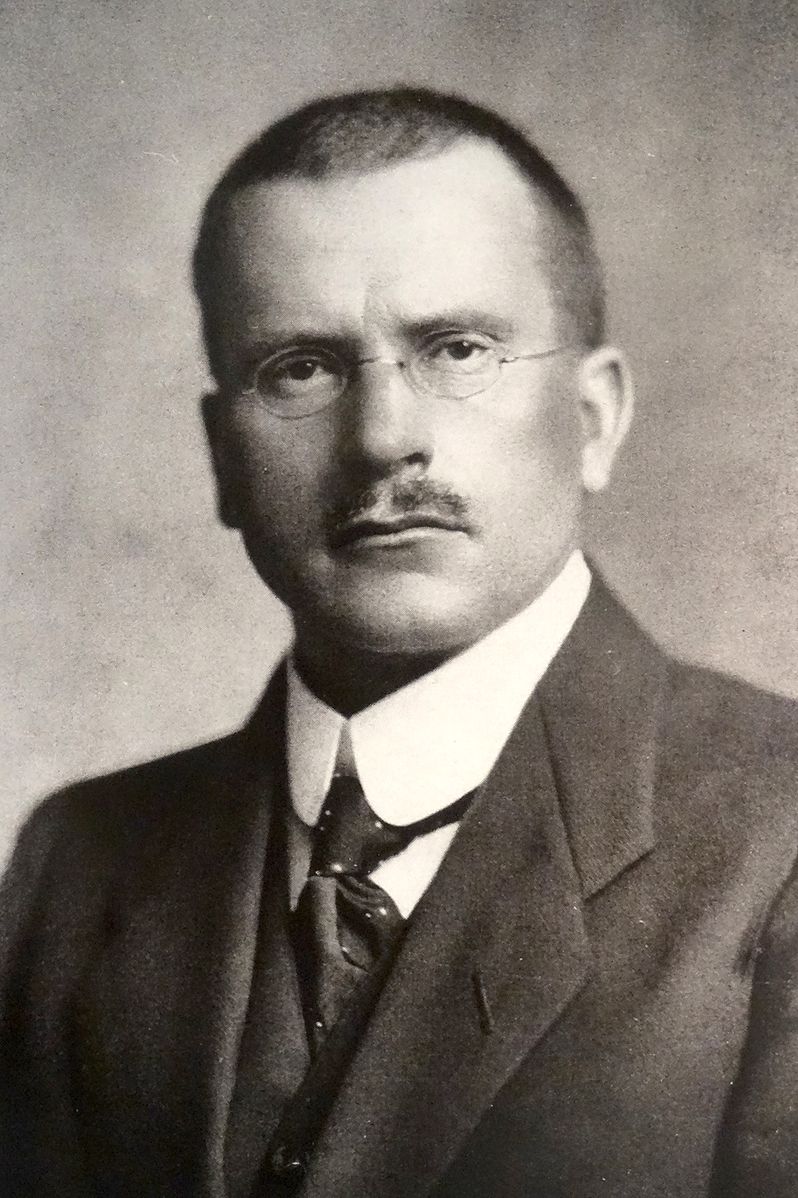
It is introverts who most commonly report, or are more willing to report being lonely, but the term introvert is itself a modern one,coined by the Swiss psychiatrist and psychoanalyst Carl Jung (pictured below) in 1921. At the time of Jung's research, many of our current working ideas about the self and society, emotions, the mind and the role of the individual were being formulated with the rise of the mind sciences. Scientific explanations for human personality and behaviour were being discussed, especially in relation to the structuring and working of the brain. 


In the new mind sciences, extroversion was characteristic of talkative, outward-facing personalities who were energetic and enlivened by being around other people. By contrast, introversion was associated with isolation and reserve, and by the need to spend time alone. Most personality models in history since Jung have worked with this basic understanding of differences between extroverts and introverts. In 1962 Myers-Briggs created a workable model of Jung's theories (the Myers-Briggs Type Indicator or MBTI) which is still in common usage. Curious? There is even a free online test, adapted from Myers-Briggs that you can take at home. 

The MBTI 'personality inventory' uses Extroversion and Introversion as one of its main categories of analysis. Despite changing models of psychology since the 1960s, concepts of introversion and extroversion continue to dominate, and have acquired a moral loading. Extroverts are generally seen to be open and agreeable, and introverts thoughtful as well as neurotic. The basic idea of personality (or temperament) types is not new; it has been around since the classical period. Following Galen, men and women were divided into melancholic, phlegmatic, choleric or sanguine individuals, depending on how much of a particular humour they possessed within their bodies. These differences are represented rather nicely below by the seventeenth-century painter Charles Le Brun's allegorical depiction of different personality types. 


Today, there is more moral loading about different personalities, and the value of introversion and extroversion. In the Western world we place higher stock on being extroverted, as identified by Susan Cain in Quiet: The Power of Introverts in a World that Can't Stop Talking  Many organisations and institutions (I have worked for at least one) celebrate noise and activity over quietness and consideration. Introversion, despite its necessity in many of the creative arts, has acquired something of a pathology; shyness a failing. Why is this? 

Part of this association (extroversion = good and introversion = bad) can be rooted in the social context of the psychological models that emerged after Jung. In the early twentieth century, European and American models of the self valued self-help, self-reliance, hard work and the rise of the individual. Being able to stand out, being willing to be vocal and outward-facing, being able to demonstrably lead others was a measure of success in presenting the self, as in business. On 21st century social media, vloggers like Zoella sell not only books and make up but a particularly modern form of aspirational extroversion that would have been unthinkable in an earlier time. 


Above: Zoe Sugg (Zoella) speaking at the 2014 VidCon, 28 June 2014. Credit: Gage Skidmore.

There are global differences in the desirability of extroversion. While it is taken as the norm in the UK and US, it has been argued, extroversion is less acceptable in traditionally social-orientated traditions of Japan and Buddhist cultures. Of course these are stereotypes, and differences are often surface, rather than core. But part of the reason for introversion in Buddhist cultures is the emphasis on looking inwards, in stillness and mindfulness, characteristics that arguably retain a different value in the West.  

In the real world, of course, we need introverts just as much as extroverts. And most of us are neither entirely one thing or the other. It is common for each of us to feel introverted or extroverted at different times depending on our mood, company and environment. Extroversion is just one of the 'big five' that psychologists now use to measure personality and aptitudes. In addition to extroversion, the characteristics that matter are neuroticism (emotional stability); conscientiousness, agreeableness, and openness. The vast majority of people fit somewhere in the middle on most of these rankings. There are always exceptions. In a recent study, The Atlantic magazine found that Donald Trump, America's new President, scored extremely low on agreeableness and unusually high on extroversion: a 'combustible' combination whose effects have yet to be seen. 

Friday, 5 August 2016

An Addictive Resource - Joan Lennon

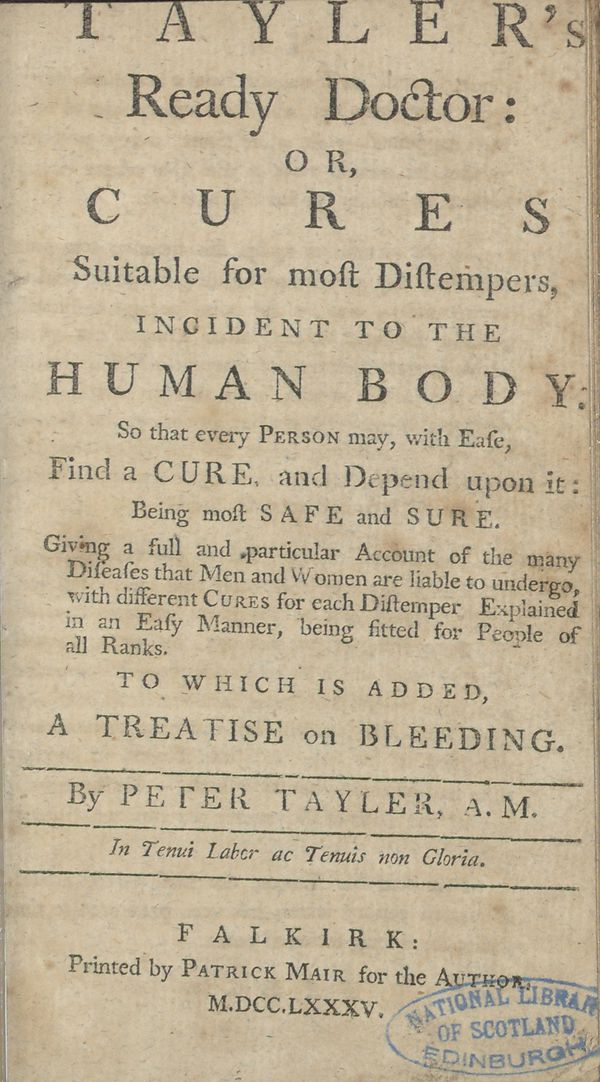
All I wanted to do was have a quick look at the National Library of Scotland's online resource of Chapbooks Printed in Scotland, just to see if I thought it would be of interest to History Girl readers.  And it is.  Fascinating historical chapbooks, printed in the 18th and 19th centuries, in 42 categories (from Accidents and Apparitions to War and Wit and Humour) are reproduced page for page.  But then I made a terrible mistake - I clicked on Diseases, and then on Tayler's Ready Doctor (published 1776) - and time passed ...


For a Greedy Appetite
Pottage of Wheat and a little Whale Oil boiled therewith; repeat this once a day for three days; or, apply Gum Arabic to the Belly.  If none of these will cure, the Patient's Case must be desperate indeed.

For Beardiness
... if you want to be free of a Beard altogether, the Blood of a Batt, once applied, will do the turn.

For Grief
Drink heartily of Balm and Mint Juice ...

For the Hickup
... Stop both your fingers in your ears, until you count to Fifty and Five regularly ...

Do you have an addictive nature?  Then perhaps you had better stay away from this site.  Think you're hard core enough to handle it?  Good luck and see you later.  Much, much later ...


Joan Lennon's website.
Joan Lennon's blog.
Silver Skin.

Thursday, 2 July 2015

The Problem with Medieval Medicine - Gillian Polack


This last month I’ve been ill. Not seriously ill. Just a virus that goes on and on and on. A debilitating virus with nasty symptoms, but just a virus. The reason I can say this with such resigned aplomb is because of the wonder that is antibiotics. Without them, I wouldn’t be breathing now. This is the side of medicine we hear about a lot. The glory side.

We also hear (we the general public) quite a bit about the evil that is Medicine Past. I seem to spend a portion of my classes each year explaining that just because a system of medicine is not the one we’re used to, doesn’t mean it’s automatically just a series of placebos. 


Scientific method is a wonderful thing. It allows us to take an idea and test it. Does this medical compound reduce the symptoms of a disease? Yes! Does it harm humans? Not in a worrying way. Good! We have a potential medicine. If the answers are not so good, then we count it as a dead end, learn from it (“We don’t need to try this again.”) and move on. 

Modern medicines have mostly been created using scientific method. I have some problems with the assumptions of how medicine should be tested and used and how we perceive illness, but that doesn’t detract from lab testing and field testing and the wonder of the double-blind study. Modern medicine may not be everything we mostly think it is, but it’s not half bad. My vile chest infection is cured, after all, and without antibiotics I would not be breathing right now. Prior to clever scientists sorting them out, many people did die. The common cold was potentially fatal.

We don’t know about medieval medicine. Really, we don’t. It hasn’t been tested in the same way.
Every now and again I find medical people (often quite senior in their profession) who have an interest in the Middle Ages who do my workshops and attend my lectures. Every time, we discover something new. My favourite discoveries all came from the one course: the Western European test for leprosy in the Middle Ages would work (it entails blood and a silver bowl) and so does the test for diabetes (the scent of someone’s urine) and so does the treatment for kidney stones (sequential warm baths filled with relaxing herbs).

What this alerted me to was that we don’t know the whole of medieval medicine. We don’t even know the half of it. We haven’t tested it. We’ve just assumed that it wasn’t modern, therefore it was garbage.

Some medieval medicine certainly doesn’t meet modern medical needs. In daily life in countries such as Australia and the UK, for instance, we tend to separate religion from medicine in a way that was inconceivable in the Middle Ages. Our whole world view is different. The spheres move in both universes, but they don’t move in the same way nor, indeed, do they have they same forces propelling their movement. This means that the prayer element and what we see as the magic element of medieval medicine simply do not work for us.


Until very recently, this meant that scientists didn’t even bother checking medieval cures. “They won’t be useful,” was the vague consensus, “because they’re medieval and wrong.” 

This was a failure of scientific method. The baby was thrown out with the bathwater because of preconceived assumptions. No-one took a statistically significant selection of cures and tested them. And yet, in my classes, doctors were still pointing out that some of the principles for balancing the humours would work as modern recommendations for leading a healthy life. Balanced intake of food (not too much, not too little, the right types of food) and gentle exercise are really not that alien to modern thought.

The interesting thing is why our wonderful scientific method failed us in not being applied earlier to medieval medicine. Pharmaceutical firms look for more medicines and more ways of turning those medicines into money. Scientists question the universe and discover fabulous new things about our world every day. Why was it – until very recently- just assumed that the Middle Ages were an area where nothing good was to be found, medically? 

We carry around deep inside us cultural pictures of various periods. Every time someone says “Don’t get all Medieval on me” or “Go back to the Middle Ages!” they’re drawing on a set of pictures, and those pictures say “A time of filth and superstition.” They say a lot more, too. Romance. Adventure. Early deaths. Crusades. It all adds up. It adds up to a sense of period so very strong that when scientists were looking for ways of expanding their understanding of medicine, they turned to Ancient Egypt rather than to Medieval Europe. They often assume that medieval doctors were simply fakes, and that medieval diagnosis and treatment wasn’t worth investigating.

We live with assumptions. We create them in order to live, really. If we didn’t assume that there was air to breathe, we’d be in a spot of bother, so we don’t test air and gravity every single day just to feel safe about them. Some assumptions (like there being air) are very sensible. Science fiction writers test these things and explore what it would be like if… and this is why all fiction is important. It allows us to test assumptions safely and to explore the universe, with or without gravity and air.

Historical fiction enables us to explore history safely. It tells us stories of the past couched within safe parameters. It can also (unintentionally, for the most part) reinforce some of the less sensible assumptions. We know that people breathed in the Middle Ages. This is a sensible assumption. We do not know that people died from the prescriptions of their regular doctors. We certainly don’t know that all doctors were quacks. And no-one has yet tested a complete set of medieval medical cures to find out just what the standards were for the doctors who used them. I know from my students that some diagnoses were accurate and some cures useful and that others were less so. That’s not a proper inquiry, however, it’s random sampling by a non-scientist. 

My answer to general questions about medieval medicine right now is “I need more parameters for your question. What types of practitioners are you talking about? University-educated doctors or apprenticed doctors, apothecaries, midwives, something else entirely? What sort of illnesses? What region?”

 Even then, my answer will be a bit hazy, for I need to read more studies by modern scientists, analysing the usefulness of the work of all these people, cure by cure. Until I get those answers, I don’t know. None of us do. 

The one thing we do know is the assumptions about bad medicine in the Middle Ages are just that. 

I usually offer a pacifier, however. I point out that just after the Middle Ages, Nostradamus was very famous for his medicine (despite not being licensed to practise as a doctor) and that I have his recipe book and I offer his recipe for quince jelly. My mother made it recently, in the spirit of scientific inquiry. She says it’s very nice, but that she should have cooked it a bit longer.

Monday, 5 January 2015

Flatulence, Indigestion, Black Death, not to mention Acne ... by Joan Lennon

The season of excess in food and drink is still strong in our memories, as are thoughts of ensuing digestive difficulties.  (If you type "Healthy January" into Google, you get something like 530 million links to click on.)  Indigestion and the "expelling of wind" were topics which also exercised the minds of medieval medical types considerably.*  Here are a few of the cures they proposed for those gut feelings:

- powdered bay leave taken with honey
- feverfew fried with wine and oil and applied to the belly
- the ingestion of mint, valerian, hemp seeds, cardamon seeds, fennel, cloves ... 
- borage, which had the added advantage of also being good for melancholy (Being overly windy can be depressing.)

A quite interesting thing about these cures was that they were also prescribed for plague**, acne and the bite of a mad dog.  The up side to this was that anyone unfortunate enough to be suffering from all these conditions simultaneously wouldn't have to spend time and money on taking different medicines.

I think I might just consider a bit of moderation.


* I thought this should perhaps be an image-free post.  You can thank me later.
** Other medieval cures for the black death included drinking powdered emeralds or molten gold, eating a spider inserted into a raisin, and the toad cure.  This involved a number of dead toads which you dried in the sun and then placed on the victim's boils.  The toad would swell up and burst, and you would then apply another, continuing until the patient got better*** or you ran out of toads.
*** Or, you know, died.

(To find out more about the delights of medieval medicine, join me at the back of The Wickit Chronicle books where I get to include much that is gruesome and revolting from the Middle Ages, just for the fun of it.) 

Joan Lennon's website.
Joan Lennon's blog.


Thursday, 10 July 2014

A very welcome development – Michelle Lovric


The history of medicine is the history of mankind. We know ourselves through the adversities our bodies face and the ways in which, through the ages, we have confronted them. Our cultural identities are aligned with and imprinted on our bodily operations. It is medical history that records plagues including AIDS, tattoos, sport and eating patterns, keeping the most scrupulous records of our physical existence.

This post is about a refreshing new development in the field of medical history, and includes a set of images that demonstrate just how wide a field is covered by that term. All the illustrations in this blog come from one place: Wellcome Images.
Venus's Bathing (Margate). A woman diving off a bathing wagon in to the sea,
       hand coloured etching by Thomas Rowlandson, 1790
The Wellcome Trust has recently taken the plunge (forgive me! but I love this picture) of making its historical images freely available for download for personal, academic teaching or study use, under one of two Creative Commons licences. Hi-res historical images are also available to download free of charge, for any usage, under a Creative Commons Attribution Only. Historical images are free of all reproduction fees.

This news will bring shock and awe (in a good way) to those of us who have had to laboriously and expensively negotiate reproduction rights for books, PowerPoint presentation and blogs.

Not only is this a most generous gesture by the Wellcome, but there’s an impressively well managed image bank site. Searches are easy and extensive. Each free-usage picture comes with the Wellcome Library attribution embedded in it, so one doesn’t have to accessorise and clot up one’s text with attributions as with (the much appreciated) Wikimedia commons, for example.
Effigy of the false Imposter (Satan) sitting on a brass throne wearing on his head a crown like the tiara of the Pope. From the Histoires Prodigieuses, by Pierre Boaistuau, a sixteenth-century French writer presented to Queen Elizabeth I in 1560.

Wellcome searches enable the user to consult History, Contemporary or Historical & Contemporary. Advanced search options include date and medium (i.e. carving or painting).

When searching, it is easy to see which images are free usage: those that require clearance are labelled ‘rights managed’ even in the search thumbnails.

Clearly a great deal of thought has gone into this process. So this month I interviewed Simon Chaplin, head of the Wellcome Library, about the developments.

ML Can you tell me briefly about the history of the Wellcome collection of images and how it started?

Wellcome Images is an amalgam of two things: the Wellcome Trust’s medical photographic library, and the picture collections of the Wellcome Library. As the delivery of images has moved from analogue to digital, so these have been combined into one service, Wellcome Images. Today we have hundreds of thousands of digital images freely available online at wellcomeimages.org, covering the history of medicine and current biomedical science and clinical practice.

ML Can you explain how all the different parts of the Wellcome Trust work – the Image Library, the Library, the Collection, the Trust, and anything else I have forgotten?

Henry Solomon Wellcome, 1906. Oil painting by Hugh Goldwin Riviere

We’re all part of the Wellcome Trust, the charitable foundation set up by pharmacist and collector Henry Wellcome. Our mission is to improve human and animal health by supporting research and public engagement around biomedical science. In line with Henry’s vision, this also includes understanding the place of medicine in culture, past and present. Like the BBC, we have different elements that serve different audiences – Wellcome Collection is our public exhibition and event venue, the Wellcome Library supports researchers interested in the place of medicine in culture, Wellcome Images serves up images drawn from all of our activities. There’s lots of parts to Wellcome, but underneath it we all share a common purpose.

ML I believe you are the first major picture library to take this unusual step of freeing your historical images for use. Is that true?

I’d love to say we are, but actually we’re part of a growing trend. In the US federally-funded institutions such as the Library of Congress or the Smithsonian have always made their out-of-copyright collections freely available. More recently places like the Rijksmuseum and the Metropolitan Museum of Art have made high-resolution images freely available. We’ve gone  a step further than some by allowing anyone to use the images for any purpose rather than just restricting them for educational or private research use.

ML What was the thinking behind this move?

Our mission is to encourage knowledge creation and engagement. What matters to us is that people find and use our images, so the fewer restrictions we have in place the better. It helps that for us generating revenue isn’t the most important factor – we have Henry Wellcome’s endowment and the team who manage it to thank for that. But I think that even for museums and libraries that don’t have the same kind of funding that we do, there is often not much profit to be made from selling rights to your images when you factor in all the time needed to manage permissions, negotiate fees and then ensure that people are following the rules!

Picturesque sales techniques for medical wares

ML Do you think other big image banks, like Bridgeman, Getty or similar will follow suit?

I think it’s different for commercial images libraries – clearly they need to make a profit, as do people whose livelihoods depend on the copyright they own on images they’ve created (just like authors!). But like music and publishing companies they are adapting to a changing environment, and I think there is growing awareness that in some cases it is better to embrace limited free use than to become a kind of digital Canute. For example, Getty has recently made millions of its images freely ‘embeddable’ in web pages.

ML The Wellcome Trust has a vast collection of medical history artefacts. Are modern photographs of the artefacts included in the free usage?

Yes, the free images include modern photographs of objects in the library collection or in the Wellcome collections held at the Science Museum in London (like this one, http://wellcomeimages.org/indexplus/image/L0034909.html, which is a good reminder of why locking precious things up is sometimes not the best solution)
Wax anatomical figure of a woman, by Clemente Susini, Florence, 1771-1800


ML What kind of images are restricted in use? This is because the copyright rests with the photographer or artist?

We have some images that are only freely available for educational or private research use. This is because they’ve been supplied to us by photographers or artists who trust us to manage the image rights on their behalf. When we license these we pass the fees back to the photographer. It’s a good system – they benefit, and we help achieve our mission because we have these fantastic images that can be used for education and research (as our Wellcome Image Awards demonstrates, http://wellcomeimageawards.org)


The life and horrible adventures of the celebrated Dr. Faustus; relating his first introduction to Lucifer,  and connection with infernal spirits; his method of raising the Devil, and his final dismissal to the tremendous abyss of Hell, 1825


ML Tell me a little about the length and breadth of the image collection and what are its biggest strengths, in your opinion?

Where to begin? Well, our images reflect the wonderful variety of stuff we have in the Wellcome Library for a start – so illustrations from printed books and manuscripts, paintings, prints, drawings and photographs and so on, mostly relating to medicine or health in some way, but not all. For example, our collections are strong on subjects like travel, food and religion – all of which are closely associated with health and well-being. (Ed. note - and animal well-being: see below)

A group of dandies stand by while a lady's dog receives an enema. Coloured engraving.


Our collections are strong in non-western material so we have a lot of illustrations from East and South Asian manuscripts as well.

Early 18th-century Chinese woodcut illustrating 24 types of external haemorrhoids. From Yizong jinjian: Waike xinfa (The Golden Mirror Of Medicine: Essential Knowledge and Secrets of External Medicine)

ML I understand that there are new developments underway for the Research Library.

We’re in the process of revamping it, creating a new public library – which visitors can go into without becoming a member – alongside the research library. We want to encourage people to use our collections for study, and to explore what we have but we also recognise that a good research environment should be quite and not crowded, so separating the two seemed like a better way to go. The research library is almost finished – it has a richer feel, with more paintings on the walls and colour in the décor. And on a practical level we’ve enlarged our rare materials room so there’s more space for people wanting to look at archives, manuscripts and older books.

Miniature of St Luke, patron saint of medicine, and the beginning of the third Gospel. Transcribed by Shmawon the scribe and illuminated by Abraham for the sponsor Lady Nenay – Armenia Gospel of 1495

ML How easy is it for a novelist or researcher to become a member of the Wellcome Library?

About as easy as it can be: you turn up, you show us some picture id and proof of address and we give you a membership card. It’s all free and membership lasts five years before you need to renew it.
The evolution of a writer: a fox riding a goose turns into a writer seated at his typewriter - which in  turn evolves into accordion, bellows, money-bag, and handcuffs; satirising Darwin's theories. Wood engraving after C. Bennett, 1863.

ML Once they are members, they have access to all kinds of materials by remote access, something I have found very useful in own my work. Can you tell us a little about the electronic collections available to writers remotely?

I’m a historian of the 18th century so the ones I love best are the Burney collection of newspapers from the British Library – read the small ads in particular for a wonderful insight into texture of life in Georgian England – and Jisc Historic Books, which brings together three vast collections of English printed books from the 17th, 18th and 19th centuries. There’s a full list of all the journals and databases we subscribe to here: http://catalogue.wellcomelibrary.org/search/l.

ML And there are plans to expand the remote resources too, by digitizing a substantial proportion of its holdings and making the content freely available on the web. This already includes some cover-to-cover historical books, but I understand that you are now working to upload video and audio, entire archive collections and manuscripts, paintings, prints, drawings, photographs, ephemera and more. What is the thinking behind this?
We’ve realised that while the Wellcome Library is a wonderful place to come and work and look at our collections in person, there’s many more people out there who’d love to make use of our collections but can’t get to London. So digitising our collections helps us share them more widely. We started with images, but have expanded into books and archives and we’re increasing the pace now. We aim to have about 50 million pages online by the time we’re done – we’re about a fifth of the way there. We’ve digitised archives about genetics and eugenics, reports about public health in Victorian London, books about sex and crime (which will link to exhibitions we have planned in Wellcome Collection).

Sex and crime: The rape of Proserpine. Engraving after Titian.


We are just starting two projects, one to do all the 19th-century medical books we can lay our hands on and the other to do all of our mediaeval manuscripts. All of the stuff we’ve digitised is completely free – you don’t even need to be a library member to see it online.
Witchcraft: a white-faced witch meeting a black-faced witch with a great beast. Woodcut, 1720

ML I understand that you also have picture researchers on staff who can help? Is that a free service? What is offered?

We have expert and very helpful staff who can help point you in the right direction, but we can’t do your picture research for you! We are trying to make our catalogues and image library as straightforward and easy to search as possible, and are making sure that our images are also indexed by google. We’d love to offer personal service to users but with over 40,000 visitors to the library a year, and over half a million images downloaded each year, we’d need to hire hundreds of people!

 ML We first knew one another when you were at the Hunterian Collection. I know you have personal research interests in medical history too. Can you tell me a little more about how you came to be involved in this field?

I really wanted to be a marine biologist, but I realised quite early on that my role model (Doc, from Steinbeck’s Cannery Row) wasn’t a reliable indicator of life as a research scientist. Instead I was drawn into the history of science and medicine at university and loved the subject. Since then I’ve been lucky enough to work at three institutions – the Science Museum, where I began my career; the Hunterian museum; and now the Wellcome Library – which all have a strong connection with medical history and a desire to see this translate into things that really appeal to non-specialist audiences. I loved the Hunterian, where I helped plan the redisplay of John Hunter’s collection of anatomy and pathology specimens – things which were for too long hidden away from non-medics, but which deserve to be seen and celebrated as the masterpieces of science and skill that they are.
Sir Joshua Reynolds, President of the Royal Academy at Somerset House, holding his ear trumpet. To his    left is Dr. William Hunter who was Professor of anatomy at the Academy and is directing the arrangement of a male model. Johann Zoffany, 1783


ML Clearly you believe that there is a place for writers of fiction in the field of medical history?

History of medicine is a thriving academic discipline, and has a strong following among professional historians and doctors and others who have a part-time interest. It’s a natural thing to see this knowledge feed in to fiction: it’s such a rich subject, and speaks so strongly to the human condition. And in turn, authors writing fiction can bring the subject to new audiences, so there’s a mutually beneficial reciprocal relationship.

An early History Girl: Anna Seward (1747- 1809), writer, literary critic and correspondent. Stipple Engraving 1823 by J. Chapman


ML The Wellcome offers opportunities for writers in various ways – even to writers of fiction, with the Wellcome Prize for the best book published on a medical theme each year. Can you tell us about the thinking behind that prize, one of the most valuable in the publishing industry?

The Wellcome Book Prize is open to fiction and non-fiction writers in any genre that touches on medicine, health and illness.  The Prize, and the brilliant writers it attracts, is uniquely placed to provoke, excite and sustain interest and debate in the many forms these experiences take.  We’ve revamped the prize this year and it is now a central part of our commitment to literature as a means of inspiring and nourishing curious minds.

ML There are other opportunities for fiction writers at the Wellcome too, I understand. Engagement Fellowships …? Can you explain?

The Wellcome Trust’s Engagement Fellowships enable talented communicators to make real advances in public engagement around biomedical science and the medical humanities. We fund people for up to two years, and the strength of the scheme is the diverse range of their disciplines, from clinicians to historians. We welcome applications from established writers and artists – one of this year’s Fellows is the award-winning poet Lavinia Greenlaw. The Trust also runs a Screenwriting Fellowship with the BFI, in association with Film4.

ML Finally, an obvious question but one I cannot resist asking. What is your personal favourite among the images at the moment?

It’s this one: http://wellcomeimages.org/indexplus/image/L0030376, the reverse of an advert for Brooke’s Soap from our ephemera collection. I got it printed on to a cover for my phone, which (a) looks like a bar of soap and (b) can do lots of things but won’t wash clothes!


                 Thank you, Simon, and many thanks to the Wellcome, too.

Michelle Lovric's website

Her latest novel, The True & Splendid History of the Harristown Sisters, was published last month by Bloomsbury.