Saturday, 14 May 2016

This Orient Isle by Jerry Brotton Review Catherine Johnson


Just last week that wonderful, massive, all encompassing metropolis, London, elected its new mayor. Sadiq Khan is (quite a lot) younger than me but we do share some experiences. We're both the children of immigrants who grew up to know that London, a city that accepts all comers, is ours. He grew up a Muslim, attending mosque in Tooting,  South London, where people worshipped in a language that was not English. Just as I attended chapel in Finsbury Park, North London, listening to services in Welsh.

Khan's success has been celebrated as London's first Muslim mayor. To most Londoners that's something, rightly I think, to be proud of. To others, (I made the mistake of listening to a Radio 4 phone in over the weekend) it's the end of civilisation as we know it.

London has always been a city that soaked up the driven, the hungry, the ambitious, the terrified and the desperate for hundreds and hundreds of years.

And this lovely book is very timely indeed, even though it details events of  nearly five hundred years ago.

Jerry Brotton is a Professor at Queen Mary University of London. He has written a marvellous and very readable book, a little window on a tiny period in history, the late sixteenth and early seventeenth century. It details the links made by Elizabeth the First's court to the Ottoman Empire and the Morrocan Kingdom. For reasons of trade initially - the Persian silks and Turkish carpets, and Elizabeth's favourite, Moroccan sugar - and equally importantly the possibility of making an alliance against Catholic Spain and the Holy Roman Empire.
The 'Rainbow' portrait of Elizabeth I by Marcus Gheeraerts the younger c 1600 shows the queen dresses in Turkish and Oriental silks and jewels
For a brief while late Tudor Britain fell in love with all things oriental. Elizabeth and Sultan Murad III exchanged diplomatic gifts and letters, Elizabeth was keen for little England to be recognised as a power of almost equal standing to Spain. And on London's streets the massive Ottoman Empire was a source of fascination as well as fear.

The Levant Company - a forerunner of the East India Company - sent traders to Persia and to Aleppo. The British court sent an envoy to Constantinople. (Un)Gentleman adventurers the Sherley brothers, boasted and lied and roistered their way round the Persian courts.

Of course prisoners were captured too and sold into slavery all around the Mediterranean. And some, most shockingly  'turned Turk' and converted to Islam. In 1577 a Norfolk merchant, Samson Rowlie was captured by the Turks and after  castration became Hassan Aga, Chief Eunuch and Treasurer of Algiers.

The Tudor stage was inspired too, and characters from the south and east peopled various plays. Not only Shakespeare's Othello written soon after the visit by the Moroccan ambassador al-Annuri, but Tamburlaine by Marlowe and a host of other now forgotten productions.  Moors and Turks and Persians crop up in many writings of the era by lesser known names and plays, now long forgotten.

But the relationship cooled and in 1601 Elizabeth issued an edict, just before the Moroccan ambassador made ready to leave. In this edict she complains of a great number of negroes and blackamoors which (as she is informed) are carried into this realm since the trouble between her highness and the King of Spain...'

As today, economic difficulties - bad harvests, lack of cash - made new and visible immigrants unwanted guests.  In her edict she said 'these kind of people shall be with all speed avoided and discharged out of this her majesty's realm'

She appointed a merchant to ship us all out, but of course it didn't happen. London was, as then, a world city. It was already far too late for sloppy attempts to pull up the drawbridge. Britain was already looking out to the East, and soon to the West as well. And travel, trade and ideas always go both ways.

Brotton's book is a great read and illuminates the impact of the Muslim world on late Tudor Britain, through trade and culture. I can't recommend it enough.

One more thing. Brotton talks about an unfinished play, a co-written piece by Shakespeare and other writers in 1603/4. It was called Sir Thomas More,  and was a dramatisation of the life of the famous Tudor Councillor.

Shakespeare wrote scene six himself, it's in his handwriting apparently, and in it there's  a powerful speech in which Sir Thomas takes to task London shopkeepers and citizens who have been attacking aliens and strangers and refugees in the May Day riots of 1517. The locals blame these people for taking their jobs. It's a wonderful illustration of how absolutely nothing changes.

Shakespeare, in the voice of More, tells the crowd to reject xenophobia. He asks the crowd what they would do if they were refugees -

Say now the king,
As he is clement if th'offender mourn,
Should come too short of your great trespass
As but to banish you:whither would you go?
What country, by the nature of your error, 
Should give you harbour? Go you to France or Flanders,
To any German province, Spain or Portugal,
Nay anywhere that not adheres to England:
Why, you must needs be strangers. Would you be pleased
To find a nation of such barbarous temper
That, breaking out in hideous violence,
Would not afford you an abode on earth,
Whet their detested knives against your throats,
Spurn you like dogs, and like as if that God
Owed not or made not you, nor that the elements
Were not all appropriate to your comforts
But chartered unto them?What would you think
To be thus used?This is the strangers' case
And this your mountainish inhumanity.


Catherine Johnson
Her latest book is The Curious Tale of The Lady Caraboo and is shortlisted for the YA Book Prize

Friday, 13 May 2016

WHO IS THE GIRL IN THE GLASS TOWER ? Elizabeth Fremantle

Arbella as a girl
In advance of the publication of my new novel I thought I'd introduce my extraordinary protagonist, Lady Arbella Stuart.

Through her great grandmother Margaret Tudor, and as the nice of Mary Queen of Scots, Arbella had a strong claim to the English crown and was raised in the belief that she would be the heir of Elizabeth I.

In the final years of Elizabeth's long reign there was much covert political jostling to establish who would eventually take the throne. But the fear of being usurped meant that the ageing Queen refused to publicly name her successor. The nearest she came to doing so was to say of Arbella, 'One day she will be even as I am.'

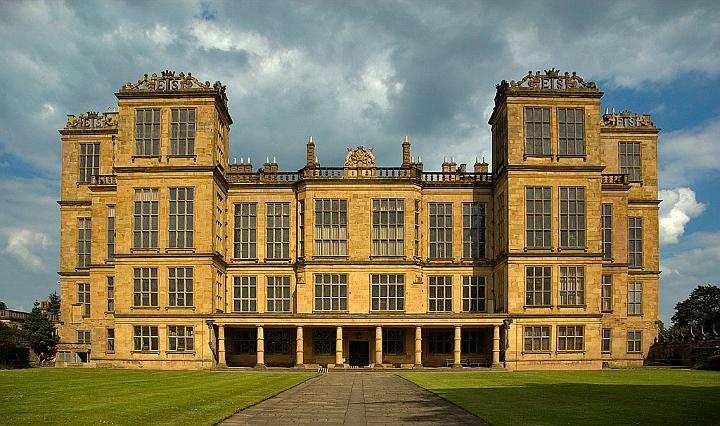
Arbella's position as presumed, though unofficial heir, made her a potential focus for Catholic plots. Though she was raised a Protestant the prevailing fear was that she might be kidnapped and encouraged to convert whilst still young so the plotters could then launch a coup to place her on the throne as a Catholic puppet queen. For this reason she spent her youth in virtual imprisonment, cloistered away at the magnificent Hardwick Hall in Derbyshire under the strict rule of her ambitious grandmother Bess of Hardwick.

Hardwick Hall

However the political climate changed irrevocably in the last year of Elizabeth's reign and it was Arbella's cousin James who eventually succeeded, leaving Arbella in political limbo. She was released from Hardwick and called to court but her royal blood made her at best a valuable bargaining chip on the royal marriage market or, at worst, a dangerous pretender to the throne. But Arbella refused to be held a fugitive at her cousin's court and made a courageous bid for freedom at great personal cost.

Arbella later in life
A remarkable, highly intelligent and complex woman, yet headstrong and deeply flawed, Arbella with her poignant and profound desire for freedom, fascinated me from the moment I first read about her. She was a prolific letter writer so it was easy to engage with her authentic voice and thereby build a sense of how she might become a character in The Girl in the Glass Tower.

In my novel I have claimed poetic license and woven Arbella's story through with that of the poet Aemilia Lanyer. Lanier was another extraordinary woman of the period, remarkable for being the first English female published poet. 

Possibly Aemilia Lanyer
Lanyer is sometimes cited as a candidate for Shakespeare's 'Dark Lady' but as I found no hard evidence for this I have not included it in the book. At age 18 she became the mistress of the Queen's cousin henry Hudson who was forty years her senior and thereby had an entry to court circles. Her groundbreaking, project was a long poem in defence of Eve and other misunderstood women and as a tragically misunderstood woman herself, Arbella fits well into Lanyer's scheme. 

The actual link between the women is tenuous but Lanyer addressed a poem to Arbella and they may well have known one another at court. But it seemed to me apt to place these two women side by side in The Girl in the Glass Tower as their stories chime together.


READ AN EXTRACT ON THIS LINK

Tap. Tap. Tap on the window.
Something, someone wanting to be heard. Waiting to be free.
​Tudor England. The word treason is on everyone's lips. Arbella Stuart, niece to Mary Queen of Scots and presumed successor to Elizabeth I, has spent her youth behind the towering windows of Hardwick Hall. Her isolation should mean protection – but those close to the crown are never safe.

Aemilia Lanyer – writer and poetess – enjoys an independence denied to Arbella. Their paths should never cross. But when Arbella enlists Aemilia's help in a bid for freedom, she risks more than her own future. Ensnared in another woman's desperate schemes , Aemilia must tread carefully or share her terrible fate...

​The Girl in the Glass Tower brilliantly explores what it means to be born a woman in a man's world, where destiny is strictly controlled and the smallest choices may save – or destroy – us.
The Girl in the Glass Tower will be published by Michael Joseph on June 2nd

For those interested in reading more about Arbella's life Sarah Gristwood's excellent biography, Arbella: England's Lost Queen, is a must.

Thursday, 12 May 2016

No post today

Owing entirely to the incompetence of blog founder Mary Hoffman, there is no new blogpost today.

Normal service will be renewed tomorrow.

Apologies

Wednesday, 11 May 2016

Peaky Blinders: Fact or Fiction? by Katherine Clements

Peaky Blinders returned to our screens last week. One of the most critically acclaimed dramas in recent years, the show has amassed an army of loyal fans, including many who would never usually watch a period piece.

For anyone unfamiliar with the show, the story follows the fortunes of the Shelby family, and in particular, the head of the Peaky Blinders gang, Tommy Shelby, a veteran of the First World War, who seeks to legitimise his illegal gambling operation by taking over racetrack bookmaking pitches in the years following the war. Set in Small Heath, Birmingham in the 1920s, it's visually stunning and packed with brilliant performances. It’s been a hit in the UK, and due to a distribution deal with Netflix, is gaining fans across the globe.

The cast of Peaky Blinders


I recently interviewed Peaky Blinders creator and writer, Steven Knight, for Historia magazine (you can read the full interview here). I asked him about his inspiration for the series. He told me that the seed came from stories his parents told him about growing up in Small Heath in the 1920s. The Peaky Blinders that we’ve come to know – Tommy Shelby and his charismatic family – are a fiction, but they’re based on stories from Knight’s own family background, something he clearly holds dear. But how much is fact and how much is fiction?

According to Carl Chinn, a Birmingham native and Professor of Birmingham Community History at Birmingham University, the real Peaky Blinder gang came to prominence in the 1890s. The first written record is found in newspaper reports of a brutal attack on a young man after an evening spent in a local pub. The incident was reported in the Birmingham press with no mention of the Peaky Blinders but national newspapers picked it up. Soon after, one London paper received a letter claiming that the Peaky Blinder gang of Small Heath was responsible.

But this Victorian gang was a far cry from the organised mob depicted on our screens. They were typical of the street gang culture that arose in industrial centres in the 19th century, such as the Manchester Scuttlers and the penny mobs in Glasgow. The Birmingham gangs were known as ‘Sloggers’; violent young men scraping a living through robbery and threats who fought with sharpened belt buckles and iron bars. The Peaky Blinders were one of several street gangs that took their lead from the Sloggers. They were feared and they were lawless, known for their distinctive sartorial style of bell-bottomed trousers and silk scarves.

But what of the razorblades sewn into caps? No evidence, says Chinn. He claims that the name simply came from the fashion for young men in industrial towns to wear flat caps, rather than the bowlers of the previous generation.

Members of the real Peaky Blinders from West Midlands Police Museum

Historian David Cross, curator of the West Midlands Police Museum, disagrees. Based on the museum's collection of photographs and court records Cross says, 'They used their hats with razor blades sewn in to rob people. That's what a Peaky Blinder was. When they hit someone or head butted someone on the nose while wearing one, it would cause their victim temporary blindness.'

So is this an urban legend? Or is it rooted in truth?

The Peaky Blinders terrorised Birmingham throughout the 1890s but their reign came to an end as the century turned. Chinn thinks this was largely due to increased policing and stricter sentencing under the tenure of Police Chief, Sir Charles Haughton Rafter, who came to Birmingham in 1899. Rafter was from Belfast, and was recommended for the post as 'skilled in the preservation or restoration of peace in troubled districts where party feeling runs high'. Rafter expanded the police force, recruiting men from Ireland to swell the ranks and was one of the first to employ women. Was he there to put down the Peaky Blinders or to suppress radical political groups? Whatever the case, it's tempting to assume that Knight has used Rafter as jumping off point for the wonderfully malevolent Inspector Campbell, as played by Sam Neill.

Rafter’s policies worked and the Peaky Blinders were suppressed – historical references to them seem to disappear in the early 1900s – but that wasn’t the end of the story. New gangs emerged in the pre-war years, namely the Brummagem Boys, a gang of thieves and pickpockets who targeted racetracks and football matches, frequently resorting to violent tactics when their victims wouldn’t play ball.

One man eventually emerged as leader of this gang and fans of the show will recognise his name: Billy Kimber. Kimber was depicted as Tommy Shelby’s cockney nemesis in series one but in reality he was Birmingham born and bred and head of the Birmingham gang; a charismatic man who, by the early 1920s, had risen to become one of the most powerful mob bosses in the country. He’s the closest real life counterpart to Tommy Shelby.

Billy Kimber

Kimber rose to prominence through organised crime, running racecourse rackets. Legislation had made gambling illegal except at racetracks. Attendance at races was booming and punters were ripe for the picking. With roots in Birmingham’s illegal gambling operations, this was natural territory for Kimber to make his mark. With a willing army of men under his command, he soon did. In 1922 a police report declared that the Birmingham Gang was 'mostly made up of convicted thieves of the worst type', who had convictions from 'assaulting the police to housebreaking and from wounding to manslaughter'. Kimber used all manner of violent tactics to control the tracks in the North and Midlands and even attempted to take tracks from rival gangs in the South.

But with power and ambition came opposition. Bitter war broke out between the Birmingham gang and London’s power players. Here we encounter another name that will be familiar with Peaky Blinder fans: Darby Sabini.

The real Darby Sabini was a far cry from the slick, sharp-suited character portrayed with unhinged menace by Noah Taylor in series two. Hailing from Clerkenwell’s Italian quarter, Sabini had a rough upbringing. He began his career as a boxer and runner for local bookmakers who were reliant on protection rackets run by gangs to prevent robberies and avoid arrest. Heavily involved in this world, Sabini's influence increased in 1920, following a fracas with local London rivals the Elephant Gang (so called because they hailed from Elephant and Castle). Sabini floored the gang leader, breaking his jaw with a single punch, his previous occupation clearly coming in handy. Soon after he was running his racecourse racket out of The Griffin Pub on Clerkenwell Road. 

The violent clashes between racetrack gangs depicted in the series are based on fact. The early 1920s saw rival gangs staking claims over pitches, operating forced protection rackets and bribing police. The Sabini gang were notorious for using cutthroat razors as a weapon of intimidation. Newspaper archives are littered with reports of gruesome attacks. Perhaps this is where the association with the razorblade originates?

Sabini also teamed up with some of Kimber’s rivals, among them the Jewish gangs based in London’s East End. In 1921 Kimber was attacked and shot during a pre-arranged meeting with Sabini, the gunman supposedly one Alfred Solomons. Though Kimber survived the gunshot wound, Solomons stood trial but was acquitted when all the witnesses mysterious retracted their statements.

The TV version of Alfie Solomons depicts him as the Jewish boss (another unnerving performance from Tom Hardy here) but that’s not quite the truth. Solomons, along with his brother Harry, was certainly active in the Jewish underworld and was no stranger to violence, but he wasn’t the man in charge. He crops up in the records a few times, associated with gang related crimes. In 1924 he was accused of murdering a man at the Eden Social Club. Fans will remember that the Eden Club was the name of the ostentatious London venue that serves as the site of territorial warfare between the Shelbys and Sabini in series two. The real club was reported in The Times as a rather less glamorous ‘two storey premises above a motor garage’. 

Slums on Garrison Lane, home of the fictional Shelby family.

So what should a student of history take from Peaky Blinders? If we look at the historical record, the real Peaky Blinder gang had waned by the 1920s. It’s doubtful that they ever used razorblades as weapons. But they were part of a longer history of street gang culture, the 19th century Slogger gangs that emerged from the slum areas of Birmingham and a forerunner of the powerful Birmingham Gang under Billy Kimber. 

And what about the stuff that didn’t make it into the history books? What about those stories that so fascinated a young lad from Birmingham? Knight says: ‘my dad’s uncle was from a family called the Sheldons – which in fiction became the Shelbys – they were bookmakers and were known to him and everyone else in the area as Peaky Blinders … I started doing research into the racetrack gangs and how they operated … the things that I’d heard from my parents differ from what’s been written, and I believe my parents. When you hear real history, you know it’s the truth.’

It doesn’t take much digging to find the real stories behind the extraordinary characters that Knight has created – this post only touches the surface. Knight has done his research, taken characters and ideas from history and made them into something entirely new. What is clear is that the series is a labour of love, and Knight takes pains to be respectful to the history of working class Birmingham, its people and its gangs. After all, it’s his history too. 

As a piece of storytelling it’s a masterful example of having fun with history. Against the backdrop of Birmingham's gangs, Knight weaves in numerous story lines based on real political events. Knight describes ‘the history stuff’ as ‘nails in the wall – if you put one or two nails in then you can hang what you want on it. But the nails have got to be there.’ It’s a brave approach that will have the purists gnashing their teeth, but at the end of the day I have to agree – when it comes to drama, it’s the story that matters, and this one has me on the edge of my seat.

Tuesday, 10 May 2016

Doing the salami and swallowing the toad - Michelle Lovric


Every language is most alive in its idioms, and none more so than Italian, where everyday expressions are rich in colourful metaphor and hilarious visual images. Most of my novels are populated by Italian characters whom I write in English. All of us writing in this way face the same problem: how to convey the perfume of Italian-ness without silly pastiche. Similarly, when I write Irish characters, I have to rein in the 'Hong-Kong Paddy' of begorrahs and their kin and look for something deeper: the rhythm, the redundancy, the exaggeration that lends Irish English its charm.

With my Venetian protagonists, one of my tricks is to use Italian expressions literally translated into English, so that it makes sense, but hovers in the outlying region of sense ... that debatable land where you often find the poetry.

Below are some examples of the kind of expression that I like to use to show that my English-speaking Italian  characters are not at all English.

The expressions are shown in the original Italian and then in literal English translation, with an explanation of the actual meaning or the English equivalent expression underneath. The middle line is the one my characters use.


Sono contento/a come una Pasqua.
I am happy as an Easter.
I’m happy as can be.

Dormo tra due guanciali.
I sleep between two pillows.
I’ve got no worries.

Ho un culo bestiale!
I’ve got a beastly ass!
I’m a lucky guy!

Sono andato/a in brodo di giuggiole.
I went into the Jujube soup.
I went into raptures.

Mi sono mangiato il fegato.
I ate my own liver.
I kicked myself.


Fa venire il latte alle ginocchia.
He'll makes milk come out of your knee.
He’s a real bore.

Spirito di patata.
The spirit of a potato.
No sense of humour.

Vende solo fumo..
He’s/She’s only selling smoke.
He’s/She’s talking big.

Sono incavolato/a …
I have thrown myself in the cabbages …
I’ve really lost it …

Io me ne faccio un baffo!
I don’t do a whisker!
I don’t give a damn!

Sei un bugiardo della Madonna.
You could lie for the Madonna.
You are one hell of a liar.

Non fare il salame!
Don’t do the salami!
Don’t act like an idiot!

Non ha sale in zucca.
He doesn’t have salt in the pumpkin.
He’s not very intelligent.

Sei uno scarpone.
You are a big shoe.
You are a dead loss.

Ti salta subito la mosca al naso.
The fly really jumps out of your nose
You have a quick temper.


Fai di ogni mosca un elefante.
You make an elephant out of every fly.
Your make mountains out of molehills.

Ho una bella cotta per quella ragazza.
I have a beautiful cooked thing for that girl.
I have a crush on that girl.

Ho una scuffia per lui.
I’ve capsized over him
I’ve really fallen for him.

Lui mi fa sangue.
He makes blood in me.
He turns me on.

Voglio fare l’amore in tutte le salse.
I want to make love in all the sauces.
I want to make love every which way.

Sei come il cacio sui maccheroni.
You are the cheese on the macaroni.
You are the cat’s whiskers.


Faceva la santarellina
She did the little saint.
Butter wouldn’t melt in her mouth.

Mi mordo le mani.
I bite my own hands.
I’m really sorry.

Non so più a che santo votarmi.
I don’t know which saint to pray to.
I don’t know which way to turn.

Ha mangiato la foglia.
He has eaten the leaf.
He’s onto us.

Lui mi ha preso in castagna.
He’s got me in the chestnut.
He caught me in the act.

Vado a lume di naso.
I am going by the light of my nose.
I’m hanging on by the seat of my pants


Doveva essere un spettacolo bello,
ma eravano solo quattro gatti.
It was supposed to be a great show,
but there were only four cats there.

It was supposed to be great show. but only a few people showed up
 
Mi sono cacciato in un ginepraio.
I have thrown myself in a juniper bush.
I’m really in a fix.


E costato troppo poco; deve essere farina del diavolo.
It cost too little. It must be the flour of the devil.
It didn’t cost enough: it must be stolen goods.

Sono rimasto con un pugno di mosche.
I was left with a blow-fly’s punch in the nose.
I was left empty-handed.

The images on this blog come from spreads I designed with Lisa Pentreath and Ornella Tarantola as a book proposal. We thought that visual aids would help settle the expressions into the brain. We all got too busy doing other things, which was a shame.

Here were the alternative covers


I am sure other History Girls and visitors to this site have similar useful expressions from other languages they speak and write. Do share!

Michelle Lovric's website


Monday, 9 May 2016

Burning Cernunnos at Butser

by Caroline Lawrence
It was a chilly spring afternoon in the Iron Age village. Hundreds of men, women and children gathered near wattle and daub roundhouses with conical thatch roofs to eat, drink and listen to music. Most people were dressed as colourfully as the free range roosters. Some wore ivy or floral garlands. 


A so-called "mast beast"
Many had painted their faces. One man wore the richly embroidered robes of a Druid high priest and sipped a golden brew made of fermented malts and hops. A mast beast – a spooky creature comprised of horse’s skull on pole with a cloth covering – cavorted while her companion shrilled a flute.


Cernunnos the wickerman
As dusk approached, everyone made their way towards a hillock at the edge of the village with woods behind. On this rise towered a wickerman with a deer’s head; an effigy of the god Cernunnos. Despite its name, this figure was not made of wicker but rather of nine different types of wood. All afternoon, worshippers had been tying prayers to this fifty-foot high idol, waiting for the moment when it would be set alight and their prayers lifted to heaven by sparks and smoke.


Dave the priest
Now the crowd is contained behind a small fence with a gate. The people grow silent as a man with long white hair and matching beard stands quietly in front of the effigy. Dressed in blood red and black garb, he is in charge of the great wickerman. His arms hang stiffly at his side and he breathes in, as if inhaling the spirit of the place.


‘Please!’ cries a latecomer to the ceremony, stretching his hand over the gate towards the priest. ‘I have a prayer to tie to the god.’ In his hand is a small roll tied with yarn.

‘I’m sorry,’ said the priest. ‘The gate is closed and that magic is closed.’ 


‘I can run up there very quickly,’ pleads the man. 

‘No,’ said the priest, with firmness and dignity. ‘That magic is closed.’ 

Earlier, the haunting strains of music filled the dusky hillside. Now as darkness gathers, a troupe of long-haired drummers come thumping through the crowd. The gate is opened for them. Banging their drums, they mount the little rise and take their places around the great woven statue.


face paint and garlands
At a signal from the priest, the drums fall silent. The priest turns to the crowd. ‘We are about to set the wicker man alight!’ he announces. ‘Today is the last day of winter. Tomorrow is the first day of summer. You women,’ he adds, ‘don’t forget to get up at dawn to wash your faces in the morning dew.

And now,’ he gestures, ‘will the chosen one come forward?’


8 year old lights the wickerman
Trembling with excitement and dread, an eight-year-old boy moves forward, urged on by his family. The priest hands the boy a torch and helps him light it in a small campfire. Then they mount the slope to the fifty foot high structure. Earlier, the priest had spread hay around the base of the wicker man. Now the boy touches his flaming torch to these feet of straw.

In his book called the Gallic Wars, Julius Caesar wrote, ‘Some tribes have colossal images made of wickerwork, the limbs of which they fill with living men…’ Caesar then employs one of its most horrific examples of the ablative absolute ‘with these having been set on fire (quibus succensis), the victims are burnt to death.’


One of the drummers watches the fire
There are no people or animals trapped in this Cernunnos, only the little prayers tied on earlier, before the ‘magic was closed’, but the crowd cheers as the flames take hold of the legs and lick up towards the torso. The long-haired drummers begin beating again. 

The crowd cheers, the drums throb, the effigy sends forth billowing plumes of smoke mixed with sparks. Now heat from the burning man lights the rapt faces of the watchers and warms the chilly night. 

It is the last day of April. 
The festival is Beltain. 
The year is 2016. 

The venue is Butser Ancient Farm in Hampshire and most of the people in the crowd have driven here in their cars. Some of them are ‘live Tweeting’ the ceremony, using the hashtag #standintheglow.


One of the smaller roundhouses at Butser
Butser Ancient Farm is a treasure box for historians and writers of historical fiction. It began in 1970 with a decision by the Council for British Archaeology to construct a working ancient farm where archaeologists and historians could test theories on how people lived in Iron Age times.


Outhouse and henhouse at Butser
Now on its third site at the charmingly-named Bascomb Copse it comprises five round houses of slightly different styles, animal pens for the heritage sheep, goats, pigs and chickens, a blacksmith’s shed, storage huts, a tiny thatched chicken coop, a visitor’s centre, a replica Roman villa and – my favourite structure – a wattle outhouse.


Hands on activities for children include a live dig, ancient writing and bashing chalk. Adult workshops are designed to access not just the Iron Age but also Stone Age, Roman and Saxon eras and include sessions on daubing, clunching, sweeping, thatching, wattling, felt-making, cave-painting, sword-making, flint knapping, ancient apothecary and even coracle-making.


Madeleine Alison & soapwort
Last September, my husband and I went on an Iron Age cookery course. We met one glorious sunny morning in a dim round house. A dozen of us sat on round log stools in a circle on the chalk floor around an open fire. Our tutor, Madeleine Alison, told us that she always begins her sessions by taking a moment to be silent and breathe. So we did. The peace was immense. Even the roundhouse seemed to hold its breath.


heritage sheep
We could hear birdsong and the breeze and the occasional baa of a sheep, strangely comforting. We washed our hands by rubbing them on soapwort and rinsing them in a wooden bucket of water. Later we shelled hazelnuts, made mackerel pâté oatcakes, baked caraway and poppyseed flatbread and simmered up a lambshank stew.


Programme for Beltain 2016
On Saturday 30 April we returned to Butser for the festival of Beltain. We travelled by train and taxi, arriving promptly at 4.30, even though the wickerman wouldn’t be burned until 9pm. Standing in the cheerful queue, you could buy lottery tickets to win a bronze axe or a chance to light the wickerman. (A family won the draw, and that was how the eight-year old boy got to light the effigy!)


While waiting for the fiery main event, visitors can listen to live music, eat food and visit various stalls and activities. You can weave a garland, have a go at blowing a trumpet made of horn and listen to Jonathon Huet tell a story by the crackling wood fire in one of the roundhouses.


Liz Barnes-Downing
Liz Barnes-Downing taught me how to make a Crosh Cuirn, a charm from the isle of Manx made by tying two twigs of rowan with a piece of fresh yarn. I twisted the yarn myself, taking the greasy wool and using a drop spindle in a clockwise motion. You are meant to hang it over your door to keep out the bad fairies. 

A lady selling faience told me which minerals add colour her faience beads, an early form of glass famous in Egypt but also known in Iron Age Britain. 

A man selling flint arrowheads and blades told me how his dad would come home from military manoeuvres on Dartmoor with pieces of flint and how he would spend hours chipping flint blades in his back garden. (Imagine a child doing that today!)


Beck Olja AKA birch oil is good against ticks & bugs
‘Guy the Bushcraft Guy’ presided over a display of Iron Age food and let me sniff pungent Birch Oil, which will keep away ticks. I could smell the distinctive creosote smell of it as we gathered to watch the burning man, the highlight of the evening.
After the burning man had become a smouldering framework, you could go up to the Roman villa, where the Hampshire Astronomical Group had set out telescopes, and gaze at the stars. However, most people were ready to go home. Everyone was given a flaming torch and I watched a line of lights move up the curve of a black hill, gold against the peacock blue sky of almost-night. The taxi that would take us to Petersfield station was waiting by the side of the road and we gratefully stepped into its warmth and light to return to the 21st century. But we will return to Butser Ancient Farm!


Caroline Lawrence is writing a series of books set in Roman Britain. The Roman Quests: Escape from Rome and The Archers of Isca are both out now.


Sunday, 8 May 2016

'A Grave Story' by Karen Maitland

Maggoty Johnson's grave.
Photographer: Peter Johnson
One night when I was child camping up on the moors on Dartmoor, I rolled out of the shelter in my sleep and woke up a few feet away to find myself lying against a grave, which I hadn’t noticed when we’d set up camp in the dark. It was a bit unnerving at the time, but I think that was the start of my fascination with gravestones and now as a writer, I often find inspiration for scenes and intriguing characters from inscriptions on graves in churchyards. But I am equally fascinated by the graves that lie on unconsecrated ground.

Near Beckhampton, in Wiltshire on the London to Bath road is a stone that marks the grave of a highwayman who was shot dead whilst trying to hold up the stagecoach. He was buried where he fell, face down. Face-down burial was common practice for the corpses of felons, not simply to punish them by giving their bodies a degrading burial, but also as a means of stopping their spirit rising from the grave to haunt the living.

Bodies of murderers or suicides were often buried at crossroads, and the bodies spun round several times by the corpse bearers before burial so the spirits of the dead would be disorientated and wouldn’t be able to find the road back to the village. For good measure the bodies might also be sprinkled with salt or had iron nails hammered into the feet to stop the corpse walking and some were even impaled with a wooden stick to fix them in the grave.

At Cheltenham, Gloucestershire, legend has it that one such stake, took root and grew into an elm tree, though it is more likely that a seed simply fell on the dug-over soil and sprouted. Nevertheless the tree was known as Maude’s elm, because it marked the grave of a young girl who never returned after being sent from Swindon to Cheltenham by her mother to deliver skeins of wool. The following day, she was found drowned in river, while on the bridge above lay the body of her uncle, Godfrey Bowen, a man with a wicked reputation. He was found shot through the heart by an arrow and died still clutching a piece of cloth ripped from Maude’s dress. The coroner decided Maude had committed suicide, so the unfortunate girl was buried at the crossroads. Many years later, in 1778, it was revealed that a man called Walter, a skilled archer, had shot the uncle when he saw him molesting the girl Walter secretly loved on the bridge. Maude had tried to flee, but had slipped, hit her head and drowned.


Jay's Grave, Dartmoor. Photographer: Fiona Avis

 Another tragic story lies behind a granite stone on Dartmoor at point where a road and track cross. It is known as Jay’s grave. Around 1790, a baby was delivered to the workhouse at Newton Abbot. She was given the name Mary Jay, an unkind name for ‘Jay’ meant prostitute. Once she was old enough to work she was sent as apprentice to Canna farm near Manaton. They called her ‘Kitty.’

But the farmer and his wife dismissed her when they discovered that she was pregnant, probably by their own son. Rather than return to the workhouse, she hanged herself in one of the barns at Canna. As a suicide, she was buried on the moors not far from Hound Tor Inn. But the strange thing is for over two hundred years fresh flowers or greenery have regularly appeared on her grave. Many people have kept watch, but no one ever sees who leaves them.
Close-up of Jay's Grave. Photographer: Smalljim

Flowers were also left on that highway man’s grave in Beckhampton, Wiltshire too, by travellers on their way to Tan Hill Fair, because they maintained he was an innocent man shot by the coach guards who thought they were being held up when he was simply trying to control his horse.

But not every burial in unconsecrated ground is a tragic story. Samuel Johnson, known as ‘Maggoty’ because of his pockmarked face was professional jester, singer and playwright born in 1691. When he died, aged 82, he was initially buried in the churchyard, but his friends had him removed as he had requested and reburied in woods, now known as Maggoty Johnson’s Woods, near Gawsworth, Cheshire. He had asked not to be left in the churchyard, because he particularly disliked a quarrelsome old woman who was buried there, and joked that on the Day of Resurrection she would pick a fight over his leg bones, claiming them to be hers. So he wanted to be buried safely away from her, so she couldn’t snatch them.