Sunday, 7 April 2013

How it all began...by Adèle Geras

When I was seven years old, in 1951, this is what I was reading. There wasn't much of anything else around at the time. I didn't come to Enid Blyton properly till I was about eight, in North Borneo. While I lived in Nigeria, from 1950 - 1952 or early 1953, I mostly read OUR ISLAND STORY (and I've written about this experience on this blog in the past. Here is the link: http://the-history-girls.blogspot.co.uk/2011/08/blog-post.html and a book called TALES OF TROY by Andrew Lang. It's not the kind of thing you'd think of giving a seven-year-old to read nowadays but I adored it and could recite long passages from the book off by heart. I read it all the time, eagerly, avidly, and I fell in love from that moment with the story of the Trojan War.

On every single recto page are the words: ULYSSES, SACKER OF CITIES, almost as though this were a kind of subtitle to the legend on the verso pages: TALES OF TROY. This obviously planted something in my mind because I've always taken the side of the Trojans in the war that lasted so many years and that ended with the most famous city destruction of them all, though there have been a few contenders more recently for this dubious honour.

One of the chief attractions of this book is the illustrations. I'm putting up two examples. This one because I used to love declaiming the words that accompany the drawing of the mortally-wounded Paris, throwing himself on Oenone's mercy. I'm going to quote the words I loved so much, just because I still love them. "Lady, despise me not and hate me not, for my pain is more than I can bear. Truly it was by no will of mine that I left you lonely here, for the Fates that no man may escape led me to Helen. Would that I had died in your arms before I saw her face! But now I beseech you in the name of the Gods, and for the memory of our love, that you will have pity on me and heal my hurt and not refuse your grace and let me die here at your feet."
Oenone's expression conveys perfectly what she's feeling: a mixture of still-burning love, pity for a wounded man and a good bit of "I'm not going to be tricked into listening to your blandishments, you bastard!"

The picture of Helen on the walls of Troy, pointing something out to Priam, was my favourite drawing of all. I think it's the dress. I just longed to own one precisely like that and it's still my benchmark for all 'classical' garments.

So this is where my interest in all things classical began. I went on to read Virgil's Aenied Book 2 and then Book 4 while at school. I didn't study Ancient Greek but read translations of the Iliad and the Odyssey. I read, as student of French, LA GUERRE DE TROIE N'AURA PAS LIEU by Jean Anouilh. And in the fullness of time I wrote my own novel, TROY, which is the story of five normal teenagers who just happened to have grown up during the time that their city was besieged by Ulysses. And we know who he was, do we not? The Sacker of Cities. It's a story that's endured for thousands of years and every time someone retells it, it lives again. I am proud to have taken my place in a long line of writers who've been inspired by this tale.

P.S. TROY is out of print, but probably findable in a library near you.

Saturday, 6 April 2013

Grand National Memories - Katherine Roberts


I have a confession to make. Today I’ll be taking an afternoon off to watch the Grand National, one of Britain’s great sporting traditions. My excuses, if you wish to accept them...

1. I’m horse crazy.
2. I used to work for Venetia Williams, trainer of the 2009 winner, Mon Mome.
3. I won my first bet on Red Rum back in the 1970’s (when I was still underage and had to get my granddad to put the money on for me!)
4. The race is still unpredictable enough to be exciting.

Which is quite a mix of reasons, but I think for most people it's number 4 that makes the Grand National so famous/infamous, depending upon your point of view. Even today with all our carefully-studied form books, safer fences, rules and regulations, the Grand National provides thrills and spills a-plenty. It is still possible (maybe even probable) that a 100-1 outsider will beat the favourite, and that means it’s also possible for someone who can’t tell one end of a horse from another to back a winner.

But how did it all start, and why?

An Irish wager (18th century).
The first steeplechases were run over open fields from one church steeple to the next (hence the name). It all started, apparently, as a wager between two gentlemen in County Cork, who decided to settle the bet by racing their horses across country four miles to the next village. There were few rules, and every obstacle – hedges, ditches, gates, stray sheep – had to be jumped or otherwise climbed over. It was dangerous but must have been very exciting (I don't remember that far back).

an early steeplechase from church to church

The sport quickly caught on. The first recorded steeplechase on a prepared course was run at Bedford in 1810, and the first recognised English National Steeplechase took place on 8th March 1830. This 4-mile race from Bury Orchard in Bedfordshire to the Obelisk in Wrest Park was won by Captain Macdowall on a horse called The Wonder in a time of 16 mins 25 seconds. Not bad, when you consider it can take an hour to drive that distance on a bank holiday!

The First National (1836... maybe)

Becher's Brook, 1890
Lord Sefton laid the foundation stone at Aintree on 7th February 1829, but there is much debate regarding the first official Grand National. Most historians consider the first race to have been run in 1836, when it was won by a horse called The Duke, who won it again the following year 1837. Yet these two early "Grand Nationals" are usually disregarded, because of the belief that they did not actually take place at Aintree. In those days, Becher's Brook was much more formidible than it is today and defined the race.

The War Years (1916–1918)

During the First World War, Aintree Racecourse was taken over by the War Office. To avoid disappointing the racegoing public, the race was moved to Gatwick Racecourse, disused these days and just as well since it is now part of Gatwick Airport. The 1916 race was renamed the Racecourse Association Steeplechase, and the 1917 and 1918 became the War National Steeplechase. They are not usually recognised as Grand Nationals, either.

Last horse standing – Tipperary Tim (1928)

Tipperary Tim started the 1928 Grand National at odds of 100-1. A friend teased his jockey before the race, saying: "You'll only win if all the others fall down!" (I don't remember that year either, but people have said similar things to me in the past). It was a case of famous last words, since 41 of the 42 starters fell during the mist-shrouded, muddy race. Although Billy Barton's jockey managed to remount and complete the race, Tipperary Tim came in first. With only two riders completing the course, this race holds the record for the fewest number of finishers.

“Doing a Devon Loch” - Dick Francis' disappointment (1956)

In 1956 the Queen Mother’s horse, Devon Loch, had cleared the final fence and was leading the field five lengths clear of the second horse. Only yards from what seemed like certain victory, Devon Loch inexplicably half-jumped into the air and collapsed on his belly. Despite efforts by his jockey Dick Francis, he was unable to complete the race. Afterwards, the Queen Mother famously commented: "Oh, that's racing!" and the phrase "to do a Devon Loch" is still sometimes used to describe a last-minute failure to achieve an expected victory. It's the stuff of fiction - as his jockey later proved, when he retired from racing to write his best-selling thrillers. Needless to say, I love those books.

Kindle edition


The horse who had a fence named after him - Foinavon (1967)

When I was a little girl, a melee at the 23rd fence in the 1967 Grand National allowed 100-1 outsider Foinavon to become another surprise winner. A loose horse, which had unseated his rider at the first jump, suddenly veered across the leading group, causing them to stop, refuse, and/or unseat their riders too. Some horses started running in the wrong direction back the way they had come. Foinavon had been lagging 100 yards behind the pack, giving his jockey John Buckingham plenty of time to steer wide of the havoc and make a clean jump of the fence on the outside. Although 17 jockeys remounted and some of them made up considerable ground, none could catch Foinavon before he crossed the finishing line. The 23rd fence (the 7th first time round) is now called  “the Foinavon fence” in his memory.

Red Rum makes me richer (1970’s)

Red Rum is the most successful Grand National horse to date. Originally bought as a yearling in 1966, he passed through various training yards before being bought by trainer Ginger McCain on behalf of one of his owners. Two days later, McCain noticed that Red Rum appeared lame. It turned out his new horse was suffering an inflammatory bone disorder. But McCain had witnessed many lame carthorses recover after being galloped in sea-water, and successfully used this treatment on Red Rum, who went on to win the Grand National three times in 1973, 1974, and 1977 (when he won me my riches - about £2 as I recall). Red Rum finished second in the intervening years 1975 and 1976 and is now buried at Aintree, where his statue also stands, overlooking the course he loved so much.


Red Rum's statue at Aintree


The Sex Discrimination Act of 1975 made it possible for female jockeys to enter the Grand National. The first female jockey to enter the race was Charlotte Brew, who rode the 200-1 outsider Barony Fort in 1977. Sadly she did not finish the race, since her horse refused at the 26th fence. I suppose, being a girl, I should have been rooting for  her... except then Red Rum wouldn't have won.

Safety First (1989) 


After the 1989 Grand National, in which two horses died at Becher's Brook, Aintree finally sucumbed to popular sentiment and modified the course to make it a bit safer. The infamous brook on the landing side of Becher's was filled in, and the incline levelled out although there is still a fearsome drop on the inside of the course. Other fences have been reduced in height, and the entry requirements for the race have been made stricter. The field is now limited to a maximum of 40 horses.

The race that never was (1993)

In 1993, while the race was still under starter's orders, a jockey (think she might have been female, but don't tell anyone) became tangled in the starting tape, which had failed to rise correctly. A false start was declared, but lack of communication between course officials meant that 30 out of the 39 jockeys did not realise this and continued to race. Officials tried to stop the runners further by waving red flags, but many jockeys thought that they were protesters who had invaded the course earlier and ignored them. Seven horses completed the course, including the “winner” Esha Ness (in the second-fastest time ever), ridden by John White and trained by Jenny Pitman – but as the start had been declared false, the result had to be declared void. I can still remember the expression on the winner’s face when he realised this... more stuff of fiction.

A Bomb Scare (1997)

The 1997 Grand National had to be postponed after two coded bomb threats were received from the IRA. I was watching the meeting on TV at the time, terrified there would be an explosion, since my husband was there that year with Venetia’s horses. The course was evacuated, and all cars and coaches were locked in the course grounds leaving 20,000 people without their vehicles for the weekend. With limited accommodation available in the city, local residents opened their doors and took in many of those stranded. My husband slept in his lorry, after stabling the horses nearby. The race was finally run two days later on the Monday.

Up the Girls! (2000 onwards)

In 2009, Mon Mome won at 100-1 for Venetia Williams, only the second female trainer to have a victory in the race since Jenny Pitman. I had got divorced and left the yard by then, but was excited enough to phone my ex-husband and congratulate Venetia's team.

In 2012, Katie Walsh completed the course on Seabass to finish in third place after an exciting race, the best result to date for a female jockey.


I’m writing this ahead of time, so I can’t tell you yet which horse will win in 2013 (if I could, I'd have the mortgage on the beast!). But you can be sure this year’s Grand National winner will touch the hearts of many who do not normally care about horse racing. Will it be another 100-1 shot outsider or the favourite On his Own? Or will Katie Walsh beat her brother Ruby and make it a first for a jockey girl? What a story that would make!

So did you pick a winner this year?


Me and friends playing at being jockey girls in County Sligo, Ireland
My horse racing days might not have turned me into a champion jockey, but they inspired my Alexander the Great novel "I am the Great Horse", since I know what is is like to send a horse you care for into a race (or a battle) praying that he will return unharmed. For those who cannot bear to watch the Grand National, the Kindle edition of "I am the Great Horse" is FREE TODAY AND TOMORROW ONLY from amazon (offer applies midnight to midnight Pacific Time - please check price is zero before downloading).


***

Katherine Roberts is an award winning children's author www.katherineroberts.co.uk

Her latest series the Pendragon Legacy about King Arthur's daughter is published by Templar - Book 3 Crown of Dreams is now available in hardcover.

Blog reclusivemuse.blogspot.com
Twitter twitter.com/AuthorKatherine

Friday, 5 April 2013

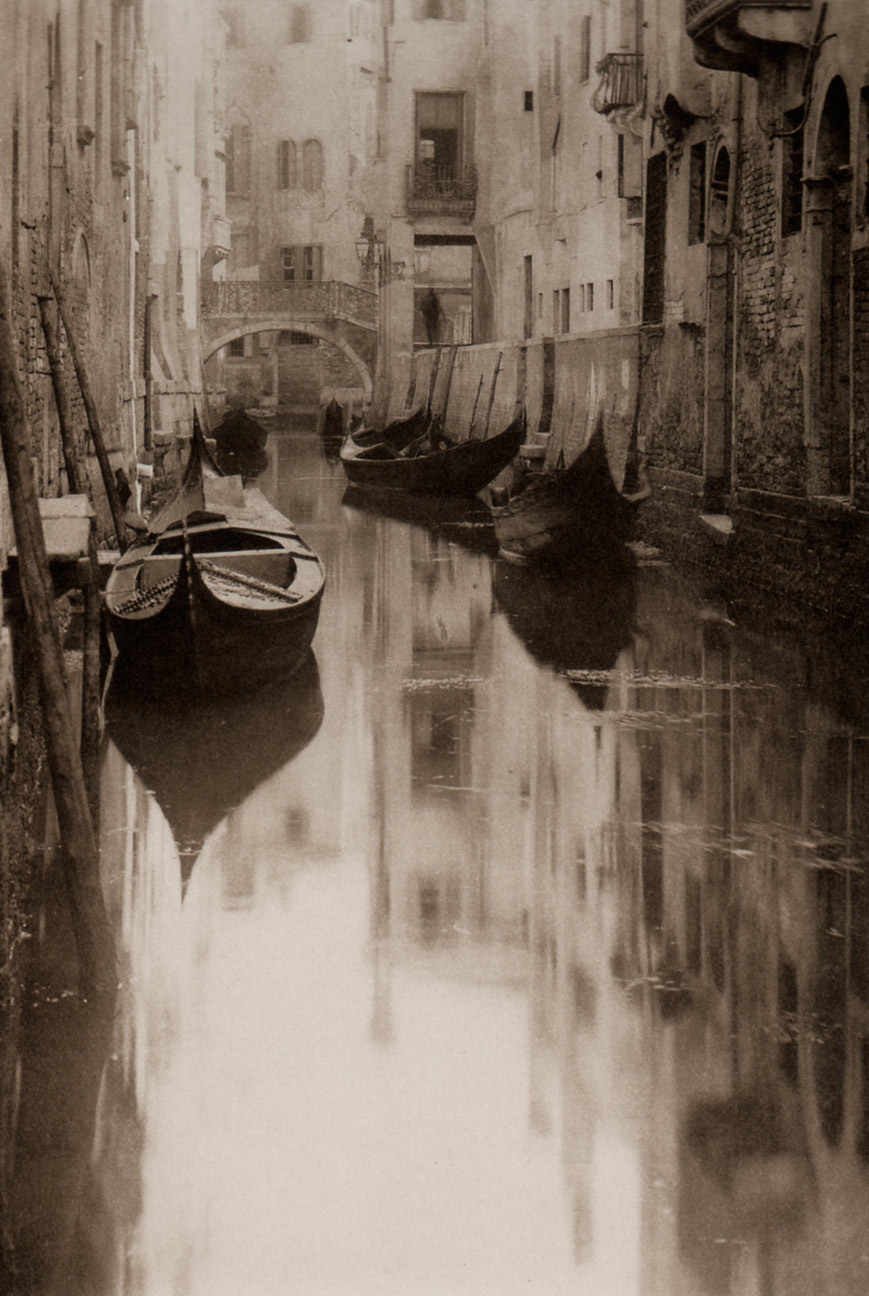
Alfred Stieglitz, I Love You - Joan Lennon

They have a strange and difficult allure, old photographs, don't they.  A power.  A poignancy.  As a writer, you want to write - to tell the story - but at the same time you can feel you're being allowed to be part of something that is complete without language.  Already perfect.  

I stumbled across Alfred Stieglitz's work only recently, and I am smitten.  I am also afraid to find out too much about him, in case he turns out to be a creep.  A supremely talented creep with the eye of an angel.  That sort of thing.  Where ignorance is bliss, 'tis folly to be wise - It's not exactly a professional attitude, but in this case, let's just let the images speak for themselves.  Three from the 1890s -     


"The Terminal" (1893)


"Winter – Fifth Avenue" (1893)


"Venetian Canal" (1894) 


And, as a postscript, one more Alfred Stieglitz photograph from the next century - 


"Dirigible" 1910


The man makes me go weak at the knees.  

(Click on the images to see them bigger - it only gets better!)  

Joan's website.
Joan's blog.

Thursday, 4 April 2013

The Fall of the Red Cross Knights - Katherine Langrish


Two worlds collide.


Everyone’s mental picture of a Medieval Knight must owe something to the Knights Templar.  Here’s a picture of one.  With his distinctive white mantle and red cross, he seems the epitome of the gallant Red Cross Knight himself, or many another knight who lumbers into the joust in films of Ivanhoe or Robin Hood.

When I was a child I read and greatly enjoyed the historical novels of Ronald Welch, whose books followed the fortunes of the Careys, an imaginary branch of the D’Aubigny family, whom he placed in Llanstephan Castle on the Welsh Borders, and whose sons (always brilliant swordsmen or crack shots) manage to be present at nearly every moment of interest in English history, from the Crusades to the First World War.  The first of the series, Knight Crusader (Oxford, 1979) won the Carnegie Medal: it is a well researched, exciting, and remarkably well-balanced story about Philip, a young knight born in Outremer (as the crusaders called their heavily defended eastern kingdom). He fights in the Battle of Hattin against Saladin, is taken prisoner by a Turkish knight, Usamah, who treats him well, and eventually escapes to fight for Richard Lionheart, and to make his way to England for the very first time.

Krak des Chevaliers, Syria

One of the things that struck me about the book, reading it for the first time, was the contrast Welch draws between the Muslim-influenced luxury and cleanliness of the Outremer castles, opposed to the squalor of a smoky, draughty Borders castle of the same date.  Annoyingly, I seem to have mislaid my copy, but I recall Philip wondering why a recently-arrived comrade is so smelly (because he baths only once a year) – and so uncouth.

I now suspect Ronald Welch may have been indebted to a book I’ve discovered entitled ‘Memoirs of an Arab-Syrian Gentleman’, originally written by one Usamah ibn-Munqidh, who died November 16, 1188 (or the 23rd of Ramadan, 584) at the grand age of  96. Usamah’s reminiscences include fascinating stories of the clashes, not only military but cultural, between the invading and occupying Frankish forces and the Islamic armies.

Usamah regards the Franks with bemused wonder as ‘animals possessing the virtues of courage and fighting, but nothing else.’ Here are some of his accounts. Circa 1140, Usamah befriended an elderly Frankish knight who had come to the Holy Land on pilgrimage.  When it was time for him to return home, he asked Usamah to send his son with him to Europe.  It was the Western custom for noble boys to leave home and become squires, but a custom unfamiliar and unwelcome to Usamah, who needed a get-out:  
    
When he resolved to return by sea to his homeland, he said to me, "My brother, I am leaving for my country and I want thee to send with me thy son” (my son, who was then fourteen years old, was at that time in my company) “to our country, where he can see the knights and learn wisdom and chivalry.  When he returns, he will be like a wise man.”

Thus there fell upon my ears words which would never come out of the head of a sensible man; for even if my son were to be taken captive, his captivity could not bring him a worse misfortune than carrying him into the lands of the Franks.  However, I said to the man:

“By thy life, this has been exactly my idea.  But the only thing that prevented me from carrying it was the fact that his grandmother, my mother, is so fond of him, and … did not let him come out with me until she exacted an oath from me to the effect that I would return him to her.”

Thereupon he asked, “Is thy mother still alive?”  “Yes,” I replied.  “Well,” said he, “disobey her not.”

11th century Frankish medicine
Usamah provides examples of  the Franks' curious medication, both bad and good in effect: a knight with an abscess in his leg was being successfully treated with a poultice, until a Frankish physician arrived and asked the knight:  “Which wouldst thou prefer, living with one leg or dying with two?”  and proceeded to cut off the leg with an axe: gruesomely, “the marrow of the leg flowed out and the patient died on the spot.”  A happier outcome was that for a knight called Bernard, who…

was one of the most accursed and wicked among the Franks.  A horse kicked him on the leg, which was subsequently infected and which opened in fourteen different place.  Every time one of these cuts would close in one place, another would open in another place. All this happened while I was praying for his perdition.  Then came to him a Frankish physician and removed from the leg all the ointments which were on it, and began to wash it with very strong vinegar.  By this treatment all the cuts were healed and the man became well again.  He was up again like the devil.

Medieval amputation

The Knights Templar were so called because their headquarters were on Temple Mount in Jerusalem, in a wing of the royal palace close to the Al Aqsa Mosque. They became second and third generation expats, who as expats often do, adopted a number of foreign ways and, paradoxically, acquired some respect and tolerance for the Islamic culture which surrounded them, even though they were officially its enemies. Usamah has an interesting story to relate of different attitudes to prayer:

Everyone who is a fresh emigrant from the Frankish lands is ruder in character than those who have become acclimatized and have held long association with the Moslems.  Here is an illustration of their rude character.

Whenever I visited Jerusalem I always entered the Aqsa Mosque, beside which stood a small mosque which the Franks had converted into a church.  When I used to enter the Aqsa Mosque, which was occupied by the Templars, who were my friends, the Templars would evacuate the little adjoining mosque so that I might pray in it.  One day I entered this mosque, repeated the first formula “Allah is great,” and stood up in the act of praying, upon which one of the Franks rushed on me, got hold of me and turned my face eastward saying, “This is the way thou shouldst pray!” A group of Templars hastened to him, seized him, and repelled him from me.  I resumed my prayer. The same man, while the others were busy, rushed once more upon me and turned my face eastward, saying, “This is the way thou shouldst pray!”  The Templars again came in to him and expelled him.  They apologised to me, saying, “This is a stranger who has only recently arrived from the land of the Franks, and he has never before seen anyone praying except eastward.”  Thereupon I said to myself, “I have had enough prayer.”  So I went out and have ever been surprised at the conduct of this devil of a man, at the change in the colour of his face, his trembling, and his sentiment at the sight of one praying towards the qiblah [the direction of Mecca].

The Al Aqsa Mosque

The Templars’ full name was The Poor Knights of Christ and the Temple of Solomon. Originally they relied upon donations to survive, but on acquiring St Bernard of Clairvaux as a sponsor (and paying no taxes) they rapidly became rich, with financial networks stretching across Christendom. There’s an irresistable comment in the wikipedia entry on them, suggesting they represent the world’s first multinational corporation.  And we know how popular large multinationals are. 

That wealth and power, coupled with the xenophobic suspicion ‘back home’ that the Templars had become the degenerate and luxurious sympathisers of a foreign creed, led to their downfall. In 1307, Philip of France ordered the arrest of the Grand Master of the Templars, Jacques de Molay, along with many of his order.  The warrant opens with the words, “God is not pleased.  We have enemies of the Faith in the Kingdom.”  Charged with multiple offences from idolatry, homosexuality and obscene rituals, to fraud and financial corruption, the Templars were accused, tortured, convicted, and eventually many of them burned.  The order was broken up.  One of the saddest ‘confessions’ is this:

‘I, Raymond de la Fère, 21 years old, admit that I have spat three times on the Cross, but with my mouth and not from my heart.’


One wonders what young Raymond made of a world in which he could be tortured into making such a statement (is the ambiguity deliberate? - is he implying that not the act, but the admission of the act comes from his mouth, not from his heart?) when he came from a world in which Christian Templar Knights could rush to protect the sanctity of a Moslem gentleman at prayer. 


Picture credits: 

Knight Templar, image from Wikimedia Commons, author Vahakn
Krak des Chevaliers, Syria from Wikimedia Commons  posted to Flickr by james_gordon_losangeles at http://flickr.com/photos/79139277@N08/7435880868
11th century medicine Wikimedia commons
Medieval amputation (Kaiser Friedrich III, 1493) Wikimedia Commons
Al Aqsa Mosque: author Barbara Kabel Wikimedia Commons
Burning of Templars. (British Library, Royal 14 E V f. 492v) (wikimedia commons)

Wednesday, 3 April 2013

History is pointless - by Eve Edwards

Building on my last blog post in March - history is annoying - I have decided to tackle the even more contentious issue of history being pointless.

'What?!'  I hear you cry.  'Run this woman out of the History Girls for heresy.'

*Sounds of gathered History Girls organising a posse to chase me out of town* (I would respectfully suggest you pin the sheriff star on Caroline Lawrence as she knows all there is to know about cowboys...)

But hold your horses, my friends, this is not a Michael Gove type argument to strike the subject from the school curriculum.  It's really a cheeky way of getting you to read a more serious argument about the mistreatment of history as a means of point scoring, the claim 'we won' or 'it was your fault'.

HMS Monarch
I was thinking about this theme in connection with some research I am doing into the Battle of Jutland for something I am writing on World War 1.  I was particularly drawn to this encounter because my great-grandfather fought in it as a Chief Petty Officer - Gunner on board HMS Monarch.  That made each shell burst so much closer as had he been standing in the wrong place, I would not be here.  I had only vague impressions of this battle before I began reading up on it.  I knew it was the major sea encounter of the war and that British sea supremacy was confirmed in that the German fleet did not make another serious attempt to get out of its home waters afterwards.  I was therefore surprised to discover that the German High Command claimed it as a victory.  And here we come to the point scoring.  On a strict tally of lives and ships lost, the Germans did indeed 'win'.  If you choose to score it on another scale - that of who left the encounter with the most ships, heavier fire power, freedom of movement - then the British navy carried the day.  As one commentator put it: it was like the German navy was a prisoner who escaped his cell, roughed up his guard, but then returned to sit behind a locked door.

So both sides won - or lost - depending on your perspective.

It reminded me of how unreliable history becomes when turned into a point scoring exercise.  (Let's not even start on the 'who was to blame for WW 1?' discussion).  Looking round the world there are so many present day conflicts where a historical tally of grievances is used as justification for current atrocities.  Clearly it would be reprehensible to forget, or sweep under the carpet, injustices committed, especially when those affected are still alive, yet there are many cases where the wrongs seem to a third party about equal and still the two sides are only interested in their own points.  Would it not be better to use history to understand, rather than score?

Moving away from the academic discipline of history to fiction writing, I suppose that is what a good historical novel does: it equips you to understand the perspective of someone on the other side.  I really valued reading last year, Alone In Berlin by Hans Fallada, which is based on the true story of an ordinary man trying to stand up to the Nazi regime.  Written in the years immediately after the war, this book helped me see a possible answer one of those great historical questions: how on earth did a civilised nation like Germany let Hitler do what he did?  I can now imagine just what it was like to be a civilian in Berlin and can grasp why the population as a whole 'allowed' the holocaust to happen and how difficult it was to resist.  I highly recommend this book if you haven't yet read it.

So to recast my title in a more honest fashion now I've got you to read to the end: history should not be about point scoring; the best use for it is understanding.

Eve Edwards
www.eve-edwards.co.uk


Tuesday, 2 April 2013

The White Swan, The Gay Brothel in Vere Street - Lucy Inglis

This weekend, the new Archbishop of Canterbury invoked the Easter spirit of tolerance and forgiveness into the debate over gay marriage and female bishops. As a state (if not a nation), we are still struggling to come to terms with the idea that gay people exist throughout society and may wish to avail themselves of the same legal rights and social status as their straight counterparts. I spend much of my working life researching and writing about the people on the margins of society in eighteenth century London, and in that work come across many ordinary gay men and women, trying to make their own way regardless of the strictures of their society. Gay men are usually more visible as their relationships were deemed criminal at the time and so it is court cases that illuminate their world. Two of the most famous are Mother Margaret Clapp's Molly House (details of which can be found in the Old Bailey Online records) and The White Swan in Vere Street. Margaret Clapp's was more of a coffee-house primarily for homosexual clientele, rather than a place where gay sex was traded for money and The White Swan was one of the first and most accurately recorded establishments had been set up with the aim of making money. It stood in a medieval street just to the west of Lincoln's Inn and was part of the area of London obliterated by Kingsway.

On the 8th of July, 1810 the Bow Street Police raided The White Swan, a tumbledown pub of Tudor origin near Drury Lane. Twenty-seven men were arrested on suspicion of sodomy and attempted sodomy. The Swan had been going for less than six months, established by two men, Cook and Yardley, but already had a considerable following. Cook, whose wife ran an ordinary pub nearby called the White Horse, was proud of his amenities, and his clientele. 'Cook states that a person in a respectable house in the city, frequently came to his pub, and stayed several days and nights together; during which time he generally amused himself with eight, ten, and sometimes a dozen different boys and men!'

Cook and Yardley had furnished their establishment for its purpose. 'Four beds were provided in one room - another was fitted up for the ladies' dressing-room, with a toilette, and every appendage of rouge, &c. &c....The upper part of the house was appropriated to youths who were constantly in waiting for casual customers; who practised all the allurements that are found in a brothel, by the more natural description of prostitutes. Men of rank, and respectable situations in life, might be seen wallowing either in or on beds with wretches of the lowest description'.

The account of The White Swan raid and the subsequent trials was told in 1813 by Robert Holloway, later Cook's lawyer, who sold many copies of his account. In it there are some excellent observations of the behaviour within the house, where faux marriages were conducted to 'bless' the coming union. The descriptions of these weddings make them appear parodies of the traditional service, but they were common enough that on some level they must have had meaning for those performing in them.

Many of the clientele assumed feigned names, though often not very appropriate to their calling in life. 'Kitty Cambric is a Coal Merchant; Miss Selina a Runner at a Police Office; Blackeyed Leonora, a Drummer; Pretty Harriet, a Butcher; Lady Godiva, a Waiter; the Duchess of Gloucester, a gentleman's servant; Duchess of Devonshire, a Blacksmith; and Miss Sweet Lips, a Country Grocer. It is a generally received opinion, and a very natural one, that the prevalency of this passion has for its object effeminate delicate beings only: but this seems to be, by Cook's account, a mistaken notion; and the reverse is so palpable in many instances, that Fanny Murry, Lucy Cooper, and Kitty Fisher, are now personified by an athletic bargeman, an Herculean Coal-heaver, and a deaf Tyre-Smith.'

It is Blackeyed Leonora, the drummer who stands out amongst this motley crowd, for Leonora was in fact most likely Thomas White, a 16 year old drummer in the Guards. Thomas was one of the 'youths' who stood and waited in the upper part of the house. He was a great favourite amongst the 'more exalted' visitors to the house, according to Holloway. Almost every single one of the people at The White Swan had an mainstream occupation. Of course, some were visitors, but White worked there. No doubt it was his youth, and probably his looks that drew attention from the richer customers. 'White, being an universal favourite, was very deep in the secrets of the fashionable part of the coterie.'

Poor Thomas, who wasn't even at The Swan on the night of the raid, was too quick to confess, and was executed for his 'crime' after almost a year in prison, although there was no doubt he was guilty of the charge. With him died a man called John Hepburn, aged 46, who had procured White's services with the help of a witness who testified against him. White was prosecuted as the giver, rather than the receiver which made it almost impossible for the court to avoid the death sentence when the jury convicted him of 'buggery'. At White's execution, various people of note were recorded. 'A vast concourse of people attended to witness the awful scene. The Duke of Cumberland, Lord Sefton, Lord Yarmouth, and several other noblemen were in the press-yard.' The Duke of Cumberland had avoided a homosexual scandal by a razor thin margin in June 1810 when his servant was found with a cut throat after threatening to out his master after catching the Duke and his valet 'in an improper and unnatural situation'. Perhaps Cumberland was one of White's 'fashionable' guests.

Of the other 25 or so, only six were found guilty and they were pilloried and imprisoned, including Cook the landlord. Yardley seems to have got away with the whole thing. The White Swan affair raised the public ire, and the convicted men suffered at the hands of a mob. 'The disgust felt by all ranks in Society at the detestable conduct of these wretches occasioned many thousands to become spectators of their punishment. At an early hour the Old Bailey was completely blockaded, and the increase of the mob about 12 o'clock, put a stop to the business of the sessions. The shops from Ludgate Hill to the Haymarket were shut up, and the streets lined with people, waiting to see the offenders pass....A number of fishwomen attended with stinking flounders and entrails of other fish which had been in preparation for several days.'

Cook refused to implicate any more clients, but on his release he began to blackmail two members of the clergy who had escaped prosecution during the raid and investigation. In what was probably a set-up, he ended up in prison for assault and debt and his whole family were systematically ruined in a series of evictions and persecutions that Holloway attributed to 'influential persons'. Just how influential, we will never know.

Monday, 1 April 2013

April is the coolest month by Mary Hoffman


April, from a 15th century Book of Hours (Public Domain)  


So, T. S. Eliot might have got it wrong. The month we are just beginning, as well as hosting my birthday, has all sorts of literary and social associations.

It begins with April Fool's Day, when tricks can be played on people - at least till noon, after which they rebound on the trickster. Particularly rewarding is spotting the jokes in the morning's newspaper. I well remember the Guardian's excellent 1977 Report on the Island State of San Serriffe (actually two islands in the shape of a semi-colon): "terrorism has been almost eliminated from the beaches." But this kind of joke has been played for far longer:

  
1857 Public Domain
I wonder how many people turned up?

Brewer's Dictionary of Phrase and Fable (2nd Revised Edition 1981) suggests that the custom might derive from the Roman Festival of Cerealia, held in April. Ceres sought in vain for her abducted daughter Proserpina, responding to "the echo of a scream" - or being on a fool's errand.

I'm not sure I entirely believe in this theory - since the Cerealia was held in mid to late April and lasted a week.

Maybe it was Geoffrey Chaucer who drew attention to the specialness of my birth month by pointing out that it was then that people began to long to go on pilgrimages. That might not be experienced by many these days but there is still perhaps a sense of beginning and fresh starts in April, and not just because a new tax year begins on the 6th. (1st in Japan).

Chaucer at the Court of Edward lll, Ford Madox Ford, Public Domain


And of course it's the month of Aries, the first sign of the Zodiac so another beginning association. I've always really enjoyed being an Aries, even though some would like to deprive me of that designation and tip me into the Sign of the Bull. Nothing wrong with Taureans but I'm absolutely not one of them, lovely phlegmatic souls that they are.

Aries is a Fire sign, like Leo and Sagittarius, and this is typical of the sort of star-sign descriptions you find: "one of the most highly charged masculine energy signs in astrology. No wonder women born under Aries are forceful, dynamic and aggressive, and as a result these Aries women frequently find themselves with dilemmas surrounding their romantic relationships."

I count myself fairly dilemma-free in that department but really identify with the ambitious and dynamic associations.

I used to wish that my mother had hung on for a bit so that I could have been born on the 23rd, April's noblest association, definitely the death and by convention also the birthdate of William Shakespeare. But then I wouldn't have been an Aries. I wonder if Shakespeare was postmature? He doesn't seem very Taurean to me.

The Chandos portrait. Public Domain
In the United States, April is:
I'm not aware that any of these is celebrated in the UK  but someone will tell me, I'm sure.

April, from the Très Riches Heures du Duc de Berry, Public Domain
Easter usually falls in April but not this year. One year my birthday fell on Good Friday, which felt very odd and we postponed the celebrations. Next year it's on Easter Sunday - I imagine chocolate eggs will feature.

Tell us your favourite month and whether you live up to your star-sign description.